Ethical Volunteer Travel and Global Impact with Globe Aware (feat. Kimberly Haley Coleman)


Welcome back to Travel Time Stories with Shannon! Today, Shannon and Ann sit down with Kimberly Haley-Coleman, founder of @GlobeAware a nonprofit dedicated to culturally respectful, community-driven volunteer travel programs around the world.
💬 In this episode:
— How Globe Aware began
— The difference between ethical volunteer travel vs. “voluntourism”
— Powerful stories from families, communities, and volunteers
— What travelers can expect on their first Globe Aware trip
— How to choose a responsible volunteer program
— How meaningful travel can transform your life from the inside out
Whether you're a traveler, a giver, or someone searching for deeper purpose through adventure, this conversation is full of heart, healing, and inspiration.
🌍 Learn more about Globe Aware: globeaware.org
Listen weekly for more travel, life, and healing stories.
If you enjoyed this episode, make sure to like, subscribe, and share it with someone who dreams of making a difference.
Introduction & Welcome
They may go into it thinking that they're going to be serving, and then they get there and they realize they're learning and I think that surprises a lot of people and yet they realize how important it is and they tend to start close to home, usually in Latin America. And, they'll go on to Eastern Europe or Southeast Asia at the African continent.
But a lot of times people are nervous on the front end because they're, will I like the food, you know, are they gonna be serving me monkey eyeball soup? I mean, I don't know how to use the hammer and all those things. And then when they realize that the structure walks, people through this, and we're really designed for people who don't go into it with specific skills.
Welcome to Travel Time Stories with Shannon, the podcast where we share real journeys. Real stories and real healing happens one conversation at a time. I'm your host Shannon, coming to you from the Lone Star state of Texas. Some weeks I open up and share pieces of my own life journey from travel adventures to the winding road of healing and personal growth.
Other weeks I'm joined by my best friend and co-host Ann from the show me State of Missouri, as we sit down with special guests who share their experiences, insights, and expertise to help all of us along our own journeys. You know, I love a good adventure, but I love an adventure with purpose even more.
And today we're diving into exactly that world of service, travel, what it means, why it matters, and how it transforms both the traveler and the communities they serve. Our guest tonight is Kimberly Haley Coleman, founder and executive director of Globe Aware. Globe Aware is a nonprofit that has been mobilizing volunteers for short-term service projects in over 25 countries since 2000.
I also have my co-host and best friend Ann here with me. Hey Ann.
Hey everybody. I'm so excited about today's conversation, as we say on travel time stories. Grab your favorite beverage and let's get into it. Kimberly, thank you so much for joining us and welcome to the show tonight,
Shannon and Ann, thank you so much for having me.
It's so great to have, an excuse to talk about warm, wonderful things when it's going to be so cold outside.
Yes, exactly. Especially here in Texas, we are definitely bracing for those cold temperatures that we are not used to. Same. Sure. So Kimberly, let's start with the heart of it all. What inspired the creation of Globe
What is Globe Aware?
Aware?
Was it a single trip or a moment where you just realized this is what the world needs?
You know, it was a really interesting confluence of different things happening. My background was all international. master's degree in art history and international business. I traveled a lot growing up and found myself in the for-profit world, traveling internationally, having already done a lot of the tourist sites and wanting to just fill my time when I was.
In country on business and there over a weekend and just started looking at, okay, well maybe I can serve, maybe I can give back or volunteer. And I thought it was really hard to try and find a short term volunteer experience while traveling. And that just lit a fire under me that, okay, well I'm gonna find a way to do it, you know, most.
organizations really don't want you short term because the amount of time it takes to train and oversee and it makes sense and it's obvious, but I really found it to be, transformative and joyful and just a big bucket list item thing to do that changes the person, that is serving alongside someone else by showing up differently.
rather than just your traditional tourist experience, which is also lovely and wonderful. so that's how it really came about. I was, traveling and just started doing things on my own one-on-one in various communities and going back, home and talking about it and finding that there were a whole lot of other people who seemed excited and interested and wanted to join me, and that's.
Really how it came about. So I would love to tell you it was this lifelong dream and super intentional, and that's just not the way it worked out.
Wow. For listeners who may not be familiar in the term service travel, can you explain what Globe Aware does and what makes your model different from the usual volunteer or service travel that people hear about?
I appreciate the opportunity to do it. 'cause you're right, I, we talk to people every day who haven't heard of it. But, really it's about, yes, short term adventures in service. So, you know, the Peace Corps, if you've got 27 months, is a great way of doing it. doctors Without Borders, engineers Without Borders, you know, they're all of these niche spaces where you can serve abroad.
Usually they're longer term, but. The way we do it, it's like going on a cruise in that you go to the website, you pick the date and the country and you join 10 or 12 other people that are gonna be on it. You get to be really good friends with them. It's all very structured, so you don't have to speak the language or know how to do anything.
'cause our coordination staff handles that. When you get there, that covers the, the meals, the accommodations, the work projects, the bottled water, the in-country transportation, the medical insurance, all of that stuff for around $1,500, it's a tax deductible expense.
Wow.
You're not staying at the Ritz, we're not eating at TGI Fridays or Applebee's.
You're eating more local foods with local families, with coordinators that have worked with us for, in most cases, a couple of decades, and they really know what. Volunteers love to do and they know how to connect, with the community, what kinds of projects people are able to do. And these projects vary a lot.
You know, we are assembling and distributing wheelchairs to landmine victims in Cambodia. We are, installing concrete floors in the homes of single moms. In Guatemala, we're building waddle and job style homes in Kenya. So these are projects that were designed to finish something substantial small scale.
We're not building hospitals and roads, but we're really getting this up close Opportunity to connect. Back to humanity on a fundamental level in a way that lets you feel the difference you can make and the connections you can make when you're working on a project that someone chose that's important to them.
And so that's what we do. you know, you show up and you don't even know, how you're gonna do this project and you come away from it realizing what a difference we all can make. The value of soft power on our planet. So that's a little bit, and we're working in 26 countries right now, and these are all one week projects throughout the year.
All of the projects and programs.
Yeah, that's one of the questions I was gonna ask you. So it's a week long service project that you're going for, and everything is, is wrapped up and included in the cost of That's right. This one week. Yeah. Wow, that's amazing.
Usually start on a Sunday and we end on a Saturday.
So again, these are, these are designed to be short and fit in with the, typical busy American lifestyle. So, you know, Australians usually start out with six or seven weeks vacation. we work really well with an American lifestyle that just may not have several weeks to give, but they still wanna do.
And, you know, I left out that we include the. Cultural stuff too. You know, our program in Peru is in Cusco. people are going to see Machu Picchu in the Sacred Valley. They're gonna do all the things. our focus just happens to be service. So, you know, for about 30 hours of the week we're doing the service project, and then we're still doing the fun cultural stuff.
and then we have some free time throughout the week as well. So it's designed to be, all inclusive in that sense.
Wow.
Wow. I love that. That's amazing. And that cost is like on point for just about anybody can afford
anybody.
mm-hmm.
That's what you're gonna spend, like you brought up about a cruise.
it's easy, like a cruise to book. The cost is, that's same as what you're gonna spend on a seven day cruise.
And again, these are, you know, we tend to be in fairly modest accommodations. You're not gonna be staying at a five star hotel, but it is a tax deductible expense because, well, most of the funding is going toward paying for the materials and all the local staff that is working alongside us and teaching us how to do everything.
cause we really don't want to replace. Jobs locally. We want to make sure that the communities are always warm and welcoming and happy to see us so that it's a win, win, win all the way around. and really our coordinators, they're the secret sauce 'cause they are, from the local communities and really understand the needs and wants the safety picture, for everybody.
And they know what gets volunteers really. Engaged. And so, they're really the, our constant feedback 'cause it's our coordinators that make the experience so
Ethical Service Travel
magical.
Yeah. Well there can be a lot of debate around helping communities responsibly. So how does Globe Aware ensure that the programs are ethical, culturally sensitive, and community driven instead of just outsider driven?
Well, you just said it, you know, making sure that the projects are chosen locally and that the methods being used are the local methods, because there's always. A ton of reasons on why local communities have chosen to do. You know, I'll give you an example. In Kenya where we're building these wattle and do style homes, they have, the framework is made with stripped limbs, and then we have a mud mixture that we.
Mix alongside everybody that fills the walls. It's really thick. And then the silt that's kind of got this really fine sand and ash, and mud combination that goes on the outside. , There's a reason it really keeps the heat out. It's a very long lasting, very durable housing style.
So if we're doing things responsibly, it means we're doing things the local way and it means that we are learning, we are not coming in as heroes, and we are also not working with vulnerable populations in. The sense of having, for example, orphans with volunteers one-on-one. there have been, a fair number of stories about a decade ago where a variety of organizations weren't doing things responsibly and people were hurt and we cannot be everywhere there.
Extreme need. We can't be in Darfur, Somalia, Afghanistan, Palestine. These are places where we've really got to, because we're not a paramilitary organization, we've gotta keep our volunteers safe. We're not operating where there's a disease outbreak or where it's war torn. We're not handling bodily fluids are high on ladders.
We have all sorts of things that, we look for in terms of making sure that. A program location and a project will be a good fit. So it starts with the local grassroots organization existing to the point they've already identified whatever their core needs are and how they want to address them.
And then we run that. Past all of our criteria in terms of safety risk. Do we feel it's genuinely helping a needy community? are we doing something that is going to help a community be more independent and sustainable as opposed to just giving out cash and candy and making them more dependent and looking at our volunteers, making them, a less healthy equal relationship?
we do have to acknowledge that the communities where we are working there is. A power difference in terms of economic resources. And so we have to be very careful of that. We're stepping into a situation and not creating, an adversarial or tension based relationship. And so those are really important questions and it means that our projects can change and even the locations can change.
If a place becomes unstable for whatever reason, and it doesn't happen often, but look, when COVID happened, you know, almost all of our programs stopped.
Mm-hmm.
it means a willingness to, have to, shift and pivot, based on all sorts of conditions. And, that's really where a lot of our work comes in and where our coordinators are so important and things can look different when things first started back and, 21, you know, we were having to test everybody before they arrived.
Before they left, getting, doctors to come on location to do all the testing, to help all of our volunteers fill out the bilingual biofeedback forms, within 24 hours of leaving, you know, so these are, our steps to participate. Haven't always looked the same, but our, criteria has stayed the same.
And that's been really helpful in terms of having, guiding mission statements and principles and , we really have two simple ones. Everything's gotta promote. Cultural awareness, which for us means understanding the real beauties and real challenges of a culture or a country and or help the local community stand on its own two feet.
So, promoting cultural awareness or sustainability, those are our two primary, primary guiding principles for everything we
Personal Stories & Impact
do.
I love that. I love that. That's what you're all about. So I have to ask you. After all of your years of global work, you must have met a family, a community, or a moment that even now today stays with you.
Can you share some of that with us?
I have so many.
I have so many and some that. You could anticipate in some that you just can't. and I tell you, we have a lot of volunteers when they get on location, where a big surprise constantly for me is that our volunteers will often will, we'll set up a project, we think it's gonna take six hours.
They're working so hard and refuse to take breaks. They'll finish it in five hours and then they'll find other projects to do that weren't even on our radar. that just happens constantly. One that really stands out. I was in the Philippines and we were with Doug Robinson and we had passed a little family on the way to work every morning where a baby had just been born.
And I don't remember the name of the blood disease that the baby had, but as I recall, it was, a pretty serious thing. This is about a year and a half ago, and. Our coordinator was translating with them and they had learned that, they didn't have the money to treat this blood disease, whatever it was.
And so the next day the family got in a taxi with Doug and his wife. They went to the hospital and paid for the. All the treatment that baby was gonna, it was like $1,100, something like that. And this family wasn't gonna be able to pay for that. You know, things, situations like that, that we did not anticipate.
And then, you know, every time you give out a wheelchair and you look at the eyeballs of the parents of that child who was. Already envisioning a future for that child before the child was maimed. And me as a parent looking at another parent's eyes, being a mother who has my own fears and hopes for my children who are now, grown and out of the house and looking at, the mother of a child, knowing that you could have written a check to pay for that wheelchair.
but showing up and sharing that time with that mother. So that she knows she matters and feels that her family was worth connecting personally with over that, and then me and other volunteers coming home and feeling like our perspective on life and the globe and the culture is now changed and how we view the world's changed and how we care about it has changed.
And then it's really hard to put a price tag on that, that experience, how we change. And, you know, this is an experience where, you know, there, there are certain travel experiences where people will bring a best friend or a significant other, this kind of travel, we have a lot of solo travelers, retirees, multi-generations that will travel together.
So it's really an unusual kind of experience from that perspective. you know, people are, approaching it with, curiosity and humility more than expertise and not knowing if they're bringing, you know, a grandchild. What the grandchild might be bringing to it. They may be a teenager that is spending a lot of screen time doing video games and not feeling like they are making much of an impact on this planet and feeling like they're a bystander and.
Somehow having an experience like this where the local community doesn't have screens and we're able to go and put a concrete floor in the home of a single mom who is living in a shelter, made out a cardboard and whatever refuse she could find without running water. If you're a 12-year-old and you witnessed that.
You have pumped water and carried it over in a bucket to mix the concrete and seen what a difference it makes. All of a sudden you don't feel so powerless and so insignificant. I feel like our culture has a lot of great things and we have challenges, and right now I feel like our young people making them feel connected and that they matter.
it can be harder 'cause they're looking at these comparative, curated screens of life that isn't necessarily real.
Mm-hmm.
Mm-hmm.
so these are things that we weren't necessarily thinking about when we would create our experiences, but they've definitely been an outcome. so when I think about the experience I've had, oftentimes it's seeing what the other fellow volunteers kids are experiencing.
you know, now that they're turning water off between brushing their teeth when they used to take 45 minute showers because they hadn't understood the importance of running water. There are lots of different things that come to mind. I could talk to you all day about that. That's why we do it.
And the joy, you know, I have to say there's an unexpected joy that comes with it that you don't necessarily think you're gonna get going into experiences where you're serving at this level.
Oh, I imagine you feel so good at the end of the day when you've helped somebody like that.
Yeah, and like you say, being able to do it face to face and really get to know that person versus just writing a check and never seeing what happens on the other end with that check.
Yeah. You know, I can't say that enough times. And I have to say that our coordinators, as I mentioned before, they're kind of the bedrock of all of this. And because they start every day with a cultural exercise and they end every day with a reflective exercise, you know, telling you something about that country that a tourist just.
Wouldn't be likely to learn. And then discussing reflectively, you know, a kindness that was observed or, something that asking what you might be grateful for today that you hadn't thought about yesterday. these, our coordinators are. Are really the reason that these experiences hit home so, so deeply.
while the the projects are meaningful, the, the locals would do them without us. They may not have the money to do all, they may not be able to use the metal chimney that we're be doing, but they're better and faster at everything. and this is why I, I say it's so important for people. They may go into it thinking that they're going to be serving, and then they get there and they realize they're learning.
And I think that that surprises a lot of people, and yet they realize how, important it is, you know. And we struggle with the words, you know, words like volunteerism and service, vacation and volunteer vacations. These are words that have had different meaning and had a real evolution over the last 25, 26 years.
And, when people are new to the experience, it takes a lot of words to try and give people a picture of what this. Is, it's a struggle, but fortunately, when people do it, usually it lights a real fire in them. And, they tend to start close to home, usually in Latin America. And, they'll go on to Eastern Europe or Southeast Asia.
At the African continent, but a lot of times people are nervous on the front end because they're, will, I like the food, you know, are they gonna be serving me monkey eyeball soup? I mean, I don't know how to use a hammer and all those things. and then what they realize that, the structure, walks, people through this.
And were, really designed for people, who don't go into it with specific skills.
Yeah, that's really wonderful. And I like the fact that yours is like a group, like a small group. It goes together versus just
me too,
you know, somebody, like two people going on their own to do a, service project or whatever.
I like the fact that it, it's a group thing.
Yeah.
That helps put people at ease too,
like-minded people. Yeah.
Cultural Perspectives
Mm-hmm.
I also feel like. It's important we feel that this doesn't replace the service that we believe everybody should be doing at home. That service starts at home.
Mm-hmm.
, Occasionally we'll get angry email asking why we're helping people in other countries when there's still needs in North America.
You know, I, think a lot of times that comes from people who may not recognize some of the relativity that's different. You know, you can be middle class economically in Cambodia and not have running water or electricity, and you can be below the poverty line in the US and have access to running water.
You know, these are some relative things, but it doesn't mean we shouldn't be first and foremost helping people in our backyard, our neighbors, and supporting our family first. Foremost, and because there is a carbon footprint, by the time you get on an airplane, we hope that the projects we're doing are that it's hitting, not just leaving behind something really wonderful for the local community, but again that the volunteers are going home significantly changed as well.
Yeah, I think you go and do something like this, and maybe you weren't really service-minded beforehand. You go and do something like this and have this experience and see how it changes, and also make you recognize how much grateful you should be and how blessed we are here in America versus other countries.
True.
And then you come back home and that prompts you to want to do more in your backyard.
Yeah,
There is that emotional impact. It's got a healing impact.
Mm-hmm.
you know, for some people it's grounding. It can sometimes be unsettling to see a poverty divide. but it cracks something open and once that happens, it's really hard to, to unsee it, you know, and, yet the real beauties that.
People will often experience, you know, they will be, unused to seeing human beings faces instead of seeing them look at a screen in Cuba, everybody's looking at each other. You know, the interaction, the amount of time people spend on their faith with their friends and family. Outside of the United States, you, you might not know how different that is.
That's a real beauty in many countries, that you might not see or notice or understand if you're just going as a traditional tourist. And, you know, a real challenge they might see is, you know, if someone has a heart attack in rural. Guatemala, they usually don't have the money or resources to get to a clinic or a hospital.
Of course we pay for all that for our volunteers. And you could see that that's very different, what a privilege that is. and a real challenge for the local communities, you know, and again, that's not something you would necessarily fully appreciate if you're being disgorged from a cruise ship as one of 5,000 people to be in Venice for the day.
Yeah.
Yeah, exactly.
I'm not saying people shouldn't do that. I'm just saying this is a different experience and a different way of, experiencing the world.
Exactly. people here in America don't realize that in other countries you don't just call an ambulance and they come and pick you up and you know, take you to the hospital and you get treated whether you can pay or not pay or whatever.
Like we have here in America.
Yeah, I agree. Then there are times when, you know, I think people are shocked when they realize how many doctors there are in Cuba. Every country comes with challenges in terms of operating. and that's one where, because of our government relationship, we're very tightly constrained in terms.
Of what we can do. And yet here's this country that they've got such a high education level and almost no resources. You know, you struggle to find Tylenol or a, a needle and thread. and we have, you know, that's not an issue for us here. You go into the grocery store and there's not just one type of Tylenol you've got, you know.
A choice. And yet they've got so much time and such a high level of education, and that's something we don't have is a lot of free time or, cheap and easy access to higher education. So those are the things that we, really hope people are able to get a feeling for so that they can question whatever.
Defaults they might think are at the core of humanity. what do we think is a human right? Do we, do we have the right formula or not? Are there things open for debate? Do you see things you actually like in other countries or way things can be changed? That was the reason John F.
Kennedy started the Peace Corps, is he really wanted to have a constituency of people from which we could choose where they had learned. How to solve cross-cultural problems, and it's, a form of soft power that we often don't talk about a lot, even if it's being done in. Ways that we, you know, church churches have been doing missions for, for years.
Mm-hmm.
And, again, there are very specific Doctors without Borders and Engineers Without Borders, and a lot of student organizations that see the benefit of service travel. For some reason it had somehow missed, other pockets, other demographics. And so we've been. It's delighted to see that. it's something that has, certainly been embraced over the years, and particularly by employers who will often do, because we're a 5 0 1 C3 contribution matching, so they'll often pay for half of the cost for their employees to go on a program, or they'll allow them to take volunteer paid days off instead of taking vacation.
So we've seen a real evolution in that. In terms of allowing employees to have philanthropic charitable activity that isn't necessarily a one size fits all, where all employees are giving to the same thing. it's been great to see.
That's a great idea. I had never, thought about that, but that's a great idea for companies.
really great idea. Very team building. All these big companies do these retreats for team building that are. Honestly ridiculous.
Yes.
And they're not really team building, doing something like this, taking your group to something like this for a week. Would be way more amazing and actually really be team building.
'cause you're gonna have to work together and do this project and you're all gonna have this experience and be bonded by that experience.
Oh, I'm telling, you know, I just think about how, you know, the confrontation with death and, quite a few of. Countries, particularly on the continent of Africa, where they just have a, a face-to-face relationship with death in a much more frequent way than we, we do for all sorts of reasons.
And we had a big group there, this summer and at the end they had a big barbecue for us. and we have a bread, a bakery where we. It in the, local community runs it and they sell half of the bread to pay for a bunch of families that just really don't have access to. Another way to support themselves and then they give the rest of the, bread away.
And at the end of that week, they had a big barbecue for us. And when the volunteers saw all of that food and knew how hungry they were, none of the volunteers would eat and just gave the whole barbecue to the community and it was really a Unexpected touching thing to see. I love that. And in terms of bonding together, again, that's just, it was a surprise and it was something they all decided really spontaneously to do together.
And they're never gonna forget that, you know?
Yeah.
They, it was a big celebration. Lots of music, lots of dancing, and they decided to, they were gonna eat whatever granola bars and whatever they could. Find at the little kiosk stores near our accommodation rather than eat this big fancy meat meal that, they knew would be such a special treat for the community.
Wow.
Wow.
Really special.
Yeah. I love that.
Mm-hmm.
That's great.
That's
Running the Organization
amazing.
So what's something that most people don't see about running an organization like this? What challenges have you faced?
Good Lord. So many COVID was probably the biggest one because it impacted all of the programs. But you know, something that is, unexpected.
and that's such a good question, is, the cultural differences impacting the work schedule because our volunteers usually come from this background, so focused on productivity as. A guiding principle, and in many of our local communities, that isn't necessarily foremost in their minds that if it's raining, stopping and having a coffee is often a more reasonable response in Costa Rica than working.
So. We're straddling these two worlds where we know our volunteers are gonna wanna work, work, work, work, work. And the local community is like, yeah, work's important, but so is interacting with each other. And so finding that balance, making sure that the locals understand, yes, they really are coming to work and they really do wanna do as much as possible.
It can be a head scratcher for them. and also because in. A lot of countries, like a lot of, European countries where most service work is something that is carried out by government entities, so they don't necessarily think of private entities to do this kind of work. It can be perplexing for them.
So when you ask about what can be unexpected in terms of running a program like these. That managing those expectations so that there's plenty of work for the volunteers who wanna just keep working past the scheduled time and, managing the expectations of the local community so that we're coming together in a harmonious way.
Wow. You've traveled so widely, Kimberly. Is there one Globe Aware. Destination that personally moved you and why?
you know, I normally answer that it's, wherever I've just come from or wherever I'm about to go. I love the African continent. I love South Africa, India, places that make me look at the world differently and ask, why do they do this this way?
Why don't they use. Traditional street addresses in Costa Rica when they mail something to someone, how does that work? How is that even possible? How is it that in Thailand, the most offensive thing you can do is show impatience or anger? And we're in a pretty impatient society. So these are two widely divergent expectations for behavior.
And how did they get there? What does that mean? So countries that. Help me reassess myself, or what I'm most drawn to. I still love going, to Western countries and to, Europe and seeing churches and museums. but it does feel different to me when I get a chance to, have that global mind shift and learn.
you know, travel is a mirror travel as like Rick, Steve says, he sees travel as a political act, as a way to let other people see us in a, humanitarian way. And not just as a consumer. And that's, really very much how, we operate. He, likes to say that, I gave a, keynote address with him last year and it was really, it was interesting 'cause he talked about how when he first started his company, he was trying to get people to think beyond Orlando.
And now Europe has such a, healthy travel market that his last few years have been really focused on looking beyond Europe. Even though he doesn't run any programs there. He feels that, Before you bomb people, it would be good to know them. And oftentimes when you, know them, you don't feel like bombing them, you'll look for other ways.
So I really like that thought of, travel is having this larger role for human connectivity that can impact larger elements of society in addition to yourself.
Yeah, I like that idea too.
yeah.
Yeah.
Yeah. That's why I, always say, and one of the reasons why I wanted to start the podcast is that travel is healing, and not only for yourself, yourself personally, but from person to person, from country to country.
travel can heal.
I totally agree, and, I just don't know, a way where you can learn more deeply more quickly . I just think about how easy it is for us, any one of us, to get stuck in a routine where we're going from our workplace to our grocery store, to a school.
And that we're going to those places 90% of the time, and we're getting, you know, not even noticing the routine and the robotic efforts that our life can be through. But when we go someplace where everything's different, all of our senses are seeing different things somehow everything is open.
Mm-hmm.
And we're able to do that reassessment.
It's just easier to do when everything is different and, with very little effort in, the sense that, you know, you don't have to be lectured to or read to just that. personal experience, how powerful it is.
Future of Service Travel
Yeah, I agree. So we touched a little bit on COVID and how you had to adapt and, make changes once we restarted again.
Where do you see the future of service travel heading?
Well, gosh, if I could wave a magic wand, I would design inexpensive. Carbon footprint, free air travel so that everybody could, know one another more easily. But you know, who knows what, can happen. There's so many changes happening technologically, I really love the trend where we're headed toward allowing this workplace position where they are.
Supporting philanthropic efforts that are more personalized so that somebody can say, yes, United Way is great, but I really personally feel like helping kids with special needs in Romania. And that's what I wanna do. And it's good PR for the company, it's great for the employee, it's great for the local community.
Let's make this happen, this, much more personalized way of giving back. And so I really hope that trend
How to Get Involved
continues and gets even. Bigger and broader, because again, I think it just benefits everyone involved.
Oh
yeah,
I agree completely. So, Kimberly, if someone is listening right now and you're feeling that little tug in their heart and they wanna get involved, what's the easiest way to start a Globe Aware trip?
Oh, and I love you. Thank you for asking. , Well, we are really, everywhere you look with the words globe aware, a lot of times people think it's global, but it's globe three syllables. So, you know, we have our own podcast channel that. Helps people prepare for wherever they're going and gives various travel tips.
We have our own YouTube channel, and of course Facebook and Instagram and website and all this stuff. I mean, even AI does a lot on us, so fortunately, we're in every direction. You look and it makes it easy to get video clips of what does it look like in the Philippines today and, you know, hearing from the projects and programs.
So that's all it takes is going any place on the internet with the word Globe Aware or any sort of podcast. Anywhere you list to your podcast, you'll find the Globe Aware Podcast. So, thank you for asking that. But we're all over the internet with those words.
Awesome.
Wonderful. Kimberly, this has been
Closing
incredible.
Thank you for sharing your passion, your wisdom, and your heart with us today. And for our listeners, you mentioned they can find you everywhere on the internet. Is it just Globe Aware.com? Globe Aware.org?
Global word.org.com.net, dot ca, or? Yeah.
You got it all covered.
We got it all covered.
I love it.
Right.
That's awesome. Is there anything else, Kimberly, that you would like to say to our listeners or want them to know that we haven't talked about yet before we close out?
I would just like to
say how grateful I am for your podcast and that it exists. I was telling you before the show how much I love the concept and I love what you guys are doing, so thank you for doing it.
Yeah. Thank you so much. Globe Aware is doing such powerful meaning work and we are just so grateful to get to help spread that message.
Exactly. And we'll be sure to put the links in the show notes. If you've ever wanted to travel with intention to connect, to serve, or to Grow, this is such a beautiful place to start.
If this conversation spoke to you, take a moment to share it. Leave a review. It truly helps these stories reach the people who need them the most. And thank you for traveling with us today.
And remember folks, whether in travel or in life. Keep making memories that last a lifetime.
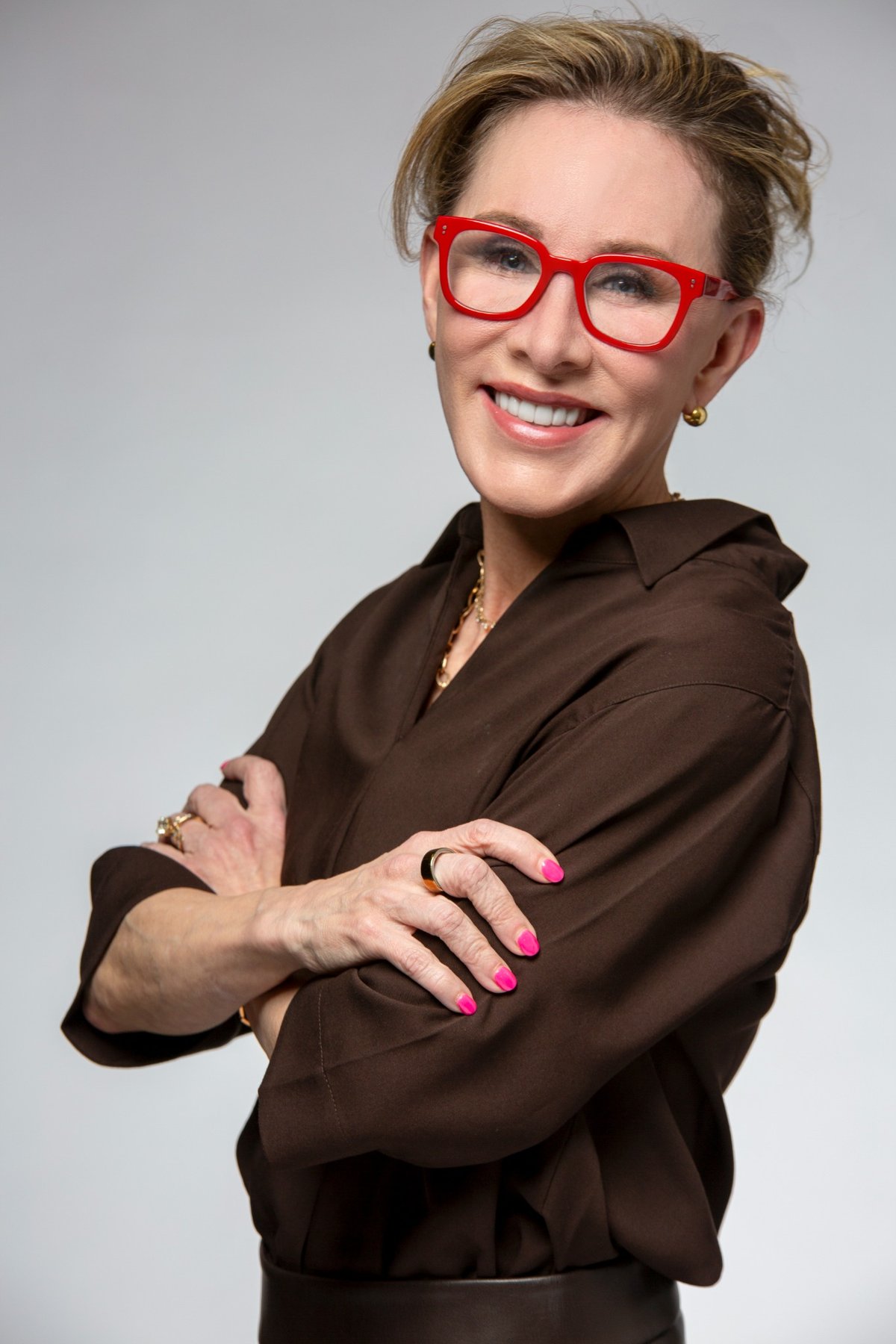
Founder/Executive Director
Kimberly Haley-Coleman is the founder and Executive Director of Globe Aware, a US & Canada based nonprofit that leads and mobilizes volunteers for short-term service projects in over 25 countries (since the year 2000). With a background in international business development and finance, she previously held leadership roles at global firms including CNBC.com, Space Services International, and Investtools. Kimberly holds an MBA in International Business, an MA in Art History, and a BA from Emory University. A multiple patent holder, SMU Guest Lecturer, and recipient of the Texas Business Hall of Fame Award and long-time Hall of Fame member, Chairman of the Executive Board for the International Volunteer Programs Association (IVPA) and actively engaged with organizations like the Building Bridges Coalition and United Nations ESOC Consultative Status Committee and variety of other nonprofit boards focused on international service, community development, and environmental improvement.