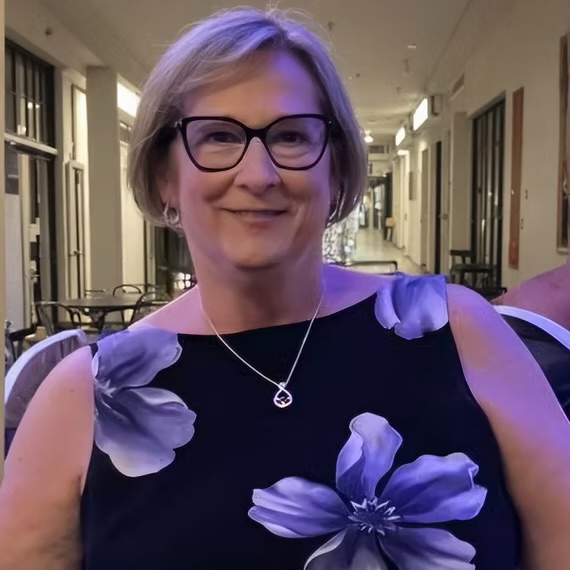
Grief Isn't Linear: Understanding Loss, Divorce, and Healing (feat. Lisa Rites)




⚠️ Content Note: This episode includes discussions of grief and loss. Please take care of yourself while listening.
Grief doesn’t come with a timeline — and it doesn’t look the same for everyone. In this episode of Travel Time Stories with Shannon, Shannon and Ann sit down with Lisa Rites, certified grief educator and author, for an honest, compassionate conversation about the many forms grief can take — including loss, divorce, and life transitions that don’t always get acknowledged.
Together, we explore how grief shows up emotionally, physically, and relationally, why grief education matters, and how understanding the process can help us feel less alone and less “broken” in our healing.
In this episode, we discuss:
💔 What grief really is — and what it isn’t
📚 Why grief education is so important
💬 Grief related to divorce and major life changes
🕊️ Common myths about “moving on”
🌱 How to support yourself — and others — through grief This conversation is gentle, validating, and designed to meet you exactly where you are — whether you’re grieving a person, a relationship, a chapter of life, or a version of yourself.
🎧 Available on podcast apps and YouTube
📌 Lisa’s books and resources: https://www.lisaritesgrief.com/
So grab your favorite beverage, get comfortable, and join us for a conversation that reminds us: grief isn’t something to fix — it’s something to be supported through.
#grieftalk #griefawareness #griefhealing #griefsupport #griefeducator #griefjourney #griefprocess #healingjourney #newpodcastepisode #tunein #healing
Shannon (00:00.14)
Welcome back to Travel Time Stories with Shannon, where real journeys meet real stories and real healing happens one conversation at a time. I'm your host Shannon coming to you from the Lone Star State of Texas. Some weeks I open up and share pieces of my own life journey from travel adventures to the winding road of healing and personal growth. Other weeks I'm joined by my best friend and co-host Ann from the Show Me State of Missouri.
And we sit down with special guests to share their experiences, insights, and expertise to help all of us along our own journeys. Before we begin tonight, I want to gently share that today's episode includes discussion of grief, divorce, and emotional loss. We approach these topics with care and compassion, but if you're in a tender place right now, please feel free to listen when or if it feels right for you. Your wellbeing always comes first.
Today's conversation is one we've been really intentional about because grief is something every one of us will experience, yet so few of us are taught how to understand it, talk about it, and live alongside it. We're often taught to associate grief only with death, but grief shows up in so many forms. Divorce, identity shifts, family changes, and the loss of the future we thought we were going to have.
Today, Ann and I are joined by Lisa Rites a certified Grief educator and author whose work helps people understand grief, not as something to get over, but something to learn how to carry with compassion. Lisa, we're so glad you're here. Welcome to the show.
thank you. I'm glad to be here. I'm excited to talk about this topic. I think it's really important, as you stated, for people to learn about grief, because often it's such a taboo conversation. People just don't understand it and just don't understand how to live with it.
Shannon (02:02.366)
Exactly.
So Lisa, before we dive into the work that you do, we'd love to hear a little about your story. What led you to grief education, not just professionally, but also personally?
Sure. So for over 40 years, I was a respiratory therapist. So I dealt with the inevitability of death with family members pretty much throughout my career. Obviously not all, but there were many, many. I used to run a COPD group for family members of patients that had COPD to help the family members understand the future of their loved one and how to care for them.
So from there, I was looking to find something else that I could use my compassion for, because I feel like I'm not at the end of God's work yet. And I did find the grief education program and I have transitioned into being a certified grief educator. But my own losses, I've lost my dad, I lost my mom recently, going through a divorce and other things, obviously pets and everything else that I've dealt with, not realizing how much
grief affected me and how much I learned about it after being so educated in the process. So that kind of brought me here and brought me to write my book and share my story about my grief journey through my divorce.
Shannon (03:22.912)
Wow, that's wonderful. I'm so glad that is the direction that led you into because we need many more people like you out there to educate and help people with the whole grief process.
People do not talk about it. They just bottle it up, don't know how to deal with it, and go on about their way, you know?
Yeah, I think part of it and what I've learned really is because we all experience grief and, we can start with the death of someone, right? And we get through the wakes, the funerals and whatever rituals we need to do with our families. And then we're told we have to go back to work or we have to go back to real life. And we don't realize that there is a whole grieving process that is about to happen because we thought, okay, I did it. I grieved. I did what I was supposed to do. now.
Okay, I've got to move on. And people tell you, you have to move on. And that is probably the furthest from the truth. You don't have to move on. You can move forward. I always try to tell people you can move forward throughout your life holding grief in one hand and joy in the other. Doesn't mean you have to stop living, but there's no reason to stop grieving whatever it was that you might be grieving. Because throughout your lifetime,
think memories are going to come up and things are going to come up. And it's okay to still have those feelings. And I think another part of it is people don't know how to speak to others who are in grief or what to do around them. Right? We see someone, we say, I'm sorry, and so sorry for your loss. And that's it. Because after that, we're not taught to say anything else. But I try to tell people, if you know a friend that's going through grief, just let them talk.
Lisa (05:03.788)
Let them say what they want to say, things you don't say. Don't tell them they're going to be okay. Don't tell them time will pass. Don't tell them, you know, you'll feel better as time goes on because it doesn't have to. And they don't have to feel that way. I try to tell people just sit with others that are in grief, have a cup of coffee, maybe go visit them. If it's a friend, call them up, bring some lunch and let them talk. Just whatever it is they feel like they want to say.
and just let them talk and just be there for them.
That is so right. You aren't taught how to be there for somebody in grief, and that is so very important and a lesson we all need to learn. And also a lot of people think grief only applies to death. Correct. So how do you define grief and why do you think that narrow definition of that it just applies to death causes confusion and more pain even?
Yeah, I think people get grief mixed up sometimes with anger. When we go through other things in life, like a divorce, we spend a lot of time angry and we think that's what it is. Divorce will take you through the entire grief process, right? So a lot of us have learned there are stages in grief. There's anger and bargaining and depression and acceptance and there's many different stages you're going to go through.
After I had gone through my entire divorce and I became a grief educator, I did realize how much I went through all of those stages. But again, it's not something that we're taught in society. And again, if it's all cut so short after the death of a loved one, people don't understand that, know, grief is out there. I mean, look at the world today. There are so many people that are grieving that don't realize they're grieving. A lot of people are very, very angry with the world today.
Lisa (06:52.366)
Just things going on in society, right? So I think people just don't understand the difference. And hopefully with myself and others talking about grief education, we try to educate others to learn that, again, what you're feeling is okay, and it's just part of a grief process.
and just talk it out. I think many listeners may be realizing right now, that's what I've been feeling. Why do you think people struggle to recognize grief when it just, it's just not obvious?
Yes. Right. It's not obvious because again, we don't know enough about it. For our listeners that are listening, there are many feelings you could be having right now. And it doesn't mean you're listening because you lost a loved one. You might have moved away from your friends. You might have had your, maybe you're younger and your parents got divorced and one of them had to move and you had to move with them and you've lost.
everything that you were used to, you've lost your home, you've lost your room. All those feelings are feelings of grief. It's sadness and you need to let the process go through and don't stop at anger because anger, takes a lot out of us, but there are so many more processes to go through to get past that anger. I just think that, again, not being educated that so many things belong to grief in this world, people just don't know.
And again, if you're just angry over something right now, or maybe you're feeling a little depressed, it could be that you're in Grief.
Shannon (08:24.504)
Yeah, think it feels like invisible grief is the loneliest kind.
Definitely. So let's go back and talk specifically about grief and divorce because this is such a common experience and one people often minimize or feel ashamed of what kinds of losses show up in divorce that people don't always acknowledge.
Going through the stages of grief, we can talk a little bit about how it affects divorce. could be divorce, be end of a relationship. I was lucky enough at the end of my relationship with my ex, we are now still friends, friendly. We still do functions together and really we kept it together, or I should say I kept together for the sake of our children. I just, I didn't want to be those angry parents that...
thought all the time in front of my children. It just wasn't in me. However, I'm not going to say I got there right away. So when, you know, when I, my husband first left me, my first inclination was, well, you're leaving, you will never see these children again. And that was the one of the first things he said to me. And I said, yeah, you're right. You're leaving. Right. That was my first thought. You don't deserve to see them. That's it. But moving much, much forward, and it took me a while.
to realize that when I got towards the acceptance stage and accepted that we were now going to be apart, I realized that he wasn't leaving his children, he was leaving me. So to get to that part can be really difficult, but you have to get through some of the other parts of grief first. You know, the anger lasted with me a very long time and I was angry.
Lisa (10:08.372)
When I saw him, I was angry when I saw him with his girlfriend. I was angry if I heard he was going away. I was angry he was doing all these things with other people that he didn't do with me. I had all those feelings and those are all valid feelings, but they're feelings of grief. It's part of grief. And I tried the whole first summer to get him back. would try to say, I'm going to do this different or I'm going to do that different. Realizing now that was part of the bargaining stage.
As you can see, these stages of grief, we're moving through them as we're going through the divorce process, right? Depression, I dealt with a lot of depression. Had to see my doctor, had to take care of some personal things to get through the depression. And then after a year, year and a half, I started to try to find myself again and realize, okay, this is your new normal. This is your new life. You need to step it up. You've got kids to take care of. And I realized that...
He needed to take care of them too. He still was their dad and he needed to take them on weekends or whatever we had worked out. And I started to realize during that time after he was taking them for a year that I could go out and I went out with friends and I spent some time doing some things that I like to do again. So I kind of resurfaced myself again.
and then slowly moved back into that acceptance stage. Not going to say I didn't fall back, there were times I still got angry and there were times I still got depressed. And again, those are all parts of grief. So when I got to that acceptance stage and came to realize that I was part of the problem, I was part of the reason he left and I was able to accept that and
thought about all of the good times we had, because those memories were not going to go away, and they weren't going to go away from my children. And it wasn't fair for me to take those memories away from my children. We had a trip to Disney World. Am I supposed to pretend that never happened? It did happen, and my kids had a great time. So we still talk about it, and there should be no reason to forget the memories. But again, it was, what was my new life going to look like? What was my new normal going to be?
Lisa (12:21.334)
spending the holidays not as a family.
Yeah.
That's hard. Right. And same thing if you're in grief from a loved one. What does your first holiday look like without your family member there? So it is a loss and it's still a major loss that takes place in your life. So there is a process to go through and when you can get through that process and have someone to help you through it, it really does help. And like I said, so at the end, I was able to maintain a relationship. I know some others can't and I work with people who can't.
And that's fine. But my goal with people who, you know, absolutely can't is to find some peace for themselves and help those people move on and move forward to find a better life for themselves and not stay in that angry stage. It's just not worth it. He's off or she's off doing their thing and they're very, very happy. And you're left. Why shouldn't you get a chance to be happy? You get one shot at life.
Right. And holding onto that anger, it's bad for you physically as well. It will take a toll on your physical body, not just mentally too. So yeah, it's not. No.
Lisa (13:30.766)
Not healthy. And it's not healthy for all the people around you. And if you have children, it's not healthy for the children. And if it's an end of a relationship or, you know, break up from a long-term relationship that you were in, you're still going to go through all these same feelings. And there's a lot of embarrassment that comes with it. Especially my divorce, we were both very well known in our town. It was a huge, I didn't want to go out for the longest time. I knew people knew what happened. I was mortified.
My kids were mortified. They would go to school and they're like, I heard your dad is with, know, da-da-da. And it's like, goodness. So we forget all that can happen. Then you try to shelter what's happening around you. Yeah.
Why do you think people feel like they shouldn't grieve if the relationship wasn't healthy or if they were the one that chose to leave?
So I think a lot of times, I'm not saying grief doesn't happen for the person that chooses to leave, but a lot of times they're not the one that is in the process because they've already mentally made that decision that they're going to move on and for whatever reason they have chosen to move on. Obviously, if you're in a complicated relationship where it wasn't maybe a safe environment, I'm not saying you're going to stay friends with that person, but you are still going to grief because you're going to grieve those things that
You've lost, you're going to grieve the things you thought were normal. That might not be normal and you have to learn a new way to, to move forward.
Ann (15:01.422)
Can grief coexist with relief, freedom, or even maybe peace? And how do people hold these seemingly conflicting emotions?
It definitely can and I always teach my clients, again, like I said, to hold grief in one hand and joy in the other. So no matter what your grief you're holding, once you get into that acceptance stage and you've accepted what your new normal is going to look like, and you've accepted what your new life is going to look like without your partner, without your child, grief of child sometimes will never go away. But again, it doesn't mean you can't.
still live your life. But there are going to be things, there's going to be memories. Let's just say your parent passed and now your children are getting married and your parents aren't going to be there to see their grandchildren get married. That might bring up a grief event on that day. And that's okay. But you're also celebrating joy, right? Because you're celebrating your child's wedding, but you're sad because the person's not there. I just had that. My daughter got married. My dad died.
maybe four months before my daughter, and we were outside for the wedding, and at one point the clouds broke and the sun came shining through, and I know it was my dad. And I tried, and it's okay, because I was crying for everything. I was crying because I was happy for her. was crying because I was sad my dad didn't get here. But you just try to get through the losses. Sometimes it's just not gonna get better. Grief has no timeline, and it can last forever. And again, we're gonna move on to these special events, whatever it is, a family home.
a job, a relationship, you're still gonna face these firsts that are going to happen. How do you wanna face them is kind of, how you have to look at it is how you wanna face them. I knew when my husband and I were already separated when my daughter, my first daughter got married and part of me was like, how do I wanna do this? Do I wanna argue with him the entire time? Do I wanna go to the wedding not speaking to him? How is that gonna make my daughter feel? How are pictures gonna look?
Lisa (17:09.058)
So by then we had maintained a relationship. And let me tell you, even my last daughter got married a couple of years ago and no, we were happy as can be. The kids had a great time. We were all together. My ex got married last year. My new husband and I went to his wedding. My ex and I danced. My kids were all taking pictures, laughing their heads off, texting each other. Mom and dad are dancing. Yeah. And I'm not saying everybody's going to have that, but it was my choice to be like, how?
I love it.
Lisa (17:38.913)
What am I gonna make this look like?
And that's the secret phrase right there, Lisa. It's my choice. How do I want to proceed? It's a choose.
How do I want you to get to choose? And do you want to choose to stay in bed every day or do you really want to try and get up? And how do we take those baby steps to move forward? And a lot of times it is baby steps.
Yep, exactly. But as long as you're putting one foot in front of the other, doesn't matter if it's a baby step or not. Just keep going.
Exactly.
Lisa (18:11.246)
Keep going. And if you fall back, it's okay. Just get back up and we'll proceed some more. Because there are going to be days I always explain grief as a ladder. You're going up the steps of all these stages and there's times you're going to fall off the ladder. There's times you're going to think, okay, I'm good. I'm doing good. I'm doing good. And then something's going to either remind you of that person or an event's going to come or whatever reason and you're going to fall back and you're going to be really angry.
And it's okay, you can have a day, be angry. No one's saying you can't. When people are like, oh my gosh, you're angry again, get over it. He's moved on, she's done this or your mom's gone. No, I'm still, I'm angry today. I miss her.
to get it out. can't help yourself.
and it's totally okay to have days like that.
Yeah. And we hear the phrase and you've said it several times so far, the stages of grief. So let's explain what the stages of grief are.
Lisa (19:08.718)
You
Lisa (19:13.782)
Yeah, so again, the first stage of grief is, well, I shouldn't say the first, the stages of grief, there's anger, there's bargaining, there's depression, there is acceptance and just moving forward. So they might not come in linear way. You might start bargaining before you get angry. You might get angry first.
So it just depends on what the situation is, what stage you might be in. Usually when I take on clients, I try to find out where they are in their grief journey. And then I will step in beside them and walk with them and help them from that place on. try not to go back.
Yeah, that makes sense.
Yes.
And like I said, some stages you're in for very long time, anger being one of them. A lot of people stay angry for a very long time.
Ann (20:00.27)
What do you wish people understood about grief, not being linear or having a timeline?
I do wish people understood more that grief can last a lifetime. It doesn't have to. Some people are over grief in a few months and they've been able to accept and move on and great. But for some people, they will be in grief for a long time, maybe their lifetime. And I want everyone to understand that if someone is or if someone you love is still in grief, it's okay. Let them be in grief. They have to be able to.
Again, it's their choice, but they have to be able to live the way they want to live. And if they want to be angry one day or sad one day, it's okay. Just support them. Just be there to support them if they're having a bad day. It's really important because again, people don't know what to say or do and somebody will get upset or they'll start crying. They're like, no, no, what am I supposed to say? It's okay. You'll be fine. It'll go away with time. You're good. It's just a phase right now. They're just having a bad day. Let them have it.
Maybe they just need to talk to you. Let them talk.
Yeah. And sometimes you don't have to have words for them. Just be there. Let them cry. Let them scream. Whatever they need to do. Just be there.
Lisa (21:16.064)
Yes, just sit there and listen. And sometimes that's all you need to do. Like I said, if it's somebody, you know, you want to bring over a cup of coffee and be like, Hey, you're having a bad day. What's, what do want to talk about? Let them talk. I had a friend who lost her husband and she was to play, like have a game night with her girlfriends. And after it was about six, seven months, and one of the girls said to her, just never stopped talking about your husband. Like it's just starting to get really old now.
She stepped out and she doesn't go to game night anymore. I don't know what they meant by it, but you just don't say that. They just didn't want to hear about him anymore. They thought, you're grieving too long. You keep talking about him. Okay. Well, she was married 55 years. She loved him. My mother talked about my dad for a long time after he passed. And she talked about all the things they did together. Again, those memories, they don't go away.
Yeah. Exactly.
For listeners out there who may have lost a loved one in a death, you're still thinking about fun things you did or maybe every day you called your mother at a certain time and now your mom's gone. So what are you doing during that time when you called her? Because you might be home crying or you might be home grieving right now because, my gosh, at nine o'clock every morning I used to talk to my mother and now she's not here. So we need to find something for you to do at nine o'clock.
to remember her, but to get you past that nine o'clock hour, because obviously that's a trigger for you and you need to learn to just learn some ways, coping mechanisms to be able to push yourself through that.
Shannon (22:51.17)
Yep, exactly. And you should be allowed to talk about somebody that you lost and the memories that you had with that person, because that's all you do have left is memories. Memories are part of our life and what helps us along our journey is going. That's one thing we say here on the show at the end is to tell people to keep making memories for life because that's what we hold dear to us when we do lose someone.
Absolutely. Absolutely. For some listeners that might be out there, there's a thing called anticipatory grief. And I work with a lot of clients that are caregivers or family members of loved ones that are passing. The caregivers or the family members, they're also in grief and they don't know that they're in grief right now. And the person whose life is ending, they are also in grief because don't think that that's where they want to be. They don't. Right.
Yes, definitely.
Lisa (23:47.766)
and they don't know what's about to happen to them and they know they're coming near the end. It's very frightening. And I talk to a lot of family members and they'll talk to me and they'll tell me how angry they get. My mother just keeps telling me the same stories or my gosh, she just keeps asking the same questions. I understand, but let her because that's all she has. And pretty soon, that's all you're gonna have had.
And then she's going to be gone. You're not going to even have that anymore. So you know what? Get a cup of tea, sit down. If she wants to tell you the story three times, you know, of how she chased chickens around the backyard, let her, let her tell you, you know. It's her memory and she doesn't know that she's told it to you three times, but it does get very frustrating for the people who are taking care of their loved ones that are getting ready to pass. The caregivers are also in grief.
Yes, exactly.
Lisa (24:44.13)
because they're angry and maybe they're bargaining with higher power. Don't take my mother or take my mother before she suffers or bargaining. That's another stage that listen to yourself. You might hear yourself in. Are you depressed? Are you feeling really sad about what's about to happen? So again, people don't realize that these are all common stages of grief and are grieving. You're grieving the loss that's about to happen, which is very difficult.
My mom had multiple sclerosis, so would sometimes tell you the same story. And my brother would tell her, mom, you've already told me that story the other day. Don't tell it again. And I finally told him, said, never say that. Pretend like you've never heard it before. Because she doesn't know that she told you that story. And when you say that, it hurts them. Just something for you to in mind.
Mm-hmm. Exactly. Yeah, that's exactly right. It hurts their feelings again because again, they're coming towards the end and you're telling them they keep repeating themselves and they're thinking, I have dementia, I have Alzheimer's or whatever. What is wrong with me? I keep saying the same thing. They're all, I'm sorry. I'm sorry. I won't say that again. I won't say that again. You're making them feel bad because they don't realize what they're doing either.
So it really has to be a little side on both. And if you're frustrated, go take a walk or go to a movie or go do something that will give you a little peace because you deserve to have peace too if you're the caretaker.
Exactly. And I know a lot of times people compare what their grief was to someone else who's grieving, what their timeline was to somebody else's timeline, the loss itself, comparison. How did that impact someone's healing? It's got to be detrimental to do that.
Ann (26:40.117)
Yeah.
Yeah, and to hear somebody doing that and comparing it. that's one of the things when I'm speaking with people who are trying to deal with friends of grief, that's one of those things you don't say. You don't say those things because yeah, because again, we have to allow the people who are grieving the time to grieve because two sisters could lose the same mother and one could move forward in a week and one could be sitting in grief for four years. You have to just
be compassionate to each other and understand that. And everybody's grief is going to look so different. It all looks different. I have my husband, my sister lives by herself. She lived with my mom. My mom passed in March. I'm sure there's days my sister's at her house and things happen and she probably sits there and cries. And you know, she doesn't tell me, but I'm sure she has times where she's alone and she's thinking about something or thinking about my mom being in the house with her. When the holidays,
came around this year, I said, do you want to sleep at my house? She was like, no, I'm going to be fine when I get up in the morning. But it was her first Christmas to get up and she was by herself. That was really hard for her. And again, it's still part of grief, right? She's moved forward, but she's still going to have those moments where she's going to grieve her loss. And it's okay. It's okay to not be okay.
Yeah. So you're a certified grief educator. Can you explain what grief education actually is and how it differs from traditional grief support?
Lisa (28:15.566)
Sure. So versus a grief educator versus going to therapy or counseling or coaching. A grief educator is more peer to peer. So it's more of a friend level. And I walk beside my clients step by step as we move through the grieving process where traditional counseling or therapy tries to push you. You know, I don't want to say push you because that's not a good word for therapist is listening. They have different techniques.
that they will use to help you get through your processes. Mine is just strictly more education. I do give a lot of worksheets. have journaling things that I will give to my clients. We talk about where they're at. We talk about triggers. So it's more, and a lot of times it's really my clients telling me about their grief issues and what they're feeling and having somebody be present just to listen to what they have to say.
and not being told constantly as a therapist or counselor is going to give a lot more advice ways than a grief educator would. A grief educator is really going to educate them along the way and keep them on track that whatever it is they're feeling, it's okay to feel this way and we're just going to move forward as long as it takes to move forward.
Yeah, so the grief education is really a powerful tool because it's going to help reduce the shame and self-blame around grief.
Yes.
Lisa (29:37.208)
Right. And people don't have to say, if a lot of people ask you, are you in therapy for your loss or are you in therapy for this or what your therapist say? lot of people get stigmatized by having to go to therapy where this is, this is not that traditional type of therapy. It's really just peer to peer talking to somebody who's helping them through. So I think just, again, the stigma and the whole embarrassment of having to get help. I do always push support groups. think.
A lot of churches have support groups these days for grief. There is a lot of grief help. If you just want to sit in on a group support for whatever type of loss you're experiencing. I always think that's good to hear others around you that have been in that situation talking about what they've gone through. I personally work with, I don't work with clients if I haven't experienced a particular type of grief. For instance, suicide. I tend not to take.
clients that have had family members with suicide because I don't have lot of experience with that so I don't have a lot to share. As a grief educator, I like to share my stories along the way. I like to try to make sure that I'm working with somebody that I can share a story with.
I like that. That's really good because that also lets the person know, hey, they truly can relate to me.
Right, right. Yeah, I can't sit there and to somebody who's saying to me, you know, I lost my child to suicide and I'm like, I know how you feel. Cause I absolutely don't know how you feel. I can imagine, but I don't because I haven't gone through it. But if you've lost your parent or you're in anticipatory grief or you're going through a divorce, I certainly can sit and listen to you and help you and share some of what I've done, which makes a big difference. think it builds a trust. like you said, it's just, yes, this person can help me because
Lisa (31:22.392)
they've experienced.
it. Yeah. What's one thing you wish everyone knew about grief before they ever had to experience it personally? And I wish somebody had told me something before I had to experience it. I have no clue.
Okay, so something I would probably, the first thing I would probably tell somebody is if it's a loss, people are going to grieve at least a day or two when death happens or whatever. I would definitely tell that person to allow yourself to take as much time as you need to have whatever feelings of sadness that you want to have and don't let others tell you that you're going to be fine in a week or you're going to get over it because you don't have to.
And I think that's really important with grief. People need to know they don't have to get over it. People say that a lot. And again, back to the beginning, I think is because we don't know what to say. Cause no one's, did anyone's mom here or dad ever say, let me sit you down tell you about what grief and what grief is. And this is how you should talk to someone. No, nobody's ever said that to anybody. Nobody said that to anyone. But we, you know, we've all said, you're going to be fine. You'll get over it.
Exactly.
Lisa (32:33.91)
time will pass and your feelings will, no, I don't want them to go away. I don't want to stop celebrating. know people that celebrate their parents' birthday that has passed. have a friend of somebody I know was telling me her mom passed and every year on her birthday, she puts a candle for the year that she's passed. And I was like, I love that idea. Now I share that with my clients. I was like, I love that idea. I wouldn't have thought of that one, but it's a great idea. on her birthday, she'll put a candle and
for the years that she's been gone. And she sits down and she blows out the candles and she has some cake.
That is great. Yeah. Right. So does it mean she's
Still in grief, no, but she still has feelings of grieving, but she's still remembering and she's learned how or adapted to move forward. Choose to use, do something fun or do something in memory of that person who's passed. Now, we were talking about divorce before and I was going to tell you, when my kids come down to my house or we're whatever, we're talking about old stories or old times and they're looking at pictures.
My pictures now, my kids call pre-divorce and post-divorce. So yeah, so when they look at pictures, like they'll call their dad right from my house and they're like, dad, do you remember when blah, blah, blah? They're like, yeah, that's a pre-divorce picture. It's funny now. Like, and it's great that we can do that. You know, it's wonderful. And you know what? It's us. We're goofy. We're crazy. When people read my book, they're going to laugh. They're going to cry because I have a lot of funny stories in there.
Lisa (34:10.958)
probably some stories where people are gonna go, this girl is nuts. But you know what? It's the truth and it worked. I just love being able to help others just find that there's just more out there for everyone. We don't have to stay angry.
That's really good. I love that.
Mm-hmm. I do too.
So for someone who's listening right now who may be in the middle of grief, where do they start? What do you suggest they do?
I would definitely suggest, depending on what your grief is, maybe try to find a support group at your local church. If you're looking to talk to somebody one-on-one, obviously you can always reach out to me on my website and you can book a free session. Usually what I do is I'll meet with the client, the potential client, and we'll talk about where or what it is. If I feel I can help them, I'm very honest and I would try to advise them to where to go.
Lisa (35:04.064)
And there are other grief educators out there that specialize in certain types of grief. So you might even want to, you can look that up. There is grief websites out there where you can find grief educators all around the globe. But yeah, I would definitely start with a support group. If you can find something at your local church and definitely if you feel like you're stuck, try to find somebody to work one-on-one with just to help you get unstuck.
some gentle, compassionate ways people can support themselves without trying to rush the process.
Just giving yourself grace is a big one and understanding that what you're feeling is okay. And again, just give yourself grace with that. Make sure you're taking care of yourself, doing some self care, try to do something that you like to do. For some people, it's going to be trying to get out of bed in the morning. So if you're listening and you need to do that,
Try to get yourself up out of bed, put your feet on the floor. It's a new day and start to feel a bit better about yourself. And for some people, it will be that difficult. For some people, it might be trying to get out on your own for the first time. You know, try to find maybe a library that might have some sort of a craft or a meeting or something, or a book club that you could go join and where there'd be a group of people, but you can get yourself out to go do something. So definitely self care and give yourself grace.
because it's going to take time.
Ann (36:33.334)
and you deserve that grace. It's okay to do that.
Yep, absolutely. lot of times, especially women, we don't give ourselves that grace.
Thank you.
Ann (36:44.744)
No, we do not. We just keep going. We do.
We do because it's just the way we're made.
Yes, exactly.
Yep. And the other thing is it's not selfish to do self-care. And that's something that us women a lot of times think that if we do self-care, that's selfish because we're so used to and wired to help everyone else and put ourselves last.
Yes, that's a great point because yes, because people do think, I can't do that for myself, you know, but yeah, definitely.
Shannon (37:19.576)
So you're also an author. What led you to write about grief and what were you hoping readers would take away from your work?
Yeah. So I just decided because my story was so different. My family's always saying things to me. I have a particular son-in-law that was like, mom, you really need to put this down. Like people just need to learn from the way our family is. And I just sat one day and I was like, you're crazy. And then he just some way in a bed and I'm like, well, I'm writing the chapters in my head. And, and then I just started to put it down and I was like, you know what? It is a funny story, but it does really talk about.
each stage of grief. So each chapter is a stage and then I explain that stage of grief, but then there's my story going through that stage of grief. Some of it's a little hard to read. My children have not read my book. Their feeling is they don't want to go through it again. They were all supportive, but they won't read it. And that's okay. I'm okay with that. But yeah, there will be parts where you probably will cry.
and there's parts where you're gonna laugh. I put in parts where you can answer your own questions. You can journal, try to help yourself through. If you cannot maintain the type of relationship that I have, because the book is about keeping the family bonds together, hopefully you can keep, if you have children, the relationship with your children, civil, with both parents, co-parent. But at the end of the day, I hope people find some peace. They can find some peace and they can just learn that they can move forward.
If I can do it, anybody can do it. had four children, you know, I have four children when you're all of a sudden and anybody out there would feel this. If you're left alone with four children to raise, it's a really scary place to be. So you can do it. You can do it.
Ann (39:06.542)
can imagine. Has writing been part of your own grief process and have any of your reader responses surprised you?
I had so many people tell me they cried reading the book. So that I was surprised by because I know I was very emotional writing it, but I didn't realize the readers were really going to feel that intense. So I was kind of not happy about that, but I thought that was kind of surprising that people actually were crying when they read the book. But I think it was therapeutic for me to write it out. Again, I'm a big person to push journaling.
especially in right in the beginning when people start grief education with me, one of the first things I talked to him about is journaling. So, and this is a way to do it. But honestly, I felt so good when it was finished. I just feel like I can help so many people. And that's just all I want to do is just to be able to help people find some, just find some relief and understand that what you're going through as you're going through that process. It's okay. I did it too. And here's the way I did it. And here's how I got out of it.
And it just felt good. It feels good to do that.
and I'm okay today, so.
Lisa (40:16.724)
Exactly. Exactly. So I'm going to be working on, I'm hoping to start a second book this year, but it's going to be about veterans in veteran grief stories.
I love that.
Interesting, yeah.
Yeah, think that they have so many different types of grief stories. So I'm excited to start working on that.
I need to read that.
Ann (40:36.14)
That'll be amazing. Lisa, if someone listening feels broken behind or like they're doing grief wrong, what would you want them to hear today?
There is no wrong way to grieve. Grieving is personal. Grief is done however you want to do it. So if you think you're doing it wrong, you're not because you can grieve any way you want to. Again, give yourself some grace, but whatever you're doing, you're doing fine, you're doing great, and just get up the next day and keep moving forward. And if you're stuck, get some help.
Great advice. So Lisa, what is the name of your book?
It's called navigating grief and divorce while keeping family bonds strong.
I had a great time.
Ann (41:23.413)
I do too, yes.
And it's on Amazon and Barnes and Noble.
Great. Lisa, thank you for holding space with us today and for reminding us that grief isn't a sign of weakness. It's evidence of love, change, and meaning. To our listeners, if this episode stirred something in you, know that you're not alone and you don't have to navigate grief perfectly to be healing.
Lisa, where can listeners find more about you, your work, and your books?
My website is the best place, lissarightsgrief.com. All my links to my social media are there. You can follow me on Facebook. I post stuff every day, positive things about grief. So feel free to follow me. You can sign up for my newsletter on my website. My book is there. You can also book a free support session if you need it. Anything you need is on my website.
Ann (42:15.714)
That is awesome. I love the free session.
Yeah, that's really nice.
Thank you.
Because you know what, sometimes people either we're not a good fit or can't take everybody. If I'm not comfortable, I can't help somebody. So I will definitely put them in the right direction.
We'll make sure to link all of your work and resources in the show notes.
Ann (42:40.04)
And to our listeners, thank you so much for being part of this journey with us. I have so enjoyed this today.
I like we could talk about grief for hours, so... You can't be going, I'll be here for hours. You're really good, there's just a lot to learn.
Yes, you really could.
Shannon (42:58.504)
Exactly, yeah. If this conversation spoke to you, take a moment to share it and leave a review. It truly helps these stories reach the people who need them the most. Thank you for traveling with us today. Until next time, take care of yourself gently, keep honoring your own journey, and keep making memories for life.
Absolutely.
Yes.