

 Apple Podcasts
 Spotify
 Youtube Music
 From Trauma to Transformation: A Brain Injury Survivor’s Story (feat. Nicholas Ruchlewicz)

What happens when your life changes in an instant?
In this powerful episode of Travel Time Stories, we sit down with trauma and traumatic brain injury survivor Nicholas Ruchlewicz to talk about the motorcycle accident that changed everything—and the unexpected path that followed.
Nicholas shares what it was like to go from living a normal life to navigating the physical, emotional, and mental challenges of a traumatic brain injury. From identity loss and mental health struggles to finding meaning in the aftermath, this conversation is raw, honest, and deeply inspiring. But this isn’t just a story about survival… It’s about transformation.
✨ In this episode, we discuss:
The day of the accident and immediate aftermath
Living with a traumatic brain injury
The hidden mental health battles after trauma Losing—and rediscovering—your identity
Finding purpose and unexpected “gifts” in pain
If you’ve ever faced a life-altering moment, struggled with mental health, or wondered how to rebuild after everything falls apart—this episode is for you.
Find Nicholas at https://linktr.ee/giftofperspective
💬 Let us know in the comments: What part of Nicholas’s story resonated most with you?
Become part of the TTS community by becoming a member find more information on our website traveltimestories.com.
#podmatch #traveltimestorieswithshannon #newpodcastepisode #traumaticbraininjury #healingjourney #mentalhealth #advocacyinaction #tbirecovery #tbiawareness #survivorstory #tunein
SPEAKER_00
The pain, the discomfort, I always say is a small reminder about where I am now versus where I've been. Our bodies can't actually remember pain. They just fear pain. But I find if I don't talk about it, it doesn't actually exist. More I talk about it, I can start feeling it again. I am probably gonna be in on discomfort the rest of my life. What I can do is just my response to the situation.
SPEAKER_01
Exactly. Every journey has a story, and every story has the power to heal. My story hasn't been ordinary. I was adopted, I'm a survivor of abuse and trauma, and I have more than a dozen siblings. That's just the beginning of my story. Life has taken me on a long and winding road of healing and personal growth. A journey that ultimately led me back to myself and the path I was meant to walk. Along the way, I discovered that stories have power. The power to connect us, to help us grow, and even to help us feel travel time stories with Shannon. Real journeys, real stories, and real feelings. Welcome back to Travel Time Stories with Shannon, where we explore not just the places we go, but the journeys that shape who we become. I'm your host, Shannon, from the Lone Star State of Texas, and I'm joined by my co-host Ann from Missouri.
SPEAKER_02
Hi, everybody. Today's episode is a powerful one. We're talking about traumatic brain injury, survival, and what it really means to brief folks are lives when everything changes in an incident.
SPEAKER_01
Tonight we're joined by Nicholas Rucklovitz, traumatic brain injury survivor and mental health advocate. After life-altering motorcycle accidents, Nicholas faced a long and difficult road, not just physically, but mentally and emotionally.
SPEAKER_02
But what's incredible about Nicholas is how he's reframed that experience, not just as something he survived, but something that actually transformed him.
SPEAKER_01
Nicholas, we're so grateful you're here to share your story. Welcome to the show.
SPEAKER_00
Thank you, uh, Anna Shannon, and I appreciate you having me on.
SPEAKER_01
So let's let's start back at the beginning. Take us back to before your accident. Who were you then and how did you see your life unfolding?
SPEAKER_00
So I just had a uh rough separation and divorce. It wasn't easy, and that's kind of where my journey with therapy really I did therapy when I was a kid. There was some violence against me, so I needed to go into therapy when I was in high school. I was homeschooled my last year. So I was familiar with therapy, but when I was in my previous marriage, uh I I was trying to learn how to help, you know, handle our situation with my spouse and how to help them. And then through that I learned how to help myself, and that's really where my journey through therapy was. That was in uh 2010, you know, go to therapy, you know, how do I help, how do I help, and learn how to start helping myself. Uh cognitive, I learned uh my therapist taught, you know, utilize cognitive behavioral therapy to kind of challenge me to kind of get through it, and that's what I used. I always say the hardest thing I ever went through was a separation and divorce over my trauma. Trauma was physically hard, but you know, at least people in my, you know, the hospital and they were ready to help me and try to support me. It wasn't about taking or hurting like uh separation was, but I always like to say nothing's uh more exciting than a uh 35-year-old uh male living in his uh renting out his mother's basement. You know, that's uh that's really fun for most uh young adult men. But you know, I just got separated and I was just trying to kind of review myself, and I had a lot of friends, acquaintances that rode motorcycles, and I've had my license for about a year. So I was excited. I, you know, just got out a lot of financial burden with that, and then I decided to make it all happen again. But uh, so I got a bike and I was really excited. Um, I had my license from like November or a little bit before October year before, and then we just I got our new bike, but it just snowed like the beginning of March, and I didn't want to ride my bike on the road because of the salt. I'm in northern Virginia, so there's you know, our weather in March is always crazy, and um the salt is everywhere, and I didn't want to mess up a nice new Harley's uh paint job. So I decided that I would just and again I was separated, so I had a a big storage unit that I had all my stuff in when I was with my mother, so that's where my bike was stored. It was in my storage unit, so it's a you know a two-garage storage unit, and I would ride it at night, you know, every day for roughly about a week or so, and then one night on March 15th, 2016, on the Isa March in traumatic brain injury awareness month. So double jeopardy. My mother, you know, said, you know, got him and my my dogs were acting up, and she said, you know, where's Nicholas at? My brother had no idea. So she called my girlfriend. She didn't know where I was, so my girlfriend reached out to someone on Facebook, and Facebook gave someone else her number. So they were able to call this, and they all came to the storage unit where I was, um, called the police. They couldn't get in, it was locked, and they didn't see any trouble. So um the buddy of mine that came down, he ended up uh breaking in because the cop said if he goes in, it's not breaking and entering, the the police officer. So um that was at roughly 1120 20, 1122. Last time they saw me on camera was 7:30 uh at night, and the paramedics showed up roughly at 1122. Fortunately, my family never saw my body where it was. Um, I was technically not unconscious. I was responsive when the paramedics came there. I made noises when they would try to talk to me. Um, but I I impacted, if I would have gone six feet over, it would have gone in the road, but it doesn't matter. I impacted a wall, um, I separated my pelvic circle, I broke my sacroiliac, I crushed my left orbital, I have a massive concussion, right side brain bleed, subderma hematoma. So I always say just a little bit of trauma. I was taken right to the level one trauma center in DC area in Virginia, Innova, Fairfax, where I was taken right up there, right into the trauma ICU. They were concerned right away with all the internal bleeding. Fortunately, I had no external abrasions. I have one little gut by my eye. Everything else was all internal, or I would have bled to death. There is no question about it. And I I lost a lot of weight before it, so otherwise I I would have, again, it would have been bad if I had a cut. But nonetheless, they were worried about the bone piercing my brain, but fortunately it was just swelling. They didn't actually have any brain surgery, but um, they were also very worried about the internal bleeding from the the pelvic injury. Um so every brain injury is different, and so I was never unconscious, but I was never I wasn't cognizant for roughly 12 days. People would come in the room and I would, you know, respond to them, or my girlfriend would be like, Look, we're gonna go get dinner and just get me to eat and stuff like that to try to, you know, speak to them or try to, you know, do whatever. Had um so every brain injury is different. So mine was right side. Right side of the brain controls left side of your body. It's also a lot of times how you see in space, a lot of your emotional wellness or your response, your compulsivity, and it is your analytical thoughts, your executive, you know, problem solving. That's right side brain injury. Left is generally uh a lot of speech, uh writing, and so I could definitely keep talking a lot. But you know, every, like I said, every injury is different, and they had to tie me down in bed and tie my arms down because when they didn't, like I pulled, I say that movie Face All's full of it. Because I my face was ear to ear, and they pulled down my eyes, my to redo my eye socket, but I pulled the staples out of my head, I pulled the intubator out. One day I stood up and uh urinated on the floor, and they found that I broke the sutures in my pelvis. So now I have a like a metal chain, a metal plate that holds it together. So that's uh that was a you were a model patient, weren't you? I wouldn't I let me just say, I I wouldn't want to be that modeling agency, but I was definitely I did ask if I had a gold why is there not a gold star in the hospital? Because the insurance paid for $875,000 of all their surgeries. So uh, but you know, again, my brain wasn't out in. I I recognized certain things. I thought they were dreams, but obviously it was my brain coming into lucidity. But it was interesting because my girlfriend would play when I was going through pain spikes, you know, blood pressure would rise, she would play my um my radio station that I really listened to. I made a typo negative gothic metal station. It's always listened to after my because before I got separated, what kind of inspired me was just listening to music, walking my dogs, and that kind of gave me the strength, so it gave me a lot of peace. But it was interesting. So when uh the music would come on, you could literally see my blood pressure lower in the I mean it lowered it when my brain was out. And then I was one day I woke up, I always say, and then I found out like when I was being transferred to a rehabilitation hospital where I had to relearn how to do everything and non-weight bearing for 12 weeks.
SPEAKER_02
What was that early recovery period like physically and mentally for you?
SPEAKER_00
So the hard part is like so I volunteer now with uh Trauma Survivors Network and I volunteer at the hospital where I was a patient. And I always say I feel disingenuous sometimes because I have zero memory of my trauma unit because again, my brain was out. And it's very common people that have been through certain acute trauma because of head injuries, it's you know, there's a lot of medicine, stuff like that. I remember very vividly going to the rehabilitation hospital because I remember the patient transport said, My name's Kyle, I'll take you there. I said, That's my girlfriend's brother's name. So that's when things started trying to fire. I remember going there and I was like, Why are my mother and father in the same room? What's going on? And I just um, you know, they said, you know, you busted your pelvis, you you you you crushed your eye, and you had a mask, you know, you had a brain injury. Well, I fortunately had my appendages, so I just could focus. Okay, great. I have my legs, I just can't walk right now. Can't walk right now. I didn't understand why I saw two of everything. I couldn't really move my hand, it just kind of, you know, floated around. Um, couldn't move my eyes. Um, and um I just figured I'd figure it out. I was very isolated and I felt very alone. It was very dark, um, very dark. It it felt very isolate. I mean, it was it was like the darkness. I always say the movie never-ending story was that's what it was like, the darkness. It's just always there. It's that it was a cold, chill, scary, calming sensation. Just, you know, closing my eyes and just feeling that wash over me was was terrifying. I'm even getting chills now talking about it. Um, but you know, I realized that I needed to I needed to get through this. I remember struggling a lot, and I remember my um I was my dad was there and I said, I you know, I can't do this, and he said, You gotta do it, pal. And just, you know, hearing him say that said, you know, I can you know it made me want to try more and do more. So every therapy's different. I I had speech therapy, speech language pathology, occupational therapy, physical therapy. Speech therapy is the first one that was really hard for me because I felt like I was being treated like a child. Like, why are you doing this to me? I can talk fine. And that's when I when I remember when they left, I was just arguing about this stupid worksheet. I was like, I wouldn't do that. I literally put managed construction for a living. I would never do it this way. She said, just please follow the things, and I got really upset. And that's when I realized I realized again through CBT with my therapist that anger is a secondary emotion, and I was very angry. And anger can only come out in generally three ways yelling, physical, or crying. Well, I was crying, I was very angry, but for me, my trigger for anger, especially, is frustration or belittlement. And nothing's really frustrating, you can't do anything yourself, or belittling when you have to clean up after you. So I was very, I was very low, very, very low. But, you know, there was some great therapists there who mean the world to me and definitely helped me beyond belief, just trying to regain that independence. I always say to people, you know, everybody knows what a physical therapist is. I hope nobody has to have ever known what a speech therapist or occupational is, but you know, physical therapy, people were like, Oh, I'm so hard. Sorry you went through that. But for me, that was very powerful because I remember when I couldn't lift myself up, when I couldn't transfer, when I couldn't do certain things. Occupational was good, but it was also still teaching me, okay, here's how we're gonna have to hold a fork, here's where we're gonna have to, I had to relearn how to use my eyes, like move my eyebrows up and down and then pick stuff up. I mean, that's again, that seems it seems very low. And then speech therapy again was very hard, just trying to calm down, know my environment, what am I saying, what is my volume, just trying to look at myself analytical. So it was very low. It was it was low. Um at the hospital, they have something called peer mentoring where former patients come in and they tell their story. And I had to be taken out. I was in a lot of discomfort. I don't call it pain, I call it uncomfortable because pain has a lot of power over us. If we don't call it pain, it loses its power. But I was in a lot of discomfort that would take me out. But I heard a woman speak, and she only spoke for about five minutes and spoke about a bear brain aneurysm and how uh it was left side and they didn't understand what numbers and letters were anymore, and they were a math professor, and I'm like, I felt selfish. Like, why am I getting so upset? Like, I can I just can't calm down. But hearing them speak for five minutes really helped inspire me to say, okay, I am going to get better because I want to help out others see they're not alone. I was discharged uh roughly two weeks later at home health, really rough. Like I said, mom's basement. So we had to buy a wheelchair ramp, had to take the handles off the wheelchair, drop-down commode, no no dignity, it's all out the window. You know, many homes are not really meant for ADA, you know, they're not meant for wheelchairs and stuff. So my my bed went in the uh in the living room, my couch and everything went in the other room, and that's where I was. So um I didn't have a lot of options for home health because of my uh limitations in the in the house, but I did have speech therapy. So I did that. I did luminosity, anything I could do to kind of keep my mind going. I always say, you know, you can see physical, you can see physical uh gains. You can understand um independence when you can do certain things alone. But sometimes behind our eyes is the hardest one because nobody knows what they're going through except the person going through it. So I try to do as much as I could. Then I was able to get into an outpatient program uh roughly six months, where you know, it three times a week, twice a week, every other week, blah, blah, blah. Uh learned to walk again, which was uh I remember walking July 15, 2016. Very, very solid memories of that. I remember she said, you know, you're not gonna be in a a cane, you're gonna be in a walker. And I remember laughing. I said, Yeah, right, I'm gonna walk her right out of here. I'll tell you, those were the hardest 12 steps I ever took in my life. It's to think of a baby when they're walking, their bottom's moving, and that's exactly what it feels like, a gyroscope. But again, that's you know, and I would I tell people, like, how frustrated you get, you look down, this can't do, you can't do, we forget to look behind us about how far the journey's been. So sometimes the pain, the discomfort, I always say is a small reminder about where I am now versus where I've been. I mean, fortunately, our bodies can't actually remember pain, they just fear pain. We can only fear pain. It I it's a healthy fear I have, I but I find if I don't talk about it, it doesn't actually exist. If I it does more I talk about it, I can start feeling it again. I am probably gonna be in on discomfort the rest of my life. It is what it is, you know. I have a lot of metal in me all over the place. I can't change that.
SPEAKER_02
Yeah.
SPEAKER_00
But what I can do is just my response to the situation.
SPEAKER_02
Exactly. You know, I have to say that mind over matter is a huge thing when it comes to having to rehabilitate or come back from something like this. My mom had the MS and was totally paralyzed several times, but she made herself get up. She had dad put bars down the hallway so she could get up out of that wheelchair and make herself take steps. It started out the first day, she couldn't even take a step. But little by little, and after that, she was back on her feet living life again, you know. But it she told me she said it's it's mind over matter. You make yourself do it because you have to. And you want to help other people who are going through this. I wish my mom could have had a podcast because she would have done what you're doing, you know, for TBI for MS because she like you believe so much that that helping others was the way to go.
SPEAKER_00
Well I'm sorry she went through that and thank you for trusting and sharing in that. It's it's it's hard, you know. I mean I never had a lot of confidence in myself growing up. I you know, I just you know, I was I've learned later that I fail forward. I just that's what I do. But I never actually said why me, because I just again I didn't think highly of myself, so I felt very negative towards me. But I I did learn, I think I said this before from another uh mentor, why not me? So that's what he says. So I always say, why not me? If anybody can do it, it's me. So that's why I've kind of you know taken on this mantle of something that happened. Now uh, I mean it's the uh 320, so it was literally 10 years and five days. Yeah. So Sunday was last Sunday was the traumaversary. It was uh it was a lot. And you know, I I used to always do like an apology tour. But I'm so sorry for all the people I heard this and that, but I've tried to now restructure it and just say, look at what I've done since the past year. Look who I've helped, look what I've done, you know, meeting congressional leaders, musicians, podcasts, artists, you name it. Look what I've done because of that, because I'm willing to take that vulnerability on myself to courage and strength to others that they are not alone in any of these journeys. And that's the best thing about my story is you know, it my story can be heard by many people, not just people TBI survivors, because it is very true the struggle of rehabilitation, the struggle of isolation, the struggle of all this stuff that many people can pull, you know, tidbits from because that is the different challenges we go through, and that is how you know this collective world is that we all kind of come together and just you know, if we share our experiences, we find that we are not alone in this. You are not alone. And you know, we like to use a lot of you know, social media likes to say, oh, you know, it's okay to not be okay. You know, all these different sayings, and it's all true, but also it's not just a saying when you step up and try to do something about it. And that's that's why I'm you know I'm fortunate enough to be with you ladies here and you know others just to be part of a greater chance to heal, because I've learned that healing is not a zero-sum game, and that I'm always choosing to heal. That's why I'm trying to do this, because sure, things suck sometimes. I can't move my hand, I my eyes drift, I get weird headaches. Sure. But I remember a patient asked me once, she said, When did you become a hundred percent? And that was like a slap in the face. I was like, I'm not. But I said, you know, I'm beyond it because I can help people now.
SPEAKER_02
Well, there's a reason you're still here, Nicholas.
SPEAKER_00
Thank you.
SPEAKER_01
Exactly. Yeah. So what do you think people do not understand about living with a brain injury?
SPEAKER_00
I don't think people necessarily understand that. They might some people feel like they treat people a little differently or they're a different person. And they are the same person. They are just life is different. I've learned again when I talked to the musician Christina Escabia, she said, you know, you were a different person 20 years ago. You're right. I mean that was your life there. Doesn't mean you're a different person, but that was another part of your life. This is just part of, I always say to patients, you know, this is just a new chapter of your story. You're this didn't end in a period. It's just a comma. It's just it keeps going. So trying to figure out the narrative of it and trying to that's why I try to again I say to people, just control the narrative because when when I speak about it, it takes the power away from someone else, doubt, fear, whatever. And I'm the one that's now controlling where I am and how I'm healing through it.
SPEAKER_01
Yeah, exactly. That's my that's my firm belief. That's the whole reason I started my podcast is because I believe that stories have the power to heal. And every person's story needs to be shared because there's somebody out there that will get something, some little piece from your story that will help them in some way, shape, or form. Exactly.
SPEAKER_00
I've I've done some really cool things since it and you know I've I've lived a few lifetimes in 10 years. Um, but like when I got to interview, you know, an elite Italian singer, you know, people in their community reached out to me from Germany, you know, Australia, you know, about how trauma affected them and plus the states. And then through that, again, that's how I've done this different advocating. And I've been unfortunate enough to be on other podcasts and saying that well, someone's listening to you in, you know, the Middle East somewhere or or in Europe. So that's the we can make good out of the the crazy social media and the internet world if we kind of again create our own trajectory. And I'm grateful for my conversations that again, people can hear differently and hopefully keep helping them heal.
SPEAKER_01
Exactly. Yeah. So you are also a mental health advocate. Can you talk about that? Tell us a little bit about your work in in doing that. I have a lot of experience with mental health and the fact that our mental health system needs a total revamp.
SPEAKER_02
Very badly. We don't have a mental health system. You can't even get an appointment. I mean, it's it's it's horrendous.
SPEAKER_00
So that's uh that's a good uh little segue. So I I had a therapist, like I said, my trauma happened, didn't see her. Obviously, was in the hospital. I came out the first week out, I saw her, and then literally four days later, she had a heart attack and had to stop. So you talk about I had a safety net that helped me get there. And I mean, I was just like, I don't know what I'm gonna do. But I I went and and looked at different resources like psychology day, whatever, and found the different things who works with CBT, who assess my insurance. And I remember having like six, five names. I emailed uh all of them or called them and or both. Uh three of them didn't respond, two, two of them didn't respond. Uh, two of them said they're not seeing taking anybody, and then uh one of them said, I can see patients, but I only do it during work hours. And I said to myself, you know, my mental health is very important, so I am gonna do this. And I still see her today. I mean, I see her, you know, again, over 10 years. I mean, oh, it'll be 10 years in July if I'm seeing her, but it's still there. So, what does it mean to be an advocate? It means to be outspoken, it means to be willing to share how the struggles were for you and how maybe we got through them and never backing down from it. I mean, I've always been, my mother was a union vice president, so I've always, you know, I've always had a big loud voice, a big personality. So I utilize my trauma and my my journey to help, you know, advocate for others. Again, through, you know, the various uh through the hospital. I'm a I'm a trauma survivors network, which is a national organization now. Started in Fairfax, now it's literally uh around the globe and Canada and Australia, 260 trauma centers across the uh globe. Um, and I'm again part of that network uh where I can speak to other survivors. And you know, we might have very different modalities that did this different injuries, but we all speak very similar language of trauma, isolation. I, you know, how do we get navigate through that? So working with them helped me, you know, heal myself and realize that I have ways to help others. So that pushed me towards it. And then in my company in 2019 decided to uh switch insurance to an awful insurance, they didn't cover my therapist. And and and then I remember going there and I remember them saying, Well, we have other therapy on our network, and I said, You're exactly right. Let me send a new babysitter to your house. You want a new dog sitter? Like, it's not just uh this was someone that saw me through trauma. So I mean, I spent the year of my trauma, I spent roughly $15,000 in all the medical bills and that. There was a lot of other issues, reason why, but nonetheless, I spent that much. In 2019, I spent $27,000 because of the lack of coverage of different mental health services, different that is wrong. So I saw my state delegate and I talked to them about it, and we were trying to work together, and then the pandemic happened, which was great. So fortunately, my company at the time went to uh a better health tier like it had before, which saved me. I always joked, it saved me like a $12,000 raise. Then they decided to cut our pay 20%. But hey, um the um but you know, through that I've realized I've taken my pain and my financial struggles to do it. I am not like I'm I'm not burning money in front of me. I'm not, you know, well, I mean, I am doing very well for my education, for where I was, but I I it struggles, you know, sometimes making out of the meat, but I realize how important my mental health is. So um that's how I began talking to others. You know, I did a brain injuries uh speech at a brain injury conference, and that was very powerful. Again, walk talking to others um in uh trauma, and I did webinars, you know, I've done all this stuff. I went to Congress through um Trauma Survivors Network and spoke to different uh lawmaker staff about the importance of having a national trauma. And um I'm currently now uh in talks with my state delegates in um uh Virginia trying to find out if we can make it a little better path forward for people. Because again, every time a travesty happens, it seems to happen quite a bit in our country, but every time something happens, it's a mental health problem. It's I was okay, how are you going to fix it? I can tell you how we can fix it, but you have to listen, you have to be okay. So I forgot it's like no surprises, I think it's called no surprises act, but when you go into therapy, like they have to the therapist has to basically tell insurance how long do they think this is gonna take. Because insurance doesn't want to pay for it, and that is wrong because I don't know about you, but every day can be very different and you can have a bad day.
SPEAKER_01
Exactly.
SPEAKER_00
And insurance doesn't want to cover a lot of that unless people are medically necessary or at risk. The problem is you don't want to be at that point because you don't know where you were before. Not that everybody should go to therapy. I mean, everybody should, I believe, should be willing to speak about it, but it's not for everybody because your therapy is not about going in there and bitching, complaining for an hour. It's not like that. If that's the case, you're not in therapy, you are just, you know, in a sewing circle at that point. It you're not doing, I mean, it is good to vocalize it because when you hear yourself say it, you do you can analyze your problem, but you it is hard work. And I think many people don't want to accept that it is hard work to get through it. So I'm talking, I'm talking to my state senator and as well as my state house of delegates member. I want to talk to them about finding ways to create a path forward for people with insurance that doesn't want to cover. I mean, personally, I mean, I I think that I mean insurance companies get lots of subsidies from the uh federal government, a lot of money. And they take it all out of mind. I mean, they don't care about me, but you know, we have we pass these bills for different uh funding in our country for social services, stuff like that. But, you know, what we could do is even if it's not a network, I personally believe that if my insurance company would pen it's $150 for me, uh, my insurance would only cover $100, great. I should be always allowed to put that $100 towards it. Not a deductible, just there. I will pay for it and I will get um that's my expectation to be because I am spending it because I am not safe. My my therapist will say this is needed, this is done, this is I'm doing something. I'm not just giving them money. They do have to do checklist to make sure is therapy working for you. Because if it's not working and you're going to therapy, that is is wrong. It's not it's wrong for a lot of different things. So that's what I firmly believe that we could do because if I choose to go to a therapist that is not in network, that is a choice that I'm making, but that should not hinder me from not getting services because when I didn't, when they switched my insurance, I tried to go every other week. And it started, or once a month, I started not liking what I was feeling. I thought like, you know, demons can happen real fast and they can get in your head, and you're like, all right, I don't want to be in, and I didn't like the paths I was thinking and going towards. I was like, I don't want that. So I said, you know what? Might as well do it. Uh you know, why not me? So I, you know, I I had to do it, and it's been tens of thousands since then, but you know, it is what it is. You know, I'm still figuring it out, and my hope is that when I speak to others, I that's how I kind of did the little link tree gift of perspective. I made a little business card, QR code, blah, blah, blah. But I'm able to talk to someone, and actually in Virginia, there was a um, you know, we had a very good victory for uh Virginia uh governor, so it was a big victory party. I'm I'm you know, I'm helped with the precinct, and actually the state senator was there, our United States Senator was there, United States Congressperson was there, along with my state representatives, and it was great to talk to them. And I actually heard from the state, my congressional uh senator emailed me and said, Thank you for the work you're doing. Let me know how we can be of support. So, what it takes to be an advocate is speaking about it. Everyone can be an advocate when you have a bad day and you talk to others about it, you're trying to help someone else in that situation. That is what a mental health, that is what an advocate is. Mental health advocate is for me, I'm taking that on because you know, obviously, I'm a big guy, I'm very, you know, tough looking, this and that, but I'm obviously very sensitive and I'm willing to talk about it. And men have a real hard time speaking about it because machismo and and toxic masculinity is a real thing, and I've been called horrible names because I cry or I get upset or anything else. That is not true, it's not fair. But though I always hear those insults, I always hear that stuff, and I self-doubt. But so that's why I also speak where I do, because you know, men, because we've also in Trauma Survivors, we work with uh we different service people like EMT, and there is unfortunately people that you know don't make it, they they decide to, you know, they decide to do something they can't come back from because they're not willing, they can't talk about it. And again, you're all right, just drink something, you'll be okay, and then forgetting that it just takes that time where someone's having that uh darkness to do it. So being an advocate is being human, being honest, being genuine, and being compassionate. I mean, we can always what I learned through therapy, always each other uh three things each other compassion, acceptance, and forgiveness. We can do that for everybody. It's but I always try to always look at it like a water till, like are all of them even. You know, some people very f you know, compassionate and but they don't forgive, you know. So there's a difference. I always try to, you know, uh let it be, you know, as as uh as the the Beatles said. Yeah, exactly. Let it be.
SPEAKER_02
Pretty laid back. So Nicholas, what helped get you through those dark moments when, say, it was just you therapist wasn't available?
SPEAKER_00
So in those moments was uh it was music. It was very much music. Again, that was the that was like the the lifesaver because you know people write music all sorts and there's poppy music, whatever the case may be. For some reason I like real dark lyrics. I don't know why. I guess it's my my brooding personality. That's why I was a yin and a yang. I like to be very positive, but I like those things. But I always felt that people wrote a lot of harder lyrics are derges, they are about honesty, they are about real emotions. And hearing a musician write up sing it, you know, maybe you realize that you are not alone in whatever you're going through, that someone was able to put my feelings to, you know, music. And it was through that, you know, I never again, I never would have thought I'd be where I am now, you know, again, 10 years later. And you know, I love my favorite band, typo negative. I never got to see them. I always put it off. I kept putting it off. And I remember going to see them in 20 uh 2009, I had work, I'll get it later, and I'd get an next tour. Well, Peter Steele died of a heart aneurysm in 2010. So I never got to see him in April, and it crushed me. And I realized like when I got out of the hospital, I was like, life can change like that.
SPEAKER_01
Before we continue, I want to share something really special we've created for this community. If you've ever listened to an episode and felt something deeper, like a moment that stayed with you or a story that made you reflect on your own life. We wanted to give you a place to go with that. We've officially launched our travel time stories membership where you can go beyond listening and become part of the experience. Inside the membership, you'll get access to the Story Circle, our private community where we reflect on each episode through guided journal prompts, share our stories, and connect through monthly meetups. There are also additional tiers with opportunities to go even deeper from storytelling and sharing your voice to being part of the creative journey behind the scenes and joining us on our yearly group travels. If this speaks to you, you can join us through the link in the show notes or visit our website at traveltimestories.com. We would truly love to have you join the community.
SPEAKER_00
I will always do something to do it. So seeing concerts, talking to people, and and just reaching out to more is how I've been able to again engage with the community. You know, my one of my favorite active bands, the Kunakoil. I mean, you know, her voice is, yeah, I remember hearing her voice when my brain was out. Like I remember hearing that sound. So, you know, speaking to her about my journey was she was very honored, and the whole band is super nice. But I mean, heck, I've I mean you do travel stories. I mean, I went to London to see them play, and I met people from like 10, 15 other countries. You know, it's really I mean, I'm traveling to, you know, all they're going all around around the world, uh country and starting this week, and you know, I I'm seeing them in six stops, and it's great because I've met friends that I've just gone to the concert, the VIP, whatever, and talked to them. And now I talk to them still to this day. I mean, we'll text each other. I mean, I hate uh I hate certain meta things, let's just say. So I'm not on Facebook, I try to be out, all that stuff, but I am on Instagram because that's how I talk to the band. That's how I talk to these people from around the globe. I don't want another, I mean, I don't want WhatsApp and stuff, but that's how I talk to them, and it's been really rewarding for me. Um, but it is really neat when you are having a bad day and or when you voice your stuff and and how much you appreciate them. So there isn't many pictures. All the pictures of me after my trauma were deleted, except for one. I finally didn't want to see it. I wish I had more just so I can see what it was, also to see the before and after. But there's only one picture of me, and I think you I mean you might have seen that on the but it was me holding a comic book. I mean, my eyes are totally glassed over. You can see the horrible thing. But in that comic that I'm holding, and again, it was written well before my accident, uh you know, whatever collection I had, my girlfriend put it in my hand. But the one picture is it's Thor. It's with Thor was it was actually very much, it's what the movie Thor Eleven Thunder was based on. Jane Foster, she had cancer, but when she picked up Thor's hammer, the cancer was gone, and she could uh live as something else. But when she put the hammer down, since cancer is a poison, it came or the chemo is a poison, it came back. So, but whenever she was stuck, she could do this to get out. Well, I talked to the writer of it, Jason Aaron, very wonderful man, and he was I was at a comic show. Um, and I told him that, and I told him like how powerful it was, like, you know, this, and I'm like, think of a metaphor. I was literally trapped in my brain, and then this, and he was just in awe. So he picked up a comic and you know, signed it for me and said, you know, all hail the power of Nicholas. I mean, really nice uh gentlemen. And I actually at that same comic convention in 2019, I met another patient. I could speak about them now because they are a trauma survivor, they do a lot of advocacy work, but they were run over by a vehicle. They were body was split in half, I mean, airlifted, almost died, I mean, should have been dead, um, but there. But they actually currently work at the hospital. They are they are a clin, they they work to help others because they saw their path and their life differently. But in that room, when I met them, they had a um, it was a Batman backpack from a nephew, whatever, and I remember seeing the writer of Batman, Tom King, and I said, What would Batman say? And he picked up a comic, and it says, It's okay to be scared, everyone gets scared. Now's the chance to be brave, Batman. Tom King used to work with uh soldiers with PTSD, but actually, that literally on Saturday this past week, right before my traumaversary, I saw Tom King again. And the hospital wouldn't let me give that gift to the patient, so I got got a print sign now from him from it. I remember talking to a story, and he was, I mean, very speechless. And I said, Well, how much owe you this? He's like, Nothing, it's for you. Him and the artist did that because they said how important it is what I'm doing. And in that same convention, my favorite artist growing up, he's doing the Doctor Strange comic. And really neat. I love the art, Chris Picalo. But I talked to him and I said he doesn't do many shows, like three shows a year, or two or three shows a year. Talked to him and I said, Listen, you know, that movie, Doctor Strange, meant so much to me because I remember when he the accident car accident happens and he's trying to relearn, he's struggling with the occupational therapist, Dr. Bended Cumberback, Dr. Strange, to try to use his hands. And I remember being in tears in the theater watching that, but how real it was. And the artist was just, I mean, he was he was an I mean, he gave me a big hug and you know, shook my hand, and just, you know, and I gave him my card, and he said, I like that gift of perspective. And they said about losses they felt and how it's happened to them, and understands that things are very different. Sometimes letting little things roll off of us is okay, and that's why we look at things differently. So, and I was seeing uh him on Sunday, and he said, You know, I'm glad you're here. I'm glad you're here. And, you know, it's it's nice. So again, through that, you know, different ports of media or anything I do, you know, help me when I when it's been dark, when it's been lonely. Um, you know, I'm a very big nerd, as everybody can see behind me. My nerve street cred is really high. I do a lot of tabletop gaming, but that gaming was super uh important for my recovery because before my injury, when I had this horrible separation divorce, I did not want to be online playing video games. Nothing's wrong with that, but it's not for me. I didn't want to be. It home online. I wanted to socialize with people. So I pushed myself to go out, go into stores, meet people, just get out. And then my trauma happened. So I mean, I would go all the time, but then all of a sudden, where's Nicholas at? No, we knew. And then I come back in and I'm in a wheelchair, the lights, the sound. It was it was hard. But I made like I moved all the pieces with my left hand. You know, you're doing, you know, analytical and creative thought. That's very hard for right side brain injuries. So I did everything, I made it a rehabilitation in that. But through that, I felt very included and I want to make sure, and I do make sure that I can help provide an environment for people to be comfortable and safe because everybody's going through something. And you know, the company I volunteer with Paiso Organized Play, Pathfinder, they offer a very inclusive environment. And I make sure when I go to places that everyone doesn't matter, you know, orientation, uh, you know, age, gender, whatever, I want them to feel comfortable because that is what in the end of the day is. And if we all treat each other just like you would want to be treated, it tends to really change someone's. Like we had a player who was trans, and the person that was running is that I didn't know what to call what to call. I was like, just call them by their name, and you will never have an issue. Their name is all you need to say. Right.
SPEAKER_01
Yep. How simple is that? You know, mind-blowing. Just use somebody's name.
SPEAKER_00
Yep. You never have to remember, just what do you remember? You know, and and and I spoke about, you know, in one of my um in one of my speeches I did about, you know, I was said, you know, people you might forget what people said, might feel uh what they did, but you'll never forget how people make you feel. And you know, feeling included, feeling seen, feeling accepted, feeling safe is very important. And something that I can do with confidence to help give that to others because of my circumstance, because of my you name it, I'll do it. And that's something that I've been very in awe of of how much, again, I've done in this little time. And when I go to these trade shows or conventions speaking to others about my journey and then really them reach out to me, you know, artists, you know, musicians, whatever, and just thanking me for that because they don't have to write about me in their lyrics or anything else. But I interviewed Christina and she was on a major YouTube podcast like a few weeks later, and that was published, like, because she said, you know, she didn't say me by name, but she said I met a fan who had brain surgery, but had had their music helped them. And it was it was our conversation. So even though she didn't drop my name, our conversation helped, you know, do that. And and when I saw them in show and the one of the last show, right before my uh webinar, uh, they have a song, you know, nothing stands in our way. And then she texted me. She's like, I was pointing at you. I was like, because she saw me in the stands, and and it was neat. And that their latest album was about anxiety, fear, and and you know, everything going on in the world, uh, and depression. So that was a very long, what do I use to uh help me recover? And the answer is a lot, but it is creative avenues, is what it is. Music is the fastest and you know most readily available, but other creative means speak, you know, is how I've been able to really get through when it gets dark. And I I do recognize myself, and I realize if I push people away, something's not right with me. So I need to always remember what am I engaging with. So and then again, years later, talking here has been really healing for me and helping me see look where I was and look where I am. I mean, Amelia Clark through Game of Thrones, she had a brain aneurysm. She had multiples, multiple brain surgeries, and she recovered obviously fantastically, but she recognized there was major gaps in brain injury. So she founded saying you.org. They're a uh United Kingdoms-based company uh or organization, and again, they help with brain injury awareness, brain injury services, and just different support. But they actually feature me as an advocate from uh, you know, you know, and like how cool is that? And I did a study with them, my wife and I with the university that they helped set up Unit of Cambridge uh Cam Brighamton in the United Kingdom. I did a uh a study with them. So again, how cool has that been because I was willing to say, why not me, and step forward and in front of it and advocate for myself, and therefore I advocate for others.
SPEAKER_02
Exactly, exactly. So you've spoken about finding your gifts in your trauma, which is a powerful perspective. What do you mean by that?
SPEAKER_00
So my therapist taught me what what good what what gifts did it give you? What gifts? And you know, I'm angry about a lot, but you know, my first brain injury speech, right? We do a mentoring speech, 10 minutes, blah, blah, blah. And I was not really walking yet when my birthday in August. So I wanted to do it in October when I was able to walk more. Um, and I did it at a park, and I went to record it. My girlfriend was like, Why do you want to record this? Well, your family came up, these people moved now, this, and that's so. I did this brain injury speech, and I actually had my hospital therapists were there, and they were there to help me celebrate where I was. And uh at the end of it, I said, everybody's favorite you know, lunging and balance exercise. Now the therapists are here, and that's where I proposed to my wife. And whoa, that's awesome. Amazing. But those therapists were there at my proposal, and those therapists were there at my wedding. So that is what that gift is. Look at what I've gained from it. And I always tell people I wouldn't change one thing. Only thing I would change is the potential fear that my family felt or the pain they felt. But I know if I change one thing, I wouldn't be here right now speaking to you, lovely ladies. Again, look at all the stuff in the what I've done and look what I keep doing and keep challenging myself to do. I wouldn't do anything. And that's what the gifts of all the terrible things that can happen to each other in our lives. That's what we can look at. If we look at all the bad, we will just be looking at the bad. But I would say in the hospital, I said, if I don't give negative breath, it doesn't live. Meaning, if I don't talk about it, it can't have power over me. So I do that's how I've been able to look at the gifts around me, the people that I've helped, the relationships that I've made because of my trauma. I would not want to not have those therapists in my life. I love them dearly. I text them on Christmas, their birthdays, and every year on the traumaversary, I always tell them and they tell me they love me and how important I've been to them in their career. Because again, when we can give that gift of that thank you, can really change someone. Is this the right thing they're doing?
SPEAKER_02
Right.
SPEAKER_01
Exactly. Yeah.
SPEAKER_02
Wow. That's amazing.
SPEAKER_01
That's wonderful.
SPEAKER_02
What a wonderful proposal.
SPEAKER_01
You did good. So, Nicholas, if someone listening right now is struggling, maybe with trauma, identity loss, or mental health, what would you want to say to them?
SPEAKER_00
That I will say that I promise we're not alone, and I'm grateful to be on your team. And I'll say that to patients. I'm I'm on your team. I'm grateful to be here because I am with you now too. And this gave me this ability to do this. So I'm grateful that you're I'm on your team and that you're on my team because this is what this is about. That I am I'm grateful to express my heart. I'm grateful to choke up in a podcast, cry and whatever, whatever the case may be, because I want people to know that I am on their team. If they need me, I I will help however I can. I mean, I've learned that I'm a good connector and I can give help people find resources and support they need. I mean, Trauma Survivors Network is for my physical trauma. You know, it's a different everybody has different trauma, and I have different resources on my link tree, but you know, there is sources out there for it. There is closed, you know, different groups for stroke support through brain injury support and Facebook and other possible, but asking yourself that question is important and asking out because you know, I always say social media did so much damage for so much. But long ago, when there was a problem, we would talk to a doctor, we would talk to someone else about the problem. Now we just go online and say, oh no, I must be right because everybody else feels this way. You know, that is it's okay to need to find a group, but ensure that the group is is helping us out, helping you be healthy out. And I love being able to help support others and help people find a resource to them. Again, a cool podcast to listen to that might inspire them when they don't know they need it. And that's what matters. It is that gift that we do. And the nice thing is this will last forever, and someone in five, ten years could listen to this and like, wow, that's really neat. Let me look up into this and see how much things have grown from that.
SPEAKER_02
Exactly. I am so thankful that you were close to a level one trauma center. That type of trauma, a regular hospital, probably could not have helped you. So very thankful for that. And I want to tell you I would want you on my team, Nicholas.
SPEAKER_00
Thank you, and I appreciate it. I'm glad to be there. Thank you.
unknown
Thank you.
SPEAKER_01
This is the second time we're crying on an episode. Yeah. We've only done one other episode where we cry. Oh gosh.
SPEAKER_00
I'm glad to be on the team, and I'm glad to have you on there. And again, if I if I can ever help, and I know again, everybody has their own journeys, and trauma is the number one cause of death between one and 45. Technically, it's guns between one and 17, but what am I now? Um, but you know, when we speak about trauma, so I did my old company, I did was we had town hall. May is uh National Trauma Awareness Day, and you know, I spoke to Town Hall in May, and I had people that reached out to me and said how trauma touched their lives about you know, spouses, relatives, whatever, car accidents, you know, you know, attempted, you know, whatever happened to them, trying to brain injuries, head injuries, whatever, that is, you know, trauma affects a lot more. And that's important for it. And that's the nice thing about my group. We meet once a month as a support group, but we also meet as as a volunteer, you know, twice a month. We go in there and we speak to patients, we speak to nurses, whatever. Actually, I um again, I have a lot of gifts. So um on uh this past uh Christmas Eve, I lost my mom a couple years ago. It's been tough. Blah, blah, blah. It's it's been tough. And I always like to try to do thank you. I always like to chew a lot. So I used to do on Thanksgiving, I used to go to the hospital and bring food for the nurses and staff. And things have changed a lot. I now I do stuff with my family and my my wife and other friends and my brother, but now I actually went on Christmas Eve and I went to the trauma center and I brought the nurses and the staff something, and I talked to a couple of patients, and that's the gift I have. Help is a gift I freely give. So understanding this is a way for me to help others is healing for me, and it does show someone that there is someone out there that sees that. And my my trauma told me that I thought I was invisible. That was a big lie. I was not invisible. And I see, I'm willing to say, I I see you, and I'm glad to see you, and I'm glad you're here with and I'm glad to be here too.
SPEAKER_02
I know that those nurses and the staff appreciated you doing that. Anytime you've had a let's call it an extended hospital stay, you get to know those people and you see how hard they work and you realize what all that they do for patients. Some of them it gets personal for them and for the patients as well. So those people are a godsend for us. I I think every day that that we have, you know, our nurses, our doctors, they work so hard.
SPEAKER_00
I and it's it's a shame how they get treated sometimes uh by others, but like it's it's interesting. So, you know, every head injury is different. I was in the, you know, my brain injury again, compulsivity, so I had to have uh basically a a watch, someone to watch me, make sure of it. And I remember talking to my uh day nurse and just talking to her. And I saw her like two years later when I was going to the hospital mentoring, I heard the voice, and I was like, I said her name, and she was like, oh my gosh, it's again, but that kindness stuck with me. That it it showed me that there. And if I could afford it, if I didn't have the golden handcuffs, I would work, I would, I want to be a recreational therapist to help hospital, I help people, brain injury people just show a path forward. Actually, the other person that was on my interview with Christina, Andrew Davy, him and I became great friends, and I was he saw me as a mentor in the hospital, brain aneurysm himself. And through that, you know, I followed him, and he was the one that told me about same you. They featured him, but he actually um became a social worker to work with um um brain injured survivors as well. So we don't know what brought us here now, but I know people again that I'm good friends with a trauma survivor now works at the hospital. Another one who was involved in a uh multi in a in a car fatality with other obviously someone, uh now they are a trauma going to be a trauma surgeon. Again, that's the catalyst that did something that took someone to that next step. Because, you know, why not me is a good way of saying it. And just when we see that someone out there, what they're doing, says, huh, that's I want to do this too. I want to be the change we want to see.
SPEAKER_01
Yeah. Well, Nicholas, you're very much appreciated, and we're so glad that you're now part of our family here at Travel Time Stories. And your story is incredibly powerful, and I know it's gonna touch a lot of people when they hear it, not just because of what you went through, but because of how you've chosen to move forward from what you went through. You've taken something life-altering, you turned it into something meaningful, and that's something so many people need to hear. So thank you for your honesty, your vulnerability, and for reminding us that even in our hardest moments, there is still the possibility of growth, purpose, and hope. Exactly.
SPEAKER_02
Nicholas, where can listeners find out more about your work and and you?
SPEAKER_00
Well, I wish I was a better social, you know, I wish I had a better uh sales pitch, but I have a link tree, link tree, a gift of perspective. Um, I have a YouTube channel where I put my various uh, you know, a couple of the speeches I've done, and I try to link, you know, wonderful podcasts I've been on, webinars, whatever different stuff. So I but the link tree is where I have there, and I also have an email, gifts of perspective at gmail to help be able to connect someone with something they might need. Um it's been again, it's been a really neat way of embracing the world and again choosing how we want to tell our own story.
SPEAKER_01
Yeah. To everyone listening, if this episode resonated with you, please share it with someone who might need to hear it. We'll have Nicholas's information in the show notes, and it will also be on our website, traveltimestories.com. Each of our guests have a dedicated page on our site with all their social contact information, so be sure to check it out.
SPEAKER_02
And until next time, keep traveling your stories and keep making memories for life.
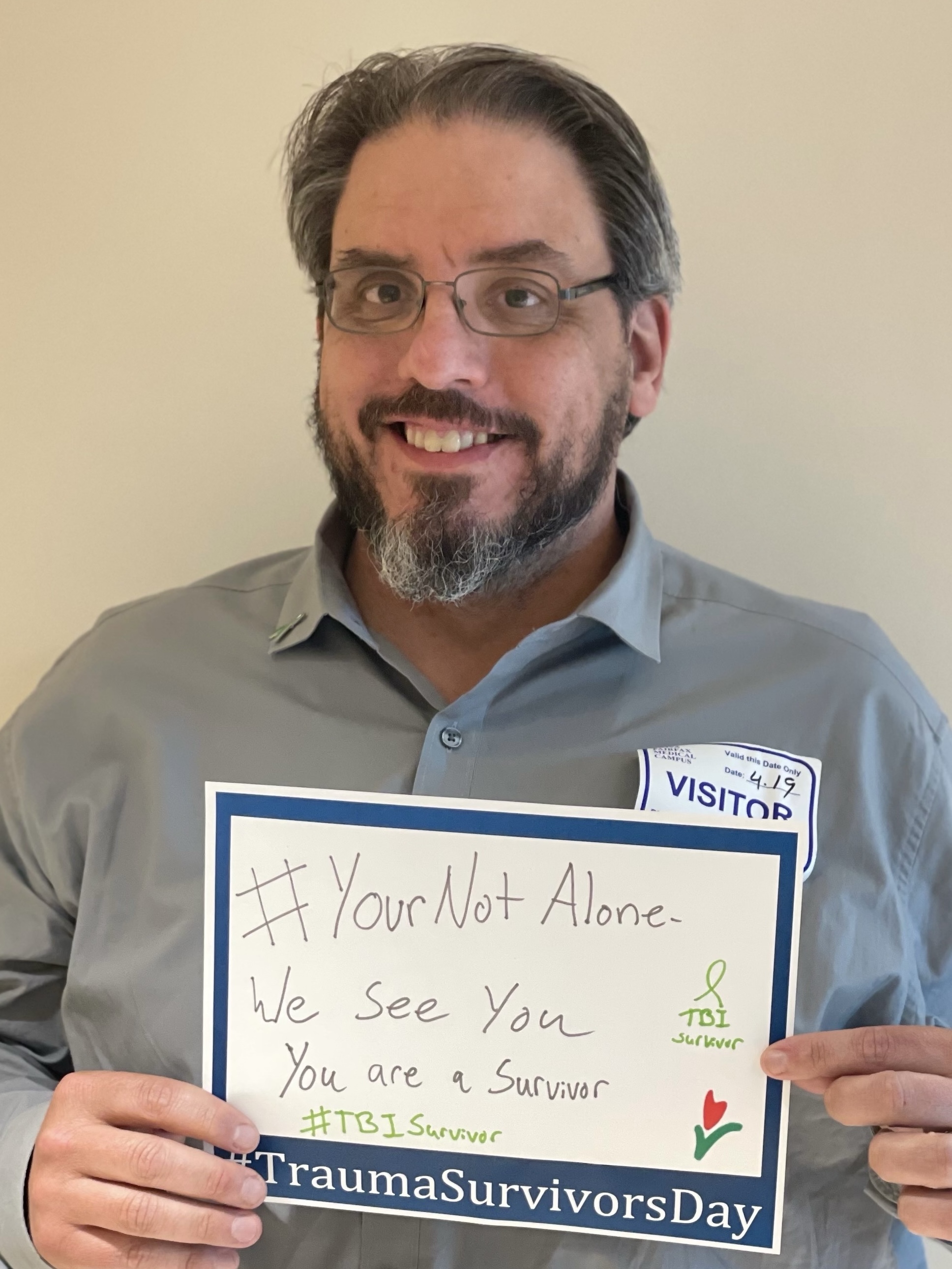
Mental Health Advocate/Trauma Survivor
Nicholas is an avid table top role player, music and concert lover. He is also a Trauma Survivor, after being involved in a motorcycle crash.
He had a brain injury and a very long recovery going through this he has been able to use his struggles to help others, as a mental health advocate.
He has spoken to international organizations, political organizations, as well as United States, Congress to address some of these concerns
