Apple Podcasts
 Spotify
 Youtube Music
 From Combat to Consciousness A Veteran’s Journey Through Trauma Healing & Awakening (feat. Brandi "Bee" Doyle)

What happens when a combat medic comes home — and her body and mind begin to collapse?
In this powerful episode of Travel Time Stories, we sit down with Brandi “Bee” Doyle — nurse practitioner, combat veteran, trauma survivor, and spiritual guide — to explore the journey from PTSD and autoimmune illness to deep, integrative healing.
After serving in Afghanistan, Bee returned home expecting to resume normal life. Instead, she faced the unraveling of her physical and mental health. What followed wasn’t a single solution — it was a profound journey bridging functional medicine, plant medicine, trauma work, astrology, and soul-level awakening.
In this conversation, we explore:
🪖 Life as a combat medic in Afghanistan
🧠 How PTSD lives in the body
🧬 Functional medicine & healing beyond prescriptions
🌿 The role of plant medicine in trauma recovery
🌙 Astrology as a tool for purpose and healing
✨ What it means to awaken in midlife
📖 The message behind Keepers of the Light Bee speaks with rare credibility — grounded in science, informed by lived trauma, and guided by spiritual insight.
If you’ve ever felt broken by your past… If your body is carrying stress you can’t explain… If you’re curious about healing that bridges medicine and mysticism… This episode offers compassion, clarity, and hope.
Drop a comment below: Do you believe healing requires both science and spirit?
Subscribe for more conversations on travel, transformation, resilience, and the courage to reclaim your story. Join the community at www.traveltimestories.com learn more about us and our past guests, read our blogs and sign up to be a part of The Story Circle by becoming a member.
Bee's website: https://doublelibraastrology.com/
#ptsdrecovery #veteranstories #traumahealing #functionalmedicine #plantmedicine #spiritualawakening #astrology #healing #psychedelicmedicine #traveltimestorieswithshannon #podmatch
SPEAKER_02
It's so important that women in particular, but everyone across the board that uh you need to advocate for yourself. Yes. No one else is gonna advocate for you. You need to advocate for yourself and know that it is okay to question that doctor if they don't give you the answer you feel in your gut. We all have that gut intuition. And if we feel our gut intuition is telling us that that's not right, that doesn't sound right. Now there's gotta be something else. Follow that intuition, question that doctor. Every journey has a story, and every story has the power to heal. My story hasn't been ordinary. I was adopted, I'm a survivor of abuse and trauma, and I have more than a dozen siblings. That's just the beginning of my story. Life has taken me on a long and winding road of healing and personal growth. A journey that ultimately led me back to myself and the path I was meant to walk. Along the way, I discovered that stories have power. The power to connect us, to help us grow, and even to help us heal. This is Travel Time Stories with Shannon. Real journeys, real stories, and real healing. Welcome back to Travel Time Stories with Shannon, where real journeys meet real stories and healing happens one conversation at a time. I'm your host, Shannon, from the Lone Star State of Texas. And some weeks I fly solo and share my personal journey of travel adventures, healing, and personal growth. And other weeks I'm joined by my best friend and co-host Ann from Missouri as we sit down with special guests who share their insights, expertise, and personal stories to help all of us along our own journeys. Today, Ann is here with me. Hey Ann.
SPEAKER_01
Hey everybody. Today we're joined by Brandy B. Doyle, nurse practitioner, combat veteran, trauma survivor, intuitive healer, and spiritual teacher.
SPEAKER_02
After serving as a combat medic in Afghanistan and returning home to the collapse of her physical and mental health, B began a healing journey that bridges functional medicine, plant medicine, and soul work.
SPEAKER_01
She speaks with fluency to both the medical and the mystical. And today we're diving into both.
SPEAKER_02
B, thank you so much for your service and welcome to the show.
SPEAKER_00
Thank you. My honor to be here. Thank you so much for having me.
SPEAKER_02
Yeah, we're super excited for today's show to hear your story and learn more about you. And again, we appreciate your service for this country. We both come from military families, so we know what that means to serve. So we appreciate it.
SPEAKER_00
Sometimes I feel like the families are the ones that really serve the most. So thank you both also.
SPEAKER_02
Our pleasure. And so you served as a combat medic in Afghanistan. That alone carries a lot of weight. And when you came home, you described your health physically and mentally collapsing. What did that season look like for you?
SPEAKER_00
Yes, I mean, I came home from a tour of duty in Afghanistan. And my time in Afghanistan was I wasn't just tucked away in a hospital somewhere. I had a very active tour. I came home with a combat action badge. My military folks understand what that means, but basically having took part in firsthand combat action. And when I came home, I really felt like there was a few things going on. You know, I felt like at the ripe age of 25 years old, that the most important work that I could ever do was already behind me. I really had this belief that nothing I could do in my life could ever be more important than saving soldiers on the front lines, right? So I was grappling with that and grappling with, you know, these wounds of what I later found out was post-traumatic stress. I didn't know quite, you know, the words right away, but the flashbacks and the nightmares and the hypervigilance and, you know, still that underlying feeling of, well, what else? How do I live my life now? That the most important thing I could ever do is behind me. And so, like many people struggling with trauma, I was numbing out. I I turned to alcohol and it really became something very problematic for me. And I covered it well, you know, I was still functioning and trying to check all the boxes, but nothing was really giving me any sort of fulfillment or that feeling of deep purpose in life. And so it was a very dark time. You know, there were, I ended up at one point in a psychiatric hospital just because I was struggling so deeply and doing all the things prescribed by the VA. I was taking the meds and doing the therapy and checking all the boxes, so to speak, but still just found myself in a very, very dark, dark place. And I think that's the best word to describe that season was just a place of darkness. Yeah.
SPEAKER_01
You know, PTSD shows up differently for everybody. Um it was good that that you realized that something bigger was happening and and that you couldn't just push through. Kudos to you, girl.
SPEAKER_00
Yeah, it it was not an easy road, you know. I sort of met that crossroad at a certain point where after I ended up in the psychiatric hospital, that it's like, you know, I don't really have a choice anymore. I have got to figure my way through this. And it led down a rabbit hole of many different modalities and everything because I was not really finding the sort of deep, purposeful healing in the traditional VA system and the sort of like top-down talk therapy. And what I didn't know then, but I understand now, is that I was not able to really benefit from those sort of treatments because I didn't have safety in my body. You know, I was still walking around like this, shoulders in my ears and just hyper-vigilant and not having the the verbiage for that. But I knew what I did know is that talking about it week after week after week was not helping. In fact, it was making things worse in my situation.
SPEAKER_02
And I think that's true for a lot of people. I have a lot of personal experience with mental health and mental health and our mental health system here. And it is not I'm sorry, but it is not a good system. The mental health care in the USA needs to be totally revamped and redone. And I hope that we can get to that point sometime because they treat every person the same way and in the same manner using the DSMB book. And not every person responds the same, has the same, gosh, I can't find the right word for it now, but every person is different. And they may have the same diagnoses, but how it affects them, what re what they respond to and what helps them are completely can be completely different.
SPEAKER_01
Yes.
SPEAKER_02
You can't put every person in one box, and that's what our mental health here tries to do. They put everybody with that same diagnosis in the same box and follow the same treatment plan.
SPEAKER_01
That's if you can get an appointment. I mean, that's if you can even get in to see somebody. And I am not kidding you. It is not pretty out there.
SPEAKER_00
Yeah, yeah, I could not agree more. And I mean, I've seen that from both sides, right? Being a nurse practitioner and actually working in that system. And, you know, the other side of the table, right? Having sat through that as a patient as well. And yes, the system is across the board, not just our mental health system, but healthcare in general. And yes, I would agree. Yeah.
SPEAKER_01
Yes.
SPEAKER_00
It's all based on, you know, evidence-based protocols and different things like that. But also what really fascinated me as I sort of dove deeper into my healing journey was, you know, all these medications that I was prescribed, it's not there is no medication really for PTSD per se. And so here I was feeling even worse about myself because it was like medication after medication is not helping, the SSRIs that I was being prescribed. And at a certain point, I felt like I was being looked at as like I was malingering or, you know, you're not getting better and you should, and sort of felt like I was being looked down upon. And come to find out, it's like, well, there's no real research that even says these medications are helpful for PTSD in the in the first place, right?
SPEAKER_01
Exactly.
SPEAKER_00
Kind of almost like a gaslighting by that whole system as well. Yeah.
SPEAKER_02
And that's the other thing with the medication. Usually the medication don't treat the disease, they treat symptoms of the disease, but not the disease itself. And so really, like, you're not helping the person with that disease, you're not helping them overcome that disease. You're just helping them deal with the symptoms that come from that disease.
SPEAKER_01
Exactly.
SPEAKER_00
Absolutely, absolutely. And that's sort of, you know, I I hit a certain point where it was like, I don't want to take these medications that are not helping anyway. It's just more side effects and they're not really working. So what what am I doing here? And, you know, it led on that path of I don't want a band-aid solution anymore. Like I I want to heal. And, you know, I think there in the in the Western world, we get confused about healing and curing, right? We're so cure mindset in the West, whether that's mental health or physical health, we just want things to be gone. But in terms of healing, it's like, no, I'm ready to really kind of unpack the layers and do that deep work to integrate because PTSD, you know, is something I will live with, right? It's it's about learning how to work within that, within my sort of window of tolerance, as I call it. But I'm I'm not cured, right? But it's about healing. That healing journey is truly just that, right? It's a journey.
SPEAKER_02
Yeah, it is. Exactly. And as a nurse practitioner, you're grounded in the evidence-based medicine. So, how did you begin blending that with the functional medicine and plant medicine? Great question.
SPEAKER_00
A long and winding journey indeed. You know, as I mentioned, I just wasn't getting the relief that I really wanted. And along with my mental health, my physical health started to collapse, I ultimately ended up diagnosed with an autoimmune disease. And I just had this inner knowing, this feeling that there has to be something more than, well, here's your medication. So, so what? I mean, you know, diet, lifestyle, none of that was even discussed with the provider when I got my diagnosis. And so I knew enough to know that there has to be something more I can do for myself. And also kind of looking at it as well through this new lens of, oh my gosh, this provider didn't do anything wrong by the book, right? I'm doing air quotes here, nothing wrong. But it left so much to be desired. So it really sent me on this, you know, healing path of not just for me, but how can I be a better practitioner to actually give people deep relief? And really, I was sort of just coming into what I call like a spiritual awakening. And so everything in that realm still felt very unfamiliar, even a little taboo. So I sort of, you know, got my feet wet, so to speak, with the things that felt a little bit safer to me, like acupuncture, massage. Um, but acupuncture in particular was incredibly helpful and just sort of really opened me up to, okay, you know, this is really working with like the energy systems in the body, the qi in the body. And so if this works, if this is giving me relief, what what else is possible? What else is out there? And so that led down another path of really deep exploration into looking at the body as, you know, that energetic system that it really is, and that nothing in the body exists in isolation, right? We can't just look at the thyroid when we're talking about something like Hashimoto's autoimmune. It's a whole body system that really needs to be integrated and looked at. And of course, yes, we're taught that somewhat, but it's so true and it's so often overlooked in our medical system, you know, it's like, who's really looking at the big picture here, right? Everybody referred to different specialists and different things, but how can we really integrate and put it all together? And that's where the energetics, I think, comes in so beautifully as well.
SPEAKER_01
So, how do you reconcile the clinical and the mystical?
SPEAKER_00
Well, I I definitely feel like these days I'm more in the mystical because I have just my eyes have been awakened to so many things that cannot be explained by that black and white, this is evidence-based, this is, you know, we can prove or disprove something. So I feel like I'm so much more drawn into the mystical, but the science is catching up to so much of this. And it's like, you know, these things that used to seem out there, or even quote, I'm doing air quotes again, like woo-woo or too far out there, like quantum physics and the energy field. And it's like, oh, wait a minute. Science is actually starting to catch up with so much of this. And even ancient practices like yoga, you know, we knew that ancients did these practices, but now we're seeing why. We're starting to let the science catch up. And so that is, you know, my jam, I'll call it, when we get that scientific evidence to back up some of these, you know, more broad topics that for a long time we couldn't actually prove or disprove, but now we are. And so it's like, ah, things are really starting to open up. And the way that we have such access to information these days, I think we're only going to see that, you know, open up even further. It's like, what else? What else haven't we learned yet or haven't been able to really prove yet?
SPEAKER_01
Right. I get so excited when I I read an article where they're proving what people refer to a lot of times as old wives' tales. Um but these are and my mom was a big believer in in healing. My grandmother, you know, they never went to the doctor. My grandmother went out in the woods, she foraged the medication, prepped it and gave it to the kids. And so my mom learned a lot from that. Um, and she always swore by it. And so yeah, when I read a science article that says, Hey, this actually really works. We had no idea. I get so happy. I'm like, oh yes, thank you. Thank you for backing that up. It's real.
SPEAKER_00
It is real. All the herbs and the plants and you know, everything from the earth, it's like our ancestors lived for, you know, we survived this long without the involvement of big pharmaceutical companies and you know, man-made products. So why would we not think that we can go back to this ancient wisdom of the earth, right? And even the ancient wisdoms in our bodies, you know, it's it's so deep, right? And yes, it's like, oh, when when the science starts to catch up, we're like, yay.
SPEAKER_01
Yeah, it's so exciting.
SPEAKER_00
I don't want to say I told you stuff, but I told you so.
SPEAKER_02
Right. Right. Yeah. And a lot of people don't realize, like, your body is built in a way to be self-healing.
SPEAKER_01
Yes.
SPEAKER_02
That's the way it was designed. And you look at our ancestors, and they lived way longer than we did, and they didn't have none of the things that we have now. They didn't use the things that we use now, and lived way longer, better to me, productive lives than what we have now. Well, more in balance and in tune with with the earth and and everything else than what we are today.
SPEAKER_01
Chemical-free lives, we have to say. Not in their food, not in their what they drank. I mean, everything was healthy and fresh, and that's the problem. They put uh so much junk in our food that it's just I, you know, you have to question.
SPEAKER_00
Absolutely, absolutely. And I love that. I love when people start to question because I think that's sort of the first, you know, that was the one of the first steps for me. It was like this knowing that I don't even like the way this pharmaceutical drug smells. Why am I putting it in my body? You know, really starting to question what's going on here and and what is actually making me sick? What is making my body attack itself? And how can we get it to stop? Because I don't want to rely on these pharmaceutical medications forever. And I want to feel good, right? I want to, you know, I have big things to do in this world. So I want to feel good to be able to do it. Right.
SPEAKER_02
So, what does healing look like when you approach it from both the science and the spirit?
SPEAKER_00
That's a beautiful question. It involves, I think, a lot of unlearning. You know, we have to learn to really be open to what is possible. And again, I sort of spoke to that, you know, healing versus curing and sort of approaching healing from that lens of, okay, maybe I will not be able to completely cure this autoimmune disease or this post-traumatic stress or whatever it is. But I can heal by learning to integrate that, learning to sort of look at the places that got me here in the first place. And for me, it was a long journey of, you know, a big part of that was seeing the ancestral threads in my healing as well, or in my lineage, I should say, and realizing that purpose that I was, I'm here to really heal the wounds that my ancestors never could. My grandfather was uh POW in World War II, and it just sort of became very apparent to me. And, you know, when we think about science versus spirit, it's like, well, yes, we have proven that in the science realm as well. We call it epigenetics, right? It's like we're coming in with call it ancestral wounds, call it past life stuff, whatever you're comfortable with. But we now understand that we are here to, or coming in with imprints on our souls, on our woundings that are not even ours, right? And so just being open, I think. And, you know, I'm not anti-Western medicine at all. I still will lean on Western medicine when I need. I think, you know, we have been blessed with certain medications that can really, really help in situations. We have antibiotics that we can use, although often overused, I will say that. But, you know, it can be a beautiful thing. But I encourage people to not lean on that entirely, right? Because there's so many other things down the holistic path, down the spiritual path. And for me, I can only speak, you know, deeply to this for myself, but such a big part of that healing journey, I came to realize was this deep like spiritual dissonance, I'll call it, you know, being so disconnected from source, from spirit, from the earth, even. And so that was a big part of it was coming back to that, coming back to awakening that ancient wisdom within my body. And, you know, that's not something that they're going to tell you when you go to the doctor's office. Like, maybe you need to go connect with Mother Earth, right? You're right. But it was like I was so, you know, in such desperation that these things just started opening up for me. And it was part of my journey. And I always encourage people to just be curious, question what else is possible. You know, and I think the paradigm is starting to shift, right? Like even for my parents' generation, it was like whatever the doctor said is like biblical, right? Right. Yep. That's that whole system has led to, like I mentioned, a lot of like medical gaslighting. And, you know, especially as women, they chalk things up to, oh, it's just perimenopause or menopause, or no, you know, it's like, no, you deserve to feel good at every age and stage of life. And if that's not happening for you, let's figure out what's really going on. And unfortunately, you know, the way the traditional medical system is set up, that's not going to happen in your 15-minute appointment with your general practitioner, right?
SPEAKER_02
Exactly.
SPEAKER_00
And it's, you know, it's about reclaiming that power too. And, you know, not giving your power away to that doctor, that provider, and reawakening that own inner healing intelligence. Because, like you said, Shannon, given the right conditions, the body is designed to be a self-repairing, self, you know, cleaning machine, right? Yep, exactly.
SPEAKER_02
And it's so important that women in particular, but everyone across the board, you need to advocate for yourself.
SPEAKER_01
Yes.
SPEAKER_02
No one else is going to advocate for you, not even that doctor. You need to advocate for yourself and know that it is okay to question that doctor if they don't give you the answer you feel in your gut. We all have that gut intuition. And if we feel our gut intuition is telling us that's not right. That doesn't sound right. You know, there's got to be something else. Follow that intuition. Question that doctor. It's okay to do that. I know a lot of people, especially my generation and before me, you know, you don't question the doctor. You know, they're the they're the educated ones, they know what they're talking about, but that is not true.
SPEAKER_01
You guys it is absolutely okay. And if you can't get anywhere with that doctor, there are plenty of others out there. Do your homework. Ask your network of people, who have you seen? Who do you who did who really who really you know helped you and and go from there? It you don't have to stick with the same doctor. You don't. And B, you hit the nail on the head when you said your 15-minute appointment. Because those doctors, especially the ones that work for hospitals and bigger groups, they literally designate 15 minutes for your appointment because they have to get so many people in and out because you know, revenue here, it's about money now.
SPEAKER_00
So and I, you know, I've seen that from both sides, like I mentioned, and you know, I don't work in that arena as a nurse practitioner anymore because of that reason. You know, I I couldn't provide the sort of care and support that I really signed up to do. And, you know, that's why I coach now. It's like I can actually really help people heal rather than you're in, you're out, here's your band-aid fix. And yeah, it's a system that leaves so much to be desired. And, you know, that was another thing that sort of led me towards functional medicine because I wanted deeper answers, and functional medicine really does sort of um dig down to sort of the root cause of many conditions. And initially, when I was diagnosed with my autoimmune, they didn't even know that it was autoimmune. I had to dive deeper with the functional medicine to really get a clear understanding. So, you know, that's an option for people too who haven't had great success in the traditional Western medicine model. Yeah.
SPEAKER_02
And just let me say here before I get a bunch of hate mail from uh physicians reaching out to me. I love, I love medical doctors. I work for medical doctors, so I have nothing against medical doctors at all. And in fact, my family doctor is, I call him Super Doc because I think he's the best in the world. Um, but he doesn't just do 15-minute appointments. I will tell you that. We are lucky that we have been with him for over 20 years and he rejects the whole 15-minute appointment thing and really gets to know his patients. And he is open to both traditional medicine as well as functional medicine. He will offer alternatives, holistic things. I have nothing against doctors. I'm just saying people need to advocate for themselves because there are a lot of doctors out there that do not take the time, whether that's because they don't personally want to or because they work for an organization that does not allow them to take more than 15 minutes with each patient, you know. So you have to advocate for yourself. It's very important.
SPEAKER_00
Yes, and thank you for mentioning that. I don't want to, you know, come across as I'm sort of saying anything bad about that profession or medical providers in general. You know, they're working, they're working in the constraints of this system, right?
SPEAKER_02
It's a system like it's the system, yeah. That's what I have issues with. It's our system. Our system needs to be changed. Yeah. And I feel bad for the doctors and nurses that have to work within the constraints of that system, because I know many of them that agree that the system is broken and needs to be fixed, but they don't have the power to change it, neither do I, you know. But hopefully somebody out there listening will do something about it.
SPEAKER_00
Well, I mean, I think that's why these conversations are so important, right? It's like, well, if if we're not even talking about it, then we can't expect anything to change. And this is where the change happens is from conversations and getting people to start to wake up to this a little bit, right? Wake up to this sort of system-wide failure and the fact that there are people out there suffering, right? Mm-hmm.
SPEAKER_02
Yeah, exactly.
SPEAKER_01
Definitely.
SPEAKER_02
And so, B, when people hear plant medicine, they don't always understand what that truly means. Can you kind of tell the audience what I what actually is plant medicine?
SPEAKER_00
Yes, when I speak about plant medicine, I am talking about plants that we are using intentionally, ceremonial, ceremonially for a specific purpose. And my healing journey did involve the integration of psychedelic plant medicines, including like psilocybin mushrooms and even ayahuasca, which is a vine from the jungle. But I was called into that work when I reached a certain point at my, you know, in my healing journey. It wasn't at the very beginning, you know, this is after I had established some safety in the body and I had, you know, done a fair amount of peeling back the layers, if you will, but I really felt a pull to explore myself more deeply. And what these sort of plant medicines can offer is getting out of what we call an ordinary state of consciousness, right? And putting us into a non-ordinary state where often what we see is our subconscious being revealed to us. And so I've also worked with ketamine, which of course is not a plant medicine, but same sort of thing, right? Getting into that non-ordinary state of consciousness. And as a nurse practitioner, that's the work, some of the work I do now in terms of traditionally, I do work at a ketamine clinic and have really seen these sort of medications, medicines, I should say, open things up for people where, you know, maybe there's been this recurring pattern or problem, and they haven't quite been able to get to the root of it. And after a ketamine journey or a plant medicine journey, things are revealed, right? And the medicine is just a catalyst. It's about how you make the meaning and how you actually integrate and sort of incorporate that into your life, right? So it's done very intentionally, very, you know, set and setting are incredibly important. And it's not something widely talked about because of course it's still illegal in many places. Not not necessarily the ketamine, but that's a whole nother story. It's like these are plants that have been used for centuries.
SPEAKER_02
Right.
SPEAKER_00
I totally agree with you, Bae. Yeah, it's like who who decided that a plant can be illegal? I'm not sure about that, but you know, that that could be a whole nother topic. And I'm not saying it's for everyone, but it is certainly an option for people who feel like they have tried everything, right? And or people that are really just trying to go deeper into their healing journey. And for me, I have always been a bit of I would call a seeker. And so it was like, oh, this is a way I can explore my psyche even deeper. All right, let's go.
SPEAKER_01
Wow.
SPEAKER_00
So I like that.
SPEAKER_01
Yeah, I do too. B, what role did plant medicine play in your own healing? And what did it teach you that traditional medicine couldn't or didn't?
SPEAKER_00
Hmm, that's beautiful. I was, I have been on each of the journeys that I have done, whether it's psilocybin or ayahuasca, I have been given deeper pearls of awareness. For example, on one journey I did several years ago, I was having a lot of physical pain in the journey. And I had a very trusted guide with me. And she said, This is an opportunity for a conversation. You can actually dialogue with this medicine and see, you know, what is this pain? And it was like I was having lower back pain. It almost felt like back labor, if anybody has experienced that. Oh, yeah. It was just relentless. And so I said, okay, I can ask these questions, I can open up this dialogue. And the information that I was presented was this is all the hardness that is really stored in your body. And from generations before you, all the female lineage in your family just had this hardness to them, that they couldn't even access joy. And it was, you know, very interesting. Kind of that kidney lower back area is where we tend to store fear when we're talking about energetics. And so it became very apparent that this was another ancestral thread that I, my soul came here to really transmute. It was like none of the women in my family have ever been able to experience joy. And so here I am at a choice point. I have an opportunity to really transmute it. And so, of course, the journey I was given that awareness of this that I was carrying around that I didn't even realize in my ordinary state of consciousness. It was like, yes, the back pain would creep up, and it was always chalked up to, well, you carried a heavy rucksack around for so long, right? But it was just that awareness that it is something so much deeper than that. And so each time I get some sort of awareness or something to work with like that, that just really provides a deeper layer to the healing, something to transmute and really work with and integrate.
SPEAKER_02
Oh my gosh, that is so enlightening. Wow. It is. And I have I have seen too and read some articles that using like the psychedelics or the ketamine has really helped um a lot of PTSD survivors and but done in a controlled, safe, you know, supervised environment, as you're saying, not just off on your own or whatever. But yeah, and I think that really needs to be explored more because we have so many that are suffering with PTSD and aren't getting any relief or help.
SPEAKER_01
Exactly. Isn't that called microdosing? I've been reading some articles as well where people are using it to help with these symptoms.
SPEAKER_00
Yeah, even you know, the microdosing just implies, you know, taking very like non-psychedelic doses, you know, just very, very minuscule doses. Um, I've known people that have done that with like psilocybin, they make it into very small capsules. So not enough to actually have any kind of psychedelic effect. But the research is indicating that, you know, the reason it's helpful is because some of these medications have been shown to increase neuroplasticity in the brain. So sort of, you know, we used to, that's another place where science used to have well, wasn't caught up, right? To what we've known, our ancestors have known is that, well, the brain can't regenerate. Nothing in the body can really regenerate, right? But now we're seeing, we're understanding that these plants and even the ketamine does help with that neuroplasticity in the brain. So that's where the magic is really happening for people who have had, you know, even traumatic brain injuries, post-traumatic stress. It's like, ah, we can start sort of like reconnecting some of these wires in the brain. And so, yes, it's an area that we need a lot more research, but it's coming down the pipeline. I I see that coming. I know there's many states, the great state of Texas included as one recently passed some legislation to do a lot of research on another plant medicine called Ibogaine, which has been really proven to help people with opioid addiction as well as those with PTSD. So, you know, we're moving in that direction, and I think it is giving a lot of hope. Great.
SPEAKER_02
And as someone who's lived trauma and treats trauma, what do you think that we misunderstand the most about trauma and PTSD?
SPEAKER_00
I think what we really miss the most in that traditional black and white Western mindset is the layers of trauma. Truly looking at it through the lens of that ancestral thread as well. You know, it's not just this is something that happened to me in my childhood or whatever the scenario is. It's that this comes back from lifetimes and from our ancestors. And, you know, because my mother was raised by my grandfather who was a POW and a horrible alcoholic, it's like, of course, that shapes how things are passed down through the lineage, right? And you know, we can look at that even if you believe in past lives, ancestral threat, however you see it. It's like we come in with wounding that's not even our own. And I think if we could look at that, it would open people up to a lot more compassion and a deeper understanding that it's so much deeper, right? And perhaps it's not something that we can cure, and that's okay. But healing is where we really learn to integrate that and still go on to live fully, live vital, beautiful lives. And so that is something I think that really gets overlooked.
SPEAKER_01
Wow. How does trauma lodge in the body?
SPEAKER_00
I love that. I love that question. The body keeps the score, is an amazing book. Um, if you've never read that book or listened to it on audio, it's it's a heavy read. It's a lot of scientific speak, but a lot of amazing points in there. And basically, what we have found through the research is the body has something called the fascial system, which is like the layer that holds all the muscles together. And for a long time, you know, in dissection labs and things like that, they would just cut through the fascia. It's just the thing that's there, very thin, thin, thin layer. Nobody thought it was important. But now, here's another place where science has caught up. It's like, oh my gosh, this is in fact important, so important that we're calling it now the body's second nervous system.
unknown
Wow.
SPEAKER_00
And because it encases, it creates a web across every, you know, muscle, every fiber in the body. And so often, you know, like for me, that the back pain that I was experiencing that nobody could really get a handle on, that was the trauma stored in the body, right? And so it shows up in that way. It shows up in our nervous system. You know, if we have trauma, sometimes we're we get stuck in like the freeze mode, sometimes it's the fight or flight. But for a lot of women, it is that sort of functional freeze. That's where we end up stuck, where it's like, okay, I'm functioning, but I'm numb, essentially. But I think really the magic is exploring that fascial system. That's why somatic practices can be so helpful for trauma, you know, yoga, static dance, moving the body. There's even a specialty type of massage called MFR, which is myofascial release. And so that's really working with that fascial system to release, release all the places that that trauma can get stuck. That's very fascinating.
SPEAKER_02
Yeah. I'm learning so much today. Yeah.
SPEAKER_00
Yes. I mean, the body truly does keep the score. And it's like I tell people the analogy of if you've ever seen, you know, if you have a dog, just watch your dog after something new. I have a puppy and I've been training her, and we took her out in public and got her into a new experience. You know, the goal was to try to get her to stand on this cart. And she was scared, you know, not horribly scared, but it was a new thing for her, right? But she did it. She got off the cart, and the first thing she did was she shook off. That that is what animals do in nature. You watch National Geographic, you see the gazelle get chased by the lion, it escapes. The first thing it does is it shakes off.
unknown
Yeah.
SPEAKER_00
And it's like animals have that innate sense, right? That's how they sort of release the trauma in the body. And we as humans, we forget to do our shake off, right? And so then that trauma gets lodged, it gets stuck, it gets stored in the body.
SPEAKER_01
Oh, I love that analogy.
SPEAKER_02
That's awesome. Yeah. So, what does real trauma healing require beyond talk therapy?
SPEAKER_00
It it requires first and foremost, this is you know, a soapbox I've really been on lately, is step one is safety in the body. It truly is. You know, we're understanding that on a biological level now, and understanding through my own journey, that's what was missing during, you know, the initial stage. That's why talk therapy wasn't particularly helpful at the time because my body didn't understand it was safe. You know, my logical brain was like, okay, I'm here, I'm back stateside, nobody's dropping bombs on us. But my body hadn't caught up with that. I had so much of the trauma stored in the body. And so developing these little pathways of safety is has to be step one if we really want to take ourselves on that healing journey. And it truly people are like, well, okay, that sounds great. How do I how do I start developing the safety? And truly, it's something you carry with you all the time. It costs no money, it's the breath. Just learning to take long, deep breaths, sort of getting that body, even if it's for you know, a split second, that is enough time for the brain to start forming those pathways of safety. And so that's the first thing I do when I start working with my clients is we learn how to deep breathe, because that's something is when we're stuck in fight or flight. Or even freeze, we're not breathing properly. The breath is very shallow. We're breathing from high up in the chest. And so learning how to take those nice deep belly breaths.
SPEAKER_01
Wow.
SPEAKER_02
Yeah, that's that's one thing I will say. Uh in my journey of healing, that was the first thing that I learned that really helped me was learning how to breathe and take those long, you know, that deep breath. And when I I do that now, when I feel myself starting to kind of try to shift into that survival mode, if you will, I that I take a moment and just you know take in that deep breath, and then you know, I can feel myself calming and then I move forward.
SPEAKER_01
Yeah, same here. And and I count as I take my breath. I I have a certain rhythm that I use every time, and it just immediately calms me. So B, you speak about midlife awakening. Was that separate from your trauma healing or was it intertwined?
SPEAKER_00
It was intertwined for me, certainly. And for many women, you know, astrology was a big part of is and was a big part of my journey. We hadn't touched on that, but there are certain transits with the planetary alignments that happen for many women, for all women, actually, at a certain time in life. Chiron return happens around age 50, and there's some other significant transits. And we often look at that time and things are shifting, right? There's a lot of questioning that time, relationships, career, is this really it? All of these types of questions. And so it's not a crisis, right? It's an invitation, it is a call to awakening. And that's where, you know, the magic really happens. I work with a lot of women going through these transitions as well. And it's, you know, learning to see this as it's not a midlife crisis. I'm not sure where that terminology come from, came from. I'm sure it was a man.
SPEAKER_01
Yeah.
SPEAKER_00
Right. It's like this invitation, truly. It's an invitation to sort of course correct, if you will. And and by that time, most of us have a lot to unpack, but that invitation comes on really strong in that midlife period during those specific astrological transits. So that's when most people come to me sort of seeking counsel and and all of that. And it's like, okay, well, step one is safety in the body. We're gonna get there first and then sort of look at the patterning and what we need to really work with here. Yeah.
SPEAKER_02
So we're really interested, and you just touched on it, your astrology work. So, how did that enter your life?
SPEAKER_00
Oh my goodness. That was um, you know, like I mentioned, I was just in such a dark place and really grasping at anything. And I was a big fan at the time. I had a pretty long commute for work. And so I was podcast listening all the time on the drive, and I was listening to one um, gosh, I can't even think of the name of it. It was some sort of spiritual podcast, and they interviewed an astrologer, and I thought, hmm, that sounds really interesting. You know, there's something I haven't tried yet. And so I ended up booking a reading. I felt particularly connected to this woman and hearing her story. And so I booked a session with her. And mind you, by this time in life, I had had probably over a thousand hours of talk therapy. I'm not exaggerating. And in that one hour reading with her, I felt seen, I felt validated, I felt hopeful again. And I'm talking, you know, after thousands of hours of talk therapy, I had never left a session feeling like that. And I'm like, and this woman, she looked at a piece of paper that had a lot of lines and symbols and, you know, asked me for my birthday, and I don't know what the heck just happened, but I must know more. And so I dove into that head first. That woman went on to become my mentor and now a very dear friend. And it's just been a tool that I go back to over and over and over again. And I incorporate it into client work as much as you know we can because it truly is like a it's like a map, right? Or looking at the weather. Don't we want to know the weather before we go out? Do we need our raincoat? Do we need our, you know, what do we need? And so it's a really beautiful tool, and I just absolutely love it.
SPEAKER_01
That's amazing. So for skeptics listening, what is astrology actually about beyond horoscopes?
SPEAKER_00
Yes, thank you. That's a great question because I'm sure many listeners have read a horoscope, and I remember reading them when I was like a teenager, and sometimes it maybe sort of made sense, but most of the time not really. And so the type of astrology that I practice that I work with is called evolutionary astrology. And so we're really looking at the birth chart, looking at each person as a soul on a journey, and that journey is to evolve, to become, you know, the highest expression that that one can be. And it then that's a journey, right? And so it's not horoscope, it's not fatalistic, it's really looking at archetypes. These are the placements in your chart, these are some challenges you may face. And again, it's one of these things that it may not be for everyone. There will be people who are skeptical. But for me, the way I sort of reframe that in my brain is like if the moon is powerful enough to move the tides of the ocean, that's water. We're all made up of mostly water. Wouldn't we think it could be possible that the moon and the planets and the stars might have some sort of influence upon us? And again, it's it's very much like a typing system. There are others out there, such as human design and the Enneogram and things of that nature. But what I really love about the astrology, what sets it apart, I think, is truly looking at each person as a soul on a journey, on a soul that's here to evolve. So with the archetypes in your chart, with whatever it is you're working with, what's the highest expression of that? You know, and I don't do predictive astrology. I don't say, here's the day you should buy a lottery ticket. Um, some people do that to sort of astrology, and there's a place for that as well. But it's really looking at sort of the questions that may come up in your life. What would be the highest way to respond to that based on your personal placements? And again, just looking at sort of the broader archetypes and your purpose on this planet.
SPEAKER_02
So then you've seen patterns between trauma, purpose, and someone's natal chart.
SPEAKER_00
A thousand percent, yes. And you know, like I said in my own that first reading, it was like, here's a woman that's never met me. All she has is my birthday, the time I was born, and where I was born. And she was able to, and it was scary, eerily accurate, you know, and it was like, okay, there's something to this. And yes, we definitely can pick up on ancestral patterns and trauma patterns and different things in the birth chart. And that's why it's a really great tool, similar to like the plant medicine. Some of these things lie just beyond the subconscious, right? Or they're just in the subconscious where we don't quite have access to that until someone or something mirrors it back to us. And sometimes the astrology is just that, and it's like you have that aha moment, and you're like, huh. Oh, oh, that people-pleasing thing. Oh, that's like a pattern. That's something I'm here to work with and integrate.
SPEAKER_01
Wow, this is so interesting to me. I had no idea. Would would you be willing to share a quick example of what astrology can reveal about purpose or healing?
SPEAKER_00
Absolutely. So when I look at astrology and from the lens of evolutionary astrology, we look at two particular points in the sky called the nodes of the moon. And the north node indicates the path forward. That's really where your soul is trying to get to. And the south node is sort of what we're trying to integrate. I don't want to say leave behind, but it's what we've already done. But something about it didn't go completely right. So there's some sort of residue of karma, what we're trying to really integrate in this lifetime. And for me personally, my north node is in the sign of Aries, which is like the warrior. And so when I sort of started to piece that together, this deep understanding came of the purpose of that warrior archetype in terms of like the spiritual warrior and the trailblazer and trying to be a thought leader and getting people to really think a lot differently. And so, you know, the archetypes are very broad, but it really did give me a deep understanding. And it wasn't just the astrology, right? Because there was a knowing that came with that too. It was sort of oh, like, oh yeah, I've always sort of felt that. But to have this, you know, reading where it's actually validated, like somebody else is seeing it too. And so it just sort of clicked after that. And, you know, we can't ever look at anything in isolation, like, oh, you're a Taurus, you must just like to sit on the couch and eat potato chips. I'm a Taurus. I can say that, right? So it's like it's how everything sort of works together in your personal chart that is pointing on that soul's direction.
SPEAKER_01
Wow. That is just so interesting to me.
SPEAKER_02
Exactly. I didn't I didn't realize that much went into the astrology. So that I love that. That's fascinating. I didn't either.
SPEAKER_00
Yeah, and it it's just one more way that we can, you know, become empowered, I think. It's sort of like the more you know, right? It's information and what somebody chooses to do with that information. You know, people can have a reading and choose to do nothing with it, but maybe someone hears something and it really resonates and they're like, okay. For me, I mean, it really changed the it got me back on course in terms of my soul's direction. Yeah.
SPEAKER_02
So let's talk about your book, Keepers of the Light. What's the message behind it?
SPEAKER_00
So Keepers of the Light is my story through trauma and transformation back into the light. And it's more than just a memoir. It really is a tool for women who are at that pivotal point, right? That midlife crisis point. I'm I'm doing the air quotes again. And it's it's a story of hope that, you know, if I can overcome these things, so can you. You know, there is nothing that special or unique about my journey. It's just a matter of having the right tools and having people in your corner supporting you that say, Hey, I see you. And so the book provides so many practical tools, real ways that we can integrate that holistic healing. And it should be coming out the end of 2026.
SPEAKER_02
I can't wait. Yeah, I'm definitely and and it's available for pre-order right now, correct?
SPEAKER_00
Yes, it is available for pre-order on publishing. So wow.
SPEAKER_01
So if someone feels lost in darkness right now, what would you want them to take from that message?
SPEAKER_00
I just want people to know that there is hope. You know, I have been in that place of absolute darkness where I couldn't see a foot in front of me. And that is the intention of the book, is that there is hope. No matter how dark, how dire the situation feels. I promise. If you begin to seek and start opening your eyes, there there is hope. Yeah, that's beautiful.
SPEAKER_02
Subie, we usually close before we close out, we like to do a lightning round. So are you up for a lightning round?
SPEAKER_00
Yeah, I don't know if I know what that means, but yeah.
SPEAKER_02
We just ask the question and you answer the first thing that comes to mind or what your favorite of the two are. Oh, cool. I love it. Uh coffee or tea? Ocean or mountains?
SPEAKER_00
Mountains.
SPEAKER_01
Ooh, a practice you never skip.
SPEAKER_00
My daily breath work. Oh, that's a good one.
SPEAKER_02
I like that.
SPEAKER_00
A belief you've outgrown that we are victims of our circumstances and stories. Because I know now that we can co-create and create our own.
SPEAKER_01
I love that. So one word that describes this chapter of your life.
SPEAKER_00
Empowered.
SPEAKER_01
You're amazing.
SPEAKER_00
We're amazing. We're all amazing.
SPEAKER_01
We all are amazing.
SPEAKER_02
Every one of us. So, B, if someone listening feels broken physically, mentally, and spiritually, what would you want them to know about healing?
SPEAKER_00
That it is a journey. It is absolutely a journey. It's not a destination that we can fly to overnight or just wake up and oh, I'm healed. They truly call it a healing journey because it's ongoing. There's always going to be a trigger or a new scenario in life that we are dealt. So, how do we peel back the layers and just continue to build that awareness and just be curious? I encourage people to always be curious and sort of look at every situation as that. You know, what is it here to teach me?
SPEAKER_01
Thank you for sharing your story with such courage and clarity today with us. Where can our listeners find out more about you and your work?
SPEAKER_00
Yes, thank you so much for having me. This was a beautiful conversation. I can be found on Instagram. I'm Double Libra Coaching on Instagram, and my website is Double Libra Astrology. If you find your way to the website, do sign up for the newsletter so you can stay up to date on all the offerings and things coming down the pipeline.
SPEAKER_01
I will do this. Yeah, definitely.
SPEAKER_02
Uh be your journey, remind us that healing isn't linear and that sometimes the collapse becomes the catalyst. And to our listeners, if this conversation resonated, share it with someone who may be navigating their own healing path. And we will put B's information in the show notes, and it will be available on our website, travel time stories.com. And until next time, keep traveling your story and keep making memories for life.
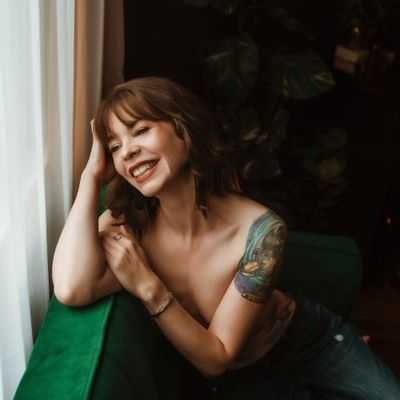
Evolutionary Astrologist - Nurse Practitioner - Combat Veteran
Bee Doyle is a nurse practitioner, intuitive healer, and spiritual teacher guiding others to reconnect with the Divine within. Her work bridges science and spirit, blending her background in medicine with astrology, ancestral healing, and embodiment practices to illuminate a holistic path to wellness.
A combat veteran turned spiritual guide, Bee’s journey through trauma, self-discovery, and transformation has made her a powerful voice for soul-centered healing and empowered living. She is the owner of Double Libra Astrology.