

 Apple Podcasts
 Spotify
 Youtube Music
 At 72, He Hiked 2,200 Miles to Heal | Rand Timmerman’s Appalachian Trail Journey

At 72 years old, Rand Timmerman set out to hike the entire 2,200-mile Appalachian Trail with his younger brother, Ron. But they weren't simply climbing mountains.
Both brothers were Vietnam combat veterans carrying experiences from the war that had followed them for decades. Rand was also walking a path of recovery from alcoholism, while Ron was grieving the loss of his wife.
What began as an extraordinary physical challenge became something much deeper—a journey through grief, addiction recovery, brotherhood, faith, aging, and healing.
In this episode of Travel Time Stories, Shannon and Ann sit down with Rand to talk about what happens when you strip life down to one trail, one backpack, and one step at a time.
We talk about:
🥾 Taking on the Appalachian Trail in his 70s
🇺🇸 The invisible wounds he and his brother carried home from Vietnam
❤️ Walking beside a brother experiencing profound grief
🌿 Rand's journey through alcoholism and recovery
🙏 The spiritual transformation he experienced on the trail
👬 Brotherhood and the things men don't always say to one another
🏔️ Why it's never too late to take on something that seems impossible
📖 His book, A Spiritual Passage, which chronicles the journey through his journal and hundreds of photographs Rand's story reminds us that sometimes the mountain we're climbing isn't really the mountain at all. Sometimes we're walking through everything we've carried with us. And sometimes, somewhere along the trail, we finally discover what we're ready to leave behind.
🎙️Travel Time Stories Real Journeys. Real Stories. Real Healing.
https://www.traveltimestories.com
If Rand's story speaks to you, share this episode with someone who needs the reminder that there is no age limit on healing, adventure, or beginning another chapter.
Rand Timmerman: https://www.randtimmerman.com
#appalachiantrail #hikingtoheal #hiking #hikingadventures #randtimmerman #alcoholrecovery #realstoriesrealjourneys #traveltimestorieswithshannon #podmatch
SPEAKER_02
With some hikers coming, and I turn around. And the first one is this great big guy. His trail name is Growler. And he looks like Paul Bunyan. He's probably in his 20s, but he's just big, full beard, big old husky guy. And he's got a lady with him, friend that they've been together, and her name was Coors Light. There's another lady with him, but I turn around and look at him, and they are bare naked. They have no clothes on. On the Appalachian Trail. Who walks around the woods with no clothes on to begin with, right? But hiking the Appalachian. I mean, I'm like, well, what the heck, Growler? What are you doing? He goes, Rand, you didn't get the memo? There's no memos, right? It's naked day on the Appalachian Trail. Well, I tell you what, Growler, I'm gonna do everybody a favor. I'm leaving my clothes on. I could not picture walking around. I mean, there's all kinds of bugs, you know?
SPEAKER_06
Yeah.
SPEAKER_02
So I let them go by me because they're faster anyway.
SPEAKER_06
Every journey has a story. And every story has the power to heal. My story hasn't been ordinary. I was adopted, I'm a survivor of abuse and trauma, and I have more than a dozen siblings. That's just the beginning of my story. Life has taken me on a long and winding road of healing and personal growth. A journey that ultimately led me back to myself and the path I was meant to walk. Along the way, I discovered that stories have power. The power to connect us, to help us grow, and even to help us heal. This is Travel Time Stories with Shannon. Real journeys, real stories, and real healing. So what if the hardest journey of your life wasn't the 2200 miles in front of you, but the decades you had already lived?
SPEAKER_03
What if healing didn't happen in a therapist office or inside a church, but one step at a time through mountains, rain, exhaustion, and silence.
SPEAKER_06
Today's guest set out to hike the Appalachian Trail at 72 years old. But somewhere along the way, the trail became so much more than a hike, it became a path toward healing. Welcome back to Travel Time Stories where real journeys meet real stories and healing happens one conversation at a time. Today's guest proves that it's never too late to begin one of the greatest adventures of your life. Rand Timmerman is a retired attorney, recovered alcoholic, Vietnam combat veteran, and author of a spiritual passage. At 72 years old, Rand and his younger brother Ron, who was grieving the loss of his wife at the time, set out to hike all 2200 miles of the Appalachian Trail. Along the way, they encountered breathtaking beauty, dangerous conditions, unforgettable people, and something neither of them expected, healing. Rand, welcome to Travel Time Stories. It's an honor to have you here. We can't wait to discuss your story. And most of all, thank you for your sacrifice and service.
SPEAKER_02
Oh, thank you, Shannon and Ann. It's a real pleasure to be here.
SPEAKER_06
So before we lace up our hiking boots, I'd love to know who Rand was before the Appalachian Trail.
SPEAKER_02
Oh my gosh. Well, I had a fierce childhood resentment against poverty. Grew up in uh Adams, New York, a little town almost into Canada, east of Lake Ontario. And my father was a Mustang pilot in World War II and came home, married my mom, who had been engaged to a soldier that was killed on D-Day on Omaha Beach, or I wouldn't be here. That's right. And then he got polio and spent the rest of his adult life uh paralyzed from the waist down. He was a year in the children's hospital, eight months in an iron lung. Can you even imagine what that was done to him? So, you know, my whole life just seemed to be full of one tragedy after another. And uh I got a huge resentment against God. Discovered at 13 I had an affinity for alcohol, which poverty, you know, that wasn't a real problem until I got in my late 50s, early 60s, because most of my life I was too busy and too poor. Right. And I had family and all that, you know, I was a very tried to be a very responsible guy, but I got drunk, and that's how I ended up in the Marine Corps. I was the only first person in our family to go to college. And uh, but I was working as a janitor from midnight to eight o'clock in the morning, Monday through Friday. I was a pin setter at a bowling alley on the weekend. This is back in the 60s, right? Yeah, it was a whole different world. And uh did not like being poor. And I did, I'd save my change up, and once a month I'd go to a bar and get wasted pretty much. And uh I did that one weekend, and uh the Monday morning the barkeep comes in. I'm laying on the pool table. And he he never said a word to me. He came in, um, went behind the bar, started cleaning the glasses, turned on the radio, and they were talking about the first Marine Division going into Vietnam. And I had changed my uh major three times. The third time I changed it to psychology because I was beginning to realize a nut job, and I had no clue what I wanted to do when I grew up. And but I had been a patriotic kid. I was in the Boy Scouts, Eagle Scout, Order the Arrow, highest award, all that kind of stuff. So I was a pretty patriotic, you know, it was a patriotic family. My dad, all my uncles served in World War II. So the idea of going into the surface, for me it was like the French Foreign Legion. I just had that moment where I'm like, okay, I'm out of here. And six months later, I'm in the war memorial in Syracuse, New York, raising my hand, pledging to defend my country against enemies foreign and domestic. And nine months later, I'm standing in a rice paddy north of Da Nang in Vietnam, thinking, I might have messed up. I might have made a huge mistake. What was I thinking, you know? Exactly. Yeah. And uh the Marine Corps damn near got me killed probably 20 times. Marine Corps didn't, but you know what I'm saying.
SPEAKER_06
Yeah, exactly. Yeah.
SPEAKER_02
I mean, a ton of really close calls. And the Marine Corps down near got me killed, and then it gave me a career. And it's the flukiest thing. I was a must, what they called a Mustang lieutenant the last couple of months in Vietnam. So that what they do is they need lieutenants, right? Lieutenants are a very high-risk position, and they didn't last long. A lot of them. So they would grab you know an enlisted man who seemed to have his stuff together and say, you're gonna be a lieutenant for a few months, whatever. So anyway, I did that, and then uh when I was getting ready to leave, I was amazed I was still alive. Most of us had a very bad attitude after a while, where you just it just doesn't seem possible we're gonna get out of there alive or badly injured. And uh so you kind of go through that. Actually, it makes it a little bit easier because now you just focus on what you gotta do. But I made it out of there, but just before I left, a colonel came to me. I hadn't seen a colonel in months. And he comes up and he says, Well, you're getting out, you're you're a corporal again, you're now you're no longer a second lieutenant, you were just a Mustang, which means temporary. And you go back, you're probably gonna get out in a few months. Or I'm recommending they send you to Officer KDA schools in Quantico, Virginia, and you can be a real officer, and if you become a second lieutenant, then nobody can ever take that away from you. So I did that, which actually was a good thing because I went home on leave. I had met a girl just before I went in the Marine Corps, ended up marrying her. At one point, we figured out we'd been together 30 days. We had a great marriage for a decade, and she produced three beautiful daughters, so I had a lot of blessings from that, but uh in the end it didn't work out. She passed uh not too long ago. But sorry. So anyway, and then by another fluke, so I decided I didn't want to be a grunt anymore. I ended up in the first Marine Division in Vietnam, and that's the division that I was listening to on that radio program. So there's a weird one. Wow. Yeah. In Vietnam, I served with the 1st Marine Air Wing for a while as a machine gunner on a helicopter, on a Huey. So I decided I didn't want to be a grunt anymore, so that's what they call inventory in the Marine Corps. So I decided to go in the air wing. Well, guess what? I ended up in the first Marine Air Wing, Cherry Point, North Carolina. And when I get there, there's a one of my drill instructors who'd also gone through the Mustang thing, happened to be the captain of the day, and he asked me, You want to go to a school? I just checked in. It's a Sunday. I just got there. And I go, sure, why not? What do you got? He goes, he's rallying off these schools, and he goes, Newport, Rhode Island. And I looked, honest to gosh, truth. I looked at him, I said, I've never been to Newport, Rhode Island. I've never been to Rhode Island. What is it? He said, Well, actually, it's it's not even a Marine Corps school, it's a naval school for Judge Eccod General, just for lawyers. So there'll be Navy officers there who are lawyers being trained to be legal, you know, in the in the military, and some Marines, and then there'd be you. Wow. So two days later, I'm in Newport, Rhode Island, right? I'm checked in. So there's a hundred of us in this class. I think it was like 12 weeks. And I already knew quite a bit about the UCMJ, the Uniform Code of Military Justice, because they trained at, you know, we have to obey these rules, so they train you in the enlisted ranks. But anyway, for whatever reason, 20 of us rented a mansion on the ocean because it was in the off season by putting our money together. We each had our own room. These guys are like partying mode. I'm more like, I think I'm gonna try to work at this. So I didn't drink it all during the week. And you know, we parted on the weekend sons, but son of a gun, at the end of it, I was I had the highest scores. I ended up being up being the class honor man. And it took them all off. And then I went back to Cherry Point and had a couple of acquittals as a defense attorney, so they made me a prosecutor. That's how you solve that problem, right?
SPEAKER_06
Oh my goodness.
SPEAKER_02
And I had a great career as a JAG officer in the Marine Corps. I learned at my 50th anniversary I was probably the only one ever to be a JAG officer without a college education.
SPEAKER_06
Oh my goodness, that's amazing.
SPEAKER_02
Yeah, it is. It's you know, talk about journeys, right?
SPEAKER_06
Exactly.
SPEAKER_02
Yeah, yeah. And then my brother came back. He was also, he was in the army, and he was a machine gun on a helicopter down by Chulai, which is in the middle of Vietnam. So when Ronnie came home, our mother's best friend is Edie. Now, Edie's 14 years older than Ronnie, a very beautiful inside and out lady. She was just unbelievable. And uh so on their first day, Edie showed up with the three youngest of her seven children. No lie.
unknown
Right?
SPEAKER_02
Oh my god. My brother's like 21, right? Well, they fell madly in love. Both of them were spiritual people. I had no use for spirituality after my, you know, after Vietnam, right? Even at the beginning of it. I I I was done with God at that point, as far as I was concerned. But Ronnie never lost his spirituality. They got involved in the Mormon church. Ronnie Ron ended up being a bishop in a church in uh Watertown, New York, and then the kids got older, they decided to go to Utah. They lived out there for 40 years and very involved in the church, and then Edie had a massive stroke in 2011 and never got better.
SPEAKER_06
You know, some people get strokes and then they they kind of Yeah, they get better, or she went the other way and went downhill.
SPEAKER_02
Yeah, and she was in a wheelchair for six years. But Ronnie was deterrent, he wouldn't let anybody else take care of her, took care of her all the time, but he was still running and stuff. He put her in a wheelchair in the front room where she'd look out the window and he'd go running and he'd come by every little bit and check on her. I did 26 marathons and I had done a bunch of cross-country ski races all over North America in the wintertime because we were both kind of, you know, we were those weekend warrior type guys, both of us, and that's relevant. We could have never done the trail in our early 70s if we hadn't uh been in pretty good shape, even though I had an artificial knee and my right leg was shorter than my left by about half an inch. I like to brag, I'm the limpiest man that ever walked the Appalachian Trail. You want to hear a little bit about the trail?
SPEAKER_06
Yes, yes, I would love to hear about the trail.
SPEAKER_02
Okay. Well, the trail is 2,200 miles. It goes from Springer Mountain, George, Georgia, through 14 states over 600 mountains. Half of them are named. Uh, there's a Bear Mountain in every state. Seems like every state has bears on some mountain, and they may name it a Bear Mountain. It goes up and down 465,000 feet. So that's a half a million feet of elevation changes, if you can believe it. Probably three-quarters of it is rocks or stones. I mean, it is a beast. It is a beautiful, beautiful beast with a lot of beastly uh attributes. About three million people hike some section of the Appalachian Trail every year, you know, maybe day hike or whatever, right? About 3,000 try to do the whole thing. Right. Of that, about 17% actually do. So that's like 45,500 people. So, and we when we did it, we were the oldest ones out there for sure. That puts you in a whole different world in some sense. Uh I could tell you stories all day, but I'm sure you have some questions you want to ask me.
SPEAKER_06
Well, what did what did Ron say when you suggested doing the trail?
SPEAKER_02
Oh my gosh, I didn't. He did. So they live in Utah around the.
SPEAKER_06
Oh, he suggested it. Okay.
SPEAKER_02
Yeah. I you know, I only saw Ron about once a year, pretty much our whole adult life after the war, other than maybe coming home for you know our parents' anniversaries and stuff like that. So I we didn't see each other very much. And uh and they're out in Utah, and I just didn't know my brother that well. We never had any problems or anything like that, but but when Edie died, I was really concerned because I just knew, you know, it was going to be hard for him. You know, here's the best thing he he said to me about Edie when one one night on or one morning on the trail when we got up, because we didn't talk much. And uh he goes, you know the best thing I liked about Edie, bro? And and I go, no, what? And he says, every morning she woke up, she had a big smile and she was happy. Every morning when she woke up, she was a happy. I've been married four times. Okay, so alcohol, I did some things I would never have done sober, and so on. So my story's different than Ronnie's, but uh I just looked down, shook my head, and I'm a second, where do you find a woman like that? You know, can you imagine? Waking up with your mate and she's happy every day. I can't imagine that. I couldn't either. I mean, I was just like shocked. I'm like, that's so wonderful. That's necessary you need to know about Edie, right? In in one sense. Her spirituality and what kind of a person she was and everything. Yeah. Yeah. And now, so when she died, Ronnie's got 27 grandchildren. He's got the seven kids. They never had any kids themselves. I think Edie was worn out with having kids by the time they got married. But and they had 27 grandchildren. I bet. And now, yeah, really. And now 30 great-grandchildren. So my brother's very busy with graduations and birthdays. Oh my gosh. Yeah, it's like a full-time job. He makes every time a child is born.
SPEAKER_06
Yeah, I can't even imagine either.
SPEAKER_02
He makes them a bank. That's a lot of grandkids. Yep. Right. For each one. Everybody gets five dollars. Whether it's a birthday, graduation, doesn't matter what, because that's all he can afford. Do the math, right?
SPEAKER_06
Yeah, with that many, I can imagine, yeah.
SPEAKER_02
Yeah. But and his life is very full.
SPEAKER_06
A lot of people think the Appalachian Trail is just about climbing mountains. But what mountain were you really climbing?
SPEAKER_02
Well, for me, it was the mountain of impossibility. Uh so when Ronnie said he that he was gonna hike the Appalachian Trail, we were talking on the phone. And I thought, that's the cr because I hike parts of the Appalachian Trail. In my 30s, 40s, and 50s, if you're a combat veteran, we had post-somatic stress syndrome. We both had it. I had it really bad. Didn't know it, had no clue. But I would have these horrific nightmares, and I ended up using alcohol as a medication to battle the nightmares and things like that. I mean, they were horrific. But then I would get up, go to work, and be a regular guy, right? And all that kind of stuff. And then, of course, Ronnie had that, plus the loss of E.D. I didn't think it would be possible for us to do it. I had hiked sections of it. I did fake bear charges with bears. I had a really bad encounter one time with a bear. He fake charged me. It might have been a female, I don't know what it was, but it was in the fall and it was hungry. I think the bear was hurt and it would not leave me alone. And there was nobody around. I'm all by myself in the south part of the Smoky Mountains. And that bear would charge me, you know, but it's a fake charge because it doesn't know. I'm supposed to run. I had a lady in another podcast ask me, okay, I'm on Rand, I'm on the trail. I just got there. This is my first time ever on the Appalachian Trail. What do you say to me? And I said, I didn't even think about it. I said, if you see a bear, don't run. She said, What? Because there's a lot of bears. We had a stretch in the Shenandoah National Park, which is in the southern part of Virginia, because there's no hunting allowed. We ran into bears every day. I saw a bear every day for seven days in a row. Most of the time they just leave, right? They're not, they don't want to mess around with humans. So, but every once in a while, it can get pretty creepy, that's for sure. In this one incident I had that bear, I didn't run, so it doesn't know if I'm prey or not, right? It's trying to make me run, and then it can then it will attack me and it'll be over, right? And I know that, so I'm not running. I'm but I'm then I'm fake charging him. I'm popping my legs and yelling and screaming, and I'm moving forward maybe six inches a second, right? I'm not really charging, and he's not charging me either. And we did that a few times, and then it would leave, and then finally it's over with. And then 15, 20 minutes later, it would show up again. That bear was starving and it wanted to hibernate, and it was very hungry. So I knew I learned a lot about bears the hard way. And uh that's why I told that lady what I told her. Bears can't see very good, right? They could smell extremely well and they can move incredibly fast. A lot of the hikers would freak out when they saw bears, right? And I both had situations where we basically had to grab people and say, Don't do anything, just stand here. You know? So we ran into a ranger and we were talking about the bears, and he said, Yeah, there's 600 bears in the Shenandoah National Park. That's where we were. And I said, Well, there's 300 square miles in Shenandoah National Park, so that's two bears for every square mile. And half of the terrain here, the bears aren't gonna go on. Right? It's straight up and down, or it's really bad blowdowns and stuff, whatever. And he says, Yeah, you're right. I said, Somebody's gonna get hurt. That's true. So, anyway, so there's that. Now you know more about bears than you want to.
SPEAKER_06
That's a lot of bears. I didn't realize there was that many in that part of the country.
SPEAKER_03
No. So, Rand, at what point did your did the physical challenge become an emotional journey for you guys?
SPEAKER_02
For me, it was day one. I have the artificial knee and I ran all those marathons, so my right leg, the knee was bone on bone. And so I had a fair amount of knee pain. I wrote so when I did the book, I wrote in the in the beginning of it, I thought two weeks max. So when Ronnie was reading the first draft, this is a couple years after we did the hike, and I took 5,000 pictures. I actually hiked it way different than Ronnie. Ronnie was more about marching, right?
SPEAKER_05
Yeah.
SPEAKER_02
I was more about and Ronnie, we didn't hike together. For one reason, because of my limp, I couldn't keep up with him anyway. I can pay I've been walking at the same pace, right? Same speed, and I'm not keeping up with him. I'm dropping back every an inch or two every step. So that didn't work out. It hurt both of us, because he had to keep stopping and waiting for me, and then I'm going faster than I want to to try to keep up with him. So that's no fun at all. So Ronnie's marching, and I'm more like, I decided I'm not gonna look at the maps, I don't care what the terrain is, I'm gonna hike this thing like it's 1970, right? No, that's what I did. So Ronnie had spent studying all the maps and everything. I'm just get up, go, and whatever happens, happens. It was magnificent. Because you know, some days I take 40 or 50 pictures, I come around the curve and go, Oh my gosh, look at that. You know, and I take a picture. So I had all these pictures. Uh Ronnie had almost none. And then in his journal, he was very He's uh he became a commercial pilot, right? So he's a he's our dad was a pilot. So Ronnie came by it naturally, and uh and so he's very precise. So in his journal, he was like, We were here, we got up at 7.05, or we got up earlier than a half, but we got up at you know 6.05, 8, ran, went north north. I drove down around, went up to the next road to the trail. I walked south, I met him in the middle. We did 11.3 miles, we went over 15 mountains, blah blah blah, right? My my book, my journal every night was more about I met there'd be a whole bunch of trail names. Everybody had a trail name, right? I met Growler and Buzzy and Creepers and all that kind of stuff, and then all these funny things that would happen. So I wrote about all that stuff. So when I decided to do the book, I had my journal and Ron's journal. And he hadn't read mine, I hadn't read his. But like between the two of them, you got a pretty good picture there, right?
SPEAKER_06
Yeah.
SPEAKER_02
So that's why I did the book in the journal format. If you want to vicariously hike the Appalachian Trail, which is way I would recommend it for most people, especially if you're in your 70s, you can read the book and you'll oh, they were here and they went there, and then there's pictures of maps in there and stuff like that, and then the picture, oh, I get that's really beautiful, and you know, have an idea where it was and all that kind of stuff. And then as a recovered alcoholic, I was four years sober when we did the hike.
SPEAKER_06
Yeah.
SPEAKER_02
Alcohol really kicked my butt in my late 50s, early 60s, which was very difficult for me to accept because you know I've been pretty successful in everything I did, like seemingly against impossible odds. Then in the recovery program I ended up in, which is uh for people who like to remain anonymous, so and I have to uh you know honor that situation, right? Anonymity. So I failed miserably at first because I wasn't gonna do the God thing, and it's a spiritually based program, and I didn't understand that at all. And I was just totally bewildered by how because when I started drinking, I couldn't stop. I just couldn't stop at the end. It just ripped me to shred. I would end up in the hospital. I remember the first time this happened to me, ladies. Oh my god. So I I'm coming to, right? It's in the morning. I I have no idea what happened. I to this day I don't know what happened. And I'm laying there, a nurse comes in, checks my vitals. There's a lady sitting in the chair by the window reading a paperback book, and nobody's talking to me. And hours go by, and then all of a sudden, another lady comes in with a paperback book. They chit-chat for a minute and they switch places, and the first one leaves. And then the nurse comes in, checks my vitals. What why am I here? Doctor, I'll talk to you later. So, like 10 hours go by, right? And I'm like, what the? And finally I go to the lady, why are you here, ma'am? And she goes, Honey, I'm here to keep you company.
SPEAKER_01
What? And my brain goes, You are on suicide watch. Holy crap! How did this happen to a guy like me? Right?
SPEAKER_02
A warrior, a leader, you know, all this kind of stuff. And I'm like, I was totally be bewildered by the disease of alcoholism. And then, and it is a disease. In 1956, the American Medical Association determined it was a disease. The founder of the program I was in was that started in 1935, June 10th, 1935 is our anniversary. He became a very spiritual man too, and worked with a lot of doctors. And what they figured out was that alcoholics metabolize alcohol differently than normal people, right? Even that first time I drank it, a normal person, when they started getting that feeling, they would have stopped, right? Dizzy not feeling all that great, blah, blah, blah. Alcoholic, no, I'm thirstier than I was when I started. And I could be on a binge and two or three days later, I'm totally gonzod, and I'm I can't stop. Me? How the heck did this happen to me? Well, the problem is that alcoholics metabolize alcohol differently and it creates an excess of acetone. The normal people, when they start getting an excess of acetone, which is that that you know, vibrant, queasy feeling they don't like, they just stop, right? They have no problem. I don't like to do this. An alcoholic, mm-mm. And it just gets worse and worse and worse. And once I realized that it was I'm not a bad guy, I some do some things I shouldn't when I'm drinking, that's for sure. Or I don't like to do, but but I have a disease. And then I met a guy, uh, he took me to the emergency room. He became my what we call a sponsor, and he took me through the 12 steps. The first day he got me out of the detox, we went to a meeting, and after the meeting, everybody had left, and we're standing in the parking lot. And I had spent he had spent the whole day with me in the emergency room. I had spent an hour telling him all the reasons why I would never do the God thing. God punished my family, you know, paralyzed my father, all this stupid stuff that I had buried inside of me all that time. And then after a while, I just, you know, I put all that stuff back in that room, that part of my brain, that dark, dark room where you don't want to go into it without a flashlight and a shotgun, right? But then it kept creeping out, right? And haunting me. So, and Billy just looked at me and he said, Ran, you need to pray that God you don't believe in. And I I bogged. I said, And he just looked at me and goes, or you will get drunk again. And I I did not want to do that. I absolutely did not want to. The last two times I went on binges, I did not want to drink, but I had to. Every cell my body was screaming at me, you're gonna get drunk today. That's how what it felt like, you know. I don't know. All I could tell you, ladies, is that I did everything Billy told me to do, including that, and we ended up on our knees, me crying my eyes out because I was sobbing. I didn't know how to cry. To Billy, 68-year-old man crying like a baby. He said, You'll be all right. Just do what I tell you to do, basically. Right? Changed my life. And uh six months later, the obsession went away. And a year later, I had done the 12 steps of the alcoholic program, and a guy asked me to be his sponsor. And I said, My brain was screaming, you're not ready.
SPEAKER_06
Yeah.
SPEAKER_02
So I said, I did the same thing. Billy Billy was people were asking him all the time, right? And I would just watch how he operated. He was teaching me how to be a sponsor, and I didn't even know it. But he would always say, Well, come back tomorrow, and we'll we'll figure it out, right? We'll talk about it. Most of the time they don't, right? Because they're not really serious yet. And uh, but I did it because I had to go talk to Billy. So I go talk to Billy, I tell him what happened, and he's looking at me, and and my brain is screaming, You're not ready, Rand, you're not ready. And and Billy says, Good, Mister, go for it. And I go, Billy, I'm not ready. He goes, Oh, Ran, you're ready. You got a lot of bad experience. And now you got a lot of good experience. And I started working with guys, and I have been ever since, never stopped. And it's giving me tremendous I'm 80 years old now. I'm still walking about hiking 40 miles a week. I'm in pretty good shape. I got some medical problems, but I have more joy in my life than you could ever imagine. That's amazing.
SPEAKER_01
Yeah, how does that happen?
SPEAKER_02
I went blind for two months earlier this year. I had to have a big operation. I don't know, you know, I'm not going to get into my problems, but I got I was in the house most days. It was full of booze. I never even once thought about drinking. Guys were picking me up, taking me to meetings, calling me on the phone. I was sponsoring guys on the phone. I mean, I'm a blessed man. I just changed my life completely. Yeah. Well, the trail was a big Yeah, the trail was a big part of that. But that just gives you kind of the foreground and now the background, right?
SPEAKER_06
Exactly. So why is giving back such an important part of your own healing?
SPEAKER_02
Oh, I think it's vital. One of the things that we talk about in my recovery program is that uh we become the person that God wants us to be. And I really felt that as I grew spiritually. My God, when we did the trail, was pretty big, but he got way bigger doing the trail. Got way, way bigger. You you created an image of your God that as you understand him, is what they talk about. So if you're a religious person, and it could be Jesus, it can be Buddha, it could be a Hindu, Hindu who has what, 6,000 gods or something. It can be whatever you want it to be. So we kind of try to keep it generic in the program so that we can help everybody, right? Doesn't matter what you believe, as long as you believe that you are powerless over alcohol, I certainly prove that. And that a higher power can take it away from you and do a lot of other things for you as well. You're gonna work on your character defects and all that kind of stuff, and you're gonna become a better much better person.
SPEAKER_06
Yeah, exactly.
SPEAKER_03
So, what would you say to someone who feels trapped in addiction and can't imagine another life? What would you tell them?
SPEAKER_02
Well, drink as much as you want. Get to your bottom as fast as you can go, because if you're a real alcoholic, the only way out is to ask for help. If you're sincere in wanting to recover from your addiction, you have to ask for help. And that's what I did when Billy I you know how I got to the emergency room with Billy? I was on a 10-day air vodka vacation when that happened in 2014. I just passed 12 years of sobriety. And I was out of I was out of my mind. I just wanted to die. If you looked at me, I looked like I was a hundred years old. I mean, I was a total horrible. The problem was it's Saturday morning. I had decided I'm just gonna get a gallon of cherry vodka and finish the job. I don't I was just gonna guzzle it down and be gone, right? And uh but the problem was it was seven o'clock and the liquor store didn't hold them until nine. So I'm wandering through Syracuse in a stupor, and I figure that out. So I go and sit on these steps of the house. Just went and sat on the steps. Well, it was Billy's house. Oh my gosh. Wow. And he walked out. And but see, the answer to your question then is that I was ready. Billy knew somehow that I was at the precipice of changing from a godless man to a to a belief in something more that would keep me sober. He knew that. At the hospital, I took, like I said, I spent an hour telling him why I wasn't gonna do the God thing. He told me his whole story. I told him probably six times, Billy, I think I'm gonna be I'm laying on the gurney with the tubes in my arms, right? He's sitting in a chair. I think, you know, Billy, I think it's you seem like a really nice guy, but I think I I'm okay. What I really want to do is go drink some more. Right? He knew that. He knew that. He didn't leave me. So when he told me that that first night, I've been doing what he told me to do. I started praying every day like he told me to. I started going to meetings, I started reading the literature, I made the phone calls, I tried to help somebody else out. I've been doing it every day ever since.
SPEAKER_06
That's incredible. Thank you so much for doing that. There's so many people that need the help. Very much.
SPEAKER_02
But you can't help them if they're not ready.
SPEAKER_06
Yeah, exactly. They have to be ready.
SPEAKER_02
I had a host on another program afterwards. I could just tell it was something bugging him, and uh, this was quite a while ago. And and he started talking about his dad. So I'm just listening, right? We talked for like an hour and a half after the podcast. And he's telling me about his dad. He was a police officer, and he said, but he's not working, he's got horrible problems, he can't stop drinking, blah, blah, blah. I said, Well, I'll tell you what, I'll send him, you know, I'll send him the book.
unknown
Woo!
SPEAKER_02
That's how I got this this is answering Ann's question. This is the only way I know how to do it, is to do what I was taught to do and was willing to do, was humble enough to do, right?
SPEAKER_06
Right, right.
SPEAKER_02
So anyway, long story short, I said, Well, you got my email. If you decide you want me to do something, I'll try to help your dad. So about a month later, he sends me an email. All right, send the book to my dad, send the darn book to my dad, but don't tell him any, I don't want him to know anything about me. So all of a sudden I realized that was the problem. Right? He was afraid I was gonna he was gonna get tied up in it somehow. And so I sent the book and I just wrote it, and I understand you might be having some difficulties. Happy Trails, and sign my name and sent it to the guy. Figuring that was that. Well, about six weeks later, I get I got one email, and the guy emailed me back and he said, I don't know why you sent me this darn book, but I really liked it. And I think I'm gonna do and I think I'm gonna do something different. See? Wow. We gotta show them how to drink the water and where the water is, but we can't make them drink it. Right.
SPEAKER_06
Yep. Exactly. They have to come to it on their own.
SPEAKER_02
Yep. You know, one of the things we talk about in our meetings is sometimes we walk over the dead bodies. It's it's not I don't know where I got the desire to not drink from. I do today. I know it came from God. For a while there, I thought it was me, but it wasn't. It was my higher power. Why did my higher power keep me alive? Why did I survive Vietnam? I remind my kids of this every once in a while. Because if I had survived Vietnam, you wouldn't be here. The grandkids, nobody would be here. There had to be a reason, right? Exactly.
SPEAKER_01
And I think you had a purpose.
SPEAKER_03
Yeah, exactly. This might be it. Might be. It's working so far. Well, you couldn't help these other people, Rand, if you hadn't gone through it.
SPEAKER_02
That's right. And I'm just a vessel. There's nothing special about me. I go to meetings every day with a whole bunch of people just like me, and they come from all walks of lives. And there's street people, and there's doctors and lawyers, and you know, nuclear scientists, and all kinds of people. And we're all exactly the same when it comes to our disease. You know, we're all passengers on that same boat, the Titanic. Yeah. And it's going down. Some of us make it, some of us don't.
SPEAKER_06
That's the one cruise ship I don't want to be on exactly.
SPEAKER_02
You know, I saw a picture of it the other day as supposedly the last picture ever taken of it as it was leaving New York. So it's quite a ways away, and I'm like, it looks so small in this picture. You can almost see the doom reeking out of it. I don't know, it's a weird picture.
SPEAKER_06
So hiking the trail, who is someone that you met on the trail that you'll never forget?
SPEAKER_02
Oh my gosh, that's such a good question. Yeah. There's so many. So in the beginning, there was this man. He was Asian. He was the handsomest. I'm gonna say he was Japanese. I don't know what he was, but he he he looked like a samurai warrior. He had the robes, he had a man bun on top. I mean, he had the picture, you know, but he's got a pack and he's got the walking sticks and stuff like that. And his trail name was Half Slow. So, and he was most handsome man. I mean, this guy was handsome, he could have been a movie star. Handsome, he was built like Schwarzenegger, he had muscles popping out all over the place. I mean, he just was a beauty, right? And I we you get in the bubble where you see the same people for a while, and uh one day he saw me and he he stopped me and he goes, Rambo, that was my trail name. Give me your hands, yes, sir. So I'm holding hands with Half Slow in the middle of the trail, and people are walking by us. This is fairly early on. There's a fair amount of people coming and going. Uh he says, I'm gonna pray for you and I'm gonna take away the pain in your knees because you are in a lot of pain. Yeah, I am. So we're holding hands and he's praying away. And all of a sudden, I hear him say Macbeth, and I realize he's quoting Shakespeare. Oh my God. And I said, Finally, I go, you know what, Absolut, I'm I'm a really I feel pretty good now. I think I think we can I'm in this, okay? And he said, Okay, I'm in. And I walked away, my knees didn't hurt. Honest guy. For a while. I mean, it did, you know. But admit I don't know how that worked. That was one another really funny one. So we're hiking, I'm hiking on Hogback Mountain, somewhere in Virginia. I don't remember exactly where. Uh I was left early in the morning, so usually in the morning I would for the first hour I might not see anybody, right? But I so I'm limping up Hogback Mountain, and I hear a noise behind me. Well, some hikers coming, and I turn around. And the first one is this great big guy. His trail name is Growler, and he looks like Paul Bunyan. He's probably in his 20s, but he's just big, full beard, big old husky guy. And he's got a lady with him, friend that they've been together, and her her name was Coors Light. There's another lady with him, but I turn around and look at him, and they are bare naked. Oh my god. They have no clothes on on the Appalachian Trail. Who walks around the woods with no clothes on to begin with, right? Hiking the Appalachian Trail. I mean, I'm just like, well, what the heck, Growler? What are you doing? He goes, Rand, you didn't get the memo. There's no memos, right? It's naked day on the Appalachian Trail. Well, I tell you what, Growler, I'm gonna do everybody a favor. I'm leaving my clothes on. I could not picture bugging around. I mean, there's all kinds of bugs, you know. Yeah. So I let them go by me because they're faster anyway. Well, somehow when that happened, Growler went from being in the front to the back. When I follow him up the mountain, I'm looking at the hairiest backside of a man I've ever seen. And I've seen a lot of them in showers and stuff. Well, I decided to just let them go, right? And uh a couple hours later I caught up to him again and they had their clothes back on. But so I could tell you stories all day. All kinds of stuff. The book is full of things that happened. Some tragic, some really funny.
SPEAKER_03
So, was there a stranger who arrived exactly when you needed them at some point on the trail that you can't forget?
SPEAKER_02
God arrived. God saved my life on the trail. I'm totally convinced of it. I made a bad decision. I was hiking one of the few times I hiked south. When we did uh the Smoky Mountains, I drove up to Route 40, which is on the north side, and Ronnie went to Fon Fontana Dam, which is on the Georgia line. So he's going north and I'm going south. And so I didn't see him for days, right? And we're carrying full packs too. Most of the time we were only carrying like a 20-pound pack because we had vehicles, so we had all of our supplies and stuff in those. We slept on the trail every day, every night.
SPEAKER_03
Right.
SPEAKER_02
There's uh roads crossing it every 10 to 15 miles, so that's how we did it basically. I don't think we could have carried a full pack the whole way. We lost 35 pounds as it was. I mean, you just can't. But so I made a bad decision one afternoon. I actually spent a couple of hours with a bunch of uh helicopter pilots in the military. I ran into a bunch of them, and we sat down on some logs and started telling war stories, and and they were headed for a shelter, and I was headed going the opposite direction. So I got caught in this thunderstorm just before dark, and I had to pitch my I pitched my tent right on the trail, and I'm on top of a ridge south of Klingman's Dome, about halfway to Fontana Dam. And the ridge there is about 15 feet wide, and it drops off hundreds of feet straight down. It's unbelievable. It's basically a cliff on both sides, right? I stood there, I stood there relieving myself before I got in the tent, and I'm looking down, thinking, this is I'm in a really bad spot, and there's a pine tree behind me, like 200, 300 feet down. It's just like this is crazy. But I get in my tent, and the way the valley was there, the valley was a mile wide south of where I was, but then it came to a point pretty much right where I was. And these horrific winds came up, and it sounded like freight trains coming down that valley, and then they would shoot up the side of the cliff and fly right over me. And I had this lightweight pound tent that had two uh rods on it. Ronnie said, Were you hanging on to the rods? I said, Hell no. I was pushing down with my hands on and feet with the stakes as hard as I could because I knew if they came out of the ground, I was gonna, they would have never, probably never found me. And I felt like I was gonna, I was convinced I was gonna die. If something, if a miracle didn't happen, I was gonna, it was just that tent was just born like this, beating the crap out of me in the middle of the night in these horrific winds and it's just howling and stuff is flying around, and I'm like, God, uh, you know, I've been a good boy for four years. Because I've been so I've been sober for four years, right? I think I've been doing some of your work. I'd really like doing it, and I'd like to do it some more, basically, right? And I don't know. God and I had a lot of conversations that night. He never did tell me what the plan was, but that's how he rolls, right? And then finally, just before we started getting white the wind, the wind ebbed up, and then by the time the light came, it had pretty much stopped, and I got out of the town. I was shaking, I was so scared. I always turn my phone back on in the morning because I had two guys who would call me every day. I was trying to help them stay sober, right? And so they were checking in with me every day and uh I turned my phone on and sure enough one of them called right away and he said first thing he said are you all right I'm what because I never ever talked to them about my problems right I'm just trying to help them stay sober basically and I said yeah I'm okay why he said well because I've been watching the weather it was really really bad and there was like some tornadoes or something I said well there I didn't see any tornadoes but it was bad and I'm really glad to be here you know and I kind of dropped it at that point but I that's for me it could have gone the other way so quick so quick I felt like yeah yeah yeah and my God got bigger too on the trail my god got way bigger in the end it became 15 years billion years of creativity for me it's the creator of the universe because it's easy for me 15 billion years of of knowledge wisdom experience I don't have I'm 80 years old I got a lot compared to some people right but it is nothing compared to that right so it made it a lot easier for me to turn stuff over to that higher power my higher power just got out during the trail all these mountains and the beauty and everything I began to realize God was way bigger than I ever thought. Something super powerful created this I mean beyond imagination right yeah and then after that evening it just kept getting bigger and bigger. I have guys that struggle with the God thing I struggled with it obviously and I like to tell them this one day I realized this so I have this dog ahead this dog was a really really smart husky basically and whenever it got quizzical about what was going on his eyebrows would like flutter it was the weirdest art thing. And I did a lot with this dog. So he would sit there he would watch me get his water bowl and I would go over stick it under the faucet and I and all of a sudden there's water coming out his eyebrows would just go nuts. He'd be what how does he do that right? He thinks I'm God to him I'm God right yeah yeah and to me he's well he's a smart dog he's a nice dog but he's not very smart right certainly not as smart as a human being but we love each other in unconditionally right and he knows I'm gonna take care of him right well that's the way my relationship is with my higher power with God right I I can't understand hardly anything that he does. I don't need to right I just have to have faith and trust and then right and I know he loves me unconditionally and I sure as hell love him. So uh and that seems to be a good analogy for guys that are struggling with okay yeah that makes sense in a way right the love is the thing yeah no that's a really good analogy yeah when Billy asked me was after I had stayed sober for a few weeks and we were doing working on the steps he one day he says what kind of God are you praying to anyway Rand I don't know higher power something bigger than me it's helping me I think he says how about a loving God? See he knew I couldn't stand the hateful God the one that punished for me it had to be something supernaturally loving and caring and all that. And maybe for after a while I kind of throw in mercy a merciful I believe God is merciful even in the worst of times that he and his grace and then Billy would say what are you praying for Rand I go oh I don't know a new car no no no don't be praying for outcomes you pray so what I pray for Billy you pray to handle it with grace and dignity right so I can do that. I can teach my dog grace and dignity I can't teach him much of anything else but yeah so anyway those are little things that I yeah that helped me and and then I use those to help other people.
SPEAKER_06
I like that so when you reached that final summit did it feel like the end of a journey or the beginning of something else no it felt like the beginning of something else I only did 1863 miles.
SPEAKER_02
I fell down uh rock slide on uh Wilcox Mountain in Massachusetts it was the most painful thing I would make 10 feet from the top the most people don't realize the Appalachian Trail there are tons of landslides I have pictures in I took pictures in the book of where you're standing on a mountain you could see other mountains and you could see all the rock slides. People don't realize they're all over the especially in Virginia and so someday in in in Pennsylvania you'd be all day long you'd be walking your foot would never hit the earth it would hit rocks. Yeah so anyway I'm 10 feet from the top of Wilcox Mountain and I'm climbing up this rock slide. It's very steep and huge boulders and stuff sharp edges all you know I got about 10 feet from the top and my stick one of my sticks poles slips and I just instinctively if I had just fallen forward I might have got a bloody nose you know no big deal right but I'm a tough guy I gotta save myself and I stab with the other pole and the next thing I know I'm flipped around 180 degrees and I did a swan dive off. Oh my gosh. Oh my god yes and I learned rocks I had a couple situations in Vietnam where I had absolutely no control and I discovered that when I'm in that situation what do I do I close my eyes I just do that's how I protect myself I guess so so what did I do? I close my eyes and I thought I knew this is gonna hurt bad oh my God it hurts so bad it was way beyond oh my god I don't even know if I I don't think I passed out I was right at the edge it was that's how bad it hurt I just laid there for a couple minutes and well so finally I got moving again I crawled up the top it felt like somebody taking a band off of a barrel and put it around my hips and they just tightened it down as tight as they could. That's the worst pain. Well I get up the top and I'm standing there I've gone three miles I got to go nine miles to get to the next road where Ronnie parked and is coming towards me and you're in the woods and this is fairly far and I hadn't I didn't see hardly anybody that day and uh and I'm looking down that rock side and I knew I just there's no way I can't climb down that thing there's just no way. So I just turned and started walking when Ronnie I probably was in kind of a daze and then when Ronnie ran him he goes he came running up what's wrong with you? What happened? And I told him so he said well you want me to get help no you can't get any help nobody's gonna come and help you can't get a helicopter you know so I said no I'd be all right so we I walked to the vehicle the other nine miles and actually once you get moving like that it kind of dulls the pain a little bit turns into like an ache more yeah but the problem was and I just got there we ate and I went in the tent and usually in the morning I'd be all perky and ready to go next morning I couldn't move I couldn't move oh yeah I bet and so Ronnie said what do you want to do and I was I can't I gotta so we went home for a few weeks and uh did I go get medical treatment? No it'll be okay. A few days went by and I started walking again and pretty soon I'm hiking but I do have some pain but it you know now I know I got hip pain and knee pain right so and then Ronnie calls me one day and he says do you want to try to finish it sure let's do it so away we went and I hiked another I don't know 200 miles got up to uh I did we went by Washington because it was snowing in July or August whatever it was so I did Moosealock and I did Wolf Mountain and then we were going to go back and do Washington Mountain full pack three days and we started out and I got maybe half a mile in and I'm leading and I just turn around and I said Ronnie I can't do it the pain was I I couldn't sleep anymore because I couldn't the pain in my hip was so long story short I ended up getting a hip replacement and Ronnie finished it with his son Rick. So in the book we did the whole thing but I only did 90% of the whatever right yeah and they finished it. So it was kind of a team thing right exactly yeah I mean hey 90% how many people can say they did 90% exactly yeah well you know people talk about I say well just go for a weekend just go three days do 11 miles a day and tell me how you feel and they look at you my brother and I are like one-offs probably out of uh every couple hundred thousand seventy year olds you know we had the ability to somehow do it there's a lady her name is Betty Ellenberger did it this year 80 years old that's one in a billion yeah she's she's on a pedestal that's miles above us right that is just and I saw our picture this lady oh my god her poor heart's like could we just kind of rest for a while because I know how hard it is and in your 80s you're I mean I'm 80 now I couldn't possibly do it I don't think because there was a lot of times even at 72 we were I was kind of like a 50 year old terms of my physicality because of be taking pretty good care of myself for the most part and but at 80 now I couldn't I'd be looking the worst part is going down ladies I'd be on Moosealock two days before I finally said I had enough I'm looking down the trail goes right next to the stream so everything's covered with water and it's steep and it's all rocks. Oh man they're all wet and there's this type of moss it's a very small plant that's on rocks in the forest. Very slippery yeah when it's dry it has the texture of sand it's actually gritty so it helps your traction a lot but when it's wet it's just like clear ice and you can't see it man and it is we were hiking uh actually my brother and I were hiking together on this situation and it was really slippery but we were going up the rock so it wasn't quite so bad. And these guys were coming down the mountain and they were coming really fast and I'm like yep hey slow down slow down the first one does the second guy doesn't and all of a sudden he falls he lands on his track and he looked like a luge you know the louges just like he went flying by us he's on the laying on his pack and he went down the mountain branches are breaking we're like oh my god and we're yeah we okay are you okay and then finally after about I don't think like five minutes he goes yeah I'm okay wow his buddy was standing by his buddy was standing there looking at us and we and he goes he's an idiot oh my gosh regretful one I'm sure exactly yeah it's more it's amazing more people don't really suffer serious injuries but yeah it takes a what's it takes a different kind of person to do it I tell you one night I'm sorry I've telling too many tales so one my my brother goes there's bro there's a lot of weird people out here and I go yeah Ron you're right everybody out here is weird and then you get upset with me goes bro you and I aren't weird that's we're not weird what are you talking about I said Ron everybody out here is weird normal people don't do this they just don't what a great conversation I like that so what's one lesson from those 2200 miles that every person whether they ever hike a mountain or not can apply to their own life one step at a time one step at a time you use that in your I was listening to other episodes that seems to be a theme to some extent that's kind of a mantra of mine one step at a time if I thought I had to do four we were averaging 45 to 5000 steps a day and I had the Fitbit thing on so I knew kind of keeping track of that a little bit although I didn't look at it most of the time if I thought I only got it in the morning oh my God I got to do 50,000 steps. No way. Yeah but can I do one step? Yeah sure one one one one so you just do one step at a time and I try you know that's part of our program it's a big part of it and the worst part is that or the best part I guess is you can apply that principle to all c all stages of life I'm at that age now where all a lot of my friends relatives you know they end up sitting at home and they're not getting any exercise and they got the walker and they f keep falling down and they're afraid to do things and they're just miserable right I'm not miserable so I'm hoping that my book and our stories will inspire people especially just do what you can do one step at a time one of my favorite uh ladies is in our program she's in her 90s I guess comes to meeting she's all dialed up right she's got she's got her walker she's got her oxygen bottle she's smiling at everybody she's a happy lady right she's out socializing maybe she'll go to breakfast with some you know whatever she's living life the best she can and and that's what I'm hoping a lot of people just they they give up at the end way before they should and then they make the end more miserable than they had to be in the first place right exactly yeah you ever hear the story of Zorba the Greek this is centuries ago so Zorba the Greek has a uh has a uh fruit orchard right and one day he's going through his orchard and there's an old man in there that works for him I guess and he's planting a tree this old old man and he goes why are you planting the tree? You'll never see the fruit and the old man goes well Zorba I I plant the tree because I'm living like I'm never going to die and Zorba walks away thinking and I'm living like I'm gonna die tomorrow. See I want to be that guy I want to be that old guy right exactly yeah yeah well motion is lotion keep moving and you will be able to get around better later so yep and God's got a plan we don't know what it is just let it play out however it's gonna go but exactly you got to take care of yourself as best you can and try to be help other people you were talking about that before and Shannon if my experience is if I'm helping other people I'm not worrying I don't feel my pain. Exactly and you have a purpose yep and then we have a little bit of self-respect yes and dignity.
SPEAKER_03
I agree I agree exactly so finally what does home mean to you now?
SPEAKER_02
Home that is home that's not so much a place as it is the way I live my life I get up every morning I do my my I have a the older you get the more routines you have right I always thought when my dad was old he had to do you could set your clock by what he was doing you know I always thought that was kind but now I'm just like a way but my home is is I do my prayers I go to a meeting every day I usually help somebody before or after like do some reading and talk to them about where they are in their steps and so on. I hike a couple times a day I'm doing you know writing books I'm writing more books I've just published another book I am loud in three authors I do I'm working 10 12 hours a day only for me it's not it's just play right I'm just playing yeah doing the podcasting thing I love doing podcasts isn't it great this whole podcast thing is amazing right yeah actually you've got a great one I listened to several of the episodes and it's eclectic right you're not it's not all the same you're doing all right exactly yeah and you're in Texas and I forget where Ann is I'm in Missouri. Missouri that's yeah Texas Missouri and New York how's that for a triangle that I'm telling exactly a good one.
SPEAKER_06
Well ran today wasn't simply a conversation about hiking it was really about healing and about recovery and grief and brotherhood and about discovering that sometimes the longest path we ever walk leads us back to ourselves and our purpose.
SPEAKER_02
Yes and thank you for reminding us that courage doesn't have an age limit and neither does hope Rand where can our listeners find you rantimmerman.com or they can email me at rand.timmerman at gmail.com actually if you google this is so weird I was telling another host this the other day and and I said if you google a spiritual passage it pops right up and then there's a little pause and she goes yep you're right it did and actually if you just put in my name ran timmerman stuff will pop up too you don't have to necessarily go to my website but and I'm I don't know I'm not doing much of the social media because it takes so much time. I'd really rather be doing other things that are more productive more productive fulfilling yeah but I do exactly yeah and I will you know when we when you release I will let some people know and it'll get out there a little bit but I might be my part yeah but you got a great podcast I think you're probably doing really good. Thank you.
SPEAKER_06
Well thank you so much we appreciate that we try if we help like we say if we help just one person then we served our purpose it was worth it.
SPEAKER_03
So I can't imagine that this conversation isn't going to touch some people today.
SPEAKER_02
So I hope so because we can help people. Yes.
SPEAKER_06
Yeah exactly our experience Yeah experience is everything right we just do God's work so there you go or or whatever power you want to call it God or whatever you call it. But we just we just do the work for them so yeah yeah well thank you so much for joining us Rand and for sharing your remarkable journey and to our listeners if this conversation inspired you or you know someone who really needs to hear it share it with them and because you never know they may be carrying a burden that they don't think anyone can see but you see it and by sharing it with them you help. So healing doesn't always happen in giant leaps. Sometimes it begins with the simple decision to take one more step.
SPEAKER_00
And until next time keep traveling your story and keep making memories for life story travel time stop travel time stop
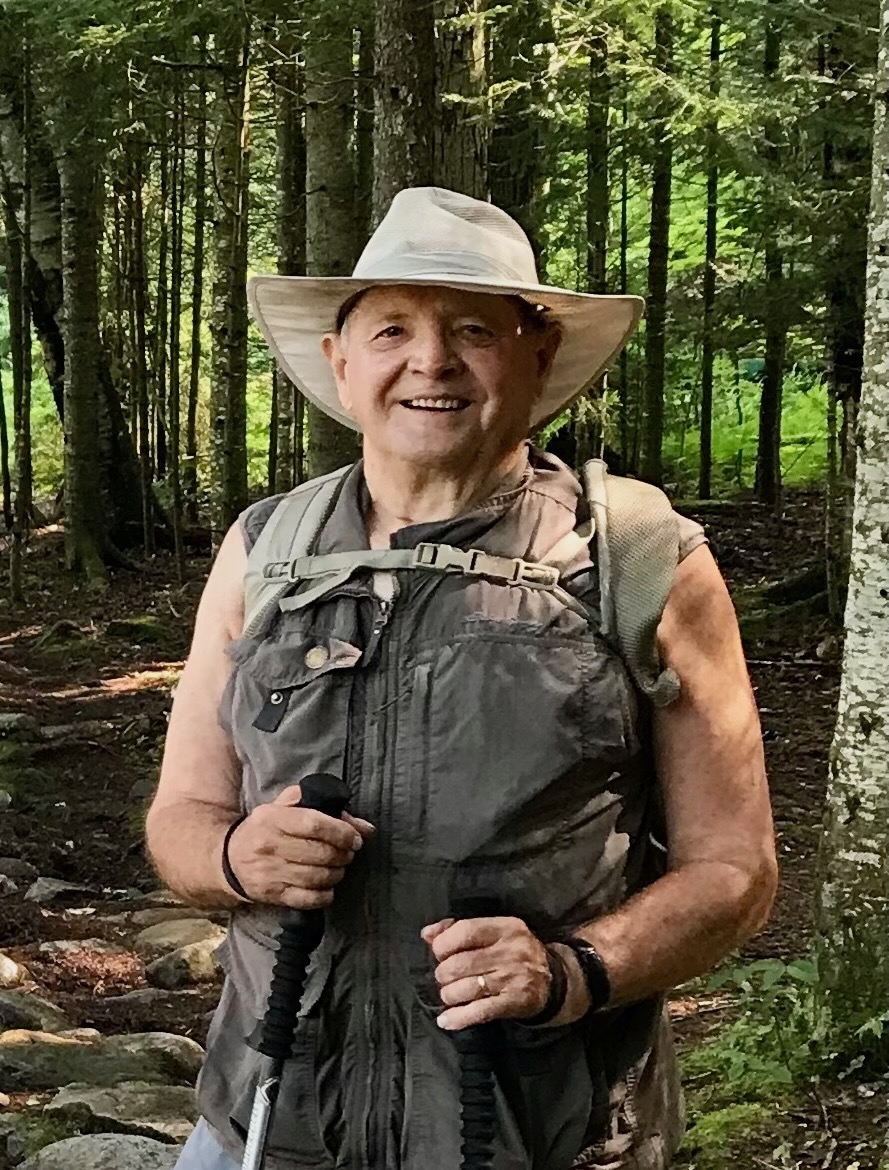
Author/Combat Vet/Retired Attorney
The author wants to inspire people who are struggling with life difficulties, whether they be physical, mental, or spiritual, by showing that we can deal with those issues by putting ourselves out there and not giving up on our dreams, aspirations, hobbies, or the other things that make us happy and fulfilled. Don't give up before the miracle happens. Use it or lose it. Go for a long hike. The author was challenged to do something he thought was totally impossible, in part because he had an artificial knee and he thought was he too old. He went on a life- altering adventure hiking the Appalachian Trail with his brother, both of them in their 70's. The book describes in a journal fashion how they did this amazing journey with 500 beautiful pictures showing what the Appalachian Trail looks like from Springer Mountain, Georgia to Katahdin Mountain, Maine, 2200 miles. The book has inspiring stories of how Rand overcame alcoholism and Ron dealt with the grief of losing of his loving wife, leaving him with seven children 27 grandchildren and 27 great grandchildren. There are many humorous moments along with spiritually uplifting events, including encounters with all kinds of critters and reptiles, nasty weather, and amazing people and vistas.. enjoy the journey!
