Apple Podcasts
 Spotify
 Youtube Music
 Disability Is Not a Bad Word Redefining Inclusion & Breaking Barriers (feat. Jenna Udenberg)
What if the word “disability” isn’t something to avoid… but something to understand?
In this powerful episode of Travel Time Stories, we sit down with Jenna Udenberg — author, disability advocate, accessibility educator, and founder of Above & Beyond With U.
Diagnosed with Juvenile Arthritis at just seven years old, Jenna has spent her life navigating physical challenges while reshaping the conversation around disability, inclusion, and what true accessibility really means. As a 2020 Bush Fellow and the author of Within My Spokes, Jenna shares how her journey of resilience became a mission to create spaces that go beyond minimum ADA standards — because people are not a checklist.
In this conversation, we explore:
✨ Why “disability” is not a bad word
✨ The difference between compliance and compassion
✨ Why accessibility benefits everyone — not just a few
✨ What inclusion truly feels like
✨ The emotional and healing process of writing her memoir
✨ How her nonprofit, Above & Beyond With U, is transforming communities
This episode will challenge the way you think about language, design, empathy, and belonging. Inclusion isn’t extra. Accessibility isn’t optional. And disability isn’t something to whisper. It’s part of the human experience.
Jenna's Website: https://www.aboveandbeyondwithu.org/
Join the community at www.traveltimestories.com learn more about us and our past guests, read our blogs and sign up to be a part of The Story Circle by becoming a member.
Let us know in the comments: What does true inclusion mean to you?
#DisabilityIsNotABadWord #accessibilitymatters #inclusionforall #WithinMySpokes #disabilityadvocate #traveltimestorieswithshannon #inclusivedesign #disabilityawareness #disabilityempowerment #podmatch #tunein #newpodcastepisode #aboveandbeyondwithu
SPEAKER_04
So what happens when we avoid saying the word disability?
SPEAKER_02
A lot of times our insecurity takes over, right? We feel uncomfortable. We don't know what other words to use. We start tripping over ourselves. We start saying other things. And I think, you know, again, some folks aren't there yet in their journey. And that's okay. And some people never do. And some people just really don't like that word. And that is fine. But I think it's being able to ask those questions. And the one saying that I really appreciate from a dear friend a couple years ago, she said, Jenna, how would you want me to describe you to somebody who doesn't know you? Ew, that's a good question. Right. I love it. And it gives that dignity and that agency back to the person. And I think it could work for any people group, right? You know, and how would you like me to describe you to somebody who doesn't know you or hasn't seen you or hasn't been on your amazing podcast yet? You know, like there's just different things, right? And all three of us are wearing glasses. So do we want everybody to make assumptions? Oh, there's that troublesome trio, you know, that eyeglass game.
SPEAKER_03
Every journey has a story, and every story has the power to heal. My story hasn't been ordinary. I was adopted, I'm a survivor of abuse and trauma, and I have more than a dozen siblings. That's just the beginning of my story. Life has taken me on a long and winding road of healing and personal growth. A journey that ultimately led me back to myself and the path I was meant to walk. Along the way, I discovered that stories have power. The power to connect us, to help us grow, and even to help us heal. This is Travel Time Stories with Shannon. Real journeys, real stories, and real healing. Welcome back to Travel Time Stories with Shannon, where real journeys meet real stories and healing happens one conversation at a time. Today's conversation is one that will shift perspectives, expand awareness, and invite all of us to think a little deeper about inclusion, belonging, and what it truly means to create space for everyone. I'm your host, Shannon, coming to you from the Lone Star State of Texas. And some weeks I fly solo and share pieces of my own life story from travel adventures to healing and personal growth. And other weeks I'm joined by my best friend and co-host Ann from Missouri as we sit down with inspiring guests who share stories of resilience, growth, adventure, healing, and lessons that shape who we become.
SPEAKER_04
Today's guest is Jenna Udenberg, a thought-provoking Arthur.
SPEAKER_03
Can I start over?
SPEAKER_04
Both my grandpas were named Arthur, so you're both. Jeez. Okay, let's try this again. You ready? Today's guest is Jenna Udenberg, a thought-provoking author, disability advocate, and accessibility educator.
SPEAKER_03
Diagnosed with juvenile arthritis at just seven years old, Jenna faces life's challenges with remarkable resilience and determination. As a 2020 Bush Fellow, she uses her voice to create more inclusive and accessible spaces for everyone.
SPEAKER_04
Her memoir, Within My Spokes, shares heartfelt stories of perseverance, healing, and the relationships that shaped her journey.
SPEAKER_03
And through her nonprofit Above and Beyond With You, Jenna is transforming lives by championing inclusion and breaking barriers in ways that go far beyond minimum standards.
SPEAKER_04
Jenna, we are so honored to have you here with us today.
SPEAKER_02
Thank you so much. It's an honor to be here with both of you. I'm excited for our conversation.
SPEAKER_03
Me too. So, Jenna, you've said before that disability is not a bad word. Why do you believe that? And why is it important for us to reframe how we think about that word? Yes, I love talking about this.
SPEAKER_02
And you know, the reality is that disability is just a natural part of the human experience, right? Um, when one in four Americans identify as being disabled, that's huge, right? And so we know that there's even more people because it does have a negative connotation for many generations and way more horrific words than disability, right? If we're being honest. So we know that that number is far larger because there are people that are disabled but are not identifying as such because of the negative stigma. And uh I would say, you know, when I was growing up, of course, you know, I was diagnosed in 1987, and so been doing this for 37, 38 years, and I liked some of those words of handy capable, and you know, like I am, you know, more than my disability, and you know, all that kind of stuff. And we all go through our journey of disability acceptance, right? And so as somebody who's been in a chair for 38 years now, I've just come to that point where it's like, let's just stop, right? In kindergarten, we teach little kids that this is a red crayon and this is a blue crayon, and this is a purple crayon, and this is a green crayon. And labels are needed in order for us to learn. But something happens weird in our adult brains where then we start us assigning value. Oh, well, that red crayon, that red crayon is more important than the purple. And that blue crayon is also more important than the purple because you can put the red and blue together to make the purple. So then, therefore, you don't really need purple because we can make that, and that might be a very trivial example of it, but sometimes that's how we can take something that just is, right? I don't see my disability as this amazing superpower. Part one point in my journey did I ascribe to that or at least allow people to say that about me? Sure. At some point, did I allow people to be like, oh, we're so inspiring, and you you deserve this bigger halo and just the life that you've gone through and XYZ. And I understand where that comes from. I too have said that about others from time to time, but now I look at it and go, that that really misses the mark, right? Just like the the former word of handicap, right? Handicap parking and oh, and you're handicapped and all the things. I'm like, I don't play golf, I'm not a birdie, right? I'm not a, you know, all those terms I don't know, not on par. Like just as you already know from our pre-conversation, right? Like, but words matter, right? So for folks that are, you know, at a certain space in their grief journey, in their acceptance journey, disability is not a bad word. It it just is. And I think sometimes by just using the words that are makes it more accessible for everyone. So I think sometimes we just get so overwhelmed with words, right? I I know for me, I'm just like, sometimes I'm tired of hearing my own voice. Sometimes I'm tired of sharing my story, sometimes I'm tired of being in meetings and hearing other people's voices that say that I'm there to be a part of the process, but really they just want to hear their own voices speak and they want nothing to do with accessibility, right? And so those words matter and the connotation behind them matter. And I think the more that we can have curious questions around disability, the more we can take away that negative stigma. And a lot of times people associate disability with like, oh, something at birth or something before death. So when you're a middle-aged woman wheeling through the world, they're like, Oh, but you're not a cute little kid, but you're not a cute little grandma. So we don't really know what to do with you because you don't fit in our definitions of what that looks like. And um, you know, I've been in a chair since age seven or since age eight, but diagnosed at age seven. So I know mobility disability, I know orthopedic disabilities, I know immune and immunocompromisation as far as uh what that did to my body to make me mobility disabled. But then when the pandemic happened and I had to acknowledge my immunocompromisation, my hidden or invisible disability, I had a much wide-eyed open experience of what fellow disabled people go through who have invisible disabilities, that they're not wheeling around in a chair where everybody gets to see and make assumptions right off of what they can see. And so I think the biggest thing is we just have to be able to have those conversations. And the world is going way too fast, and we don't just sit and have heartfelt conversations around these topics, and I think that's where we just need to keep talking about disability.
SPEAKER_04
So, what happens when we avoid saying the word disability?
SPEAKER_02
A lot of times our insecurity takes over, right? We feel uncomfortable, we don't know what other words to use, we start tripping over ourselves, we start saying other things, and I think, you know, again, some folks aren't there yet in their journey, and that's okay. And some people never do, and some people just really don't like that word, and that is fine. But I think it's being able to ask those questions. And the one saying that I really appreciate from a dear friend a couple years ago, she said, Jenna, how would you want me to describe you to somebody who doesn't know you? Ew, that's a good question. Right. I love it, and it gives that dignity and that agency back to the person, and and I think it could work for any people group, right? You know, and how would you like me to describe you to somebody who doesn't know you or hasn't seen you or hasn't been on your amazing podcast yet? You know, like there's just different things, right? And all three of us are wearing glasses. So do we want everybody to make assumptions? Oh, there's that troublesome trio, you know, that eyeglass game, and they all got headphones on too. So watch out, right? The eyes and the ears. And then watch out for those mouths, because I mean we've been laughing and doing all the things. So yeah, so goodness. And I think it's just finding those things that bring us together, right? Like there are more things that we have in common than that truly divide us. And so I think slowing down and having those coffee dates and sitting and having a meal and and asking for permission, that's my new thing for me. Is like, do I ask for consent before I ask a question? Do I frame the question so people aren't misinterpreting the words that I'm using? Right? You know, so like, you know, hey, both of you, I see you also wear glasses. Do you mind if I ask you a question about dot dot dot, right? Not assuming and going, well, how's it going to bifogal and trifocal land? Right. Well, maybe all three of us don't use either of them, right? The assumption is a part of that question versus like just taking a second and being like, Hey, mind if I ask this? And it's okay if you don't want to answer. Yeah, it shows respect.
SPEAKER_03
Yeah, I like that. That's a really great way to come at things and think about things.
SPEAKER_02
And also, like the other one that I love too is like if you want to do it to a non-disabled person, then why are you doing it to a disabled person? So, for instance, if I'm not gonna go, hey ladies, where do you sleep at night? Do you sleep in your office chairs? You know? And again, in context, sometimes you do need to know, like, hey, we're gonna travel, and I need to know what sleeping, you know, accommodations you need. Well, that's a different story, then you need to ask that question. But right. If you're just walking into the grocery store or wheeling into the grocery store and somebody stops you and is like, where do you sleep at night?
SPEAKER_00
In my bed?
SPEAKER_03
Like, you know, like yeah. Or like, how do you go to the bathroom? Correct. I mean, you know.
SPEAKER_02
And usually I say it not well, because nothing's accessible. That's good. That's good. Great answer.
SPEAKER_00
So true.
SPEAKER_03
Yeah, because I was thinking about it before the show, and uh, you know, you just mentioned like travel. We cruise a lot, and I was thinking the ratio of cruise cabins that they have for a ship versus the number of those cruise cabins that are actually ADA. It's like less than a dozen out of thousands of cabins that are actually ADA. It seems like that there would be like a set number percentage-wise that they would have to have, but I guess there's not a regulation on that.
SPEAKER_04
Which blows my mind. There's so many people on scooters in the cruise ship, and and you can't park them in the hallway. That is a no-no. They have to be in your room. Some of those rooms are so tight. I mean, you gotta climb over that to get in and out. And I I'm telling you this firsthand.
SPEAKER_02
Well, yeah, I have not done a cruise yet, but I know there are lots of uh disabled travel bloggers that I follow that they really like their cruises and all that. So maybe someday. Yeah. But yeah, and I'm sure there probably is a percentage in a quota, but I think my question, and I haven't researched this, but my my wonder would be do they originate out of America? So then therefore they have to do the ratios of Americans with disabilities act, or are they owned by other countries that then come and pick up Americans, and then therefore we think we assume, right? Let's use that word. We assume that it's gonna meet our needs. It's gonna we assume it's gonna meet code and law, and then well, this one was built in Germany, or this one was built in the Nordic countries, or you know, whatever. So that's a good point.
SPEAKER_03
Yeah, oops, sorry. I was just saying that's a good point, and I think that's probably why is because they are all built in other countries and carry a flag from another country, they're not US built and based. Right.
SPEAKER_02
And the other part that I I love, I love the baby boomers coming through. And I love the fact that they are now entering my community and culture, probably kicking and screaming in some situations. And they've enter my community and culture, and usually they get mad as heck and they're not gonna take it anymore after like two to six months. And I love that, right? So I'm super intrigued to see how accessibility, how cruises, how casinos, how some of those entertainment and travel spaces are going to have to change because their clientele and the money holders are changing and their needs have changed. And so then therefore, if they're not keeping up with it, they're gonna end up in a hurt, uh, a heap of hurt.
SPEAKER_03
And so yeah, yeah, that's a that's a good realization there because the baby boomer generation is huge compared to other generations that have followed, uh population-wise, and so yeah, that's a very good point there.
SPEAKER_02
Yeah, and that whole misnomer, you know, so many people think that disabled people are also at poverty or below. And is there a good population of my community and culture that are there? Absolutely, and yet not all. And so, like the buying power of disability community, the buying power of the older population. You put us together, we can have some serious hurt and some serious change, but it's let's get together, let's do this thing, let's figure out how do we make it better for each other, not just Jenna go and make life better for Jenna and you two go make life better for you too, right? Like we have to go and do this as a whole, thinking about those alongside of us and those that are coming after us.
SPEAKER_04
Right. We need to be thinking about it now because it's getting ready to really explode. They've got to start getting places ready that news that is that are accessible for everyone. Yeah, it's it's a huge problem.
SPEAKER_02
Well, and then even just thinking of the whole caregiver industry too, right? Like, oh, we're just used to the older population being a certain percentage, and then therefore, oh well, we'll just make sure we have assisted living or nursing homes or care places. And it's like, nope, because we don't have the workforce anymore.
SPEAKER_04
Right.
SPEAKER_02
So it's like, um, you know, I serve on some different commissions locally and regionally and statewide, and it's just like when I look at housing and everybody's just wanting to make the same version of things, right? Let's make individual apartment buildings, let's make individual care spaces, let's have all these rules and regulations that you have to be, you know, a committed couple to have a two-bedroom apartment. Well, I have a niece who has a seizure disorder. She has to have an overnight care person because she has her seizures typically at night. Really? So then you're saying that she can't have housing because of archaic and old policies and procedures that you're just grandfathering in that make no sense.
SPEAKER_04
No.
SPEAKER_02
You know, and it's like, okay, yeah, I have arthritis. I can't do some of my own cares up top because I only have the one arm that reaches. But my joke is always like, well, I can feed you and then you can feed me, right? So, like, why are we making places where you can live independently, but resident A is using their right hand to feed resident B, and resident B is using their right hand to fright to feed resident A, you know, like that is the interdependence that we are going to need. And that's the interdependence that we've always used. But we've believed, and I I know I'm a stoic Scandahovian, right? And so I know that that serves me well. I know when I use my stubbornness for good, it is for good. But the belief that the independent American spirit is, you know, first and primal and best, and and all that, it's like that's not how we're created. That's not how we live in community, that's not how we all move forward and get all of our needs met. So it's breaking down that, and maybe I'll go there, right? It's breaking down that shame. I don't want to admit that I need help feeding myself if if the law came that I had to eat right-handed. Okay, well, I'm gonna find someone else that I can feed with my right hand and they'll feed me with their right hand, you know? So yeah, I hope we can start thinking out of the box and I hope we can really change the narrative and have these continued conversations of aha's to make people think about like, okay, you just said that, but is that what you really believe? Is that what you really think? And now that you just have that realization, do you still want to use that language or do you still want to say that saying?
SPEAKER_04
So you talk about how going above and beyond ADA code matters because people are not a checklist. I don't think a lot of people have really think about that. Can you expand on that a little bit more?
SPEAKER_02
Yeah. So a lot of folks, especially in organizations and agencies and business owners, right? They're like, just give me the checklist. Just tell me what I have to do. So if you were to Google like ADA codes for a bathroom, you're gonna get lots of confusing information. And you're gonna get lots of big words, you're gonna get lots of like, you know, the grab bars next to a toilet can be anywhere from um, I think it's 32 inches to 38 inches. Well, a six-inch difference is huge for people. So then the contractors are like, well, what do we do? No. Um, so I I understand that. And yet there are so many people out in the world still that are like, well, this is this is what we have to do. This is all we can do. It must be here. And that's where Above and Beyond comes in and says, No, the code is just the floor, it is not the ceiling. You can do so much more, and the whole point of it is to live out the spirit of the ADA. So, no, Jenna's not a checklist. I don't send out to the hotel that I want to go stay at. Do you have this, this, this, this, this, and this? I call and have a human conversation with the manager or the front desk or the general manager. And even in some of my recent work, you know, it's like, hey, Jenna, come and see. We put a ramp on this agency space. I'm like, okay, awesome. Hey, we already have handicap parker. See, there I go, using that word, accessible parking. And it's like, awesome. And then it's like for a long time, it's like I got to the door and I'm like, this door is heavy, I can't get in. Other people couldn't, scooters couldn't. Like, oh, you know, and then a couple years later, hey Jenna, now we have power buttons, come and see. Okay. And then I got there for a meeting one day, and I was like, Okay, well, your um executive table is so ginormous in the room that there was no way of pulling out a chair around the table that I could get to to get in. So I as a presenter were was literally sitting between the door jam, like in the middle of the boardroom, making my presentation. And then they're like, Well, what do you mean we have to make things accessible? And I'm like, So on my way here, I stopped into the women's restroom and I can't go to the bathroom here. And I noticed, you know, halfway down the hallway that there's stairs. I can't get down to The offices. I can't get to the front desk area. I can't get to the like staff lounge without going out and around and undoing all the things that you just were super proud about. And I felt bad because sometimes I usually feel like Debbie Downer to people, right?
SPEAKER_03
Yeah.
SPEAKER_02
And it's like, okay, but you fought so hard to get me in the door, but now what do I do? What can I do? And then also what can I do independently and safely and with dignity? Because so often it's like, oh, we'll just ask for help. Well, don't you have your helper with? And it's like, no. You you just don't get it.
SPEAKER_03
Yes. So people need, I mean, they need to stop and think for a minute, put their put their self in another person's shoes and think about, okay, if I'm bound in a chair, like what would I need to get here, there, to do all these different things. Right.
SPEAKER_02
And better yet, it's I know it's really hard for a non-disabled to put themselves in that position because they don't understand all the rest of what life that we bring in, right?
SPEAKER_03
Right.
SPEAKER_02
So the best yet is nothing for us without us. So you should be bringing in representation of people from your community or from your constituents to be in that space with you and then learn together, which is the second part of Above and Beyond with you. Like we want to make those organic, authentic, growing relationships, right? So it's not just a one-and-done counseling or consultation or training or whatever, but it's like, let's make this, right? Like as a 38-year veteran in a chair, I'm learning new things every day about myself, about mobility disabilities, about other disabilities, you know, and the amazing diverse folks that get to live out that experience, right? And so it's like we just have to do it together. And can that get messy? Absolutely. Can that get uncomfortable? Absolutely. Does it sometimes make the project take a little longer? Absolutely. But if you just charge straight ahead and you don't involve the community, well then guess what? You have a nice pretty building that nobody can get in that people can't do basic bodily functions in. And then the other one that I love to flip is because of being a public school educator for well, a school educator for 19 years, um, public for 15, I think. Um when they were building the new high school, I was like, okay, sister, who's a teacher at the time, like I know you're on the committee. So who are you thinking about as your audience the whole time? The kids, of course. The kids, the kids, the kids, the kids. And I'm like, well, what if I came back as an educator to where the new building you're creating? Are you accessible from the teacher side of things? Can somebody in a wheelchair get to the printer and to the fax machine and to the Xerox thing into the different computers and throw the computer lab? Can I get from the front of the band room to the back of the band room? Or is there tiers? And then therefore the kids that are up on the fourth step, too bad, miss, you can't get to you to keep you safe, you know? Like all that. And then it's like, and so now I also twist it because people are used to me being in the education section, you know. I'm like, so superintendent, what if you became temporarily or permanently disabled tomorrow? Can you still do your job? Administrator, bus driver, right? That's always my favorite. When everybody's like, oh, Miss Yu, you're doing the Lego Robotics. Oh, you could take the small bus because you have a small team, and that'd be great. I'm like, there's not a lift on it for me to even be a rider, and there's definitely not access for me to be the driver, which I could totally be the driver, but they don't make accessible driving buses, to my knowledge. So you know, we just have to flip the script. People are living a lot longer. There's a lot of different medical advancements, there's a lot of different medical conditions, like, but the rest of the world has to catch up to the fact of I might have to put my life in the hands of Jenna, the cruise ship driver. Don't do that. But, you know, like the sky is the limit. So, like, why do we keep limiting and being like, oh yeah, we're out of institutions now? Unfortunately, it feels like they're trying to shove us back in institutions. But you're not gonna do that with a baby when we're coming through, and you're not gonna be able to do that with the you know, just the rest of us saying, No, that's not okay.
SPEAKER_03
So yeah, exactly. And people need to really think about the fact that it could happen at any time, something could happen to you, and you know, then become disabled or have you know something happen. I'm in that experience right now, four years ago. My husband out of the blue had kidney failure. Wow. And now he's on dialysis and he's considered now disabled.
SPEAKER_05
Yeah.
SPEAKER_03
And uh, you know, he has to do dialysis every day for the rest of his life unless he gets a kidney. And, you know, we that was out of the blue. We weren't prepared for that, weren't expecting that. He's still young, and so yeah, it can happen at any time. Yeah, and now we've had to change our whole everything. Like, you know, we had to change our space for him. Now he needs different space and accessibility to be able to do his dialysis because he does it at home. And you know, all of this stuff, everything had to change. So, yeah, we've had to learn a lot about accessibility and making changes to our home and different things so he has access and can get things that he needs to get. And yeah, and it can happen at any time. People need to really think about that, right? And it's not accessibility is not just a compliance issue, it's a human issue.
SPEAKER_04
Exactly. Well said.
SPEAKER_02
Yeah, and you know, again with like the housing, you know, the biggest thing is like you don't know who your next friend is gonna be either. You don't know what's gonna happen to your your sister or your brother or your niece or your nephew or your parent or your grandparent, right? Like, yeah, and you don't know who you're gonna befriend, you don't know who your next coworker is gonna be. Like, that was my biggest shock. My robotics team went to state a few weeks ago down in the Twin Cities in Minnesota, and of course it was Valentine's weekend and President State weekend and all the things. We had a hotel and all the stuff, and reader's digest version as first hotel, the pool broke, so they let us know a week in advance. And I'm like, okay, thank you, because I'm not taking middle school kids the night before state and not having a way to let out their energy.
SPEAKER_04
Right.
SPEAKER_02
So they found a next spot and we get there, and it should have told me by the way I saw the accessible parking and lack thereof. It was under old ADA code, and the access aisles were only a foot wide instead of eight feet wide. So as a van user, I knew I'd get blocked in, even in my own designated spot. And went and saw my room, and the room itself was great, went in the bathroom, and I couldn't get my wheelchair anywhere near the toilet because the wall for the shower was like right next to it. And then even in the shower, there were no benches, which was fine because I always bring my own because it's always a crapshoot of what's going to be provided or not provided. And I could have fit my bench in there, but I don't know that my knees would have fit between the wall and my bench. And so after an hour of working with the front desk and looking at the bathroom and the pool and all the things, we found that there's not a single bathroom in that whole establishment that I could use. Oh my gosh.
unknown
Wow.
SPEAKER_02
So then one of my moms, who's also a friend, walked across the parking lot and went into a bar slash restaurant and took pictures. So I'm like, well, at least I know if I need to leave my team. Yeah, it's gonna take me 30 minutes to go to the bathroom instead of 10 by the time you, you know, get through all the things and all the stuff. And so then it was an hour and a half to two hours of sitting in that front lobby, calling around to 30 different suburbs in like an 80-mile radius, and nothing was available. And I finally found one, but there was no other spaces. So my family friends that were gonna come and help me, because I didn't bring a PCA or a family member with, there was no room for them. So then I had to call a different friend to come and be like, So can you be my PCA in the morning? Because you live in this city. Sure. But in the meantime, I was calling all my disabled friends, I mean, like, hey, and then they'd all be like, Well, I have a couch for you, and then they'd be like, Oh, but we can't get your specific chair here. Or my chair works in my bathroom, but your chair won't work in my bathroom. Or other non-disabled friends are like, We can build a ramp, and then they're like, But our bathroom door isn't wide enough, right? So, like you just said, anything can happen at a moment's notice, and somebody needs to come and crash on your couch, or your loved one, or your spouse, or you yourself, right? Yeah, and so it's so eye-opening for like my whole team. My kids didn't really know what was going on because they're all boys in middle school and they're oblivious, which is fine, right? But it was such an eye-opener to the moms and the dads and all my friends of like, we can't help out Jenna. And so then at one point I said, I'm just gonna go find a hotel that has an ICU unit, and I'm gonna go sleep on a couch and hope that I can make up, you know, John Doe, Bob Anderson, you know, like whatever name might be a pretty Minnesotan name. But then on the flip side, it's like everybody assumes medical institutions are the most accessible, and many times they are not as well.
SPEAKER_04
They're not.
SPEAKER_02
I was gonna say, not always, nope. Right. But I was just trying to think of where can I find a couch? Usually an ICU waiting room has couches. You know, like I I could sleep in my van if I had to in a gas station parking lot. That doesn't sound good either. No, no, so just very scary, and just you know, in an instant, life can change and access can change and privilege can change. So yeah.
SPEAKER_03
Wow. Yeah. So why we just talked about some of it, but why specifically, or is there any other example of why accessibility and inclusion is so important, not just for people with disabilities, but for society as a whole?
SPEAKER_02
We are stronger when we're together, and we're stronger when we embrace the lived experiences of each other. And so if we're not practicing accessibility and if we're not practicing inclusion, we are missing out on over a quarter of our population. And that shouldn't feel good to any of us that hear that. Right. No, that's so sad. Right. And, you know, and and even in my work, like, you know, we were talking at a leadership meeting last week in our, you know, in our our rural community, and I'm just like, in all the spaces in our town, if you want to have an event on a weekend outside of our community center that has accessible bathrooms, kind of, right? Like we make it work, it has the bare necessities, but it's not above and beyond with you design bathrooms, and access into the building is a little sketchy. A side door is better than the main door, right? Um, there's nothing. And so what do you do when you're trying to be a community organizer, right? For us, like we're trying to find some coffee times or trying to bring the disability community together. But that means reaching out to the assisted livings, it means reaching out to the nursing homes, it means reaching out to people that you know, because it's not like we just have like a bat single, a signal, right? You know, like, oh, homie pigeon, that house that hands a ramp, I'm gonna go knock on the door because I can get to the door, right? Like people will be like, Udenberg, stop stalking us. And so um, you know, it's like, how do you find your people? And then how do they authentically know that it's okay? And maybe they're somebody that hasn't accepted their disability or they don't use that terminology, right? So then and it also came down to like, oh, well, I'm privileged, I have my own accessible van, I drive myself, but so many people, especially in my rural community, they're dependent on you know our public transportation, which is a call a dial ride, right? Um, and then you know, costs so much more now in the recent uh year or so of life. And so then it's like, well, do you want to cause a financial burden for somebody to come and have a free cup of coffee? Well, wait, let's think about all of our restaurants and all of our coffee shops. And while some have amazing bathrooms and amazing menus, and their staff are very well trained, they have gravel driveways while trying to push a chair. Like today, I went to one of my favorite restaurants with a good friend of mine, and also we got the driveway. And like I told you earlier, we had a 22-inch blizzard a week and a half ago, right? And now it's 47 degrees today. So imagine what that gravel driveway looked like. Oh yeah, oh yeah, and she didn't even dawn on her until she opened the door and her feet sunk in the mud, and she went, Jenna. And I'm like, Well, I thought about it about halfway there, but we were just so involved in her conversation because you know me, I'm not a talker at all.
SPEAKER_03
No, God, no. You really have to force you to talk, Jenna. Telling me, Jenna.
SPEAKER_02
Wow, like open that mouth, Utenberg. Come on. So, yeah, and she's like, seriously, you thought about it that far back and you didn't say anything. I'm like, they have our favorite item, and we've been waiting for six weeks to finally schedule a lunch. We are going. Even if you feel like you're pushing me through a dirty diaper, the whole half a block that you're pushing me to get to the ramp. It was just so gross. And my family hates when I say that.
SPEAKER_00
So, like, how do you know that poopy diaper feels like?
SPEAKER_02
I'm like, just sit in my wheelchair and feel the slidiness through the wheel. Like, you guys are never gonna be the same after this interview. I'm so sorry.
SPEAKER_04
Girl, my dad was in a wheelchair for a while. He kind of uh akined it to the same thing, so yeah, no, we've been to the poop diaper thing.
SPEAKER_02
Right. I'd like there's gotta be some mem core memory, right? Right back there that's like, ooh, that's what that felt like. I feel that. But yeah, so it's like, so then how do you move your programming forward? How do we live out what we're saying, what we're promoting if we can't be like, all right, so we're gonna pay for the bus. Okay, well, we're gonna have to block off that parking spot so that the bus can drop off folks, you know. Um, and then I had a good friend of mine locally too that's like, so what about accessible food? And I'm like, say, what? Tell me more about that. And she's like, Well, my, you know, my child that has cerebral palsy, but they also are have sensory needs. So, like, this kind of chicken nugget isn't gonna fly, but that kind of chicken nugget will fly. And then she's like, and what about a visual menu? And I'm like, Well, wait, what? Tell me more. And she's like, Well, think of folks that are starting the dementia journey. Think of folks that are non-verbal, think of folks that English is their second language. If you had a picture menu, it is so much easier. And then I'm thinking, you're right, because what do I look at when I'm looking at the menu boards or when I'm cruising online, right? It's all just human nature. We'd rather see a picture of what the burger looks like than just go, sure, I'll pay 18 bucks for a single cheeseburger, you know, like yeah, like show me what I'm getting, right? Yeah, and so we just learn from to we just learn from each other.
SPEAKER_03
Yeah, and you do the same thing when you travel and you go to a foreign country and you don't read the language and the menus all in the native language, you're wanting pictures, so you can at least look at a picture and go, that right there. No, I mean, we just did that in Puerto Rico. The menu for the restaurant that we went to was all in Spanish. Well, we don't speak Spanish, and we couldn't even read the descriptions of what anything was because it's all in Spanish, and there were no pictures.
SPEAKER_04
No, it was on a chalkboard, and you're like, But do you know what saved us? Some clever person down at the bottom wrote sampler platter. You're like, Yep, we'll take that. We said, We'll take that.
SPEAKER_03
Nice. That's yeah, that makes sense though. That yeah, the picture thing for the minis is that's a wonderful idea.
SPEAKER_02
Yeah, but yet it's funny because so often you get pushback from it. And like for the little mom and pop shops, like I do get it, right? Because finding workers is hard, all the things. But then on the same respect, I'm like, but you just posted this picture on Instagram and Facebook. But you have this menu special like once every other week or once a month. Like, yeah, we don't expect like everything right now, boop, gonna be fully accessible, right? There is no easy button when it comes to it. But if you're showing and you're thinking through that of like, hey, we're just gonna archive this picture, and yeah, every Monday it's a hot turkey sandwich. We don't need to retake the picture, it's already there.
SPEAKER_04
Here you go.
SPEAKER_03
Yeah, yep. Yeah. And in this digital age, I mean, come on. It's not that hard and not that costly to make a picture menu.
SPEAKER_00
Right.
SPEAKER_03
It just takes time.
SPEAKER_02
I think that's just the hardest part of it. Yeah, it takes time. The flip side of it, my president, who's one of my best friends too, she uh we were just in a meeting earlier today, and um, I just totally lost my train of thought. I hate when the train leaves the station and doesn't leave the itinerary. Where's gonna hop on that train again? Before I get on it.
unknown
Right.
SPEAKER_00
Oh, girl, it happened.
unknown
Right.
SPEAKER_00
Choo choo! Stay off the track.
SPEAKER_03
Yeah, and when the curtain, the curtain falls, or whatever. That's what she calls it. The veil.
SPEAKER_02
Yeah, yeah. Is it gonna come back? So, Jamie, what were we talking about before it? Picture menus, social media, the words.
SPEAKER_04
Digital age, yes.
SPEAKER_02
Yeah, okay, so the intent. So and we just brought up like the disability community is one of the most loyal communities. And word spreads fast. Because if you treat us well and you treat us right and you treat us like humans, man, that comes back tenfold. Because it's not only just us who are gonna return, it's our family, it's our loved ones, it's our non-disabled friends because they're going, yeah, you're doing this right, this is awesome. Keep doing you, we're gonna support you. And so, in this example um of the meeting we were in, too, it was just like, you know, okay, so right now you're talking about the Instagram influencers and like folks, and like in that generation, and like those, those are your kind of your audience members. And I'm like, that is awesome. And yet, that generation, a lot of them, they're not gonna go to places that don't stand for the moral code that they live their individual lives by. So if you're promoting that you're making this accessible and that accessible, you're promoting that you're welcoming to all, you're promoting that this is how you give back to the community as a small business, you're gonna get loyalty after loyalty after loyalty. And so that just really spoke volumes to them. And I was like, right, because that's what it's about. I don't return to the places that make me feel like crap. I don't return to the restaurant that's several years ago. Well, now it's a parking lot, but neither here nor there, where a worker was coming out after their shift, and my friend was pulling me backwards through snow and muck, and the lady yelled back by the time she got to her car, like, Oh, I'm so sorry, do you need help with that? And my friend had to grab the fat on the back of my arm through my big heavy winter jacket and she whispered in my ear, don't you dare. I was like, I'm not a that, you know. Do you guys need some help? Can I help you? You know, like and have I said dumb things, yes, probably many times today that I'm aware of and not aware of. So I do have grace, I do have forgiveness, but when that happens multiple times in a day and it's all the time, and you're treated as an inadiment object, or I'm treated as just the chair, right? Like I am free in my chair. My wheels give me freedom. So that is my life, that is how I thrive. And so it's just like, I don't see it as a negative, I don't see it as a hindrance, I don't see it as anything, whatever. And sometimes I just have to laugh because some of my non-disabled friends, I'm like, you're really not getting it. So sometimes I think your legs are getting in the way. Not that I want them to go cut them off or anything. Like, I don't wish that people are disabled. But then also when people tell me stories, you know, kind of like you shared with your husband, you know, again, what's the knee-jerk reaction? I'm so sorry. And the pity and that, you know, just all that kind of negative, depressive stuff that just kind of drips on you. And sometimes we need to just have that validation, like, wow, that's really gotta be that's gotta be rough. Or I I can't imagine all those changes at once, right? Like, yeah, some of those kinds of things are more empowering and more validating than just the I'm so sorry. Oh, the weather today. No, you didn't listen to me. You're not you're not engaging with the story in which we're telling. And then you're adding your own interpretation, right? And I still have even you know, loved ones and family members that are just like, oh, you're so inspiring. And I'm like, Cause I left my apartment and checked my mail today, like yeah, yeah, right? Well, well, you did too. Should I say that about you? Is that what you're looking for?
SPEAKER_00
Oh, you're so inspired, you know.
SPEAKER_02
Yeah, yeah. Yeah. So now I usually flip it on people if they say that. I'm like, oh, that's awesome. What did I inspire you to? Do or how are you changing something in yourself based on what we've shared? And they're like, Yeah, deer in the headlights. Right. Like, I'm gonna make you put your money where your mouth is, right? It's like, right.
SPEAKER_00
What are you inspired to do? Go check my mail. That's so good. Oh, I love that. Oh my goodness.
SPEAKER_03
It comes down to uh a past guest that we just had on the show. Uh, his philosophy is humans helping humans. And I love that philosophy. And that's what we need to have across the board, no matter what it is, whether it's we're talking disability, we're talking helping kids in need, you know, whatever, just to be humans helping humans and doing what we need to help each other. Yeah. That's how we that's how we make a great world. That's how we get stronger.
SPEAKER_02
And I've really noticed in the last couple of weeks, being out in community, that people just need us to put the phone down or put our own schedule and agenda away and just say hello. Right? Yes. The cost of smiling is nothing. The cost of saying hello is nothing. Like the other day, I was in a grocery store between medical appointments in the next bigger city, and this lady that I could tell had some cognitive something going on, but I was like, I don't know, because she was just talking behind me about celery, and I'm like, I don't know, I'm busy picking up my berries and whatever. And here I'm like, I keep hearing her ask about celery, and I'm like, what is going on? Well, here nobody around her was acknowledging her. So then finally, and of course she didn't know any of our names, right? We're all just out in public, nobody knows anybody. And so then I finally looked at her and she's like, Do you know where the celery is? I'm like, Oh, I'm so sorry I didn't know you're talking to me. Yes, it's right around the the corner here. So just cut through that little alleyway and and come right back around. Well, then I saw she went all the way down to the end, and then I'm like, oh no, I've lost this lady. So then I whipped around, I grabbed the celery, and I'm chasing her around this door trying to find her, and I can move very quickly in my chair, right? So I'm like, if I was not disabled, I'd be like sprinting, right? And I'd yeah, whatever. So I like see her at the end, and so I'm like trying to get down to her, holding up celery, and the lady that then helped her didn't see me. So they're peeling around and going the long way, and so then I literally pull up right behind her. I'm like, I'm sorry, ma'am, I found you celery. And then the lady that was helping her was just laughing, like, it's right here, too. Like, how nice of you, right? But I'm like, normally I would have just been like, I don't know you, I don't know what's going on, you know, and I would have already been checked out and back out to my van. And I'm like, nope, something inside of me, you know. The spirit nudged me and said, You know where the celery is, just go and help this person, take the extra five, you know, what I thought would be an extra minute that turned into an extra fan. But it's fine, right? And now I can say that story. And she was the cutest thing because I was heading back to my van. And at first I was kind of grumbling because this van was parked up on the sidewalk, and I'm like, Why are you on the sidewalk?
SPEAKER_00
And then all of a sudden I heard, thank you so much for my salary.
SPEAKER_02
And then she's, you know, waving at me in the front of the van, waiting for the driver to come back. And I was like, you know, that's what it means to be a human. That's what it means to just get over ourselves and do the next right thing at the next right time.
unknown
Yeah.
SPEAKER_03
Exactly. So, Jenna, can you uh tell us about your memoir that you wrote within my spoke?
SPEAKER_02
Yeah. So I wrote that as part of my 2020 Bush Fellowship. And uh, I'd always been told from a young age that, Jenny, you need to write a book. And usually it's because I can make people laugh in the most uncomfortable and weird ways.
SPEAKER_03
No, really, I never would have thought.
SPEAKER_02
I know. I have no stories to share and I have no words. So um, I was very blessed that I got to use some of my fellowship funds to be taught in writing, to be taught in publishing, and I'm self-published. So there was just a lot to learn, right? It was a lot of work just to bear my soul and then figure out what gets cut and what doesn't get cut. Um, and also finding the right words, because I don't ever want to hurt loved ones, family members, friends, any of that kind of stuff, right? And yeah, you know, we do better when we know better, but in the same respect, this is this is my story, but my story is intertwined. So the word tapestry was given to me before I wrote the book, so that's why it's part of the subtitle Um, A Tapestry of Pain, Growth, and Freedom. And so it really tells my whole story from, you know, growing up rural Minnesota, being a Tom boy, doing all the outdoor things. And then the family story is I had a fall at an outdoor flooded rink in February of 1988. And the next morning, getting ready for first grade, I was in our goldenrod bathtub having an awesome um bubble bath, and my right knee floated to the surface and it was twice the size of my left knee. And that's when I yelled for my mom, because any little girl, mommy can make things better.
SPEAKER_03
Right.
SPEAKER_02
I went to the doctor, and the doctor said, Oh, I think your daughter has water on the knee, so if it's not better in a couple of days, bring her back and we'll shove a ginormous needle and take out all the extra fluid. And thankfully, my dad had been a volunteer ambulance driver back in the 70s for our small community. He's like, My daughter is not an athlete, she does not have water on the knee, something else is wrong with my kid, and we got a second opinion, thankfully again in our small town. And that doctor took some blood work and looked at an x-ray and just said, Mm, I'm pretty sure you have juvenile rheumatoid arthritis, which then led to going to the next big city and seeing a rheumatologist. And he said, Yeah, you have JRA, but I can't be the final diagnosis because Lyme's disease, the tick-borne illness was fresh on the scene, and a lot of the symptoms are the same, at least at that time. So I had to go down to Rochester, Minnesota to the Mayo Clinic and finally get my official diagnosis. And so that's really where the story starts. And then you, you know, hear about going through high school, hear about me and the struggles I went through in order to be able to walk for graduation, and not walking in an ableist way of like this is the only way, but walking as in the sense of like, hey, I've done three or four orthopedic surgeries by that time, and this is a sign of health and strength, and this is, you know, this is for me, it's not for others, kind of a thing. And then lots of things through college, and I share some really heartfelt times, you know. I knew the chancellor of our large university because of all of the different disability claims I had against a discrimination against professors and just lots of not okay things that shouldn't have been happening in the early 2000s. And, you know, goes into me being coming a teacher and just all the things, right? It also talks about my depression and my um plans of suicide that I had at 15. It talks about my faith and how I have found my faith versus my family's faith and versus um other people's expectation. And then it does talk about coming into community leadership and being a Blandin community leader, becoming a 2020 Bush fellow, becoming a 2025 Shannon community leader cohort member. And so it was in that process like that's a lot, right? It was a lot to relive life. But the greatest piece of advice that I got from my writing coach was write your story on the day that you have the energy for that part of your story. So don't write your story of depression when you're on a mountaintop, great day, because a reader is gonna lose that. It's not doing it justice to the story in which you have to tell. And so throughout that whole process, it was like I become so much more aware that everybody has a story, and every story is so important. And maybe not every single story gets published, and maybe not every single story goes through. There's a lot of stuff there, even for self-publishers, right? It's not like a book just magically appears on a Kindle or magically appears Amazon or a library or whatever, right? There, there's a lot of blood, sweat, and tears and work behind it. But I just really became so fully aware that it's and during that process, it took me about a year to write my book. Um, but I did take about a three-month sabbatical from it because I was like I said earlier, I was so tired of hearing my own voice. Yeah. I was tired of hearing my story, I was tired of hearing my voice in my ears and in my head. Like, yeah. So then I found all these other amazing books, and a lot of them are youth novels, that the heroine or the you know, main character is a disabled person. That was not heard of when I was growing up. I was only lonely. There was no representation, right? Yeah, or if there was, it was really not okay representation and using us as tokens to get some bill across or get some policy across, right? It wasn't working with us, it was working to us or for us, right? Things were being done to us instead of with us. So yeah, I loved I loved writing my book, and I I love the fact that all the proceeds go to the nonprofit and go to continuing the work, and um that it's just it's like my business card, and that's the only reason I actually wrote that book at that time because the the person that ran that school that I went through is like, Do you have time for 5,000 coffees to sit down with 5,000 people? Or are you gonna sit down and write a book in three months or whatever the title? So, could I have had 5,000 coffees in a year? No, I'd be exhausted. That's a lot of retelling your story and over and over. But finding it out as your business card or being on a podcast to say, here is my story, go and read it, and then connect, you know, connect through our website, connect through our socials, whatever. Like, now let's take that next step together. But it is kind of freaky coming back to your question, too, because people saw me on the street and like, oh, you're Jenna. I put that in my book, like what? Like, wait, what? And then two of my good friends, they've had people in their communities and in a community that we share as well. Oh, Megan, I read your book. Oh, Jamie, I read your book, and they're all like, What are you talking about? And they're like, Oh, Jenna's book. You read Jenna's book that I happen to be a part of in a chapter or two. Yeah, Jenna's book. They're like, Your book, Megan, I read your book. Jamie, I read your book. And I'm like, that's what I love because that's why it's a tapestry, right? All of our lives are interconnected. So have at it, Megan. You have a book. Have at it, Jamie. You have a book. Just happens that my name is on the author line. It's okay.
SPEAKER_04
I I love that so much. Jenna, what do you hope your readers take away after turning the last page?
SPEAKER_02
I hope that it challenges them to think about life differently for themselves, for others, how they interact and interface with people with disabilities, but then how also how they look at themselves. And maybe part of my journey resonates, but maybe it's part of a journey they've already been on as well. Or maybe it's preparing them for their next season in life, whether it's their disability or a loved one's disability. And I hope I I hope it leaves them laughing and smiling and kind of shaking their head of like, seriously, lady, wow, okay, right? Um, and I hope it makes them check out our website. I hope it makes them want to connect and and learn more and do more together. So yeah.
SPEAKER_03
That I I love the fact that I wasn't aware that the proceeds from the book go toward your nonprofit. So that's great. That's a really great thing to do. Yeah. And so where can listeners find out more about you and support your mission?
SPEAKER_02
Yeah. Um, Best Place is our website, aboveandbeyondwithu.org, and it's the letter U, not Y-O-U, because it's a nod to my last name, because little kindergartners could not say hey, Miss Uutenberg by the time I was already in the other wing of the school. So they called me Miss You. So aboveandbeyondwithu.org is our website. And on there you can see all the services we offer from consulting to training to site assessments to public speaking, being on your podcasts. Um, and then also there's a link to the book, so you can get the book anywhere you can purchase your books. It's available in ebook, paperback. And now we just launched the hardcover because I had a disabled podcaster say, I see you only have paperback and that doesn't work for me. And I'm like, Oh, I got you. Give me a couple months, but I got you. And maybe by the time this releases, uh, my audiobook will also be out and about. So um, if audiobook is your style and it's not out yet, it is on its way and it is my voice. So if you like my voice, bonus. If you're not a big fan of my voice, sorry. But you get to hear um some of the inflections and laughs and all that kind of things. I think I might even snort once in my reading of it. Um, but yeah, and then we're also on Facebook, Instagram, and LinkedIn. So we love connecting, we love engaging with folks. Um, and if anybody's traveling to Minnesota, we've been known to help them figure out accessible options up here as well and give recommendations and all that. So we just want to make the world a better place, one accessible space and place at a time. And as my parents always taught me to leave places better than I found them, more clean, more tidy, all the things. Early on in this work, I said that that I've changed that. I want to leave people in a better place than where I found them. And in the last few months, I've changed it also to be not only don't do I want to leave people in a better place than I find them, I hope that they also leave me in a better place than they have found me. So that is my my goal.
SPEAKER_03
I love that. I love that. That's an amazing goal. We should all strive for that.
SPEAKER_04
Right?
SPEAKER_03
Absolutely. Yeah. Jenna, this conversation's been eye-opening, empowering, and honestly very necessary. So thank you for the work you've been doing and for sharing your story so openly. Your message reminds us that inclusion is an extra, it's essential, and that accessibility isn't about meeting a minimum requirement. It's about honoring humanity. And so, for everyone listening, we hope today's episode invites you to look at your spaces, your language, and your mindset a little differently. And if this episode resonated with you, share it, start the conversation. Inclusion grows when awareness grows. And we you will find Jenna's information in the show notes and on our website, traveltimestories.com.
SPEAKER_04
And as always, folks, keep traveling, keep growing, and keep making memories for life.
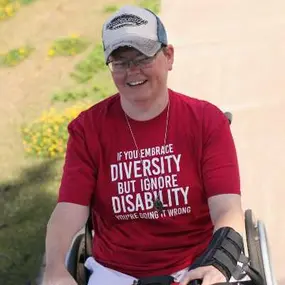
Accessibility Educator/Disability Activist
Jenna Udenberg, a thought provoking author, disability advocate, and accessibility educator. Diagnosed with Juvenile Arthritis at just 7 years old, Jenna has faced life’s challenges with incredible resilience and determination. As a 2020 Bush Fellow, she uses her voice to create more inclusive and accessible spaces for everyone. Her book, Within My Spokes, shares heartfelt stories of perseverance, healing, and the relationships that shaped her journey. Jenna’s work through her nonprofit, Above & Beyond With U, is transforming lives by championing inclusion and breaking barriers.