
 Apple Podcasts

 Spotify

 Youtube Music
Life as an Expat: Raising Kids Abroad & Empowering Women Over 40 to Travel | Paula Barnes

Have you ever dreamed of living in another country? Paula Barnes, host of Truly Expat Travel, shares what it's like to build a life abroad, raise kids as expats, and encourage women over 40 to embrace new adventures.
In this episode of Travel Time Stories, Shannon and Ann welcome Paula Barnes, host of the Truly Expat Travel Podcast, for a conversation about building a life abroad, raising a family as expats, and encouraging women over 40 to embrace new adventures.
Living abroad is about so much more than exploring beautiful destinations. It's about adapting to different cultures, creating a sense of home in unfamiliar places, navigating family life far from what's familiar, and discovering how those experiences change your perspective on the world.
Paula shares her experiences of raising her family as expats, the inspiration behind her travel podcast, and her passion for bringing women together through group travel experiences designed for women over 40.
Together, we explore what it means to step outside your comfort zone, connect with others through travel, and recognize that some of life's greatest adventures may still be waiting for you.
✨In This Episode
🌍 Life as an expat — The experiences and realities of building a life in another country
👨👩👧👦 Raising a family abroad — Navigating parenting, cultural differences, and creating a sense of home
✈️ The expat perspective — How living in different places can change the way we see ourselves and the world
🎙️ The Truly Expat Travel Podcast — Paula's podcast journey and her passion for sharing travel experiences
👭 Travel groups for women over 40 — Creating opportunities for women to explore, connect, and make memories together
💜 Friendship and connection— The importance of finding community through shared adventures 🌿 Travel and personal growth — Why stepping outside our comfort zones can open doors to new possibilities
✨ Adventure has no age limit — Why midlife can be a wonderful time to discover new places and experiences
Travel isn't just about the places we visit. It's about the people we meet, the perspectives we gain, and the versions of ourselves we discover along the way.
Whether you've dreamed of living abroad, wondered what raising children in another country might be like, or are a woman over 40 ready to explore more of the world, this conversation is an invitation to consider what's possible.
Because the next chapter of your life might just begin with a plane ticket.
About Our Guest:
Paula Barnes is the host of the Truly Expat Travel Podcast, where she shares conversations and perspectives inspired by international living and travel. Drawing on her experiences raising a family abroad, Paula also organizes group travel experiences for women over 40, encouraging connection, exploration, and adventure.
Paula's Information:
Website: https://trulyexpattravel.com/
Podcast: https://youtube.com/playlist?list=PLh9ghNtPKC2788sDbcEtkzhwuqEcDP2bP&si=8lWkXk2r_9sS5YSK
Instagram: https://www.instagram.com/trulyexpattravel
Facebook: https://www.facebook.com/trulyexpat/
Join the Conversation:
Have you ever dreamed of living in another country? Or is there a destination you've always wanted to explore but haven't taken the leap?
Tell us in the comments! We'd love to hear where your next adventure might take you.
❤️ If you enjoyed this conversation, please LIKE, SUBSCRIBE, and SHARE it with a friend who believes the best adventures are still ahead.
#TravelTimeStories #PaulaBarnes #expatlife #livingabroad #womenover40 #womenwhotravel #midlifeadventure #grouptravel #travelpodcast #podmatch
SPEAKER_01
So you host the women's group for women over forty-five. What were women telling you that they needed that inspired you to create this space?
SPEAKER_00
They needed someone to travel with. They didn't want to travel alone. Their husbands are working all the time or they might be divorced. I've got a few people that come to me divorced or not even married, never married, but all their friends have at that other stage of life where their husbands and them are traveling together. So they've got no one to travel with. And so I was like, yeah, why do we have to travel alone if we don't want to travel alone? This build this community, and you've got all these people. And I'm also not 20 anymore. I'm not going and I'm not going to bar hopping. I'm not getting up at five o'clock in the morning and going to bed at some three o'clock in the morning. And I'm not going, go, go, go. Yeah. It's and I've been on tours like that, and that's not me. And I know that that's not the girls or the women that I have have spoken to.
SPEAKER_01
What happens when the life you built begins to change? The children grow up, the roles shift, and suddenly there is space where responsibility used to be.
SPEAKER_02
For some women, that space feels unsettling. For others, it begins to feel like freedom.
SPEAKER_01
And sometimes stepping into a new life begins with something as simple and as terrifying as booking the trip.
SPEAKER_02
Today we're talking about solo travel, starting over, living abroad, and discovering that adventure does not have an expiration date.
SPEAKER_01
Welcome back to Travel Time Stories, where real journeys meet real stories and healing happens one conversation at a time. Today's guest understands that travel is about so much more than ticking destinations off a list.
SPEAKER_02
Paula Barnes is a travel creator, podcast host, and expat storyteller behind the Truly Expat Travel Podcast. She has spent nearly two decades living across Asia, raising her family overseas while building a globally mobile life that did not follow a traditional script.
SPEAKER_01
Now a relatively young empty nester, Paula shares honest, experience-led insights about expat life, solo travel, identity, and what it means to reinvent ourselves as we move through different seasons of life. She also creates community for women over 45, encouraging them to travel with confidence, build meaningful connections, and explore what may still be possible. Paula, welcome to Travel Time Stories.
SPEAKER_00
Hi, I'm so excited to be here. And that was an amazing um intro, by the way. Thank you so much.
SPEAKER_01
We're so excited to have you today. Exactly. So everybody grab your favorite beverage and let's get into it. So, Paula, before we get into the solo travel and reinvention, I'd love to start with the beginning. How did you first end up living abroad? Was that always like part of the plan, or did life take you somewhere unexpected?
SPEAKER_00
You know, it goes back to when I was 21, actually. I went overseas and my then boyfriend, who is now my husband, came over a few weeks later and said to me, I was moving abroad. So I was going to do the England, I was going to travel a bit. And he was like, Well, we did the backpacking thing, and he said, if you come home and we get married, maybe one day, then we'll do it. And I was like, Oh, okay, okay. So, you know, we met within the year we were engaged and and married the year after. So uh I'll speed it up 10 years, and my husband came home and said, You know what? I have a job offer. It's only six months, it's just uh on a project, and let's take the kids to Taiwan. And I was like, Yeah, let's six months sounds like like a kind of holiday. So yeah, yeah, let's do that. So I was working remotely at the time, uh kind of, and so I was able to take six months and uh, you know, and go on this holiday, which I thought was like Thailand. I was gonna be drinking mojitos on the beach, but it was Taiwan, it's not that. It is China, it's China, like it look, it's more like China. So after six months, uh, I thought that was it, and that was 19 and a half years ago. So I'm still this was not the journey that I thought I was gonna. I was gonna do a six-month stint and that was gonna be it. But yeah, no, I'm still here. I'm still in Asia. That's amazing.
SPEAKER_02
That's so amazing. So nearly two decades in Asia is not just an extrended extended trip, Fala. That becomes that becomes alive. At what point did you stop feeling like a visitor and begin feeling like an expat?
SPEAKER_00
I think after, I think when I first moved to Hong Kong, which was the second assignment, because the first one I did everything wrong. Everything that you say not to do. So, you know, I stayed in the wrong area, I didn't get a helper. So everyone has a helper in Asia, which makes life easier when you don't have family around you to help you and your husband's traveling all the time. So I didn't have a helper, I lived in the wrong area, I didn't know the language. And so I was like, this is hard. This is really hard. The second time around, I hired a helper. I started to learn. So the other thing is that when you move somewhere and you say you're in gonna be six months, people don't want to know you. It's too, you know, like you're you're you're gonna go in six months. It's too much to put too much effort to put in. So I definitely would not tell, I would tell everyone, do not tell people how long you're gonna be there. And then you start becoming an expert because you come, you get friends, the kids have friends at school, your husband, you know, he he starts to get his flow into work. Because six months is really just not enough time, really, to get to know a place. Twelve months, I find, then you feel like home.
SPEAKER_01
Yeah, that makes more that makes a lot of sense. I mean, here even just moving in the States, you know, if you just go somewhere for six months, you you really don't learn the area, get to know anybody or anything like that. Yeah, you need a a good solid year or more.
SPEAKER_02
So I agree at least.
SPEAKER_01
Yeah. Yeah. So when you first moved overseas, what were you most excited about and what were you completely unprepared for?
SPEAKER_00
Yeah, there's a lot of things I wasn't prepared for. It's definitely not drinking my heaters on the beach, that's for sure. I think the thing for me was that uh the things I w wasn't prepared for, the things that let's start with the things that I was excited about. So I did it, I did think that, yeah, okay, I took some time off and became mum. And that's the thing that I was really excited about. I wasn't at first because I was so career focused, but then I realized my husband's traveling all the time and I don't want to be him to be, you know, the kids to be brought up by helpers. I just didn't want that. And so I took about five years off and I became mum and I loved that. That was so much fun. The kids, although they drove me crazy and I couldn't wait to, you know, for them to put them to bed. I just loved it. I loved being mom and being around and meeting people, and so that was a thing I was really excited about. And the things that I did completely wrong and and took me, you know, is that unfortunately I had a miscarriage at quite a late stage. So I think it was 18 weeks. That I wasn't prepared for because you don't you you you don't have family around and my husband was traveling and it was like well, what do you do? Right. So that that was one thing I was not prepared for. But then what happened was it had a community around me that was like my family. And I didn't realise until then that they were like my family. And so they took the reins, you know, like they took the kids while I had to go to hospital, and you know, they did so much. I can't even like to this day they're still my very good friends. And I was wasn't prepared for the loneliness that people don't realise how lonely it can be when you're looking online and all your family is doing all these things together, and you're like, I'm missing out, like I'm really missing out on those milestones. So there is so much what people don't realize is that there's so much that you have to give up to to have this life, but there is so many rewards as well. So it just seems to be that the pros outweighted the con cons in the long time in the long run. So so yeah, that's kind of that's what I think. People may think differently.
SPEAKER_01
Right, yeah.
SPEAKER_02
I I agree with that assessment. So did you ever have a moment really early on where you thought to yourself, what have I done?
SPEAKER_00
Many, many. Especially when you move to a country that I remember when we first moved to Seoul and I was sitting in I was sitting on the computer having a bit of a cry because it had not stopped raining since I got there. So summer is monsoon season. So excuse me. Rained and rained and rained and rained, and I hadn't met anybody, and I was probably two months in, and my helper that I had hired wasn't really working out. She was, yeah, she just wasn't working out. And I was like, what am I doing? Why am I doing this? You know, and the language is hard, and and then you go into winter and it's freezing cold. But I tell you what, I look back now, and those friends are probably my best friends uh because you're doing it all together in a in a a little bit of a difficult country. And so there are there's a lot of times, you know. When my dad passed away, I was like, what am I doing here? Why why am I here when I should be there? My pet and my and my mum got dementia, and I was like, Well, should I be moving home now? There's so many times, but I think we, you know, it's only a plane rider away. It's seven hours away, you know. I can get on a plane at any time and be there tomorrow morning. So yeah, that's why I'm still here.
SPEAKER_01
So you describe your life, Paula, as one that did not follow a fixed script. And were you always comfortable living differently, or did you have to unlearn the ideal that there was one right way to build a life?
SPEAKER_00
It was hard. Like at first, it was an adventure. When the kids are little, it's an adventure and you think, yeah, I'm gonna go out on this. When the kids get older, it then starts to become you realize then how different your life actually is compared to everybody else. And I remember one day I had said to my son, because they all also went to boarding school by choice. And I remember at the time, I'm from an Italian family. We we stay with our kids until we're grandparents and then they still live with us. So I remember my family saying to me, What are you doing? Why are you sending them to boarding school? What what kind of mother are you? And I'm like, Do you know how hard it is to send those kids to boarding school? Probably the hardest thing I've ever done. You know, they chose for different reasons why they needed to go to Australia, and I couldn't go there with them because I had my husband. So I used to do two weeks in Australia and two weeks in um Malaysia at the time for four years, and then it it was it's just the way I could then be part of that. I that's why I say I'm a part-time empty nestor, because I used to spend half the time with the kids and then half the time without the kids, and yeah, that was hard. Like that was really hard. But I think for me and I think what happened is eventually I realized that this life is probably more suited for me. I spoke to my son when he was probably about 18, 19, he's 27 now, and I said to him, Do you regret growing up the way you did at international schools and us moving around? And you don't have those friendships that your friends do that had started in when they were four or five and went all the way up to you, year 12. And he he was like, I have friends all around the world. Do you really think that that was a bad childhood? I was like, okay, this is the life I chose, I think, accidentally, and it's the life that I love. I actually love being an expat. So yeah.
SPEAKER_02
I love that. So, you know, as we've been talking, you raised your family overseas. What did you hope that your children would gain from growing up across different cultures?
SPEAKER_00
Do you know the one thing that I'm most proud of that the kids have grown up with a real open mind when it comes to culture and people? And I love that about them. You know, I remember one of the kids had come home and said, Can you believe that these kids were saying, you know, you this person is Chinese? And he's like, Does he know that he's Japanese? Like he doesn't even speak that language. I like that he knows and respects other other cultures and understands that you can't pigeonhole people into uh demographics just because they are from that kind of continent. And I love the fact that they have friends that are all nationalities and that they all have a different language that they could speak, and that they have all lived abroad and understood the cultures. And that's the one thing I think I wanted them to learn is to have respect for other cultures and understanding. And every country we've lived in, I'm I did some sort of volunteering with the kids so that they could see the other side of expat life, you know. This is this is great, this bubble we live in, and that we can bring them up in this very, you know, safe environment. But it's not reality, you know, it really isn't reality. Most people aren't living like that. And I love that the kids to this day still either volunteer or they give money to charities. And I like that about them. And I didn't make them do that. That's something that they have understood along the way and appreciated. And I love that about them as well.
SPEAKER_01
So I I guess you would say that's some of the lessons that they taught you about adapting. Because children seem to accept a new world more easily than us adults do. Definitely. Absolutely.
SPEAKER_00
That's so true. Yeah. I think for them as well, I think I have learned so much about being a mum to them. So I'm grateful for them for teaching me. Because they're all three different kids and three different, you know, they had three different experiences in each place that they lived. And I think I had learned that you're always as happy as your unhappiest child. So that was one they just took. Yeah.
SPEAKER_02
Definitely. So, were there traditions from home that became even more important and special when you were living abroad?
SPEAKER_00
Yeah, definitely. I think the whole term third culture kid is really like I didn't realize I lived up as a lived as a third culture kid. I had a father that was a migrant, and in Australia, I grew up with traditions that all my friends didn't have. And so when we moved abroad, I always wanted to make sure that the kids had, you know, whether it's birthdays or whether it's Christmas or, you know, Easter, I wanted to make sure, even if we weren't living in a Christian country, that we still had those traditions. The kids still, uh in when we're living in Malaysia, my son was going to Italian school so that he could at least keep up his Italian, even though I don't really speak it very well. So I wanted to make sure that they their identity wasn't lost in the the countries that they lived in. So yeah. Or we or Australia Day or whatever it was that that wasn't really uh a tradition of that country. I wanted to make sure that the kids still had that in them.
SPEAKER_01
Yeah, I love that. That's that's really good. So people often romanticize living abroad. They picture beautiful scenery, exciting food, and endless adventures, like you were talking about the mojitos. What are the emotional realities of ex-pat life that rarely make it onto social media?
SPEAKER_00
Yeah, I I think people think that being, I hate the word traveling spouse, but being a traveling spouse is someone that has long lunches, that has a helper that that takes after, takes a load off and takes after the kids or runs after the kids. But I think what people don't understand is that, okay, so at Christmas and you really want to be at be home with everybody, you can't go for whatever reason it might be. You know, COVID was a perfect example of how awful it was. You know, I hadn't seen my husband in six months. He was stuck in Singapore in Singapore while we were in Sydney. There's little things like that. Yeah. And you know, I remember at one stage someone just said, then just quit his job and come home. I'm like, it's not that easy. He doesn't have the experience of living in Australia. And so how do you just quit? Money still has to come in, you know? It's right, exactly. You still have bills to pay. Yeah, exactly. And I think people forget that. I think people think we're doing this for the yeah, we're doing it for the experience, but it it's so that we can set ourselves up for the future and then we can have a retirement and maybe a little bit earlier, or maybe we can set the kids up so that they could because in Australia at the moment, I I just feel for the kids. I don't know how they're ever going to get ahead. And so if we can help them in any way, then that's what we're here to do for them. So I think people don't realize it's that it's times like that, or when my son had an appendicitis and I was distraught. And so I got on the first plane I could, and it was lucky that it was just after COVID, so I was able to get on a flight and get in the next morning. But as soon as I arrived, they wouldn't let me in the hospital because of COVID. And I had just come off on an international flight and I was crying. And I'm like, my son's up there waiting for me, please. And he's like, they're like, No, no, no, sorry, you can't. And as soon as I finally did get up there, they're saying, Oh, sorry, he's just gone in, he was waiting for you as long as he could, but he really needs to go in. So it's times like that where people don't realise how actually how hard it is. Or when you have to send your kids to boarding school and you're walking around an apartment and all of a sudden there's no noise. You know, there's so many times where I think, what am I doing? What do I need to go home? I should go home, it's so much easier. But then would I leave my husband here on his own? No, I can't do that. We're a team, but uh yeah, there is hard times. Yeah.
SPEAKER_02
So you touched on this a little bit, but expat life looks so exciting. You travel, you live somewhere amazing. But you touched on the loneliness in the beginning. I'm wondering, but I don't think a lot of people expect that.
SPEAKER_00
Yeah, do you know it's this life isn't for everyone. Let's set that on the table. Because you have to be a person that is willing to put yourself out there and be vulnerable. And not everyone can do that. And when you first move to a place, uh it's a little bit easier when you've got kids because then you go to school and you meet people at school. But if you don't have anybody and you have to put yourself out there and meet people, it's daunting, you know, and you know, good it's almost like you go, like you're a kid again. Can you be my friend? I've got no friends here, so please be my friend. And it it can be so lonely at times, you know. And your husband is traveling, so there's lots of nights where you eat at home on your own. Or that's I think that's why quite often we kind of band together so closely. And when they're away, it's like, well, what are you doing tonight? Let's go out for drinks, let's go out for dinner, or come around. Because otherwise, you know, in some regards, I would love to have that life where my husband came home, we'd have dinner together, we sit on the lounge, we chat, but that's not my reality. And so my reality is that for me, I threw myself into work. I'm lucky, I'm one of the lucky ones. So this life that I've created of myself is on the back end of being a housewife and living this life and not being lonely. I you know, so there is quite quite often I do speak to people who say, It's really hard to make friends here. How do you make friends? You just need to find the right people. That's what it is. You just need to find the right people.
SPEAKER_01
Yeah. So what happens to the ideal of home when you belong to several places?
SPEAKER_00
Home is where the kids are for me, you know, like the when the kids are in Sydney and I go to Sydney, I'm home because that we still have a place there, so it's nice to be able to go there. But then I do say uh I'm going home to Hong Kong because I lived in Singapore for eight years and I've just literally just moved back to Hong Kong. And so Hong Kong is always going to be home because it's so it's where the kids spent most of their childhood. So for me, it feels more like home. I've still got friends there. I feel blessed that I can call so many places home, you know. So if I feel I get into the airport in Singapore, that's home to me. I was just in Singapore yesterday, so that still feels like home to me. But then every place I've lived feels like home. And I feel very blessed and lucky that I can say that. You know, just don't ask me where home is. When people say to me, So where are you from? It's like, well, what are you asking me? Is it are you asking me where I was born, where my parents are from? Where I live, where my kids are. What are you asking me? So yeah, that's easy. Just don't ask me where I'm from.
SPEAKER_04
I love that.
SPEAKER_01
I like that too. So you describe yourself as a relatively young empty nester, and that is a transition that I relate to deeply. What did becoming an empty nester stir up for you?
SPEAKER_00
It's hard. I think people don't understand. I think I had the illusion that when I was becoming a full-time empty nester, I was gonna have this magnificent life. I wasn't gonna care anymore. Kids have got their own life. But in fact, it's hard because all of a sudden that identity you had as mum has gone. And it's it's like I always say my husband goes, Oh, you're over-dramatizing. But I'm like, it's like being CEO. You're a CEO of a company. And then all of a sudden, you get someone comes up to you and taps you on the shoulder one day and says, Okay, I'm sorry to say you're now the janitor. You know, like you've been demoted and you're no longer running this company. You just need to be cleaning up the mess along the way. And that's what it feels like being an empty nest star because all of a sudden, those kids that you needed to take to soccer or that you needed to give permission to go to someone's house or a holiday or whatever it is, you're all of a sudden they've got their own lives and you're texting them saying, hello, proof of life, are you still out there? Whereas before you were getting constant calls, Mom, can I go here? Mom, can I do this? And then all of a sudden you're not that mom anymore. It takes a while, it takes a lot, you know, and that's the reason I started these hosted trips was because we're all in this together. We're all feeling this, you know, because you no longer have that, those groups of kids to take on holiday with you. You no longer have a family trip picked. Yeah. And so you've got all this time all of a sudden and you don't know what to do with it. Well, come on a holiday with me. That that's what I think you should do. And then explore the worlds because I forgot how much I loved traveling until I started traveling solo.
SPEAKER_01
Yeah. Right. Well, I need to sign up to come on a trip with you, Paula. Yeah, that would be fun. I'm ready. I'm ready.
SPEAKER_02
Yeah, exactly. So, did you experience some grief alongside the freedom of being an empty nester? I did.
SPEAKER_00
I did. Shannon big time. Yeah. Do you know people think I'm crazy because I used to go into the kids' bedrooms and have a cry, go through their wardrobe, that they had things they left behind, you know, pack, clean their rooms. And it it was then that I realized I just miss them. I missed that stage of my life, you know, that I was had a full house with kids when even when they were young teenagers, it was like, you know, sitting at the table, talking about day, and you know, that's that loudness or me screaming at them, stop throwing the ball in the house, you know, it's all gone. That's all gone. And all that those years of really, really, really wanting five minutes to yourself, all of a sudden you have a lot more than five minutes and you don't know what to do with it. And I think I grieved that stage of my life when the kids moved out. And it took me a good year, I think, of discovery, of realizing so many other people are in the same boat, and all of us, you know, how can we get out of this slump, right? Because it's really sad. And I was going back, and even my daughter, at one stage, my daughter said, Mom, you really don't have to come back as much as you do. I was like, Okay, okay, I won't come back. And then so I didn't come back for a couple of months, and my son rings me and goes, Mom, what are you doing? Where are you? Why aren't you coming back? And I'm like, Well, I didn't, I wasn't. She says, No, no, don't listen to her. I want you back. Yeah, because they want me to do their laundry. But anyway, that's another story.
SPEAKER_01
Yeah, yeah. So I think it sounds like you went through the same process I did. I had those same feelings, went through that same thing, and that's when I began asking myself, who am I now? Yeah, you know, and so do you think travel was part of how you begin to answer that question for yourself? I know it was for me. Yeah.
SPEAKER_00
Yeah, yeah. You know, the first time I traveled, that first year that I traveled on my own, uh, firstly, I was scared, like absolutely scared, because I'm I know I'm a grown woman, but it's scary going to a place with awful directions like I have and not speaking the language and getting confused and getting lost. And I did all of that that first year. And I remember that first year, I still felt guilty. Oh, you know, I bought the kids so lots of presents. I every time I went on a trip, I bought them stuff, and because I still had that mum guilt, you know, like I'm going on this great trip without them. And after a while, I think I realized that um I started saying, it's okay. It's actually okay to have a really good time on my own, and it's okay to be loving this new life that I've got. And, you know, it's okay to say to the kids, I can't come back all the time because this is my new life now. You know, starting and I I remember at one stage my son came into me one night and was asking me some of these questions. I said, you know what? You have to understand, I have to look after myself first so that I could be a better mum for you. You know, I need to think of me first for the first time in my life, because I he was born just before our first wedding anniversary. So I've only ever known being a mum. That I've only ever known putting them first, you know, and all of a sudden, it's not that I'm putting not putting them first, because if they caught me, I'd be there in a flash. But right, I also needed to want to know who I am and what I love doing. I don't have to now go to all these fun parts when I go on a trip. I can actually go to the museums and spend hours in there and read all the things that they hated doing. And now I can enjoy that. You know? It's yeah, it's it's starting to say yes to me.
SPEAKER_02
So do you think Ipteen nesting is less about losing a role and more about being invited to meet a version of yourself that has just been waiting?
SPEAKER_00
I totally agree that I I think that I had been waiting so long and didn't know I was waiting to be this version of myself because it's not that I am happier now, because I'm very happy being a mom and loving the hectic lifestyle, but I am now also doing a job that I love. Like I really love doing it. This isn't work. What I do isn't work because I just get up every morning and love, even if it's a four o'clock flight in the morning, I'm okay with that because I can sleep on the plane. I know I'm getting to the new destination. So this new life and this new chapter also involves loving the kids at their age, you know, like going on a trip with them is so different now. You know, it's and it's so much it's so enjoyable. And they sometimes teach me lessons. They, you know, they'll ring up and go, Mom, do you think it's a good idea to be doing that on your own? I'm like, Yeah, actually, no, maybe it's not. Maybe it's not.
SPEAKER_01
Great. I love that. So let's talk about solo travel. What was your first meaningful solo trip like? Were you excited, nervous, or a little both?
SPEAKER_00
Scared. I think the first solo trip for me was scary. It was scary, it wasn't a hundred percent scary because then I met these great people and it ended up being a great trip. My very first solo trip that year was in Italy, which was a little bit safer because I met up with my cousins and my auntie, and so it felt safe. My second trip, I went on to a conference in upstate New York, and I was petrified because I got off the flight and I had to get my car and drive from JFK all the way up to upstate state New York. I was jet lagged, it was pouring with rain, and I was driving on the other side of the road, and I was like, this is scary. This is so scary. But I did it, and once I got there, I had to put myself into a position that I needed to meet people because all these people looked like they knew each other. And conference was a big conference, it was a travel conference. I went up to the first person, and she's still my friend today. I went up to the first person I saw and said, Oh, hi, I'm new, I've not been here. And she opened her mouth and went, Oh, you're Australian, you're an Aussie. Oh my gosh, hi. So we just hung together the whole time, and honestly, it was the best trip. It was the best trip because I then drove all the way to Toronto to visit a friend. I just was like, This is fun. Actually, I could do this, and that was the first time I was like, I, you know what? I think I can like solo travel. Yeah. And America's an easy place to navigate to, so that was a good first trip.
SPEAKER_02
So there's a big difference between being alone and feeling lonely. What has solo travel taught you about that distinction?
SPEAKER_00
Do you know it's funny because I think I used to be that type of person that needed a thousand people around me. I needed the energy of people to then become alive. And so to some degree I do. I'm still like that. But I think what happened when I started traveling solo was that I was never lonely because I have my phone and I would record everything. And when I started doing it on social media, it's funny because I did the the Camino a few years back and I would I would talk every day about how hard it was or how good it was or whatever. I started getting like hundreds of like messages from people saying, you can do it, stay with it, you're and I was like, I'm not alone. I might be traveling alone, but I'm not alone. I've got the internet there following me. Yeah. And right, yeah. And you also, I think when I'm traveling alone, a lot more people will come up and talk to me. If, but if I'm traveling with someone, you're kind of in that hub and people don't really talk to you. But when you're alone, yeah, I think they feel sorry for me. It's like this middle-aged lady hanging out by herself. But it's fine, I'll take that. So you do, you get to meet so many more people because it might be that you ask them for directions and then you talk. Yeah. I mean, people I've met on a plane, on a train, on a on a ferry that are now still my friends because you know, you link up through social media. And if I'm somewhere, I get messages, you're here, let's catch up. I'm like, okay, let's catch up. And so I do that now, and I'm blessed to be able to do that. And it's fun. Like I really enjoy doing that.
SPEAKER_02
That's amazing.
SPEAKER_01
Yeah. Yeah. So what do women often discover about themselves when they travel alone? That you can do it.
SPEAKER_00
That you don't have to rely on other people, you know. Like I used to rely on my husband to carry my suitcase up a hundred stairs. And for those who know Europe very well, there's never an elevator. So don't take those big suitcases. Yeah.
SPEAKER_01
Do not do it. Do not do it. No.
SPEAKER_00
No. All the cobblestone streets that you're trying to, you know, my actually my wheel broke off the last time I used it. I know the cobblestone streets. So yeah, don't do it. Not surprise. Not surprise. You girls would know exactly what I mean. Yeah. So you and I learned that real quickly. I think you realize you can do things on your own, you know, if you have to get in that car. I remember last year. Yeah, last year I was in Sicily and I drove all Sicily on my own. And Palermo, for those who are listening who ever want to go to Palermo, do not get a car. It is chaos. And I remember sitting in my Airbnb with my friend because I was going to drop her at the airport and then I was going to stay there one more night and then go to the next destination. And I remember sitting there having a bit of a panic attack because that street is so narrow. And I knew I had to get out of there and then tomorrow have to do it on my own. With her navigating was a bit easier. And so I was like, oh my gosh, I got to do this all on my own. She's I don't want to leave you. And I'm like, I don't want you to leave me either. But I thought, you know what? I'm not going to stay here tomorrow night. I'm going to actually stay an extra night at the place I'm staying like tomorrow night because I'm going to come out there with you. Because I know myself, their decisions I need to make. I can't do it on my own. I need to go. And so I did. I stayed an extra night at the the following place because I knew that the the place I was staying at had wider streets and I could park in a big car park and it wasn't chaotic. So there are decisions you have to make on your own. And you learn you learn to navigate and make decisions on your own. And it actually is a little empowering. Because I could do this. I can I can actually get in a car and drive on the other side of the road. You know, it's it's not a problem. Or I could go and I did zip lining in Aquebec last year. I'm scared of heights, but I did it anyway. You know, it's stuff like that that it's it's quite rewarding.
SPEAKER_01
Yeah, we we're both scared of heights too, but we absolutely love zip lining. So we've been in multiple places we've done ziplines.
SPEAKER_00
Wow, okay, okay. So you understand what I mean. Like it's it's daunting at first. Yeah.
SPEAKER_02
Yes, it was Yeah.
SPEAKER_01
I I was the first one to do it. Uh I was with my husband on the trip, and of course, he's into all of that, you know, anything extreme, whatever, he'll do it. And he was like, Oh, we're doing zip lining. And I was like, Okay, all right, I'll give it a try. And yeah, so I did it. And once I did it, and I saw, oh my God, I can do this. And it was actually really cool, everything that you see when you're doing it. And so then the next trip, Ann and I were together, and I booked the zipline for us, and she was panicking. I was like, Trust me, you're gonna be scared, but after you go that first line, you're you're gonna love it. And she did.
SPEAKER_02
Oh, yes, I love it. Absolutely love it. Do you think solo travel builds confidence or does it reveal confidence that we already had in us, but we weren't using?
SPEAKER_00
I think it does both. I think when you don't expect it, the confidence comes. But I think deep down it's always gonna be it. I think in some respects it's always gonna be in you. But uh I believe that on every trip I have to have one of those times where your stomach turns. That's that's my new thing, you know? And that I used to avoid that completely. And now that I do it, every time I do it, I can do something next time. I can do something next time. And I think you do have the confidence in you, you just gotta find it, you know? Right. You just gotta take that first step. And once you take that first step, then the second step and third step say is so much easier. Yeah.
SPEAKER_02
Yeah, you look back and say, Well, we did it here, we can do it again. Yeah.
SPEAKER_00
Yeah, like the zip lining, right? It's not actually as hard as you think it is, it's in your head.
unknown
Yeah.
SPEAKER_00
Exactly.
SPEAKER_01
Yeah. You hit the nail on the head there. You learn that when you get that little feeling in your stomach and you push through it, instead of, you know, letting yourself not do it because you got that little feeling. And after you do it, you realize, oh my God, that actually wasn't bad. It was actually good. I enjoyed it. Or it's something that maybe you always wanted to try, but were too scared to, and you do it. Maybe you didn't like it after you do it, but at least you could say, hey, I checked it off my list. I did it one time.
SPEAKER_00
Yeah, exactly. That I totally, totally agree. It like those little tiny streets in Italy. It's not my thing. It is not my thing. On my own, it's not my thing.
SPEAKER_02
No.
SPEAKER_01
Yeah, we learned we learned that driving on the islands in Scotland, the little bitty one-lane, windy roads around the mountain where you can't even see what's coming at you. Yeah. Yeah, we learned that. Yeah. We're like, never again will we drive here.
SPEAKER_02
Fortunately, I was used to lake roads, so it wasn't too bad. I was not panicking. But yeah, if you were not used to roads like that, I imagine that you would be panicking on those islands because they're so narrow and blind.
SPEAKER_00
Yeah. Did you drive in Ireland as well? Because Ireland has those tiny little streets as well. They're scary.
SPEAKER_01
No, we did not. We we went on a trip a few years ago to Scotland, and we were there for 16 days, and we rented a car and just drove all over the whole country. Then we drove out to the islands and went island hopping, and yeah, it was it was amazing. It was. And that was our first time driving on the opposite side of the road.
SPEAKER_02
I don't know about you ladies, but anytime I get that butterfly and I push through and do it, I feel like I'm this much stronger. You know? It did. I just that strength hits you.
SPEAKER_00
I think. It does. And you also I I feel like all of a sudden I'm an adult. Like I still feel a kid inside sometimes, but then I think, okay, I can do that. That's easy. You know, it's actually not so bad. It's funny how your head is your worst enemy. Yeah. It's honestly it it critiques you and tells you what you can't do, but in fact you can. When you tell yourself you can and you do it, it's like, yeah, actually I could do anything. Almost exactly. Yeah.
SPEAKER_02
Almost anything.
SPEAKER_01
Women traveling over 45, what fears do they usually tell you that they have or that you've noticed that they have? Is it regarding like safety, navigation, or being judged because they're traveling alone?
SPEAKER_00
What's usually the top fears? I think the main thing is not knowing anyone. That's the first thing. They're like, I don't know anyone on this trip. Am I gonna like them? So what I tend to do is I I tend to once a month do like a Zoom call with some of the people and say, This is, you know, Mary, this is uh Jan, and you know, you're gonna be on the same trip and then get to know each other before it actually starts. So that by the time the actual trip happens, everyone's conversing on WhatsApp anyway, like they know each other. So I want them to be comfortable. And I think that also they're just scared to not know people on the trip. Once they know people and then they know who's coming, they feel a little bit better. And I think also traveling to the destination that we're gonna meet at, quite often they will end up going, Oh, I'm I'm coming from wherever it is, Melbourne. Why don't you we try and get on the same flight? And even though they don't know each other, which that is also a comfort in itself. Uh, but I think that is that's been the main concern. Everything else is fine because they're like, I'm doing it all. So any questions that they have and they message me and I'm like, okay, that's fine. I can find out everything for you. And even the transfers at the so what I've been doing is getting people to come three days before the actual tour, and we can get to know each other, we can suss out this area, have a look at places that I have been to before that I really enjoyed. And so I tend to uh get a transfer. I don't want them to catch an Uber or a or a taxi if they don't have to. I want to make it as seamless and as easy as possible so that they feel comfortable on the next trip, you know, and that all they can do it themselves.
SPEAKER_01
Yeah. So travel can also be transformational, but it can also bring out a lot of emotions to the surface that maybe you haven't faced yet. So why do you think leaving our normal environment makes it harder to avoid those feelings than ourselves?
SPEAKER_00
I think when you travel, you all of a sudden you've you get to know yourself. You know, you get to know your limitations, you get to know um because when you're in the comfort of your own home and you're doing the things that you've done for years and years, you don't push yourself to any other limit, right? So when you travel and you have to, you have to get on that zipline or you have to get in that car and go down those little Scottish streets, you go, you you go, can I do it? I don't know, can I do it? Am I brave enough? And when you realize what you can do, you're not actually that scared little person anymore. And you're never the that scared person at home because at home you're so comfortable in your surroundings and you know, you know, you don't even know navigation to get to the shop or to, you know, you know that if you run out of something, you can run down the shop and get it. When you're traveling, you don't know where the next grocery store is or where you can get some money out and you've only got five dollars left in your thing, and all of a sudden you didn't know that you had to have cash on you. Done that a few times. And so you learn a bit about yourself and you have to become vulnerable too. And if you're a person that's not vulnerable, it's really hard to ask that person for directions or you know, tell someone you're stuck, or I quite often embarrass myself and say to people, if I feel uncomfortable, I will say, I'll get to the hotel and say, I don't know my way around here. Can you please tell me how to get to A B or C? You know, and I I was in Istanbul last year and I couldn't get my phone to work. I just landed and I'm like, my phone is my security because it's got everything on it from my bank to my GPS to you know, everything. So I got in the taxi and pretended that I was on the phone to my husband because I didn't know him. And I was like, oh yeah, hi, yeah, yeah. He's he's driving a little bit fast, but yeah, yeah, it's fine. Because and then I got to the hotel and I say, I said to him the next when I woke up the next morning, I have no phone, I have no GPS, and I have no way of knowing how to get to I wanted I only had a couple hours before I had to go to the airport again because it was a it was just a transit. And I I said, I don't know how and I'm really bad with directions. He said, you know what? It's fine. I'll take you over to the tram. You just follow the tram line and you won't get lost, and you follow the tram line back. And I'm like, okay, thank you. I feel better. Because you have to be vulnerable and you have to, you know, otherwise I would have stayed in my room and done nothing. So I'm glad I did. It's a beautiful city.
SPEAKER_02
So have you ever taken a trip expecting escape and instead found yourself confronting something that you had been avoiding?
SPEAKER_00
Yeah, I think it's funny. So last year when I was in Italy, I was I was there on Mother's Day. And I didn't get a phone call and I was very upset. And I'm thinking, I'm the worst mother in the world. They don't even want to call me. They did. They called me in the evening. But I really went through the motions of like, you know, am I doing the right thing? Am I the worst mother in the world? Because they're not even caring enough to give me a call. But what they had done is they had wanted to wait altogether to call me together in a FaceTime. But I didn't know that. So I'm like re rethinking my whole life and saying, well, I'm going to quit all this and I'm going to go back and I'm going to be mum again. And I, you know, nobody cares about me. No one loves me. And I'm alone in this hotel room and I'm driving on the wrong side of the road. So yeah, I think quite often when you're alone and you think too much. I think. And you start to discover things about yourself that you probably don't like as well, you know. Or you realize. I think for a long time, especially when my dad died, I think I was running from feelings, you know, like I did or from memories. Like I couldn't listen to any of his music. I couldn't watch, look at any of his photos. I could and I just kept going. I was so busy, kept going, kept going. And I think when I finally sat down with it and realized how much I missed him, that the tears came, you know, like this is I have you have to go through those motions to be able to come out the other side. And if you keep running from them, they get worse, you know. They they really get worse.
SPEAKER_01
Yeah, exactly. Yeah, they do.
unknown
Yeah.
SPEAKER_01
You host the women's group for women over 45. What were women telling you that they needed that inspired you to create the space?
SPEAKER_00
They needed someone to travel with. They didn't want to travel alone. Their husbands are working all the time, or they might be divorced. I've got a few people that come to me that are divorced, or not even married, never married, but all their friends have at that other stage of life where her their husbands and them are traveling together. So they've got no one to travel with. And so I was like, Yeah, why do we have to travel alone if we don't want to travel alone? Build this community, and you've got all these people. And I'm also not 20 anymore. I'm not going and I'm not going to bar hopping. I'm not getting up at five o'clock in the morning and going to bed at at some three o'clock in the morning. And I'm not going go, go, go. Yeah. It's and I've been on tours like that, and that's not me. And I know that that's not the girls or the women that I have have spoken to. And so we want something a little slower paced, but we want to experience and we also want to do things that that nobody, well, not everybody does, you know, like I'm not going to Paris. We've done that, or they've done that. I'm not going to go to places where they've done that with their families or when they're child, like when they're younger. I want to take them to places that are a little unique, a little different, you know, like we went to Bhutan and we went to Sri Lanka, places that not everybody puts their hand up and wants to go to, especially solo. That's the other thing. I don't I want to take them to places that I don't even want to go solo, you know. So that that makes a difference as well.
SPEAKER_02
So do you think women in midlife are hungry not just for travel but for community?
SPEAKER_00
Yeah. I think community is a big thing because we have spent so much of our lives being that um the the head of that our own little community, our own little family. And when they go off, which you want them to do, you that's what your job is, right? You want them to clip clip their wings and and head off and have this amazing life. But then all of a sudden you're left behind and you don't know exactly where you should be or where you fit. And when you start meeting other women in that same boat who feel the same way as you do, why do you need to be alone when you can build this community? Whether it's off going playing pickleball every Friday, or whether it's traveling together as a community, whether it's going online and finding Facebook groups that have the same interests as you, we're really craving community. We really are, because when we've nurtured for so long that we need to be nurtured in some regards.
SPEAKER_04
Right.
SPEAKER_01
Yeah, exactly. I think it seems like it's harder making new friends at this stage of life than any other stage of life.
SPEAKER_00
Absolutely. Especially in our own home country. I find it so much harder when I go home to Sydney because everyone is already kind of in their own little thing, if you know what I mean, a little groove. Yeah. And so when you're an expat and you have to start over again, and it's like, where? Where do I find my people? Where do I find my tribe? You know, I'm not going to be doing it at the schoolyard anymore. If I did, it was very creepy because I haven't got any kids there. So it would be, and it's not acceptable. So don't do it. So you need to find that community. And I think for me, travel was that, was definitely that that community that I didn't know I needed.
SPEAKER_02
I love that. So, what makes travel such a powerful way to create connection between women?
SPEAKER_00
Experiences. I have learned that the the more things that go wrong on a trip, the funnier it is, and the better you become friends, you know? Yay! My very first trip in Sri Lanka was full of everything, everything you can imagine happened, you know, and still to this day, we still have a WhatsApp group together, the Sri Lankan and OGs, and we laugh all the time. Whether it's a meme that we send each other, whether it's a little message to say happy birthday, because we bonded so much on that holiday because from you know, little things like we had all these women on at the platform that wanted to fight us, fight us, like we're all women. What are you doing? It was so fun, like we laugh now, but at the time I said, What are you doing? And then we all bonded together and said, You can't pick on us. Yeah, that kind of thing. It was just so weird. All those little things where, you know, we stayed in a hotel that was so unacceptable that we were like, What are we doing? And we all bonded together and said, We can't stay here. It's this room is full of mold. You know, those little things made the trip. Well, it taught me a few lessons too. You really need to know your your tour guide and your tour company before you travel. But I was learning too, and they accepted that. They they accepted that I was learning to be a host my own. So they they backed me up, you know, and definitely experiences is uh the the worse this experience, the better you become friends.
SPEAKER_04
I love that.
SPEAKER_01
I agree with that. Ann and I call those misadventures. Yes, and we only like to travel if if we have misadventures.
SPEAKER_00
I mean, otherwise it's not even Yeah. What are you gonna tell people? I went to this beautiful museum and saw this great art. Nobody cares about that. They do want to know the other stuff though.
SPEAKER_02
Right.
SPEAKER_01
Exactly. So for a woman listening who wants to travel but feels overwhelmed, where should she begin, Paula?
SPEAKER_00
She if she wants to travel on her own, she should definitely book somewhere close by. You know, whether it's in the next state or the city or town, on your own for two nights, and you know, you can drive there, you can stay at a hotel. Things are kind of familiar because you're speaking the same language, you can ask for advice and see if you like it. If you don't like it, then then go on a tour. The set next step would be go on a tour. Doesn't have to be my tour, but if you go to all, especially when you go on an all-ladies tour, you kind of feel a little more safer as well, especially if you're female on your own. And also when you're in a group of women, something different happens. I can't explain it. You know, when there's men on board, it's normally couples, so they stay together. But if you're all women, generally speaking, you're more open to having a bit of a laugh and, you know, misadventures together.
SPEAKER_01
I love that.
SPEAKER_02
Yep. And finally, Paula, what does freedom mean to you now?
SPEAKER_00
Freedom means that I can actually get on a plane anytime I want, on any time of the day, at any place in the world, and feel comfortable that I can get to the next destination and not feel overwhelmed or scared. Or, you know, I I think freedom for me is that I'm not tied down. I am tied down in some respect. I still have a family, I still have a husband, so I'd still have to be home. But generally speaking, I can make my own plans. I don't have to worry about is this person gonna like it? Is that person gonna like it? I can be my own person. I can stay in a budget place or I can stay in luxury, and no one, no one's gonna worry except for me. So that's freedom to me.
SPEAKER_02
There you go. That is freedom, girl.
SPEAKER_01
Yeah, that's that is freedom. I totally agree with that. Paula, what I love about your story is that it reminds us travel is not simply about doing somewhere new. Sometimes it's about allowing ourselves to become someone new. Definitely.
SPEAKER_02
Or perhaps returning to the woman who was always there beneath the responsibilities, expectations, and roles. Where can our listeners find you, Paula?
SPEAKER_00
You can find me on truly expat travel, my website. From there, you can find everything from my newsletter to my podcast to my trips. It's kind of all there. So, yeah. Thank you for having me.
SPEAKER_01
Awesome. Well, thank you so much for sharing your honest look at expat life, solo travel, and denesting, and the courage it takes to build a life that does not follow a fixed script. We're so glad that you joined us today, Paula. Yes. And for our listeners, take a moment to reflect on today's conversation. Share it with a woman who may be waiting for permission to take her next step. The adventure does not end because we reach a certain age. Sometimes that is when it finally begins.
SPEAKER_02
And until next time, keep traveling your story and keep making memories for life.
Travel creator/Podcast host/Expat
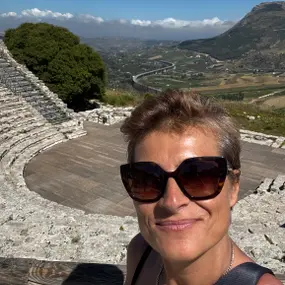
Paula Barnes is a travel creator, podcast host, and expat storyteller behind Truly Expat Travel. Originally from Australia, she has spent nearly two decades living across Asia, building a life rooted in international travel, cultural immersion, and raising her family abroad.
Now a relatively young empty nester, Paula shares real, experience-led insights on expat life, travel, and what it looks like to reinvent yourself through different life stages.
Through her work, she helps women—especially those over 45—navigate travel and life transitions with confidence, curiosity, and a sense of freedom