

 Apple Podcasts
 Spotify
 Youtube Music
 Sarah Branson (Life Ends, Love Remains): She Fell in Love with a 247-Year-Old Ghost

Can love truly survive death? And what happens when the person who helps you find yourself again has been dead for 247 years?
In this episode of Travel Time Stories: The Author Spotlight Series, Shannon and Ann welcome author Sarah Branson to go behind the pages of her deeply moving novel, Life Ends, Love Remains.
At the heart of the story is Clara Donovan, a woman trying to rebuild her life after the collapse of her marriage and writing career. Seeking a fresh start, Clara retreats to her late grandmother's home in Ridgefield, Connecticut, where she encounters Benjamin “Whit” Whitlock, a man who died more than two centuries ago.
What unfolds is an extraordinary story of love, loss, unfinished business, and the connections that transcend time.
But there's another story waiting to be discovered: that of Eliza Hartwell, a woman whose love and place in history have nearly been forgotten.
As Clara works to uncover Eliza's story, she begins rediscovering her own voice—and discovers that sometimes moving forward means confronting what we've left behind.
In this Author Spotlight, we explore:
❤️ The inspiration behind Life Ends, Love Remains and the relationship between Clara and Whit
👻 Writing a love story that crosses the boundary between life and death
📖 Forgotten women, untold stories, and the importance of preserving their voices
💜 Why grief can be a doorway rather than a dead end
✨ The meaning behind the title Life Ends, Love Remains
🌿 Sarah's remarkable journey from nearly 30 years as a midwife to becoming an award-winning novelist
For Shannon, this was more than just another book.
“This book touched my soul and will remain with me for a long time.”
Whether you love literary fiction, ghost stories, unforgettable romances, or conversations about the human experience, this is an Author Spotlight you won't want to miss.
Find Sarah and her book:
📖 Book: Life Ends, Love Remains
🌐 Author Website: https://www.sarahbranson.com/
📱 Follow Sarah: @author_sarah_branson
SPEAKER_01
In the author's spotlight, where stories collide. Twenty authors waiting. Let curiosity guide. All genres invited. From horror to sweet. Unravel the tales at our podcast heartbeat.
SPEAKER_02
Welcome to the Author Spotlight series. This is where we step behind the pages to meet the people who create the stories that we love. We'll talk about their latest book, their writing journey, and the story behind the story. And probably a few things neither of us plan to talk about. Because around here, the best conversations have a way of taking us somewhere unexpected.
SPEAKER_00
And this is true. Today we're putting Sarah Branson in the spotlight. Sarah, welcome to Travel Time Stories. We are so glad to have you here.
SPEAKER_03
I am so glad to be here, Shannon and Ann. And it's just, it's always fun to talk about my stories. And who doesn't like to chat about the people that they love? Exactly.
SPEAKER_00
This one is worth chatting about. But before we dive into your book, go ahead and introduce yourself to the audience and tell us a little bit about who you are.
SPEAKER_03
Well, my name is Sarah Branson. I spent most of my working career as a nurse midwife helping babies and families come into the world at birth centers and hospitals and home. Had a little foray into teaching that took me overseas, so got to teach overseas for a bit. And uh, you know, and it was always delightful. I'm uh I'm someone who has moved around often, which is why I really love the travel time stories, because when I was growing up, we didn't stay in one place for more than one or two years until my mom finally put her foot down when I was in middle school and said, Nope, girls have to finish high school in the same place. And, you know, that wandering star came to me as well. I met my husband in Oregon. Uh, we both went to the University of Oregon, and then we moved to Michigan where we raised the kids, and then we went to Brazil, and then we went to Japan, and then we went to Maryland, and now we're in Connecticut. So it's like, you know, follow, follow the star there. And yeah, I love that. Yeah, you know, and we still talk about it. It's like, so here we are. Is this where we're gonna stay? Is this, I mean, you know, you look around and go, is this like the last house I'm gonna live in? It's like, I don't know. So there's always another adventure around the corner there. Right. Exactly. Yeah, you just have to be open to it. That's right. And fortunately, the both of us are are willing to go, yeah, well, go wherever, wherever we're led to go there. And uh, you know, we have followed, followed the job most of the time. And yeah, you know, Rick's got, you know, three or four more years, three more years of uh work before he retires and then starts doing something else. But, you know, we'll be a little more flexible and can go where we want. Exactly. Yeah, that'll be nice. Yeah, yeah. Well, and yeah, so I you know, I I I have always loved to write stories down. Uh, you know, I wrote little poems when I was a little kid. Uh I wrote one on the ship that we took to Australia that because my parents decided at some point we should move to Australia. And then we got there and they turned around and said, no, this wasn't for us, and we came back. A little flaky, but we love them anyway. You know, but it was a great adventure and kind of started lots of stories in my head. I remember when the kids were smaller and I was working as a midwife going, like, you know what I'd love to do is be a midwife part-time and then maybe write a story, but I didn't feel like I had a story to tell. Um, and it wasn't until, you know, just a handful of years ago that a character showed up and she had a story and, you know, started reeling off her story as I was playing make-believe with her. And suddenly I had a story to that I wanted to tell. So I wrote wrote it down and it became the first four books that I ever wrote. I, you know, absolutely love the universe that I wrote my Cat Wallace books in and her daughter and her sons. There's been other stories that have percolated to the surface, and that's where, you know, life uh ends and love remains came into being. Because uh there was the story of, you know, what happens if you meet somebody in a cemetery? What happens if, you know, you're on either side of the veil and working as a midwife for a long time? You're working on the veil right there. Right, exactly. And it's just the other, the other end of it there. And so it was it was delightful. And I said that to you earlier, but you know, Kat gave me the year off so I could write something that was not in the you know uh new earth universe. And I have I've loved it, and I have loved meeting Clara and Wit and Eliza and getting to know them and all of their characters that they they have that kind of come along with them. Um as you say, you know, we might end up talking about things that neither one of us imagines. That's kind of what it is to write a story because you know, I I tend to follow my characters and and sometimes they do things that I don't expect them to do. And I know, isn't that so much fun though, when that happens? Oh, it's it's it's a delight. It's you know, it's always funny, but it's like, oh, we're doing this now? Okay, there we go. So it's sometimes the best things are those unexpected side roads. I my husband and I have a tradition that we have kind of developed of we read a little Mr. Rogers quote every morning to each other. And uh because Mr. Rogers. And there was one that he was talking, he he said, you know, sometimes the side roads are the that that you take as a side road ends up becoming the work of your life. And I thought that was a great, you know, as many of his ideas are a great perspective on life. That is like don't be afraid of taking those side roads there.
SPEAKER_00
Yep.
SPEAKER_02
Exactly. Yeah. Well, we're super excited to get to know you and talk about life ends, love remains. And as I told you before we started recording, but I have to say it again, this book literally touched my soul. I love it to pieces. I'm now your new biggest fan. And Netflix, Amazon Prime, whoever, definitely is gonna turn your books into a series or a movie or something. Not just this book, but the books about cat as well, which I haven't read yet, but I will be purchasing all of your books. So feel free, feel free. There are books that you enjoy, books you recommend to other people that are good books. And then occasionally there's that book that just stays with you after you closed it. And that's what this book has done with that makes me so happy.
SPEAKER_03
Makes me so happy. That's that's all that's all a writer really wants to hear. I mean, yes, the Netflix deal would be great, but knowing that you can evoke those feelings and you can touch somebody is is the best gift. Um, and it's really all that ever any writer wants is to just know that. And it just makes me keep doing what I do.
SPEAKER_02
Well, I'm super glad. So the book is Life Ends, Love Remains, and at the center we have Clara Donovan, who's a young woman uh trying to start over after her marriage and her writing career have both just fallen apart. And she retreats to her late grandmother's home in Ridgeville, Connecticut. Yep. And discovers that she isn't the only one there trying to figure out how to move forward. That's correct. Because there's also the other character of Wit, who happens to have been dead for 247 years. Oh, yep. So let's let's start right there. Where did Clara and Wit begin for you?
SPEAKER_03
Well, they began uh really I've always loved cemeteries to to go through and you know look at the stories on the stones, especially older ones. And I started thinking about a story about a failed novelist, because when you're a writer, that idea comes up an awful lot. And a ghost. And I would walk and run through the cemetery in Mystic is where I had originally started thinking about the story. And uh, you know, and it it was a different story at that point, you know, it was, you know, there were different ideas that were kind of percolating. And I just set that on the back burner for a few years. And the thought, you know, every time I'd walk through a cemetery, I'd kind of start thinking about it. And then we moved to the center part of of Connecticut, and I have some friends that are in Ridgefield, and we started exploring there. And the Battle of Ridgefield happened there, and they have a huge cemetery there. That's actually it's like five cemeteries that are kind of glommed together.
SPEAKER_02
Okay.
SPEAKER_03
Just over the course of the years because it's been around for you know since pre-revolution times. Right. And it was that was where it kind of started coming together with the idea of I was, you know, looking at the Redgefield Historical Society website, and they had a few years ago they found some bodies that were under somebody was redoing their house and redoing the foundation, and they found bodies that were from the Battle of Ridgefield, which was the only inland battle that occurred during the revolution in Connecticut. And learning more about that, it just kind of took me into looking at the various things that they had, like at the Keeler Museum, and it took me into, oh, look at the woodworking things. And that's kind of where Wit developed, that he was he wasn't a soldier that was, you know, part of the regular army, but he was just a a man that was going to defend his homeland because, you know, that was his town and he needed to pull his weight, as all of them did. And, you know, he ended up giving up his life during the Battle of Ridgefield. And yeah, and he he has tried to move forward, but he just has not been able to. And that's part of, you know, when he meets Clara, that's part of his story.
SPEAKER_02
I love that.
SPEAKER_03
And so, you know, don't want to say too much to be able to give away anything, you know. I say so much less than I probably need to because it's like, oh, I don't want to tell anybody. But, you know, because Clara discovers that she can hear him, and that's a surprise, you know, it's not a full surprise to her, uh, because she has some childhood experiences with that. But it's a surprise to him. And I had in the Mystics at Cemetery, I had come up with the idea that there would be, you know, people that would give this woman stories that would help her move her career forward, but then they would want something afterwards. And it was gonna be it was far more transactional and maybe a little more detective-y kind of thing in the early days before I met Clara and Witt because they were just kind of amorphous at that point. Right, yeah. But then once you meet the characters and you start getting to know the characters, which is kind of kind of my thing. If there's a good character, I just follow them. And somebody wrote down one time, it's like, you know, I don't actually write my stories, I just follow my characters around and write up the uh incident report. Which is pretty true. Once you get to know the characters and it takes you a little while to do that, you just follow them around. And I I didn't, you know, one of the surprises was Eliza. I always knew Eliza would be there, but I didn't realize how meaningful her journey would become. Right. And yeah. Because Eliza is weeping in the cemetery, and Clara begins to tell her story, you know, and tell it through wit because she's not able to communicate directly really with Clara.
SPEAKER_02
And I will say that writers who follow their characters and tell their character stories versus creating a story for a character. Yes, those are the stories that when you read them as a reader, those are the ones that you connect with and touch your soul.
SPEAKER_03
Yeah.
SPEAKER_02
And those are the ones I love.
SPEAKER_03
You know, in it I mean, I can read any genre really. I'm not great with real intense horror because I get scared. If there's a great character, if it's in a Western or a mystery or a detective or a romance, or as long as there's a great character that I can connect with, I'm in. Exactly.
SPEAKER_00
Same. Same.
SPEAKER_03
Yeah.
SPEAKER_00
You know, what struck me was is that Claire and Wit are both, you know, in very different ways, stuck somewhere between what was and what comes next. So, you know, Claire's life hasn't ended, but the life that she thought she was going to have has. It's gone. And then Wit quite literally died, but something has kept him from completely leaving. Did you always see them as two people who needed each other in order to move forward?
SPEAKER_03
Absolutely. I hesitate to use the word soulmates, but they're soulmates, you know, and they needed each other. And, you know, for I think we all envision what our life is going to be, especially when we're younger. And it often comes as, you know, either it can come as a gentle surprise that it doesn't work out that way, or it can come as a big smack at the head, you know, that it doesn't work out that way. And for Clara, she is reeling from, you know, all, you know, the idea that she's a failure.
SPEAKER_02
Yeah.
SPEAKER_03
That everything that she's ever wanted or tried for, she has failed at. And, you know, for Witt, he has so much fear about moving on and so much regret about some of the things that he has done and hasn't done and couldn't do, you know, when he was alive. And you know, they have to work through those things. And they haven't been able to do that on their own. Um but once they meet each other, they end up doing it together. Yeah.
SPEAKER_00
Yeah. Meant to be together. Yeah. You know, Wit could easily have just become the handsome ghost. I mean, yeah, you know. But he feels like a person with um a history, threats, finished business. What made you fall in love with Wit as you were writing him? Because I'm falling in love with him as I'm reading him.
SPEAKER_03
Yeah, right.
SPEAKER_00
Um, and Shannon's already there. She's ahead of me. So yeah.
SPEAKER_03
Right. I mean, you know, Wit, he could have been very much a man of his time and holding on to the views of his time, but he's also been an existence, not alive, but besides his 30-some years, 31, 32 years, I can't remember now, of life, he's been around for 247 years and he's seen things change from his vantage point in the cemetery. So he's had plenty of time to think about things. Uh, and also I think we have a perception that, you know, that era would have been, you know, gender roles would have been very clear-cut. But the reality is they were really a frontier kind of colonial place. Everybody had to do everything, you know. Men worked, women worked. If a woman died in childbirth, as they did, then men had to pick up and take care of all the things of the household. If a man died, women had to go out and do more work to be able to take care of their household. So I think there was probably, you know, less of the, you know, this is the traditional way that men and women were. And I think thinking of it in that sense, the idea of that historical aspect kind of let me get to know Wit as a person and not just as this is a man of, you know, the 1700s. And I wanted him to not be perfect. And he isn't, you know, he has issues and he stumbles and he falls. And I think that's what I like about all my characters. They don't just life isn't always just easy for them. They make mistakes, they say the wrong things sometimes, they get angry, but they're willing to come back and try again. And I think that's one of the things I love about Wit because, you know, he came to the realization as he met Clara that he was stuck and that maybe he has to do something to get unstuck. And now that he has a reason to try and be unstuck.
SPEAKER_02
Right.
SPEAKER_03
And yeah. It was so much fun watching Wit's world open up.
SPEAKER_02
Yeah. I love that too. And I won't say too much since you're still reading. And one of the other things that I absolutely loved about Wit was we have these expectations of what it was like during that time period when he died, you know, at age 32 back in 1777. But because he's been around in the cemetery and he's seen all this stuff transpire over 247 years, you know, his views and things have kind of changed. However, you see that not all of his mindset has totally changed. Right. Right. Because interactions with him and Clara, he still has that kind of gentlemanly, well, I can't stay past dark at your house. Right. That would be improper. Yeah. And I love that. I that made me laugh so hard. The views on so many things are progressive, but then he still has these, you know, ingrained views from his culture that he can't let go of. You know? Yep.
SPEAKER_03
Yep. He is he's the boy his mother raised.
SPEAKER_02
Exactly. And I love that. But I will have to say, you made me care so deeply about this relationship between a living woman and a man who's been dead for more than two centuries. And I'm sitting there the whole way thinking, there's no way this is gonna end wonderful. This is gonna be a heartbreaking ending. Somebody's heart's gonna get broken, either mine or theirs, or both. For all of them, yeah. So when you were writing this, did you know from the beginning where their relationship may or may not go? Or you had no clue and you found out just like the rest of us?
SPEAKER_03
I didn't really know what was gonna happen. I I did know that, you know, part of the requirement of writing, if you're going to write something and call it a romance, you have to have a happily ever after, or at least a happily ever after for now kind of situation. So I had to think long and hard about how that was going to happen. Uh and so there were several paths that I could take with that. And then it became apparent what I needed to do. Um, and especially given, you know, the world that we live in now, right. It became clear what the path was gonna be.
SPEAKER_02
Okay.
SPEAKER_03
And so Yeah, we don't want to give away the ending. No, right, exactly. And so it became clear, it became clear what the path was gonna be, and it and it was the right path. Again, you listen to your characters and you listen to your intuition as you're writing that down. And if it hadn't fit the way it did, but it did. It made for me a satisfying ending.
SPEAKER_02
Yeah, no, I agree. I love the path that it ended up taking. I had in my mind as I'm reading it several different paths. It could go this way, this way, which way is it gonna go? And that was part of the suspense of the story was which path, you know, is it gonna end up on?
SPEAKER_03
Yeah. And, you know, and that is the thing is a happily ever after or happily ever after for now can mean a lot of different things for a lot of different people. Once I realized that aspect, um, it became something that helped make the pathway clearer. And again, it's the listening to the characters and listening to them, taking the path that makes sense for those individual characters because the things they did were exactly in character for them, you know.
SPEAKER_02
Right. Yeah. So within this story, there's another love story that's running throughout the book. There is that I definitely do not want to overlook because Eliza is a major part of the story. She's and I love her character and her story. But Eliza Hartwell, she's also another person who is passed on. And Clara begins uncovering her story, and it turns out to be a love story that has been erased pretty much from history due to the culture of the times with her family. And they were a prominent family, and her story didn't fit what should be going on during that time, so they pretty much just erased it. That's fair. So that becomes Clara's journey as a writer to tell Eliza's story. And I think you kind of touched on it a little bit, but what drew you to the ideal of recovering the story of a woman that history had forgotten?
SPEAKER_03
I don't think you can work as a midwife for 30 plus years and not see that does happen for women. Yeah. And it happens more than it should, you know, not just historically, but also within our time now. Right. And I wanted to tell a story of a woman who was gifted with all of the things that we all kind of think we want. Um, you know, money and status and that sort of thing, but yet she wanted to follow her heart. And that it was one of the hardest things for her because she was told, No, you can't do that. And her, as a woman, she was told, we have a plan for you and you need to follow that plan. And so having her, you know, have heartbreak and the story she has of falling in love with someone who was not appropriate as far as her family was concerned, and pursuing that love was just was the right story. Where I am in Connecticut, I'm just a couple hours from New York City. And so to be able to go in and go into the tenement museum, which is, you know, in this, you know, old tenement building, you know, right around the places where, you know, Eliza ended up living for a while was spectacular. And, you know, seeing the the kind of conditions that people lived in and um realizing that people conducted their entire lives in these tiny little places. Yeah. Whereas she came from a very big house with a lot of luxuries, being in a small place with uh the person that she loved was, you know, her most joyous times. And you know, having that erased was why she cries, right? Yeah. And um, I don't think that actually gives anything away by saying that. I loved bringing her into the story, and as I said, I didn't expect her to be as much of the story as she was. And she's one of those characters who who just kind of you know staked her position and grew. And I loved that about her.
SPEAKER_02
Yeah, exactly. And I think Whit and Clara learned from her. Yeah, they did. They really did. She she had a lesson to teach them. And then in turn, her story was told. And I I love that aspect of it. I love the fact that she was a defiant lady for her time. Yeah. I absolutely love that. I'm gonna do what I want to do. Exactly. And there were plenty of them, and we don't hear enough about them. Absolutely. And I love that we're getting to hear that in the story. Yeah. And what would you say that we owe the people whose stories disappear simply because no one was left to tell them?
SPEAKER_03
I think we owe them the respect of we may never we'll never know all of those people's stories, particularly women's stories, because for so much of time stories have been written by men. And, you know, the victors write the story and those that are in power write the stories. But I think we're seeing more stories of women from the past and women of the present as well. I think we owe them the respect of of hearing those stories and sharing those stories. Even if we don't know an individual story, if we can kind of do a compilation of the stories of the time and realize that that was the story for so many people. Right, yeah. And the strength and the tenacity and the amount of defiance. I think there's so many people who have these strong stories, but we just don't know them. And so, you know, seeking them out, finding them out, going to those places where you can find out those stories is really it's a gift. My husband and I often chuckle when we are in a cemetery, because oftentimes you see, you know, the monument with the man's name on it, and then you see, you know, a night that says wife of. You know, that is who that person is, and that's all that person is. You know, that's that's how they have been memorialized through history. And I think there were people that that was a very important part of their life, but also they were other things too. You know, they they were gifted writers and artists and scientists and inventors and things like that, that then they did and then handed to their male partners because that was the only way it could get out there in the world.
SPEAKER_02
Exactly. Yeah, they were then overshadowed by the male counterparts because of the times and the way things had to be done. Yeah. Right. Exactly. Or even more sad, you're walking through the cemeteries and you see the old markers, and there's just a little small marker and it says infant baby. Yeah, yeah. And that's it. No other information, just infant baby.
SPEAKER_03
Yep. Yep. And you know, we went on a trip a few years ago and we were in Europe and we were in an old cemetery, and the amount of you know, loss was just tremendous. And I think you see that anytime you're in those really old cemeteries because you know, you can say, Oh, look, diphtheria must have gone through. Because it's like this child, this child, this child, this child have gone. Or and you can look up and see what what kind of disease was running through the community at that particular time. And, you know, especially again, working as a midwife and you know, a child loss was something that the worst thing you could possibly have happen, except for perhaps a mother loss. But, you know, there's this great movement for support for women who have had child loss now. And I remember thinking, it's like all women had that loss back in those days, you know, multiple, oftentimes multiple losses, you know. And if you didn't have a loss, you were probably the kind of the odd man out or odd woman out in that case, because you probably didn't talk about the fact that you hadn't lost any because you didn't want to, you know, tempt fate. I wonder how that support system was in those times, you know. Yeah, because it was much different. It was much more of the, you know, swoop the swoop the child away and you know, let's move on with life now. Yeah, and don't talk about it. It it's just saying, right. But you know the the heart's still grieved.
SPEAKER_02
Exactly. Yeah.
SPEAKER_03
And it's tremendous to think about that kind of pain, but also to realize that probably the community was right there together because they all understood it.
SPEAKER_02
Yeah, that's true. That's very true. So I know one of the things that you mentioned that you wanted to talk about was the ideal of grief as a doorway rather than a dead end. Mm-hmm. And I think that's such a powerful way to describe, you know, what happens in the story, and not just in the story, in life in general, if you really think about it. Yeah. So what does it mean to you to think of grief as a doorway?
SPEAKER_03
I think as we go through life, you know, we don't understand grief early on. Sometimes you know, children are met with it, and sometimes I think children probably deal with it better than adults do because they don't they haven't been told this is the right way and the wrong way. But I'll tell you, I just watched on the plane. We just came back from seeing our granddaughter. And on the plane I watched Princess Diaries. And her father had died two months ago, two months before, and her her best friend was going up, I thought you were over that. Yeah. And the idea that you know, you just get over things and you get over your grief, but I the realization that grief never leaves, but it's always a part of you because it's this love that doesn't have any place else to go. Um and so it kind of stays with you and it stays the same size. And in order to move on, you have to let yourself grow bigger around it, um, because the grief will always be there. And to accept the grief as part of you and not fight against it. Because I think when you get angry at that grief and you just want to push it away, that's when it becomes a stopper and it does end up being a dead end. But when you allow yourself to grow around it and have it become part of you, then you have the opportunity to keep moving forward. And I think that, you know, when we meet Clara, I think her grief was a stopper at that point for her. And you know, when when we first meet Wit, to some extent it was too. Um, and certainly it was for Eliza. And I think together the three of them figure out how to grow around their grief and move move forward.
SPEAKER_02
Yeah, they the three of them kind of become a support system for each other.
SPEAKER_03
Oh, they absolutely, absolutely.
SPEAKER_02
Yeah, and I absolutely love that. That that was one of the aspects of the story that just enhanced it was the fact that these three unlikely people came together and became such a support system for one another and helped one another move forward and learn and grow.
SPEAKER_03
And by helping, because each one helped the other, and in order to help the other, they all had to step out of their comfort zones and out of their safe places.
SPEAKER_02
Yeah.
SPEAKER_03
Um, that's part of that message too, is that if we're gonna grow and we're gonna move forward, we have to be willing to take that step outside of where we feel safe.
SPEAKER_02
Yeah, exactly. Yeah. Yeah. And I think we don't discuss grief nearly enough. Yeah. And we're not taught about grief either. And I think it's important. That's one of the things that we need to do. We need to talk about grief. We need to teach each other about grief, teach our children about grief, not just when it finally happens in your life, you know? Yeah.
unknown
Yeah.
SPEAKER_02
Yeah, but that's absolutely true. Yeah, because we don't know how to support one another properly because we don't talk about grief and people are awkward about it and they say the same things over and over, which is one of the worst things you can say to somebody is you'll eventually get over it, or things of that nature. And that's just not the way it is. He went to a better place. It's like, yeah, I want him here. Yeah. This is the good place. I want them here. Yeah. It fades over time or things like that. No, it it does not. I mean, the grief is always there. It changes, like you say, the form of how it is in you and around you, but it never goes away.
SPEAKER_03
No, no, because it's part of who we are and it becomes part of who we are.
SPEAKER_02
Yeah. And exactly.
SPEAKER_03
And unless your brain shifts into the Swiss cheese part of life, you know, it's always going to be there. And sometimes those having had elderly parents who, you know, dealt with dementia, yeah, sometimes it's those big emotions like grief and anger and fear, uh, the ones that we don't learn how to deal with when we're alive and functional, those are the ones that often come out when the brain kind of starts slipping gears. Um, because they've always been there and now they have nothing to kind of keep them tamped down. My husband and I have said several times that we're big believers in you gotta deal with your stuff. Uh-huh. Because otherwise it's gonna, it's gonna pop out when you don't want it to pop out. You're you're 90 years old and you don't want to have to be afraid. You want to be able to enjoy that time. Even if you're slipping gears, maybe you can just wander off to a you know, happy cemetery somewhere where you can meet a ghost. Exactly, yeah.
SPEAKER_02
And they'll help you figure out exactly, exactly. I'm all for that. Me too. So, Sarah, you talked about being a midwife. What do you think being a midwife taught you about listening to people's stories that you now carry into your writing? Exactly that.
SPEAKER_03
Yeah. The job of a midwife, while education and you know, the medical aspect to it is important, the job of a midwife is to listen to women and to birthing people and to hear what their story is. Because if you know their story, you can support them through this event that they're that they're going through. And it is a you know, major watershed life event to have a pregnancy. Um, and not all pregnancies end in a baby, right? You know, and so whether it ends in a baby or not, it's still uh a watershed life event. And to be there for them and to know what what their story is and what they're bringing into this event uh makes all the difference. And for so many people, and in particular women, we're not listened to. People don't listen to us all the time.
SPEAKER_02
Yeah.
SPEAKER_03
There's a lot of assumption it's getting better in some ways, and in other ways it isn't. I think we're moving forward and then we're sliding back a little here and there. Yeah. But you know, it's a scenario where people just want to be heard. And you know, that's what I learned in midwifery is that you know, if you just listen to people, they'll tell you what they need. And once they understand that you are gonna listen, they'll tell you all that you need to know about them. And so, you know, that I bring forward into my stories. You know, I call it pre-writing because it sounds much more grown up, but really make believe, playing make-believe. I love playing make-believe as a kid. When we would move all around the country and I would be sitting in the car looking out the window, you know, I'd be playing make-believe. And I still do that with my characters now. It's like pre-writing, but it's getting to know them and it's listening to them and imagining, you know, hearing their conversations with other people and other characters and really kind of listening and taking my cues from them to be able to know them authentically.
SPEAKER_02
Yeah.
SPEAKER_03
I absolutely loved being a midwife. I'm really happy not to be on call anymore. I bet, yeah. I miss mamas and babies and families, but I don't miss being on call. I am so glad that I can still listen to my characters and listen to people and listen to people like you tell your stories, you know, as I've listened to some of the podcasts that you've done. Because we all have a story to tell.
SPEAKER_02
Yeah, exactly. Yeah, we all have a story and our stories connect us. Yeah. Yeah. And I love that. Yeah.
SPEAKER_03
And we are far more similar across the planet than we are different. Exactly. Yeah. And it's the stories I think that help help us understand that because whether it's a story from, you know, Connecticut in 1777 and 2004 and 1851, or it's a story from Japan, or it's a story from Russia. The same kinds of feelings tend to run through them and the same kind of ideas. I think we tell stories in the same way ever since we have been sitting around a fire.
SPEAKER_02
Exactly. Yeah, since the beginning of time. Yeah. That's what I always say.
SPEAKER_03
Yeah. And there's always little differences and little surprises along the way, but it is those stories that make us understand that you're like me.
SPEAKER_02
Yeah. We're the same. We we feel things the same way. Yeah. Exactly. Exactly. We may look different, but guess what? On the inside, we still have the same types of feelings and wants and needs. So yeah, I love that.
SPEAKER_03
Yeah. And it's a marvelous connection. And I think when you think about the problems that are in the world, a lot of it comes from not listening. You know, those people who don't want to hear other people's story because they're so caught up in their own for whatever reason. Mm-hmm. That, you know, those are the people that aren't interested in finding similarities, but they're only seeing differences. And so I really love that idea.
unknown
Yeah.
SPEAKER_02
Yeah, I do too. And you see that in the story with Eliza's father. Oh my gosh, yes. He is.
SPEAKER_03
He is the prime example of that. Yeah, he is so caught up in what's proper and what he has to look like and what everything's gonna look like to other people, yeah, that he is not willing to listen to the this little girl that he, you know, he could love. And he does love in his own way, but he's not open to loving someone for who they are, but for who he wants them to be.
SPEAKER_02
Yeah, exactly. And he would rather lose that person than to conform and listen and be willing to change.
SPEAKER_03
Yeah, absolutely. Absolutely. And you know, parents always envision how their children are going to be. Right. And that's always a fascinating thing to me because it's like, you don't know what you're gonna get. Exactly. I remember as a small child, I went over to a neighbor's house and they had just had a baby, and the dad, I think, was talking about, and I'm gonna get her these skis, and I'm gonna get her this, and she's gonna do this, and she's gonna do that. And I remember just thinking as a kid, it's like, what if she doesn't want to? Right. Yeah, exactly. And here's hoping things work out for her, you know.
SPEAKER_02
Right. I know. It's the same like when you become a grandparent. Oh, yeah, and people ask you, Well, what are you gonna be called? Well, you can say what you want to be called all day long, but that doesn't mean that kid is actually gonna call you that. And the prime example was with my mom. My mom was convinced that you know she was just gonna be grandma. Uh-huh. But no, no, when the first grandbaby was born, they did not call her grandma. They had a whole completely new name for her. That's fantastic, and that's what she was.
SPEAKER_03
Well, and I have to say, I struck pay dirt with my grandparent name because I was chasing my oldest grandson around the house 13 years ago. He's 15 now. And I was growling at him, and he was growling at me, and we were crawling back and forth, and he started laughing, and his parents came home and goes, Grandmonster was chasing me. I am now grandmonster. And all five boys and the little girl, they all call me grandmonster. And they've actually shortened it to some extent. I don't know how. The boys, you know, two of them live in South Korea, three of them live in North Carolina, and then the our little granddaughter lives in LA. But the boys all end up sounding very British. Monster, monster, and so yeah, they get to go to school and go to my monster came and visited. So I love that idea. And it's exactly right. It's like, you take whatever gift they give you. Exactly. Yeah.
SPEAKER_02
I love that name. That is awesome.
SPEAKER_03
Yeah. I feel like the best one I've ever heard. Knocked it out of the park on that. It's like, I'll take it. You betcha. Exactly. You should get an award for that one, Sarah. I know. I know. Well, I do. Every time they talk to me, they they call me up and you know, visiting the little two-year-old and hearing her, you know, with her first ones going, Mom, stop, stop, stop, stop. It's like your heart walking around outside your body, you know. Exactly, yeah. Yep. So I So what's next for you, Sarah? Well, as I said, Kat, my protagonist in my Pirates of New Earth series, she gave me the year off to work on Clara's book, and she has a list of things that she wants me to do now. There's probably another middle grade story that I want to do for her boys, and there may be a YA, because I have two YAs and one middle grade, and I may do one more YA and one more middle grade and then another YA. But then there's another cat story that she's been poking me at and was very kind. You know, she wears a dagger on her thigh. So, you know, she's one of those people who, when she says something, you tend to listen. Yeah, yeah. And so she uh she does have a story there. Um, there's some other stories that I want to tell though, too, and I hesitate to say that because she's gonna hear me. And I know it sounds crazy. I sound like a crazy person, but that's a strong possibility. But there there is, you know, with all of the AI stuff going on now, there's an AI story that is kind of percolating in my head as well. So I think I have, you know, at least two or three years kind of plotted out for me of it. Sounds like it. Thing, things to keep me off the streets. And, you know, someone asked me, it's like, are you gonna revisit Clara and Wit at all? And it's like, I'm not sure. You know, I think there's possibilities, but it kind of depends on them. You know, if they have more story to tell, then I'm gonna tell it. If they're settled, then I will let them be and let them enjoy themselves in their own place. So are there possibilities there? Yeah, there's some possibilities there.
SPEAKER_02
Yeah.
SPEAKER_03
But we'll see what they have to say. They're in a pretty good place. We leave them in a pretty good place. Yeah, I think so. Yeah. Yeah. There's a part of me when I finish a story, it's like, but I want to know down to the last detail what happens in everybody afterwards. But I also love it when it's just left with a door just ajar, so I could go like, huh. I wonder what happens, you know. And those books that you want you keep thinking about, it keeps you moving forward.
SPEAKER_02
Yeah, exactly. So where can everyone find Life Ends, Love Remains, and all of your other books and follow you?
SPEAKER_03
You can go to my website, which is Sarah Branson.com, very easy. And it has links to all of the books. The books right now, Life Ends, uh Love Remains is just on Amazon. I have to push the Ingram button so it'll show up on Bookshop and Barnes and Noble and things like that. Um that's a tomorrow project, and that will be, they can find it any place. But yeah, right now it is on ebook and uh paperback and hardback on Amazon. And uh I would love to get it on audiobook. That's that's a pathway. My series is on audiobook, but I have to go back to my beautiful narrator and go, what's your schedule look like? Right there, yeah. I also wanted to mention a crazy thing as I was writing this book. I had a author friend come up and tell me about we're thinking about doing like this novella series that is, you know, in this little town in the Poconos. And, you know, would you be interested? And it's like, yeah. You know, and we're gonna set it, you know, on all the different holidays, you know, from the fall on. I was like, can I be first and do Halloween? Uh-huh. And it's like, can I have a ghost? It's like, uh-huh. So it's actually a story about Jules, who is Clara's cousin. And uh, so it's a very sweet little story about that. So it's out there too. It came out like about two weeks, three weeks before Life Ends did. Oh, okay, great.
SPEAKER_02
I'm gonna have to find something.
SPEAKER_03
It's yeah, it's sweet. It's really fun because it says multi-author novella series. So each of us got to have our own character, but it's all they all kind of know each other and they all kind of get to know each other in town. And yeah.
SPEAKER_02
Yeah, I love that.
SPEAKER_03
I've never done anything like that before, and it was a lot of fun to work with authors and collaborate with them.
SPEAKER_02
Yeah, I bet, yeah, to do that collaboration. Yeah.
SPEAKER_03
And it was fun to have Jules get a chance to have her own little bit of a of a story there too.
SPEAKER_02
Yeah, because she didn't have much in the book. No, she didn't.
SPEAKER_03
She just got mentioned a little bit there here and there.
SPEAKER_02
Yeah, exactly. But I feel like her own story to tell. So yeah. She does.
SPEAKER_03
She does indeed.
SPEAKER_02
Well, Sarah, thank you so much for joining us and letting us know. Well, thank you both so very pages. Anytime, anytime. I love talking about my characters, as you can tell. Well, I love talking about these characters that I know, and I look forward to getting to know your other characters from your other stories. Well, I will be excited for you to start down that path too. But thank you so much for inviting me along on this journey. Well, we're glad that you were here. And to everyone watching and listening, you can find Life Ends, Love Remains, and all Sarah's information in the episode description. And it will also be in our website. So be sure to check that out. And remember, every book has a story, but so does the person who wrote it.
SPEAKER_01
So join us each week in the splendor of the arts, in the office spotlight, we capture the hearts with every story shared. A new world takes flight. As we gather tonight.
A Merry Life and Life Ends, Love Remains
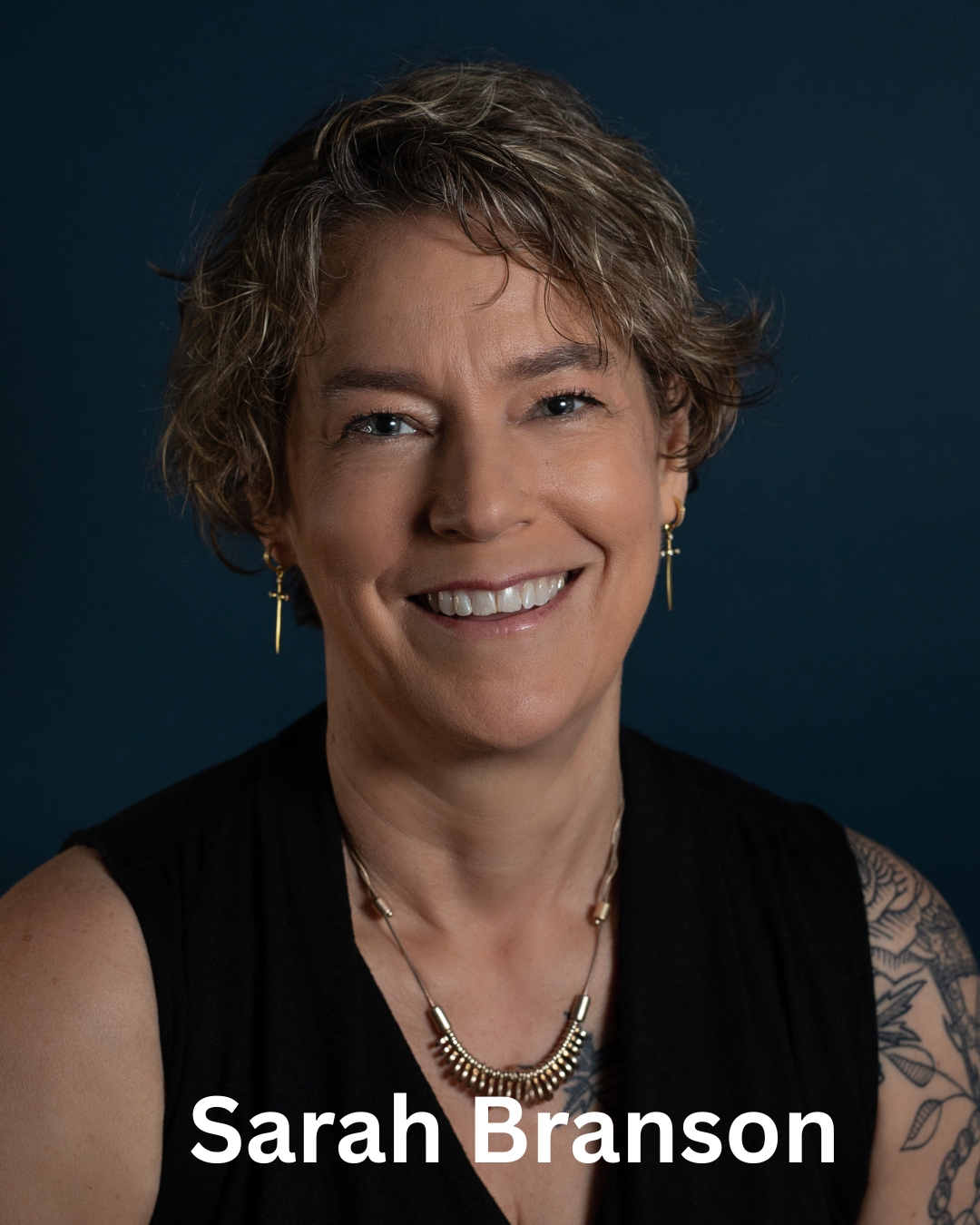
Award-winning feminist speculative fiction author Sarah Branson spent close to thirty years as a midwife before turning to fiction, writing tales of action, adventure, revenge, and romance rooted in the strength and resiliency of the human spirit. Her New Earth universe imagines a future where diversity of identity is simply the texture of life, with honors including the 2022 Kindle Book Award for science fiction, the 2025 Wishing Shelf Book Award Gold Medal for A Pirates’ Pact, and a Foreword Indie Award Honorable Mention for For the Love of Glitter. Her two newest releases expand beyond New Earth: This Is Halloween, a cozy women’s fiction novella in the Blue Spruce Hills series (September 17, 2026), and Life Ends, Love Remains: A Revolutionary Ghost Story, a literary paranormal novel set in Ridgefield, Connecticut (early October 2026). Sarah lives with her husband in Connecticut.
