Apple Podcasts
 Spotify
 Youtube Music
 The Wondrous Horrors of Life: Inside the Mind of Anthony Prieston | Author Spotlight Series

📚 Welcome to the very first episode of The Author Spotlight Series! Presented by Travel Time Stories with Shannon Limited Series: Sept - Nov Twenty authors. Twenty books. All genres. And twenty completely different minds waiting to be discovered. For our first Spotlight, Shannon and Ann sit down with poet Anthony Prieston, author of Whispers of Distress—an unapologetically dark, gothic and philosophical poetry anthology exploring love, suffering, decay, human nat...
📚 Welcome to the very first episode of The Author Spotlight Series!
Presented by Travel Time Stories with Shannon
Limited Series: Sept - Nov
Twenty authors.
Twenty books.
All genres.
And twenty completely different minds waiting to be discovered.
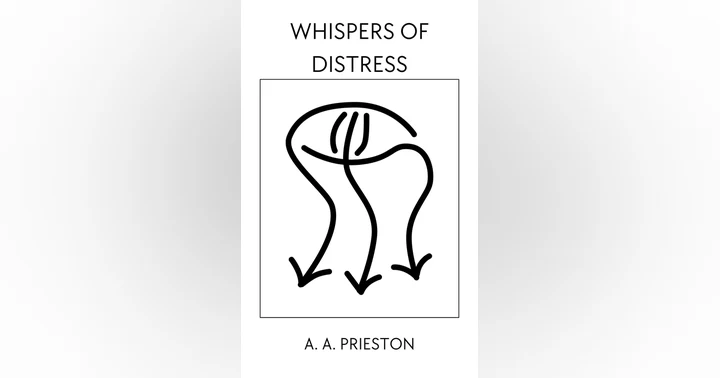
For our first Spotlight, Shannon and Ann sit down with poet Anthony Prieston, author of Whispers of Distress—an unapologetically dark, gothic and philosophical poetry anthology exploring love, suffering, decay, human nature and what Prieston calls the “wondrous horrors of life.” But this conversation goes beyond the pages.
Anthony takes us inside his approach to poetry and the philosophy behind his writing as we explore why he writes, where poetry comes from, and whether a poem needs to be understood to have meaning. We talk about the strange relationship between beauty and suffering, the freedom of writing without limitations, and the ways two readers can encounter the same words and walk away with completely different experiences. And, of course, we step beyond the official author bio to discover a little more about the person behind the poetry.
If you've ever wondered what happens inside the mind of a poet—or thought poetry wasn't for you—this conversation may make you look at it a little differently.
📖 Featured Book: Whispers of Distress
✍️ Featured Author: Anthony Prieston
Turn the page, unlock the door, and step with us inside the mind of a storyteller.
Every book has a story. But so does the person who wrote it.
Anthony Prieston on socials @whispersofdistress
Buy his book on Amazon (Whispers of Distress): https://amzn.to/4gg2asT
Travel Time Stories: The Author Spotlight Series #whispersofdistress #AAprieston #traveltimestorieswithshannon #authorcommunity #bookcommunity #authorspotlight #indieauthors #authorssupportingauthors #newauthors #bookrecommendations #newpodcastseries #newepisode #tunein
SPEAKER_05
Hi everyone and welcome to a special bonus episode of Travel Time Stories, our Author Spotlight series. This is where we step behind the pages to meet the people who created the stories that we love. We'll talk about their latest books, their writing journey, and the story behind the story. Probably also a few other things that neither of us plan on talking about because around here, the best conversations that we have is when things take a turn in a different direction.
SPEAKER_04
That is for sure. So get comfortable because we're putting Anthony Prieston in the spotlight. Anthony, welcome to Travel Time Stories. We are so glad to have you here as our debut author for this new series.
SPEAKER_00
Thank you. Thank you so much.
SPEAKER_04
So before we dive into your book, we'd love for you to introduce yourself to our audience and tell us a little bit about who you are.
SPEAKER_03
Yes.
SPEAKER_00
Perfect. So my name is Anthony. My actual last name is in Greek, so I chose Prieston because it's an indirect translation of it actually, so that people can pronounce it. I also write short stories, a few other pieces, but I mostly focus on poetry. This is what I I let's say I specialize in and what I prefer in literature, to be honest. I started writing about five to six years ago, and fun fact, the moment I started writing, like from the first few poems I wrote, this book, the my first book, was what actually took shape. And this is why on many social media, like my name is like the name for the book, because it was this project that started it all.
SPEAKER_05
Wow. So this first book is called Whispers of Distress.
SPEAKER_03
Yes.
SPEAKER_05
And you describe it as unapologetic, dark, gothic, and philosophical, and more of a journey than a collection. So let's I want to start with that word journey. What journey are you inviting the reader to take?
SPEAKER_00
Exactly. That's a very good question, actually, because you know, um, when I wrote this book, I wanted it to be different. I didn't just want to, you know, get my thoughts down on paper like most people do and then just publish it. I didn't want it to be sort of a reflection of me. I wanted to keep that out of the book. I wanted the book to be shaped in a way that leads the reader to move freely in their imagination and basically go where they need the most to go. So you've read some of my some of my books, so you know that the poems, they're not always very specific. Like they have an interpretation, let's say, but they're designed in a way so that interpretation is slightly different for each person, so that you can end up where you need to end up, let's say. So this is why I call it more of a journey.
SPEAKER_04
I totally got that from that book. I totally got that as I was reading it. I was like, oh my gosh. Several of the pieces, and I've marked them as I read them, and I read them more than once. I thought, wow, I really identify with this piece. I think anybody could adapt this to their situation, basically. And then you go and say that.
SPEAKER_00
It's pretty amazing. Um I'm so glad to hear that, to be honest, because you know, when I first started working on this, I wasn't sure that it would resonate with people that much. So hearing you say that is it it it's priceless. It's priceless to be honest.
SPEAKER_04
Good. I'm into it. You describe the anthology as being about the wondrous horrors of life. I love the oxymoron. The contradiction in those words. What does wondrous horror mean to you?
SPEAKER_00
So, to me, what does that mean? To be honest, I have this philosophy, let's say, that the difficulties in life, the challenges we face, and the things that hurt us the most are what shape us the most and are the most unique aspects of our life. Because you know, everyone can have uh and everyone has good days when you know everything goes well, you wake up, you have a coffee, you go to work, you come back, everything is normal, everything's fine. But those bad days, they're what define us, how we react to them, how they shape us. It's you know, those days are truly wondrous, even though they are horrors.
SPEAKER_05
Yes, exactly. 100%, Anthony. I totally agree with you. All of the traumas and bad things that I have gone through in my life, I tell people that I I don't look badly at those things. I won't go so far as to say that I'm glad I went through them, but they had lessons to teach me and they shaped me and turned me into who I am today.
SPEAKER_04
Exactly. Exactly.
SPEAKER_05
Yeah, I embrace that part of my life as well.
SPEAKER_04
Well, you can't appreciate the light without the dark.
SPEAKER_05
Exactly. Yeah, exactly. Yes.
SPEAKER_04
Why are you drawn toward the darker parts of the human experience rather than away from them?
SPEAKER_00
Hmm. Very good question. I think it's partly due to that philosophy. I just explained that I really try to find value and comfort in darkness because I think that exists. I think that a lot of people are very afraid of let's say, yeah, I don't know how else is to describe it. Just let's just say darker aspects of life, no matter what that is for anyone. We are inclined to shy away from that. And I believe that by you know embracing it and letting it teach us and form us, uh, we can benefit from it.
unknown
Yeah.
SPEAKER_00
Yeah, I do agree.
SPEAKER_05
Exactly. So your description also mentions our eternal connection to numbers.
SPEAKER_03
Yes.
SPEAKER_05
That's that's unexpected when you're talking about themes like love and suffering and mortality. So, what role do numbers play in this collection?
SPEAKER_00
That is a very good question because when I started it first, the connection to numbers was there, I have to say. It was still there, but I didn't really realize it. You know, I think what I define is this connection to numbers is uh, you know, we as a as a species, and as you know the the science behind humanity, we have relied on numbers for basically anything. You know, we you cannot estimate or judge something without you know putting a number to it nowadays. And no matter where we end up, what aspect of life we decide to analyze, numbers do have some role in that. And especially in poetry for me, and for most people, you know, uh poetry has a shape, and that shape is defined by numbers, be that the number for letter of the alphabet, or be that the number of verses, be the number of syllables, the number of anything. So I wanted to, let's say, honor that aspect of um Schumanity in my book. Something that came up a bit later, it wasn't the at there at the beginning of the project, as I said, fully, but it kind of matured into that.
SPEAKER_05
Okay. So why poetry? Why is that the form you reach for to make sense of things?
SPEAKER_00
Okay, to be honest, I have no idea. If I were to be brutally honest, I would say that I suck at writing fiction. But I hope that's not the case because I haven't tried writing fiction that much. But yeah, I've always felt uh a bit of a special connection to poetry. When I was younger, I didn't really like it that much. I much preferred reading fiction, and I still I still do like I read poetry, but not that often, to be honest. But when it comes to writing, I've tried many forms of literature, but poetry kind of resonates with me, and it's what feels natural.
SPEAKER_05
Okay. Well, I honestly think that you could do well at writing fiction, especially like a gothic or horror type story. I think you'd be really good at that.
SPEAKER_04
Yeah, I I think so too.
SPEAKER_05
Exactly.
SPEAKER_04
And I'm thinking about those short stories that you've already written.
SPEAKER_05
Exactly.
SPEAKER_04
But I know that you have.
SPEAKER_05
Yeah, that that would be a a good short story collection. That would that would be really good.
SPEAKER_00
I actually have a little bit of uh something in the works, but you know, it's too early to to announce anything yet.
SPEAKER_05
Right. Okay, well, that's exciting though, Anthony.
SPEAKER_04
Very exciting.
SPEAKER_05
So, what normally comes first for you? Do you get like a feeling or an image, or is it something entirely different?
SPEAKER_00
So I don't know how to describe it what when I write, I feel different. I don't exact uh it it can be triggered by anything. Like it can be a tree tree branch being blown away by a wind. It can be a thought I had about an interaction I had, it can be anything, but at that moment, I I don't know, like it's it's almost like words come up in my head and they kind of connect. So I have a vague idea of what the poem will be like before I even start writing it, and it doesn't deviate much from that. So I I don't know how to explain it. It almost comes without thought, so I don't really work on the structure, it just happens. It's very weird to be honest. It's because you're a natural, yeah.
SPEAKER_05
It it basically just flows out of you, so yeah, that is that is amazing, yeah.
SPEAKER_04
Without anything to get it get it there.
SPEAKER_05
I mean Yeah, not a not a lot of people have that ability, so that's really awesome that you have that ability for it to just flow out of you like that. Wow. It's a gift, yeah, exactly. So you say no standard or limitation or guide to your hand. So does that mean that you deliberately like resist rules and structure?
SPEAKER_00
I mean, I I would say so, yeah. Uh especially when it comes to poetry. Uh I refuse to let anything prevent what I want to take shape from taking shape, you know. So be that rhyming or be that the overall vibe that the poem has up to a point, if I feel it's switching, if I if it if it's going somewhere else, I'm not gonna let that limitation, you know, hold it back. And that's why some of the pieces uh have a very unique uh aspect to them where they they have almost this kind of uh jarring effect when they switch from let's say one vibe, one philosophy to something like completely contradictory while still being connected somehow. So I think that's my greatest weakness because a lot of my a lot of my works that I have not published I am not unhappy with, but not impressed with, let's say. But when it works out, it works out really well.
SPEAKER_04
Anthony. Do you think poetry needs to be understood?
SPEAKER_00
Somebody reads it. That's a very good question. To be honest, I don't know if poetry is meant to be understood. For example, when when I write, because I can only speak for myself, I cannot speak for other authors. But when I write and when I publish what I write, my purpose is not to be understood. I don't think if your need is to be understood, poetry is a good medium because poetry is more about what you don't say than what you say. And so I don't know how exactly to to phrase this, but it's yeah, I don't believe it's necessary to understand a poem. You just have to to feel it, you know, let it do its thing, kind of.
SPEAKER_05
Right.
SPEAKER_00
Yeah.
SPEAKER_04
Five people can read your poems and each walk away with a different uh point of view. So I mean if five people get a different answer, is it wrong? Or are they all right?
SPEAKER_00
Well, in my opinion, you know, they're they are all right because that's the point of it. The the whole point of of art is to to inspire, and you can't inspire when you have a guideline, when you have a goal. So if I were to try and convey an opinion or an emotion to you, because I've tried that with poetry, you know, I've tried it many times, it just doesn't feel the same as creating something for the purpose of you know moving someone, but in their own way, not forcing them towards something, just letting them go where they need to go. And that's what I think separates really good poems from generic poetry, is exactly that thing.
SPEAKER_05
Yeah, I would agree with that, and that's what the whole purpose of art and poetry is art, is to get people to talking.
SPEAKER_04
Yeah, completely.
SPEAKER_05
And if it makes you start a conversation, then that's good art. Exactly.
SPEAKER_04
Awesome. So can a poem simply make you feel something without you being able to explain what it means?
SPEAKER_00
Definitely. I mean, especially with some of my work, you cannot explain what it means. So all you can do is feel, I guess. Uh to be brutally honest. And you know, that's that's part of it. I really enjoy putting the reader into that spot, you know, taking away the choice of, you know, getting a solid interpretation out of a poem and only leaving behind emotion. Because at the end of the day, okay, you read the poem, you thought about something from the poem, but how you felt from it is gonna last a lot longer and it's gonna make a lot more impact, at least in my opinion. And I don't know, I feel like it fits some pieces better, and some of my works like benefit from being a bit more straightforward. It really depends on the subject and what the goal is, to be completely honest.
SPEAKER_04
I like that. Yes. So what can poetry say that ordinary language can't?
SPEAKER_00
Everything. At least in my opinion, I think there is no limitation to poetry, at least as a medium, you know. Uh every person has their blocks, let's say the the places where they hold back some things they cannot express with poetry, no matter how hard they try. And that's the that is true for me as well. I've seen it many times with a lot of subjects that I try to tackle. But I truly believe poetry is a medium in art that can express everything with enough skill and with enough effort, uh you can do anything. And I feel that's true about art. That's one of the definitions of art in life, you know, like being able to express anything any way you need to. Exactly.
SPEAKER_05
I agree with that. So, Anthony, what is something that we would never know about you from just reading your author bio?
SPEAKER_00
Hmm. Good question. There are a lot of things because aside from writing, I have a ton of hobbies. For example, I love sewing and I love cooking.
SPEAKER_03
Oh, okay.
SPEAKER_00
Yeah. I've been cooking for 10 years now.
SPEAKER_03
Oh my god.
SPEAKER_00
And I have experimented with like tons of different cuisines and stuff. Uh, it got to the point where I was heavily considering doing it as a profession, but I chose not to because well, it's a difficult sector to you know work in, I I believe. Yep. It is long hard hours, yes, it is.
SPEAKER_05
And very, very competitive too. I mean, yes, and stressful. Yes.
SPEAKER_04
Yes, it is, it is. Exactly.
SPEAKER_05
But just let us know, Anthony, when when we need to come for dinner. We'll we'll be happy to come and share a meal with you.
SPEAKER_00
We we will celebrate uh on on the launch of the second book, hopefully.
SPEAKER_05
Oh, there you go. There you go.
SPEAKER_04
I'm holding you to that. You're gonna sign line.
SPEAKER_05
Yeah, Ann and I haven't been to Greece yet, so that's still on our list. We'll have to come when you launch your second book and get your signature. So exactly. You don't have to have a list today.
SPEAKER_00
Perfect place to visit, to be honest.
SPEAKER_05
And we have we have a local to show us all around all the cool stuff, and and not just the touristy things that everybody else does.
SPEAKER_04
Right. So if your life were a book, what would the title be?
SPEAKER_00
Good question. Actually, it's pretty funny. You already know the title, it's Whispers of Distress because aside from being a journey, it is also a reflection of myself. And I believe I wouldn't be able to describe myself better than I have through this book. A whole chapter of this book is poems that reflect on people, but also that reflect on me as a person and the things I've been through. So in some way, it's it's an autobiography. It's how it started, and uh one of the defining poems of the collection was Autobiography Through the Needle's Eye, which was you know just a subtle hint. Not very subtle to be honest, but a hint that you know this is also about my story instead of being just a journey. And this is what I love about poetry that you can say more than one thing at once, you know.
SPEAKER_05
I love that. That makes the book even more special to now know that story behind it, and maybe somebody didn't pick up on that when they were reading through it. So I love that, Anthony. Thank you for sharing that with us.
SPEAKER_04
Yes. I have to ask, when you write, are you a pen and paper guy, or do you do keyboard?
SPEAKER_00
Hmm. I mean, I work with computers a lot, so usually I do keyboard. Uh I've used pen and paper, but my letters suck. Like they're basically encrypted. I barely I'm barely able to read them. So uh even though I really like it, and usually it helps me, especially with like stories, it's a lot more natural to me. But understanding what I wrote afterwards is just too too big of a child. For me, to be honest. So I generally avoid it. Usually I use my keyboard.
SPEAKER_05
I like that. So I have a couple fun this or that questions for you, Anthony. Dog ear or bookmark?
SPEAKER_00
So I didn't hear the first one?
SPEAKER_05
Dog ear or bookmark? You know, turn the little uh page down or use a bookmark.
SPEAKER_00
Oh, oh yeah. Okay, I have to I have to admit it. Usually I I just fold the page down. That's what I do too. I I keep losing my bookmarks, so I just I just hold the page down. Uh I know some people say it ruins the book, but to me, you know, it it makes it special because you open a page and you're like, oh, I stopped there at some point, you know.
SPEAKER_05
Yeah, it's cool.
SPEAKER_00
It's a really cool storytelling.
SPEAKER_05
And sometimes I want to mark more than one page at a time to go back to. I mean, if you did it with bookmarks, you'd have like six or seven bookmarks in it in there.
SPEAKER_00
Exactly, yeah. It's practical as well.
SPEAKER_05
Exactly. Physical book, ebook, or audiobook.
SPEAKER_00
Hmm. Ooh, that's uh that's a good one. In my opinion, I would tier them as such. First would be the physical book, then the e-book, and then the audiobook. Because even though audiobooks are really interesting and they can be really fun, I think it kind of limits how a reader can interpret the book because when you have a voice connected to it, it sort of guides you towards a specific vision in your head. And I look to be honest, nothing can replace like the feeling of paper in your hands and the smell of books.
SPEAKER_05
Yes.
SPEAKER_00
But ebooks are convenient. Ebooks are really convenient.
SPEAKER_05
Yeah, they are, and I'm the same way with audiobooks, and especially if the voice isn't just right, I cannot even stand to listen to an audiobook. I would rather just read it for myself. Because reading it for yourself, you get your own ideals in your head of what things look like, sound like, all of that.
SPEAKER_00
Exactly, yeah, yeah.
SPEAKER_05
And another reason why I hate when they turn book into movie, and I've pictured things one way in my head, and then you go watch the movie, and it doesn't look like what you picture.
SPEAKER_00
There are some major movies out there that have done that. Uh yeah.
SPEAKER_05
Yeah, exactly. So do you write in silence or with a soundtrack?
SPEAKER_00
I do both. Usually I do both. Uh as I say in my uh little biography and my website, uh, you know, I have no no limitation whatsoever. So there might be music playing and I will be writing. Uh, there might be complete silence and I might still be writing, and you know, there might be background noise, and that I sometimes I even find the lack of noise or the noise inspiring, and it kind of guides the poem on its own. So the answer is yes, I guess. Yes to both. Yes to both, yeah.
SPEAKER_05
I like that. So, do you prefer writing during the daytime or after dark?
SPEAKER_00
After dark, definitely. I think the night is special to me. I feel so much more inspired when it's dark outside.
SPEAKER_05
Yeah, I agree. I'm a night person, and you know, uh, I guess I leaned into my dark side as well because I love my all-time favorite movie genres horror. I love all things horror, gothic, all of that stuff.
SPEAKER_00
Nice. That's really cool.
SPEAKER_05
So now that your first book is out in the world, what's next for Anthony?
SPEAKER_00
What's next? Up to a few days ago, my plan was to release a second collection of poems. Uh, this time only centered around love and portrayed as a story. You know, I wanted to have a few letters and they're genuine letters that I've written in my life. And you know, through those letters, like sort of telling a story that you know, like spiced up with a few poems here and there. And by a few, I mean I think it's about 50 or 60 poems, if I'm not mistaken. The name is A Heart's Perpetual Sunset. And this was going to release pretty soon. The thing is, I wanted to be special because I believe love in poetry has been kind of overdone, let's say. So I wanted to be special and I want to have some illustrations and some art in there to make it a bit more special, you know, something a bit more grandiose compared to like the straight up raw poetry of Whispers of Distress. I want it a bit more elegant, you know?
SPEAKER_05
Yeah.
SPEAKER_00
But that sort of changed, then I have another plan now. As I said, I want to write a novel. And I want to write um a novel that is, you know, thought-provoking. I generally my goal is to write the next 1984.
SPEAKER_05
Oh wow.
SPEAKER_00
It's it's a tough, it's a tough one. It's a tough one, I have to admit. A great challenge, but I love great challenges. So I I think it's gonna go well. We I guess we will see how it goes.
SPEAKER_05
Well, I have confidence that it's gonna go well for you, Anthony.
SPEAKER_00
Thank you.
SPEAKER_05
So, where can everyone find Whispers of Distress and follow what you're doing?
SPEAKER_00
So, right now, Whispers of Distress is only available on Amazon, if I'm not mistaken. It's also available through some indie book collections. Uh, you can find it through there, but the final purchase link is always Amazon right now. It's in paperback and e-book format. Okay, free for Kindle Unlimited. And as for extra content, stuff like that, some of personal opinions, uh, I'm all over social media, usually as AA Prieston or as Whispers of Distress on Instagram and threads.
SPEAKER_05
Okay, all right, perfect. Well, thank you so much, Anthony, for joining us and being our first debut author here on the new series and letting us go behind the pages of Whispers of Distress.
SPEAKER_00
Thank you too. Thank you so much. It was an honor.
SPEAKER_05
To everyone watching and listening, we'll have Anthony's information and links um to the book in the episode description. And the information will also be on our website, traveltimestories.com, where Anthony has a dedicated guest page. And his book will also be on our book recommendation page as well. So you can find it there with the link for Amazon to make a purchase. Everybody, please remember every book has a story, but so does the person who wrote it. And tune in next week for another bonus episode of the Author Spotlight series. And until then, keep traveling your story and keep making memories for life.
SPEAKER_04
Whispers of distress. This poem is entitled Remorse. As Whispers Fall like Leaves in Rain and Cy Off names behind them. You think of peace and judge the weak and sign off their demise. But when the axe of fortune falls and severs off your dread through subterfuge, you'll realize that empathy is dead.
SPEAKER_02
So join between dead in the land of the eye. We capture the heart with every story. And the world
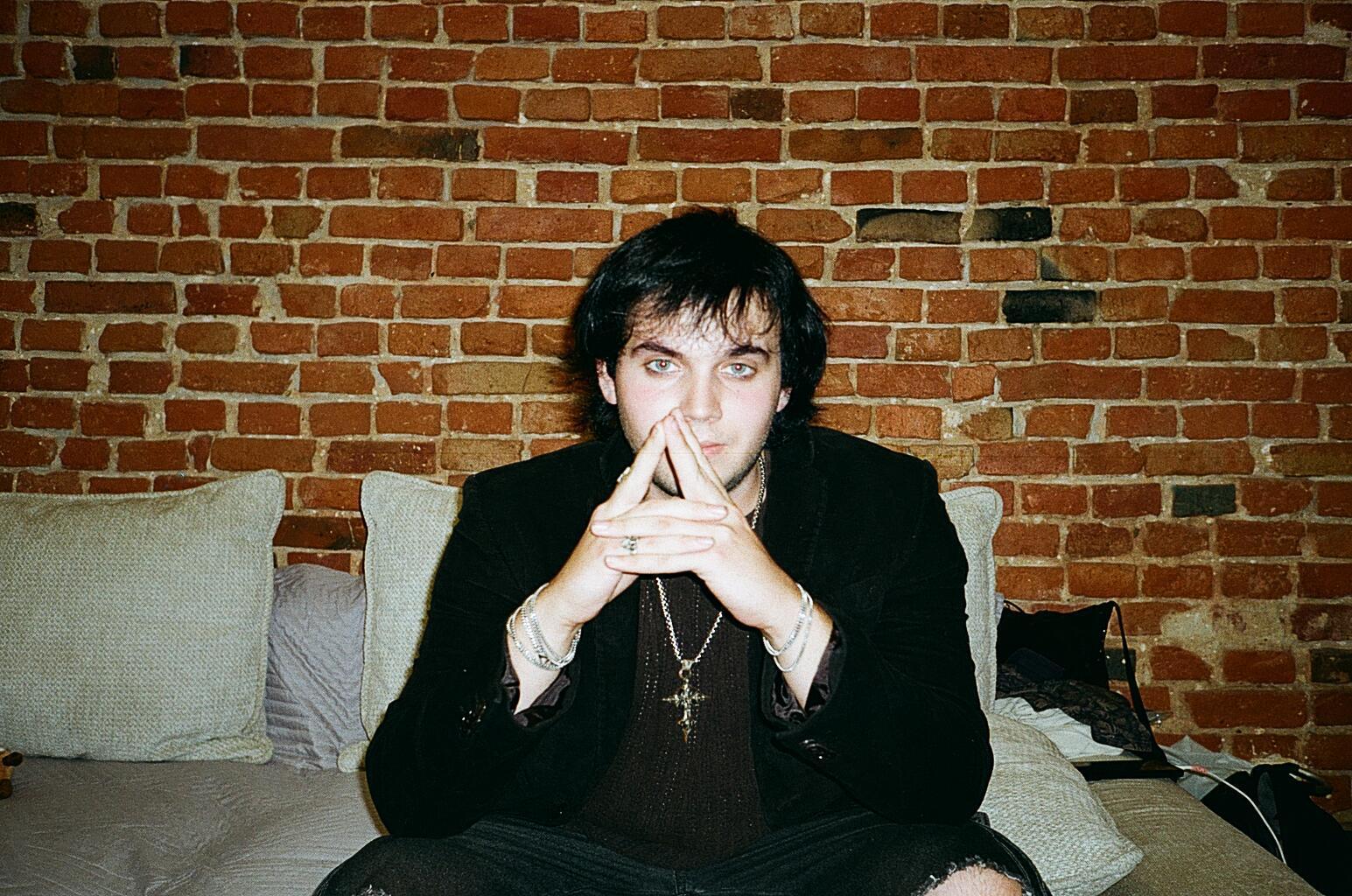
A. A. Prieston writes poetry. That's about it. There is no standard, no limitation or guide to his hand. His muse is the everlasting mixture of ecstasy and suffering that life exudes. To ponder the ultimate purpose of art is a perpetually perplexing task, a path with no final destination. Therefore, his art simply is.