Apple Podcasts
 Spotify
 Youtube Music
 Brownies for Breakfast?The Truth About Diabetes, Food & Living Well |(feat. Lynne Bowman)

Brownies… for breakfast?
It sounds too good to be true—but today’s guest says it’s not only possible… it might actually be better for you.
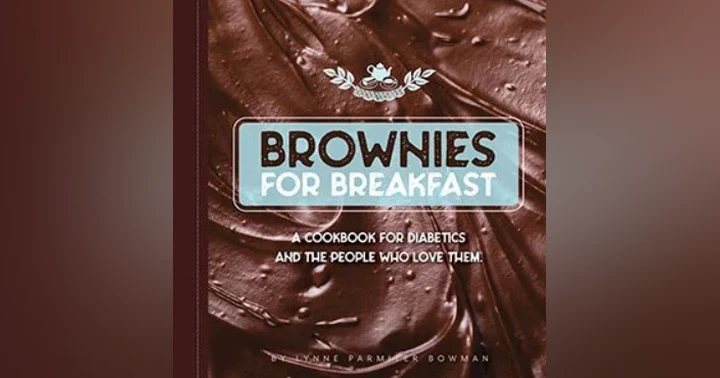
In this fun, insightful, and surprisingly practical episode of Travel Time Stories, Shannon and Ann sit down with Lynne Bowman—aka the Glam Grandma—author of the bestselling cookbook Brownies for Breakfast: A Cookbook for Diabetics and Those Who Love Them.
After being diagnosed with type 2 diabetes, Lynne completely rethought the way she approached food, health, and life—and what she discovered might surprise you.
✨ In this episode, we talk about:
• The truth about managing (and even reversing) type 2 diabetes
• Why most people get food and nutrition completely wrong
• How to enjoy what you eat without feeling restricted
• Simple habits that actually make a difference
• And yes… how brownies can fit into a healthy lifestyle But this conversation goes beyond food.
As a true Glam Grandma, Lynne also shares:
💄 Life advice we all wish we heard earlier
💔 What we get wrong in our first marriages
✨ How to reinvent yourself at any age
❤️ What really matters in the end This episode is equal parts wisdom, laughter, and “wait… that actually makes sense.”
💬 Tell us in the comments: Would you try brownies for breakfast?
Find out more about Lynne: https://lynnebowman.com/
✨ Subscribe for more real stories, real conversations, and real-life wisdom. https://www.traveltimestories.com/ Please join our community The Story Circle: https://www.traveltimestories.com/join/
#podmatch #tunein #newpodcastepisode #traveltimestorieswithshannon #healthyeating #diabetesawareness #menopause #foodlover #grandmawisdom #glamgrandma #lynnebowman #healthyliving #cookbookauthor #lifestylechanges #elderlywisdom #elderlyhealthtips
SPEAKER_01
If you choose health, let's put it that way. If you're gonna make a commitment to being as healthy as you can be, feeling great, the first thing you have to do, absolutely, the first thing, is you must absolutely quit sugar. And when I say sugar, I don't mean fruit, I don't mean food, you know, whole foods that have, you know, sweet potatoes that have sugary, you know, chemicals in them. I don't mean that. I mean added processed sugar that is in nearly everything you get that's in a box or a bag.
SPEAKER_02
Every journey has a story, and every story has the power to heal. My story hasn't been ordinary. I was adopted, I'm a survivor of abuse and trauma, and I have more than a dozen siblings. That's just the beginning of my story. Life has taken me on a long and winding road of healing and personal growth. A journey that ultimately led me back to myself and the path I was meant to walk. Along the way, I discovered that stories have power. The power to connect us, to help us grow, and even to help us heal. This is Travel Time Stories with Jamin. Real journeys, real stories, and real healing. So wait, you're telling me you can eat brownies for breakfast and be healthier?
SPEAKER_00
And not just yeah, and not just that, but reverse type 2 diabetes.
SPEAKER_02
That's right. Our guest today says yes, and she's living proof.
SPEAKER_00
She's called the Glam Grandma, and she's about to challenge everything you think you know about food, health. Maybe even your first marriage. Yeah, we went there.
SPEAKER_02
So welcome back to Travel Time Stories, where every journey has a story, and sometimes those stories come with a little extra wisdom.
SPEAKER_00
And today's guest surprises. And today's guest, she's bringing the recipes, the real talk, and the kind of life advice you didn't know you needed, but you won't forget.
SPEAKER_02
We're joined by Lynn Bowman, also known as the Glam Grandma, author of the amazing best-selling cookbook Brownies for Breakfast, a cookbook for diabetics and those who love them.
SPEAKER_00
Lynn has lived many lives, creative director, actress, writer, weather person, and now she's helping people rethink food, health, and what's actually possible when it comes to diabetes.
SPEAKER_02
There's one thing we know when grandma talks, we listen.
SPEAKER_00
Lynn, we are so excited to have you here. Welcome to the show.
SPEAKER_01
This is so much fun. This is just great. I love it. And I want to tell you, by the way, that I was the worst weather person in broadcasting, as far as I know. I think I have a record for that. But I love talking about it because, you know, failure is highly underrated in our culture as the thing that propels you forward, you know. I love failure. Looking back on our lives, and as I told you girls, I just celebrated my 80th. So I'm now feeling like a sort of newly born uh longevity voice. I mean, because for some reason we think 80 is beyond old, and it kind of sounds that way, but it doesn't feel that way. So, you know, I like talking about that.
SPEAKER_02
Yeah, no, 80 is another one of those pivotal turning points within your life. You know, you you have one about in your 20s, then you have another one in your 50s, and then 80s, the next one. Yes, exactly. Well, exactly.
SPEAKER_01
Yeah, Shannon, because it in my life, 50 was a big turning point. And I and my kids are now 48, 49, and 50. So we're talking about that a lot because to me, everything just got better and easier after 50. Uh, and of course, there's lots of talk now about finally, people are actually talking about menopause and what that means medically, and what do we do about it, and so on. Which also begs the question hey, hormones. I'm 80. Let's talk about hormones for old 80s, you know? Right, right. Because when you hear people talking about it, everyone's saying, well, you know, in your 50s and when you have menopause and so on. And you might, but but we don't start them after 65. Nobody starts hormones after 65. Well, excuse me. I started when I was 75, and I highly recommend bio-identical, topically applied hormone replacement. And I'm just sticking that in there. It's something that if you haven't heard of it, I'm here to tell you it's a good thing. Find out about it, find out more.
SPEAKER_02
No, I asked my doctor about hormones, and she told me that she doesn't want me starting hormones or doing hormones unless it gets to a point that I just can no longer take it. And then she'll think about putting me on hormones because they're just so bad for my body.
SPEAKER_01
Why are they so bad for your body? And I think you need a new doctor. That's what I said. Yeah. You know, because for decades they were telling us that that hormone replacement therapy caused cancer. And that was the result of one bad study done by men, primarily about horse urine. And so we lost decades that way. So you you can't just take somebody's word for something, even if they're medical. If you have reason to think maybe it's different, you know. Uh, I can give you some names after the broadcast. I tell you some people call. But, you know, we know. I mean, when I was having my babies, there were no women in the medical field. Practically zero. So, of course, all the doctors attending me were men. And those guys, I mean, literally I'm quoting, would say to me, I've had a thousand babies. No, you haven't.
unknown
Yeah.
SPEAKER_01
I'm sorry. No. And I've got such stories about it because the things that we were put through in the 70s having children, the contrast with what's happening now with the 20-plus year olds having children, and even my daughters, of course, but it's changed a lot since my 18-year-old granddaughter was born. It's all going in a good direction because we have women helping women have babies. Yeah, I love you, man. Love you. I married a heterosexual man and he's the best in the world. What we need these, this feminine, I think, side to medicine. Especially, you're gonna notice when you start talking about hormones. Yeah. Well, let's see your hormones, dude. You know.
SPEAKER_02
Yeah, exactly. And I don't know about it, the rest of y'all, but I don't like as a woman having to get up and shave every single day my face because my hormones are out of whack and I'm growing all this hair. Right.
SPEAKER_01
Okay, we'll we'll fix that. All right. I do not like it. I know we're supposed to be talking about food, sort of.
SPEAKER_02
Yeah, exactly. So brownies for breakfast, Lynn. Tell us, tell us all about brownies for breakfast.
SPEAKER_01
Well, the whole idea is that if you decide, if you choose health, let's put it that way. If you're gonna make a commitment to being as healthy as you can be, feeling great, the first thing you have to do, absolutely, the first thing, is you must absolutely quit sugar. And when I say sugar, I don't mean fruit, I don't mean food, you know, whole foods that have, you know, sweet potatoes that have sugary, you know, chemicals in them. I don't mean that. I mean added processed sugar that is in nearly everything you get that's in a box or a bag. And we were talking before about even Trader Joe's and I like their stuff. But if you go down the frozen aisle and you look at the Japanese food and you look at the Indian food and you look at all those things now that are so yummy looking, and you actually read the ingredients, guess what's in them? Every single one of them has sugar in it. It just is a separate ingredient. Sugar. And I have a I devote a couple of pages in my book to all the other names that processed sugar is given so that they can put it in separate, so you can make five, instead of putting it at the at the top of the ingredient list, they get to put it further down in the ingredient list because they break it up in dextrose and sucralose and all these things. So the first thing you must do, and and of course everyone is saying, well, yeah, fine, I yeah, quit sugar. I I'm doing better. I'm cutting back. Right? But what I have to say about that, you may know this, is that if I said to you, you know, Shannon, I am gonna give up my heroin habit. I I'm done. I wanna, you know, I'm cutting back. I'm baby steps. I'm not doing as much as I did. I'm doing much better with it. What would you say to me about my heroin?
SPEAKER_02
That even one little bit of it, it you're still killing yourself. You're damaging your body.
SPEAKER_01
You're addicted. And the truth of the matter is, sugar in the lab, and there are plenty of studies out there about this. Don't take my word for it. Sugar is more addictive than heroin. Oh, yeah, I believe it. You are addicted. And guess why? There's a huge amount of money in you being addicted, right? The cereals, the you know, I mean, think about all the foods that this country is consuming. Soda pop is something like 60% of the calories consumed in this country.
SPEAKER_02
Yep. And there is nothing in it but poison. Yeah, our food in this country is literally killing us.
SPEAKER_00
Yeah, it's horrendous.
SPEAKER_01
And even worse than killing us, it's making us chronically ill and it's bankrupting us because we don't have the healthcare system to take care of it. So bad, bad, bad, bad. And guess what? You can fix it yourself. You can start with you and your family, just quit sugar. And so this book is a result of that knowledge that I mean, every time I would talk to people about it, they'd go, Oh, yeah, yada, yada, yada. Nobody really could grasp that this one little thing had such a huge effect on your overall health. Sugar is inflammatory. So over all these decades that you've been eating that sugar, you have been inflaming your joints, your organs, your skin. Uh, you have made yourself chronically ill, maybe at a kind of low level, but it's still there. So Granny here is here to tell you that not only can you quit, you have to commit, first of all. But when you do, you're gonna go, wow, this food is great. You know, I'm eating better than I ever ate. Yeah, because guess what? You're not stuffing yourself with Doritos. Although, you know, you now have made room for sweet potatoes. Eat as many of them as you want. You don't need to put anything on them, just put them in your air fryer and make them crispy chips, and they're divine. A little bit of salt. Sweet potato. Perfect. So all these good foods. And people say, Well, I guess you can't eat fruit anymore. No, you can eat whatever fruit you want, as long as it's real food. Real whole food. I yes, you can cut up your apple and eat it. It's still whole and eat the skin. The skin is great for you. Because a couple of other studies that are so important, I think, to understand about nutrition, one of them is the longest lived people have one thing in common about their diets. So people from all over the world. What is the one thing that they have in common among the longest-lived people? Can you even guess what it is?
SPEAKER_00
Sugar.
SPEAKER_01
Fiber. They eat fiber. Fiber. So the combination of when you quit sugar, you are automatically going to start eating more fiber because you're going to eat real food, whole food, and you're going to be eating a lot more fiber. You're going to everything you eat will have nutritional value to you. You know, stop and think about how much you're eating right now that not only has no nutritional value, doesn't really add anything, but it's taking away from your health in some way. So stop being when you stop eating sugar, you will stop eating fast food because you have to, because all fast food has sugar in it. So that's kind of cheapy, right? But when you stop eating fast food, guess what else? You're you're not eating grease anymore. You're not eating fried food. You're not eating all that processed flour. Because processed flour, like white flour, might as well be sugar. It essentially is sugar. And all the breading, all that stuff. Think about how many times a day most people eat a sandwich. For breakfast, they have a bagel. For lunch, they have a hamburger or a hot dog or a Philly cheesesteak. For dinner, maybe even they just have toast and something. So way, way too much white flour. I am a bread lover, but as you know from reading the book, I want it to be sourdough. I want it to be whole grain. I want it to be locally made. And I want it to be made from good flour. Einkoin corn wheat is much, it's the wheat that our grandparents' great-grandparents ate, as opposed to the genetically modified wheat that commercial bread is made from now. So once you start down this path, starting with quitting the sugar and eating whole foods, then you realize you start really looking at everything that you're putting in your face. And that's a good thing. We really need to think about every bite. And it your habits will change. In fact, in in three weeks approximately, after you quit sugar, your taste begins to change. Your saliva has chemically changed. And stuff will taste different. And particularly when when it's it comes to sweetness, you will be put off by super sweet things. I know you can't imagine it. But you're looking at the thing.
SPEAKER_02
No, that makes sense though. No, it makes sense because yeah, you're you're so used to that super sweet from being on the sugar. So when you get off the sugar, then that super sweet is too much.
SPEAKER_01
I mean, when I say to people, I don't care for any ice cream, thank you, and they go, No, come on, you have a treat. It's like I really don't want the ice cream. It just it's it's too heavy, too rich, and too sweet. Um, I like sweet, but I would rather have it in berries, you know, with a little bit of yogurt with a little bit of allulose on top. That's great. That's fine. I mean, it's plenty sweet. And I, you know, all the recipes in the book for um And let's talk about the brownie recipe because people think, well, brownie have people, okay, well, here's how it's magic. You make it with pumpkin, you could make it with sweet potatoes, but most of us can grab cans of pumpkin very easily wherever we shop for food. And it's it's really good, nutritious, pumpkin puree. So easy. You blop that in, and then you you put in plain ordinary cocoa with no other ingredients. Cocoa in a little dark brown thing, you know, cocoa, and and then magic ingredient number three, and these are all health foods, by the way, including cocoa. Chocolate is really good for you as long as you don't put sugar in it. Yeah, exactly. So ingredient number three is nut butter. And think about that. What a great food, nut butt, as long as it's just one ingredient, and you look at the package and it just says almonds or cashews or peanuts, and it's protein, it's fiber, it's delicious, it's got good oil in it. So the combination of those three things, and then you add to stick it all together, you add eggs, or if you want a vegan version, just do egg substitute, which is made out of chia seeds or something. I forget what. I've got it in there. I use it sometimes, but it's perfectly healthy stuff. So, and then baking soda and what am I forgetting? A couple more little things. That's it. Vanilla and cinnamon. Yeah, vanilla. And and cinnamon, you know, it's good with a chalk. They are so rich and gooey and fabulous, and they're even better the second day if you can not manage to not eat them all up the first day, right? The thing is, too, Shannon, and I know you'll you'll vouch for me, one or two of those brownies, and you know you've had some food and you can stop. It affects your body in a completely different way because it is really nutritious. And your little cells are going, thank you. I'm good. That's enough. Yep.
SPEAKER_02
Which is amazing to some of us. Yeah. Talking about the brownie recipe, that was actually one of the first ones that my son looked at in the book because he was curious if you use the same ingredient in your brownie that I use in mine. And that's where we saw the difference. You use the pumpkin. And what I use in mine is zucchini, and I make zucchini brownies. It works. And that's that's how the kids, I would make sure they got veggies every all the time because they would lap up the zucchini brownies and they never knew that it had zucchini in it. I waited until they were a little bit older, and then I was like, you do realize that you've been eating zucchini brownies, right? And at that point, they're like, Oh, we don't care. They're so good.
unknown
We don't care.
SPEAKER_02
And what could be better for you?
SPEAKER_01
But you put sugar in yours, I'll bet. No, no, I do not. I do not. No. No, then when the kids were little and you were making them with zucchini.
SPEAKER_02
No, no. I don't put sugar in mine, no. And that's why everybody uh that I work with, that's their favorite dessert that I bring when we bring things into the office. And everybody asks for my recipe. They're like, oh my God, because I tell them they're healthy, like they're good. What else do you put in your zucchini brownies? What do you make them with? I have everything, I use everything that you use in yours. The only difference is I use zucchini instead of pumpkin. Oh, okay. There you go. Yeah. Yeah. And it's so easy, isn't it? It's yeah, it's so easy. The zucchini, when you grade it up, because I grade my zucchini and put it in grated, it has all that moisture that it puts in there. Yeah.
SPEAKER_01
Yeah. So good. Magic, I think the way when you put it back in the fridge and keep it overnight, it gathers more moisture somehow. Mm-hmm. And continues to be just yummy. And of course, they freeze really great too, if you can save any to put in the freezer. Yeah.
SPEAKER_02
They never last around here for the freeze. Yeah, here either.
SPEAKER_01
The the idea of donuts is kind of weird to some people because you assume that you have to fry donuts, but you don't. You can bake them. All you need is a the donut pans, which you can get almost anywhere online or in any of the cooking stores or um, I don't know, probably Costco now, but it's pretty much the same ingredients. I just kind of mix it like I have a pumpkin pie spice donut that people really like. And but it's the same kind of idea using pumpkin and nut butter. And and some of them I I use some nut flour too, I think. I always have to go back and look again to remind myself. But yeah, you can make yummy stuff, and carrot cake is in there, pumpkin pie is in there. And the reason I I talk a lot about pumpkins in the book, where I live is kind of the pumpkin capital of the West Coast. We have pumpkin growing contests and things, so they're kind of a part of a special part of the culture here.
unknown
Yeah.
SPEAKER_01
And we grow them ourselves and and so on. So so they make a especially large appearance in my cookbook, but they're great food, you know, they're just really super great food. And the seeds are great, and you can just roast the seeds and eat them. They're yummy.
SPEAKER_02
That's what I love to do at uh in uh Halloween time when we have. Pumpkins, that's what I do. I take the seeds and roast them up, and that's a that's a great snack.
SPEAKER_01
And I mustn't forget, you promised that I was gonna tell people what is usually wrong with their first marriage or two. Yes. Yeah, exactly. Is it time to say? Go right ahead. I'm curious to hear this. Because I did I spent some time as a wedding planner, which was because I I was rehabbing a local church, which is a historic building, the oldest church in San Mateo County. And I I got involved in the effort to restore it, and which was really satisfying and fun and great. And but the idea was well, we needed weddings in there, you know, to keep the income coming in because the enrollment of parishioners or whatever you call them was down. You know, churches aren't don't have the same numbers of people that they used to. So my big fat bride idea was that I would be the wedding planner and you know, we could have all these weddings in the church and so on. And so we did have some weddings, but boy, did I learn a lot doing everybody's else's weddings. And I think I can say with some certainty at this point that the big mistake that I saw brides making often was choice of groom. Sometimes it takes a couple of tries, girls. I would agree with that statement. In my personal case, I met my current and by far the best ever husband. And now of, I don't know, going on 40 years. I was a 40-year-old divorcee with a complicated life and career and three preteens and dogs and cats and a mortgage and everything that could possibly be a red flag for a guy, right? And he was a 29-year-old engineer. Wow. Here we are, right? We're still here, and it's working for me. I hope it is for him. I think it is.
SPEAKER_00
I love that.
SPEAKER_01
It's not always the package that you think, you know. Sometimes it comes in a form that is just wow, what? Yeah, something that you wouldn't believe. Yeah, that's true. So that's my answer to that. What else did I promise you?
SPEAKER_02
Can we let's talk about diabetes for a moment? So you were diagnosed with type 2 diabetes. And from your from your book and listening to the audio, I know that you kind of anticipated that that was going to happen to you based on your lineage and other family members that have been diagnosed with type 2 diabetes. Yes.
SPEAKER_01
And the big surprise for me was I couldn't get anyone to talk to me about it. Any medical people seemed to know. All they'd say was, well, lose some weight, keep your weight down. You should weigh what you what you weighed in high school. Just do that. Of course, that was the advice that women were given about everything, right? Yeah. Yeah, just lose some weight and your life will be just fine. Yeah. So I knew instinctively that that probably was not the answer. And I started doing research and finding out anything I could find out. And I was cooking for myself because I was poor and a mom. And so I was eating relatively healthy and I was interested in that side of things. But it was just astonishing how hard it was to get good information and get any real help with it. And just about the time you'd think, you know, you were on the right path, someone would say, Well, no, that doesn't matter. You know, it really doesn't matter. So it it has an effect in a couple of ways. One, I have been working religiously hard on my health basically my whole adult life, which I recommend. Don't wait until you're 40 or 50 or 60 before you really start paying attention. Um, because we wear our bodies out with this inflammation and with the stress on our organs from um and our gooey blood from high blood sugar. Um, so the sooner you figure it out, the better. But whenever you are diagnosed, take it seriously and figure it out. And now I'm seeing a lot more out there in the podcasting world, in, you know, all kinds of books and things, relatively good information. As we were saying before you press the button, it's usually not from sweaty guys in a black t-shirt, you know, 35-year-old guys. They are not necessarily the ones who know anything about longevity. But yeah, I have been taking care of myself more strenuously for longer than a lot of people. And I I credit arriving at 80, you know, doing strength training and and, you know, lifting weights and all that sort of thing happily with with having eaten well and moved as much as I could for a lot of years. And there's no question that you need to do as much of that as you can. The medical diagnosis came in with prescribing metformin, which is an old drug and it's a good drug, and it has very few side effects. Not everyone can take it, but for me, for me, it was easy. I never had a side effect. So that wasn't a problem. And but there are other things now, and of course, now you've got the wearables, you know, so you know what. But a thing that more than one doctor has told me that I think is important is what your blood sugar is at this moment. The moment that you take your blood sugar is not that important. It's your hemoglobin A1C, it's it's measurement over time of your blood sugar, your average. I think a lot of people don't really understand that's what matters. Over a period of weeks, months, how are you doing? Are you relatively consistent about what you're eating and how you're moving and how you're doing? And sometimes, no matter what you're eating or how you're moving, it still just doesn't add up. And you may need to to do, I've never been on insulin. And my hemoglobin A1C is now, it ranges between 6.3 to the high sixes. I'm under seven all the time, which you know, if I were being really, really strict about it, I'd go, you know, I want to do better than that. But what I'm told over and over again is at your age, are you kidding? You're great, you're fine. And I don't know what the truth is in there. I'm starting to think now, hmm, really? I don't know how much studying there's really been on women my age with diabetes who are still alive and want to remain alive. You know, when you really start looking at the evidence, at the medical evidence, at the studies, I find it shocking and appalling how little of it is done on female populations or on older populations.
SPEAKER_02
Yeah.
SPEAKER_01
We're living longer. We have different lives now. So we're kind of waiting for the real information to come in about what that means medically. Uh I mean, okay, here's an example. Last May, I broke my femur, the largest bone in our bodies. Yep. It was an aerobic gardening incident. It was me and this vine, and the vine won, and it put me on my ass in the gravel, and and it it just pretty much dislocated my femur from my hip. It so I was immediately in shock. And as those things always go, there were two adult men on the property, and neither one of them could hear me. But I we got an ambulance pretty quick, and I got to the hospital within an hour, an hour and a half, and all the stars aligned and came together. And the next morning I was on an operating table in Redwood City, California, and I had two or three people nurse, doctor, and anesthesiologist say to me, Wow, you know, we don't see women your age in your kind of shape very much. So no matter what you're thinking right now, I think you're gonna be fine. Because we used to be told that that was the end of our lives. When you broke a hip or had a bad fall, broke a big bone.
SPEAKER_00
You're done.
SPEAKER_01
You're done. You're done. You're in a wheelchair, that's it. Well, ladies, I am doing strength workouts three times a week, pumping iron with the young girls, doing all the stuff. Krabby, yes, and I am grateful and I had very good medical help. But and they told me it would be a year before that, but and I now have titanium from my knee to my hip. Isn't that exciting? Wow. They told me that it would take a year to really completely heal. But when I went back and had a checkup, I don't know, six weeks after my surgery, the doctor said, Yeah, you're good. Bye-bye. Okay. Wow, that's amazing. Right? And and he did say, I don't want you jumping, and I don't want you, you know, doing marathon running kind of stuff. Take it kind of easy. Because I know you, he said. I know your type. You're not gonna take it easy. But that I hope is a message for everyone to hear about how much more control we have now over our normal longevity and over our health span. Because who wants to spend the last 10 or 15 years of their lives not doing anything, you know, that they're not gardening and not being social and so I can't imagine. I can't either. I can't. I mean, we we somehow manage to adapt to whatever we have to adapt to. But the other thing is I've felt a big responsibility to demonstrate from my kids how older people can be. Um You know, we we raise our children by example. I was a big believer in that. You know, it's not what you tell them does not matter nearly as much as what they see, what they see doing. And so I've I've always felt like they're still watching me in their way all the time. And and so I felt a bit of a responsibility to be the best old lady I could possibly be, you know. Which and and I love being an old lady. I just pray. I mean, people people kind of make room, you know, exactly. A lot of space, and um as well, she's oh she's getting up there, so she's a little eccentric. You bet. That's right. I am well.
SPEAKER_02
I don't know if you watched the TV show Matlock or not, the new one with uh Kathy Bates, where she plays Matlock, but that's one of the things that's one of the things on the show that she talks about is that people never see an old lady coming. Like she can get away with stuff because nobody sees it coming from an old lady.
SPEAKER_01
That's true, isn't it? That's cool. That's so true. Yeah, yeah, right. Exactly. That's very true. So I have a lot of fun in local government, you know, because I'm I'm one of the people that they shove out when somebody needs to go to the county to ask for something or tell somebody something. And I thoroughly enjoy it. It's fun. I love that, yeah.
SPEAKER_02
Well, what's one uh best beauty or confidence tip for any age that you would give somebody? Okay.
SPEAKER_01
I think I have one because it came up this morning, and I like to say to the young ones, and I have some darling young friends, which I think is important too, have young friends in their early 20s. You should dress the way uh you want to be seen. You should dress the way uh you want to be received. You should you should dress the way you want to be in the world. Whatever that is, we're always giving signals to the humans and non-humans around us, but we're we're giving signals. And those signals are being received whether you want them to be or not. But I think it's important to be in control of or aware of what those signals are. So dress for for how you want to be treated. You know, uh when I see the young ones and they're all tatted up, and I think, oh my gosh, that might be fun right now. But dress the way you want to be treated. What are you saying to the world? With your clothes, with your tattoos, with your makeup or no makeup or whatever it is. We're all in costume, whether we like it or not. You know? Yeah.
SPEAKER_00
So a couple of years ago, a good friend of mine is a mortician. And uh he he said to us one night, he said, you know, there's nothing worse than a really old, very weakly person coming in, and they had tattoos when they were younger. He said they really change over time a lot. They do, and that always stuck with me.
SPEAKER_01
Thank you. You know, these young ones who don't want to eat anything that's not, you know, raised properly and so on, and then they pump their veins full of ink that they don't know where it came from or what it is or whatever. So I'm not a fan. I don't like that.
SPEAKER_02
So thank you so much, Lynn, for sharing your story and your insights with us. Where can where can people find you with your website? Lynnbowman.com. Okay. And we'll make sure to have the link in uh the show notes and on our website, traveltimestories.com, where each of our guests has a dedicated page for you to learn more about them and listen to their episodes. And if this episode made you smile or gave you something to think about, share it with a friend who could use a little glam grandma wisdom.
SPEAKER_00
And until next time, keep traveling your story and keep making memories for life, everyone.
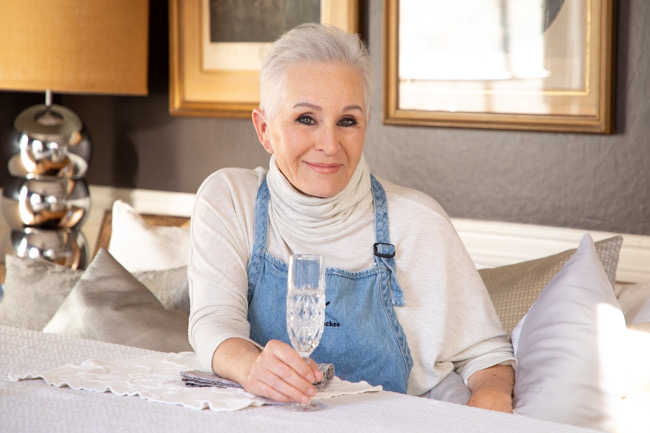
Author/Glam Grandma/
Lynne, author of Amazon best-seller "Brownies for Breakfast," has been featured at women's expos throughout the country, teaming with actress Deidre Hall to write and publish "Deidre Hall's Kitchen Closeup" (2010) and Deidre Hall's "How Does She Do It?" (2012). She's received national awards as a creative director for advertising agencies on both coasts, and has worked as an actress, makeup artist, screenwriter, illustrator, legal journalist, wedding planner and television Weather Person.