
 Apple Podcasts

 Spotify

 Youtube Music
Nakeesa Marie (100 Days of Gentle Accountability) Self-Care for Black Women: Rest, Boundaries & Self-Love
In this episode of The Author Spotlight Series, Shannon welcomes NaKeesa Marie, author, entrepreneur, and Self-Care Strategist, to discuss her book, 100 Days of Gentle Accountability for Black Women. They talk about the importance of Self Care for Black Women and how it needs to be made a priority in their lives.
For generations, Black women have often been expected to carry enormous responsibilities—caring for their families, supporting their communities, succeeding professionally, and remaining strong through it all.
But what happens when the woman everyone depends on needs support herself?
NaKeesa is passionate about helping people develop consistent, sustainable self-care practices through what she calls gentle accountability—an approach that encourages compassion, consistency, and a healthier relationship with ourselves.
Her work also extends beyond adults through her Gentle Accountability guided journal series for children, teenagers, and adults, encouraging healthy self-care habits before burnout becomes a way of life.
In this Author Spotlight, we explore:
💜 The pressure to always be strong — Why Black women are so often expected to care for everyone else while neglecting their own needs.
🌿 Self-care beyond bubble baths — Why meaningful self-care is about more than occasional treats or pampering.
❤️ Gentle accountability — Learning to build healthier habits without guilt, shame, or unrealistic expectations.
👩👧 Breaking generational patterns — Why teaching children and teenagers to value their well-being can change how they approach life as adults.
🤝 Self-care and community care — Understanding why personal well-being and supportive relationships go hand in hand.
✨ Entrepreneurship without burnout — The challenges of prioritizing your own needs while building a business and pursuing your passion.
📖 The woman behind the mission — NaKeesa's journey as an author and entrepreneur, and what inspired her to create resources that encourage others to care for themselves.
At the heart of this conversation is an important reminder:
Taking care of yourself doesn't mean you care any less about everyone else.
Whether you're a mother, caregiver, entrepreneur, professional, or simply someone who's spent years putting everyone else's needs before your own, this conversation is an invitation to begin making room for yourself.
📚 Featured Book: 100 Days of Gentle Accountability for Black Women
✍️ Featured Author: NaKeesa Marie
🔦 Series: The Author Spotlight Series
Find NaKeesa and her books:
📖 Book: https://link.amazon/B021ZNHvt
🌐 Website/Social Media: NaKeesamarie.com
JOIN THE CONVERSATION!
Have you ever felt guilty for taking time for yourself?
What's one small act of self-care you've started making a priority?
Share your thoughts in the comments. Your experience might encourage someone else to begin putting themselves back on their own list.
🎙️ About Travel Time Stories
Real Journeys. Real Stories. Real Healing.
Join Shannon and Ann as we explore the journeys that shape us, the stories that connect us, and the conversations that remind us we're never alone.
Every book has a story. But so does the person who wrote it.
SPEAKER_04
In the authors hotlight Where the stories collide Twenty authors waiting Let curiosity guide All genres invited from Horror Street Unravel the tales at our podcast heartbeat Welcome to the Author Spotlight series.
SPEAKER_01
This is where we step behind the pages to meet the people who create the stories we love. We'll talk about their latest book, their writing journey, and the story behind the story. And probably a few things neither of us plan to talk about because around here the best conversations have a way of taking us somewhere unexpected. And today we're putting Nikisa Marie in the spotlight. Nikisa, welcome to Travel Time Stories. We're so glad to have you here. Thank you so much for having me. I'm so excited to be here. Well, we're definitely excited to have you. And before we dive into the book, I'd love for you to introduce yourself to the audience and tell us a little about who you are. Yeah, thank you.
SPEAKER_00
So I'm Nikisa Marie and I am a writer. I primarily, up until recently, had only written like op-eds and essays about the black experience, the black women's experience. And one of the things that I wanted to do in my work just in many different ways was to incorporate my love and I would say dependence upon self-care. So I was encouraged by one of my aunts to start documenting my life because she's like, you're doing so many different things. And when you get older, you might not remember like every single detail. So it's good to document your life. And I thought, I don't have time to do that. I work, I have a business, I'm a writer. So I kind of just like brushed it off, but it kept nagging me in the back of my mind, like, yeah, I probably should do that. So then I went on a search to find a journal that spoke to me that I felt would be something that would be useful to me. And I wanted like a guided journal type, not just, you know, blank pages or pages with lines, which nothing is wrong with those, but I wanted something that I could respond to that would ask me questions that would, you know, make me think about where I was at a particular time or day in my life. And I didn't really find one that really spoke to me who I am. So I decided to create one. So I've got it now. This series of guided journals that are focused on self-care. And I have versions for kids, teens, and adults because I believe that all of us should be engaging in self-care daily if possible, but as much as as much as possible, and then also from our childhood through our entire lives. So that led me to including a series of guided journals into my writing. And I've just been so thrilled to be able to talk about, use that as one of the ways to talk about the importance of self-care. Obviously, self-care is important to me. So that's a thing that I talk about, I write about, I encourage everyone to do. That's kind of my thing. And I live in the Pacific Northwest and the in the Seattle area. I've been out here for many years, originally from the Washington, DC area. And uh yeah, I don't know what else to say about me. I do so many different things. We it would take half of the conversation to go through the whole thing.
SPEAKER_01
Well, it's definitely clear that you're a busy woman, that's for sure. But I am definitely excited to talk about self-care and specifically self-care for black women because I feel like this is a topic that does not get talked about enough. And any specifically anything, you know, that's geared toward black women and the black community, we need to shine a spotlight on it. We need to get the word out there, the voice out there. It needs to be heard more than what it does. We need more black authors out there. And I know that we have black authors out there, but they don't get the recognition that their white counterparts do. They're not in as many bookstores as their white counterparts are. So we need to make that change. And if this will help do that in any way, then I'm super excited to be a part of it.
SPEAKER_00
Thank you so much. And thank you for bringing that part into the conversation. I definitely obviously agree. As I said, I am a writer. I have been published in many different books and news publications. I, you know, read my essays for public audiences. I have a one-woman show that incorporates my writing as well. So I'm very passionate also about getting my voice out there as a black person and a black woman. I also am part of two literary groups. One is called the African American Writers Alliance that was established in 1991. Um, and I've just been a member for the last few years. And then the other is uh Black Women Write Seattle. I believe they were established in 2024, so just a couple of years. But both of those groups really exist to make sure that we have a space for writing, a space to encourage one another. With the African American Writers Alliance in particular, every year, every member has an opportunity to be published in our anthology that we release every year. And, you know, sometimes we'll write in small groups, but we meet in, you know, the larger group in person and virtually to make sure that we again are encouraging each other, sharing resources, supporting each other if you need someone to, you know, bounce ideas off of, and just really to make sure that we are getting our voices out there as much as possible and never stopping despite barriers, despite whether it's, you know, received in all the places that it should be, but we're not stopping and just being a part of those two groups. Though I was writing before I joined those groups, they still are just an extra, like, you know, thing that supports me to do that. And it's very inspiring to see other writers, um, black writers doing that, and we're very powerful in doing it together. So, yes, I agree that we do have those barriers that exist in this world, but there are plenty of us that are out there writing independently, getting our work published, self-publishing, and you know, some traditional um publishing as well, but certainly not as much as we should. So if my voice, if me appearing on podcasts, if me continuing to get my work out there helps that in any way, I'm thrilled about that.
SPEAKER_01
Yeah, I concur. And does that association is it open for all genres of writers?
SPEAKER_00
Yeah, okay, that's amazing. Yeah. Yeah, so but it's two, the African American Writers Alliance and then Black Women Write Seattle. So we have Afrofuturism, we have poets, we have novelists, we have just all different types. I mean, I just recently wrote a poem and I do not consider myself, I hadn't considered myself a poet, but now I'm too. I can add that to the list. So yeah, it inspires us in in those kinds of ways as well. Like we might start writing in a genre that we didn't, or we get to at least be exposed to because we have open readings that you know we'll read our work to the group. So yes, it's it's not limited to a genre, it's open to all genres, both groups.
SPEAKER_01
That's amazing. There's something in your philosophy uh that really caught my attention, and that is when you say gentle accountability as an act of self-care. So, what does gentle accountability actually look like? And how is it different from the way most of us hold ourselves accountable?
SPEAKER_00
I personally believe that how I have seen, heard, and experienced people talking about accountability, it's usually in a punitive way. It can be harsh. It's not gentle for the most part. It's sometimes a gotcha. Like I'm holding you accountable, like you can't make a mistake, you can't be human. And that is not how I want people, particularly black women, because I do focus and center black women in my self-care work. I don't want us to, number one, think about self-care. And I don't want anyone to think about self-care, honestly, in a way that is punitive, in a way that incorporates negative self-talk, because sometimes that's part of the equation, right? When we talk about accountability, we'll say terrible things to ourselves in our own head and don't give ourselves a break and don't allow ourselves to be human. And so I believe that gentle accountability is treating yourself with kindness, treating yourself with understanding, respect, grace, all the things that we're taught to give to other people. We often forget when it comes to ourselves. Or another part of it is we'll put self-care as another job that we'll think of it as difficult, like another task that we have to do. And then we'll beat ourselves up about not, you know, reaching a goal around self-care. And I don't want that to be done with anyone around their self-care practice. I want them to treat themselves with gentleness, with love, because again, I do believe that self-care is one of the highest forms of self-love. And love should be gentle, kind, soft, welcoming, and hold you in a way that is loving for lack of, you know, not wanting to repeat the the word to describe the word, but that is is what I truly believe, and that is my philosophy about how we should approach self-care in our lives. That is so spot on.
SPEAKER_01
I mean, sometimes, you know, you're you're so busy being the strong, dependable person because, you know, as women in general, that's what's put upon us. Absolutely. And then, you know, that becomes ingrained into our identity. And then it makes us feel like if we ask for help that we're letting people down by doing that. So, how do we go about changing that expectation so that we as women don't feel guilty, you know, for asking for that help?
SPEAKER_00
I always say, and I have created an ecosystem for black women around self-care. So I have many different facets to that. So one of them is a weekly book club that I host virtually and I have a podcast myself. I do a lot of posting, as you know, on social media. And my thought about how we change that is that we first have to change ourselves. Now, I do recognize that we live in a society that brought us to this place that for all women, like you said, a lot of times we are raised to be in service, you know, to other people and be completely self-sacrificing no matter what our race is. However, I believe that we have to change ourselves first. We have to disrupt that norm first and do that within ourselves independently and then together as a sisterhood amongst women, um, whether you do that in your own, you know, community or or broader or global. And then I believe we have to bring the other people along with us because I always say that while we were being programmed to be completely self-sacrificing, everybody else was being programmed to depend on us to do that. So it is gonna disrupt the norm, right? But we just have to stay steadfast in that we know that this is something that we deserve. And the way that we have been existing is not healthy for us, it's not right, it's not fair. And so, again, we must change how we're operating first, and then other people will have to adapt, and we can do our best to try to support them in accepting it, but they will have to regardless because we're not going backwards.
SPEAKER_01
So that's my answer about that. So, why is it sometimes so much easier for us to show compassion to other people than to ourselves?
SPEAKER_00
I think that I just right before we uh started tafing, I did a post about humility. It is not a word that I like. It is not a term that I like to be put on women and particularly black women. I think it is a tool of the oppressor, whoever that might be, to keep us in line, to keep us second-guessing ourselves, not stepping into our fullness, not showing up as our full self so that other people can remain comfortable. So when you've been, I think, uh socialized to be humble, not to show up in your fullness, make yourself small so that so that the status quo is held up, that is why I believe it's difficult for a lot of us to show self-compassion because we've been programmed not to do that.
SPEAKER_01
Yep. So sad, but it's absolutely 100% true.
SPEAKER_00
Yeah. I mean, I was just talking to a friend of mine who also is identifies as a woman, and we were talking about how a lot of times the way I show up just in many different spaces, I'm very confident. I am, you know, when I need to be, I'm business minded. I want things, you know, I want the things that I pay for to be correct, you know, like so even as a customer. And I do that with, you know, I have those expectations with respect. I'm not yelling or being over the top about anything or being disrespectful. However, regardless of how I show up, because I'm a woman, a lot of times that the way that I'm showing up with having standards and expecting things to be done in the way that they should, if I'm like paying for something or whatever, it is seen as off-putting. People do not like it, but I've seen men exhibit the same behaviors and even more intense behaviors, and they're called a leader. They're called, you know, someone that knows what they want. Look, there they can lead us to this or that, but I'm considered out of line for having expectations, for wanting what I deserve, for getting what I pay for even. I think that's my answer to that question as well.
SPEAKER_01
Yep, exactly. And that's the one thing I hate is mansplaining.
SPEAKER_00
Yes, mansplaining and that double standard, right? You know, I mean, if I'm paying for a service, I should have it done the same way as if a man's, you know, paying for it. And if I'm asking for what I deserve, or if I'm showing leadership skills, that should not be seen as any different than if a man is doing that.
SPEAKER_01
Yep. Exactly. Yep. And if we're doing the same job, we should be getting the same pay. Absolutely. Maybe even more pay than the well, we're we've mentioned self-care, and I know that when you mention that word, a lot of people, the first thing that's gonna come to their mind is like bubble baths and spa days and treatments and things like that. And that is a part of self-care or can be included in self-care. Yes. But that's not the whole of self-care. So, what would you say is the biggest misconception that people have about what self-care actually means?
SPEAKER_00
Number one, I think they do think of the things that you just mentioned. I think another thing is that they think that it is a luxury, and I believe that it is a necessity. I also believe that people don't understand a lot of times that self-care has to first start with your mindset. Number one, you need to understand that it's a human right. And as a human, you automatically have earned it. There's no extra earning you need to do. There's no, oh, you're gonna get a self-care token because you worked yourself into burnout or you know, whatever. You deserve self-care because you exist, and self-care can include those things. And I want people to also understand the self-care, some people don't even like those things, bubble baths or massages or whatever. But what they do like is meditation, perhaps, or they like to take a nap on a Saturday, a sleep in on Sunday, whatever that thing is that feeds you, that fortifies you, that makes you feel good, that's like healthy for you, I believe is self-care. It could be five minutes to just sit in your car before you have to go into maybe an intense situation. That intense situation could be three kids grabbing at you when you come in the door. It doesn't necessarily mean like work or you know, some community responsibility. Taking just time to go outside, get some fresh air, like whatever it is for you, that's what self-care means to you. Of course, I want people to have as much self-care as possible. So not just do that one thing, but if that's where you need to start, start there. If it's something that you can do and it's one thing and you can do it over and over again, make that habit. Because I what I find is that when people make those habits with the one thing, they start with the one thing, then they'll start thinking differently and like, hey, I should maybe do this thing too, or I should do that thing too. Like one thing that I tell people who, you know, work for someone else or have like lunch breaks that they're mandated or they are are offered to take, sometimes they'll work through their lunch, and I'm like, don't do that. See if you can just start with once a week taking your lunch break and see how that feels, you know. I can't answer, you know, for everybody because everybody's situation is different and what everybody needs and wants is different, but whatever that thing is for you, start there and then expand it, uh, deepen it, uh, add to it if you can. So those are some of the misconceptions that it has to be like the things you mentioned or that it's a luxury. Those things I don't believe it's a luxury. I think it's a human right. And that I also think another misconception, I'm sorry I didn't mention this, is that it has to cost money. I mentioned several things that are free. And I believe that a lot of you know things uh that are self-care in my mind are free. Going outside my house and taking a walk is free for me. You know, I have I live in the Pacific Northwest, so going and being around bodies of water and mountains, that's pretty much free for me as well. I just gotta get there and it's not that far from where I live. Meditating, taking a nap, you know. Yeah, there are things that are under the self-care umbrella that might cost money, like spending quality time with your best friend and going out for a meal or something. But you might pack a lunch and you go, you know, just sit on a blanket in a park and catch up that way. So there are many different free and low-cost things that really help to invest in ourselves, pour into ourselves. And I think that a lot of people not only don't think put that in the self-care category, but they don't realize how much benefit we get from those things when we gift ourselves with those things as often as possible.
SPEAKER_01
Yeah, exactly. That's one of the things I'm a huge advocate on our regular travel time series about self-care and women taking self-care and how important it is. And I tell everybody all the time, just do one little baby step. One baby step, test the water like you're dipping your toe in, just see how it goes. And once you do that and you see the difference in yourself, because it is gonna make a difference, then you're gonna wanna do that again. That's right. And like you say, then it becomes a habit, you know. And yeah, it's so important for everyone to do that. For sure. And I love how you talk about having not just self-care for yourself, but the people around you to genuinely support that. So how do we start? Because I know some people are gonna oppose like you having self-care because it's new for them too. So how do we start building that support around us?
SPEAKER_00
Well, sometimes we're not gonna get support. So I think I want to start there. Okay. So I think having boundaries around the fact that and staying firm that this is something that I need for myself and I am going to do that. I'm not going to not take care of my responsibilities, but the way that I do that or how often I do that or how much I'm available might change. So I think having a conversation with the people around you, if you're starting with really tiny incremental baby steps, you might be able to bring them along and they don't even notice because you're starting, you know, really small and before they know it, you know, you're doing it more and more. I think that partners, friends, roommates, even children, they will adjust, especially if it's done with intentionality and it's not some huge, like, oh, I'm completely just changing our norm. Yeah. And sometimes that has to happen too if it's an extreme situation or something big changes, like maybe health-wise, like you have to now rest more or something. But typically, if we get to choose it, we can do so in a way that we know works for that can work best for the people around us. And if they don't choose to support it, they will have to accept it. Another strategy I've used for the people in my life is to encourage them to start engaging in self-care or more self-care for themselves. So then it's not some strange thing, it's like everybody is doing that. And that is one of the reasons also that in my journal series, I have one version for kids and one for teens. Because I think that self-care should be like a household, a community, a family thing. So I asked the question for moms do you of daughters in particular, do you want your daughter to have the same type of self-care practice when she becomes an adult woman as you have right now? And most of the time people are like, oh my gosh, no. So it has them stop and think about what message they're sending to not only their daughters, but also their sons. Because I have asked moms too, do you want your sons to grow up to be the type of man who doesn't support their partner no matter who their partner is, or the people in their lives around taking care of themselves. So I think that self-care should be modeled for not only the young people in our lives, but even other adults in our lives. And a lot of times I find that when people start doing that, again, the other people adjust whether they accept it or not. And then often they will find their own self-care um strategies and things that they want to do for themselves. And sometimes self-care can be done in a group. Like when I go for walks with my friends or my partner or whatever, we're both getting self-care, but it's, you know, together. So there are some things that you can even incorporate people into. It doesn't have to be a solo, you know, independent, alone thing. Some things do, and I think they should, but I think that those are kind of the strategies that I've used in my own life and I've seen people use successfully.
SPEAKER_01
I love that. And would you say that if you don't have people that get on board or support you to still maintain those boundaries and continue on with your self-care? Because I feel like that's important too.
SPEAKER_00
I do. I think that if it's safe for you to do that, I feel like I need to say that.
SPEAKER_01
Yeah.
SPEAKER_00
Particularly in um Domestic Violence Awareness Month, if it's safe for you to do that.
SPEAKER_01
I'm excited that you mentioned it because that's the next thing I was gonna touch on, is that you have created guides and journals, not just for adults, but for children and teenagers as well. And I love that. And I think that that is important to incorporate that the earlier the better, because if that had been done with us, then we would be in a much better place now than we are.
SPEAKER_00
Yeah, I think that one of the reasons I did that is because I do believe and I hear and I see adults having to, and they tell me, you know, unlearn a lot of the ways that they were conditioned and programmed to be, especially as it relates to taking care of themselves and especially around like the guilt that a lot of people feel if they take just a few minutes to themselves or do one thing for themselves, women in particular. So I really want for this to be a community, really a global mission is what I have. And I want it to start as early and as often as possible because if we raise children who look at self-care as just a normal part of daily life or normal part of life, they won't have to unlearn some of the things that people who are adults now are having to unlearn. And I just personally think it'll make for a better society for us in general if if everybody is doing that, or most people are doing that, it won't be seen as a luxury, it'll just be seen as a regular thing.
SPEAKER_01
Yep, exactly. And I think it's important that we're showing and incorporating rather than just telling. Yes. Yes, I agree. We've talked about journaling and the self-care, but I also want to talk about uh your work in general and the woman who created the work, which is you. So you're the founder of Nikisa Marie Enterprises, and you've built a business around helping others care for themselves. And how did this mission begin for you personally?
SPEAKER_00
So when I was about 15 years old, I looked around me. I can almost remember the day. And I, and at least the time period, where I just kept saying, the women that are older than me, the, you know, the elders, you know, my mom's age, my aunties, my community members, my church members, by and large did not seem to be enjoying their lives. And they seemed to be taken for granted, had a lot on their plate, and it would just be rinse and repeat every day, day in and day out, month in and month out, year in and year out. People would go a decade or more in having not women that is not done something for themselves in a meaningful way. And it wasn't baked into our societal norms and how we functioned. And I said to myself, that is not what I am looking forward to. You know, I don't want that to be my life as an adult. I want when I become a grown woman, if I choose to have a partner, if I choose to have children, I want my fulfillment, my needs, my joy to also be equally as important as everybody else's in the scenario. So I just said to myself, I am going to make sure that I do everything that I possibly can to care for myself starting now and make sure that everybody who is in my life currently and who comes into my life in the future understands that you are, we are joining together, whatever that means, it could even be a friendship, you know. And but I'm not going to completely do away with what is meaningful and brings me joy or whatever for the other person or the other people. So I didn't have the term self-care at that time, but I just knew that concentrating on caring for myself in many different ways. I mean, even medical, just healthcare, every kind of way, getting enough sleep. I was going to prioritize those things. And so I have been doing this for a very long time. I haven't been 15 in a while. Little by little, you know, I adjusted what that meant for me because what I needed when I was 15 or 18 or 20 or 21 is different than what I need now. Um, and at different seasons in my life. But I just kept self-care before me and as the center of my life. And I have, you know, it's not ever been a perfect journey. There have been times when I've experienced burnout, which I do not do anymore, but I wasn't even realizing that I was doing that because I said the same thing. Well, I'm going to the spa and I'm sleeping in on Saturdays and I'm doing da-da-da-da. And my self-care at that time when I experienced that was I needed to completely revamp my schedule. I had way too many things on my plate. And so, really, that sleeping in was just trying to make up for everything I was doing the other six days of the seven-day week, right? So I had to learn that for myself. And I'm just so passionate about how I feel like self-care has held me, has kept me, has um been a foundation that when I've had things happen in my life, you know, I've experienced loss or, you know, something that made me sad. I've had a couple of very severe health battles. I think that that self-care practice was the foundation that carried me through a lot of life's challenges. So I'm passionate that um I want everybody to engage in it. And I in particular want black women too because we chronically underaccess self-care. That's just a fact.
SPEAKER_01
Yeah. I think that was a good point that you said about you're working all of these hours and you thought, hey, I am getting self-care, but it wasn't the type of self-care that you needed at the time. And that's important to recognize that, you know, at different stages, you're gonna need different things and you're gonna need to tweak what self-care you're doing to ensure that it actually is benefiting you.
SPEAKER_00
Absolutely. I was working full time and I was going to school full time, and I was volunteering for the community, and I was being a good best friend and a great daughter, and I was like going on date nights with my husband, and I would, I just had like way too many things that I was doing, and my body just really broke down, you know, it was like this is too much. And I when I was like laying in bed recovering from that, I said, I'm taking 75% of everything on my schedule off because no one was making me do all those things. And I wanted to do those things, you know. I didn't see anything, it was nothing like wrong with them individually or maybe a handful of them, but it was just too much and I had no wiggle room. So I I had to make a change. So I'm like, I'm not taking a full load next semester. I'm gonna, you know, take one class at a time because that's more reasonable for all the other things that I need to do. I'm not gonna fly all over the country visiting family as much as I, you know, was doing because that's not good for my system. I need consistent restorative rest so that I'm not having to recover by sleeping in on Saturday mornings because clearly that wasn't sufficient recovery, right?
SPEAKER_01
And that's one thing, you know, our bodies will let us know. Yeah. And if you're experiencing a multitude of different issues, one of the things that could be contributing to that is the fact that you're not practicing self-care. And so one thing that could help in changing some of those issues is like we said, to take a baby step and practice some form of self-care and just test it out and see. I had a personal experience, which is why I'm such an advocate for self-care, is that like you, I was just going and doing and doing and doing. And then my body finally said, I've had enough. And to where I literally couldn't go anymore. And I went to the doctor and like get this whole printout of all of these things that are going on inside my body that are wrong with me. And he he basically said, It's stress. Stress is the silent killer, and so it's like, you know, stress was killing me alive. So yeah, I think we need to recognize that before it gets to that point. Because once it gets to that point, it's it's not fun.
SPEAKER_00
No, not at all. Not at all. Yeah, I said the same thing like, you know, I dodged, you know, something because I'm able, I'm still here and I'm able to make these changes. Let me do that now. Because sometimes we're all we're still resistant to making the change, even when we get the signs, right? Yeah. But what we can either choose to sometimes, or like you said, our bodies will choose it for us.
SPEAKER_01
Exactly. And you definitely do not want to get to that point. So you could have chosen to focus, you know, entirely on just doing workshops and speaking and coaching, but you took it a step further and you know, you turned your ideals into books and guided journals that people could actually work through on their own. And what made that important for you?
SPEAKER_00
Well, like I was saying in the beginning, creating a product that really was going to work best for me. So the guided journal style was what was gonna work best for me. And I had heard um people say, you know, I journal and that's fine, you know, but I don't have anything to write every day, or I don't know what to write. And I thought, I if I have writing prompts, you know, for these journals, that might help people sit and think about the things that they may not even, it may not come to them or they may not think it's important. Like one of the writing prompts that I have in a couple of the different versions is around boundaries, and we know that that's important, right? But I don't think that people think about it until sometimes it's a boundary that they didn't even know they needed to be set is violated, or they don't think about setting it from the beginning. And I want people to be thinking about boundaries. I want people to be thinking about, I want people to to write out or say out loud what it is they love about themselves. So that's one of the writing prompts and the two versions I have for black women. We are, like I said, it's drilled into us a lot of times to be humble, to not say that you love yourself. And saying that you love yourself is not bragging. But if you're told, if you're silenced around even thinking about loving yourself, then you're not gonna do loving things for yourself. So therefore, that's gonna spill into not caring for yourself. So I really wanted a tool that people could use that would allow them to face privately things that they may either not have thought about or it might be difficult for them to think about, but be able to go through the practice of writing it out, being able to flip back and see, you know, what they wrote or you know, think about it for like maybe that week or something. So I it I really just feel that it is a tool that can either have you think about things that you haven't thought about, enhance what you're already doing, or you know, help you establish and create a self-care practice that then you can take on and apply in many different ways once you fill the book up, even. And then you have something that you can look back on, I think, years in the future, even and see how far you come, or if you want to revisit something and you know, work on something again. But I really wanted the act of people writing it out and then thinking about having those writing prompts be something that like lives with them forevermore that they can think about even if they're not actively writing in the book.
SPEAKER_01
Yeah, I think those journal prompts also help them to tell their story. Yeah. So many of us don't tell our stories. We keep quiet about it. And I think it's so important to tell your story. Even if you don't tell it to another person, just by writing it out, you're telling it, you're getting it out of you, especially if it has negative feelings that go along with it. You're getting that out of your body, and that's very important, and that's another part of self-care.
SPEAKER_00
Absolutely. People have told me that too, that because I didn't think about those things, sometimes in the beginning it was kind of difficult for me to face what I was actually writing out. Like I hadn't even thought about what I love about myself. And so writing it out and doing that when I've been taught to not even think about what you love about yourself. That's arrogant, that's not humble, you know. So I think it can be a a transition for people and hopefully transformative. At least that's what I'm I'm hearing.
SPEAKER_01
Yeah, exactly. And the fact that it's in book form for a journal versus just a workshop or a coaching or something like that, it helps to reach those who may not be able to go to a coaching session or a workshop or whatever. They could possibly obtain, you know, the journal.
SPEAKER_00
I even have digital versions, which you know because you have a copy of one of them that people can, you know, have on their phones, you know, and they can save the answers that way. So I wanted it to be something that people can access in different ways, different stages in life, and then also globally, because there are we are more alike than we are different, and a lot of us have some of the same concerns or lack of self-care or what have you. So in places that I'm not able to ship, people can access the digital version too, and it can be their personal thing, no matter whether it's hard copy or not, that they use, you know, as part of their self-care practice.
SPEAKER_01
Yeah. Well, one of the things that we do toward the end of the episode is we do a lightning round. And it's so I'll give you a couple things and you choose which one morning quiet or evening window.
SPEAKER_00
Oh I like both, but I really, really love the evening window.
SPEAKER_01
A journal or meditation? Meditation. Peaceful day alone or a day with your favorite people. Oh, a day with my favorite people. Coffee or tea? Tea. I love a good tea. A weekend getaway or a staycation? A staycation.
SPEAKER_00
Plan everything or go with the flow. Oh, I'm a Virgo, so I'm gonna have to go with plan everything.
SPEAKER_01
A woman after my own heart. Yeah, I would probably get away from that. I don't flex hard, I prefer the plan. It's it's so hard though to get away from it. I'm the planner and my sister is the go with the flow. And so when we travel together, she's like, I pull out my binder and she's like, oh god, not that again. Yes, experience as well. But like you, I I'm trying to, you know, let loose of that a little bit, but it's hard. Yeah. So a good book or a good movie. I'm gonna say a good movie for today. So what's one small thing that you do for yourself that instantly makes your day better? Listen to music. Yes. Gosh. I love music and music can just, yeah, if you're feeling bad, turn on a good tune and man, your your attitude, everything changes quickly. So the last question if your life were a book, what would the title be? Oh man. I know it's a hard one. Softness is the true strength. Ooh, I like that one. That's definitely a I'd want to pick up and read. So, what is next for you, Nikisa?
SPEAKER_00
So I just started my own podcast, The Self-Care Engineer, that is on my YouTube channel. And so I'm very much looking forward to the over 125 black women who have agreed to be guests on that podcast. That is amazing. Yay!
SPEAKER_01
Shout out to you.
SPEAKER_00
Thank you. Because the focus of that podcast, like I said, I've created an ecosystem around self-care for black women. So that's one piece of it. And I really want our voices to be the ones that are creating the narrative around our own lives and why self-care is important for us. So I'm going through, you know, I'm taking it step by step and, you know, a few people at a time. So really just trying to be conscious again of my own self-care, right? And not burning myself out. And so navigating this new space of podcasting, editing, all the things, and really allowing myself to enjoy the experience of learning about all these amazing black women and how they are in different stages or not of a self-care practice and really wanting all of our different diverse voices out there about this topic. So I'm very passionate about not only learning about them and having them on, but how many people it can now reach by it being on a worldwide platform. So that's one of my focuses. Because I am a writer and I've been able to self-publish and sell hundreds of books. I am developing with a friend a workshop for self-published authors about from start to finish, we're not gatekeeping anything, how to get your book self-published and then how to sell it. So I'm very excited about that. That is very exciting. Yeah, I'm excited about that. And I'm excited to continue to encourage people to engage in self-care, to do speaking engagements, to have my work be in different um programs. And I get just as excited about someone who might order a bulk amount of my books as I do when one person, a child is getting the kid's version, or you know, a black woman is getting, you know, the black woman's version, or someone from the queer community is getting my pride version. Like I just really want to continue to be excited about that, get that work out there and encourage people through my own modeling and my encouragement to have them invest in self-care. I really feel like self-care can change the world. So I'm just gonna keep, in some instances, just doing what I've been doing, continue, you know, down that path. So I'm really excited about the new things and the things that I'm gonna continue to do.
SPEAKER_01
I love that. And I'm gonna have to subscribe to your YouTube channel now. So thank you. I'm excited to hear all your interviews and what's gonna be happening. Yes, thank you. So, where can people find all of your books and follow your work?
SPEAKER_00
So I am at Nikisa Marie across all platforms on YouTube. It is also Nikisa Marie, or if you type in the self-care engineer in the search bar, you can find the podcast there. And then my website is Nikisa Marie.com, and that's where you can find all of my um guided journals. And they can also my journals on Amazon as well. Okay, they are on Amazon.
SPEAKER_01
Okay, awesome. Well, thank you so much, Nikisa, for joining us and letting us go behind the pages of your self-care for black women and learning more about you and all the wonderful works that you're doing. I just absolutely love it. Thank you so much. Well, for everyone listening and watching, you can find Nikisa's books and all of her information in the episode description and on our website, traveltimestories.com, where she will have a dedicated page. And her book will also be on our book recommendation page as well. And remember, every book has a story, but so does the person who wrote it.
SPEAKER_03
So join us each week in the splendor of art, in the author's spotlight, we capture the hearts with every story shared. A new world takes light. As we gather tonight.
Author
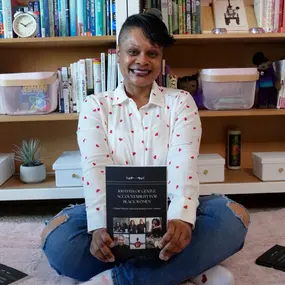
NaKeesa Marie is a writer, entrepreneur, Self-Care Strategist, and founder of NaKeesa Marie Enterprises™, a Tacoma, Washington-based business centered on helping people develop consistent and sustainable self-care practices.
She is the creator of the Gentle Accountability guided journal series, with resources created for kids, teens, and adults. While her broader work encourages self-care across generations and identities, NaKeesa intentionally centers Black women—who are so often expected to care for families, workplaces, and communities while receiving far less care in return.
Through her books, writing, speaking, workshops, community conversations, and other creative work, NaKeesa advocates for self-care that is consistent, accessible, compassionate, and supported by community care. At the heart of her work is a simple belief: gentle accountability is an act of self-love.
