

 Apple Podcasts

 Spotify

 Youtube Music
Ira White (The Children of Raven's Reach): Magic, Power & the Fight Against Evil

In this episode of Travel Time Stories: The Author Spotlight Series, Shannon and Ann welcome fantasy author Ira White to go behind the pages of his novel, The Children of Raven's Reach.
At the center of the story is a young man whose family has been murdered. Determined to learn magic, he discovers he possesses a natural ability that attracts the attention of powerful people eager to use his talents.
But his journey becomes something much bigger when he encounters a house filled with exploited children—and faces a choice that will test not only his abilities but also his humanity.
What if discovering extraordinary power meant facing an even greater responsibility? And what price would you be willing to pay to do what's right?
In this Author Spotlight, we explore:
✨ The price of magic — Why Ira believes extraordinary abilities should come with consequences.
⚔️ Good versus evil — Exploring morality, power, wealth, and the choices that define who we become.
🖤 Confronting difficult realities through fantasy — Why Ira chose to address human trafficking and exploitation through a fictional world.
❤️ The power of love — How compassion and human connection can stand against cruelty and corruption.
📖 Behind the writing — Ira's creative process, imagination, and the experiences that influence his storytelling.
🌎 The man behind the book — Getting to know Ira beyond the pages and discovering what inspires his creativity.
This isn't simply a conversation about magic and fantasy. It's about what happens when someone has the power to make a difference—and must decide whether they're willing to use it.
Whether you're a fantasy reader, an aspiring author, or someone who loves stories that explore the complicated nature of good and evil, join us as we step inside the imagination of Ira White.
📚 Featured Book: The Children of Raven's Reach
Find Ira and his book:
📖 Book: https://link.amazon/B08pmYqig
🌐 Author Website/Social Media: https://irawhite.com/
SPEAKER_04
Welcome to another episode of the Author Spotlight series. This is where we step behind the pages to meet the people who create the stories we love. We'll talk about their latest book, their writing journey, and the story behind the story. And probably a few things neither of us plan to talk about. Because around here, the best conversations have a way of leading us somewhere unexpected.
SPEAKER_05
Always, always. Today we're putting Ira White in the spotlight. Ira, welcome to Travel Time Stories. We're so glad to have you here. Thank you.
SPEAKER_02
I'm really happy to be here.
SPEAKER_05
So before we dive into your book, I'd love for you to introduce yourself to our audience and tell us a little bit about who you are.
SPEAKER_02
Well, that's a complex subject. I was born in a storm during a flood. Oh wow. Yeah, my my dad actually carried my mom from the trailer to the car that was parked on higher ground against to the hospital. But uh I grew up poor, but uh my parents were were great parents. They did a lot of good things for me. Uh my mother, when I was about three, she said that I attached myself to her leg while she's trying to vacuum and would not let go until she promised to teach me to read. Well, I read all the little books. I was like five when I finished all the little books that they had at that time. They didn't have that many. And uh, this is funny. The Watchtower people had left a a uh book with my mom and she just sort of shoved it in a bookcase next to the door. It was called Theirs Is the Kingdom, and it was all about martyrdom. So when I ran out of books, I saw that book and I thought, whoo, let's try that. So I opened it up and read it. My dad saw me reading it one day, and he didn't say anything about the book, but he said, son, when you finish that book, I got something I know you're really gonna like. And guess what it was? It was Tom Sawyer. Awesome. And next was Huckleberry Finn, and next was was The Last of the Mohicans, and then Drums Along the Mohawk, and then just his suggestions were all the classics, one after another. So by the time I was in like first or second grade, I had read a lot of the classics. I started writing in third grade. I wrote my first poem and started a novel. It was uh an autobiography. It was called the Diary of a Young Scientist. Because I was interested.
SPEAKER_03
I like that title.
SPEAKER_02
Yeah, I was interested in science at the time. In fifth grade, I really got interested in the origins of the human species, and I read everything I could get on it, along with all the Nancy Drew and Hardy Boys mystery books.
SPEAKER_05
Mm-hmm. Same.
SPEAKER_02
Yeah, they were great, huh? Yeah, they were the best. So, but anyway, I grew up poor and I worked my way through college. I was uh had a several notable things happen to me. I was uh boys state for my school during my my senior year. I was on the debate team, the number one debate team. I was number one in impromptu speaking, extemporaneous speaking, and original oratory. Nice. Yeah. And so I won the Lions Club speech contest two years running, and and then I got to be a master of the Grange at 19.
SPEAKER_04
Oh my gosh.
SPEAKER_02
It was pretty interesting because the people in the Grange, the average age was like in the mid-60s. And I was uh one of three people who were 19 when they were uh masters of the Grange. And then I went on to become the president of the California State Youth Grange. Yeah. I went on from there and I just sort of uh floated for a while after I got out of college. I didn't know what to do, and I wound up going on a hitchhiking trip cross-country.
SPEAKER_04
Oh, wonderful.
SPEAKER_02
Yeah. I love that. I did that several times and I ran into so much stuff. I ran into so much history. I mean, I spent a winter as a result of my hitchhiking in Earth People's Park. Have you ever heard of that? No, I was just fixing to say, where in the world Well, it's 600 and some odd acres that's that was perched on the edge of the uh border between Vermont and Canada, a little town named Norton. And the way it got to be Earth People's Park is the Mary Pranksters, you know, of Ken Keesy fame. They uh bought the land on one of their trips through the area. And on the deed, they wrote to the people of the earth. And that's how it got Earth People's Park.
SPEAKER_04
Oh, wow.
SPEAKER_05
Okay. I love that.
SPEAKER_02
Yeah. Yeah.
SPEAKER_05
That it's beautiful.
SPEAKER_02
Yeah, my life has been an incredible life. I look back on it, I go, how did I survive all that? And how did all that stuff happen to me? But uh, I wound up, I was born into the food industry, so I wound up going into food. And I became uh a worker in several different food plants. I was a pizza cook. I was a cook for camel soup.
SPEAKER_04
Wow, that's interesting. Yes.
SPEAKER_02
I didn't stick with it very long. I got tired of poisoning people. Yeah, the ingredients had far too much salt and far too much sugar, and they were doing it to make money. And uh I just the hours were really terrible. I had too many hours. I I was losing touch with all my friends, my family, and I just I couldn't handle it anymore. And on top of it, when I found out how much sugar and salt they were putting in and why, I just couldn't stay. So I went out and I worked for a turkey slaughter plant for a while, and one of the inspectors that was there approached me one day and says, Here, I'm gonna retire. Here's a paper here. I want you to fill this out and send it in because I want you to take my place. So I became a federal meat inspector.
SPEAKER_04
Oh my God. Wow.
SPEAKER_02
Yes, and uh my first year was uneventful. I was in a a chicken plant that did about 400,000 chickens a day. And the second year was quite eventful because I turned my boss in for breaking the law, and that kind of uh put a damper on my career. So a few years down the road, not too many years, I wound up quitting and getting a teaching credential. And uh, despite my abilities at teaching and being able to get the kids interested in learning, I couldn't get a job. So I went back to the USDA, but I had to wait till my former supervisor died. And he luckily he he didn't live too much longer. I got back in. And I retired after 26 years with the USDA. I retired uh in 2011. Nice. And I've written all along, I've always written poetry and short stories, but when I got my career, you know, it was kind of hard because I got a family too. A family, a career. Wow, that's a lot. And so I didn't have a lot of time to write, and I didn't get much time to write until after I retired. And one of the things that I did was I helped take care of my dad who had dementia. I was the one in charge of it all. And that's where my first novel, We Won't Forget You, Mr. McGillicotty, came from.
SPEAKER_04
Okay.
SPEAKER_02
Yeah. And uh then 10 years later, I do the Children of Raven's Reach.
SPEAKER_04
Well, we're excited to talk to you about the Children of Raven's Reach. Your hook on the book caught my attention immediately, and that is there's a price for knowing magic, and how will the bill be paid? At the center of your story is a young man who's lost his family to murder, discovers that he has this natural ability for magic, and suddenly finds himself attracting the attention of some very powerful people. So, where did this story and this ideal that magic should have a price begin for you?
SPEAKER_02
Well, it actually began later in the story. It kind of started with the uh second chapters where he does his first uh conjuring and he conjures up a uh demon, and uh it doesn't turn out too well. That kind of set it off, and and but I didn't really think about it much until I got a little later in the story. It kind of got added in. It's like Kaw. Kaw got added in. I got halfway through the book and I go, you know, I'm missing something here. I need a pet for him, I need a familiar for my my sorcerer. Yeah, and so uh I found Ka and I started putting it in, and I just went back and found all the places where I could put in Ka and talk about him and and where he could uh be instrumental in what happened. And really at the end of the book, what he does at the end of the book, every time I read it, tears come to my eyes. You know, that that this bird did this, you know. So that's that's how that came about. The way the book actually was constructed, uh didn't have any outline, I didn't have any idea where I was going. I mean, I kind of knew, but I didn't didn't really have a any specifics. So what I would do is I get up at like four o'clock in the morning.
SPEAKER_04
Oh my gosh.
SPEAKER_02
Yes, four o'clock in the morning. So by five o'clock, I got my coffee made and I sit down and start writing. And I will write until eight o'clock. Then I go feed the dogs and make breakfast, and I'll write for another, you know, another hour or two, and then the same cold nose comes and starts pushing on my arm again. Dad, it's time for our walk. But the afternoon is where is where the creativity comes in. Because in the afternoon, instead of taking a nap, which I was doing for a long time, I sit back in my chair and I visualize different things in the story. Like I'll visualize the characters and what they're doing. And a lot of times it's the backstory that I'm visualizing. It's not really what I'm gonna write down, but it leads to what I'm going to write down.
SPEAKER_04
Yeah.
SPEAKER_02
And I get to see the characters a lot more clearly. In fact, sometimes they'll stand up when I'm going in the wrong direction, say, hey, you gotta go this way, not that way. And it's really a very strange sensation, you know, but that's the way I wrote this book, is by visualizing what was going to happen next.
SPEAKER_04
Yeah, I love that. What interests you to you about the ideal that gaining power should also require something from the person who possesses it?
SPEAKER_02
Yeah. Well, you know, people who possess power, they have a choice. And they can do good or they can be self-serving, or even a third choice, they can just plain do evil. And I've seen all three. And that's kind of where that idea developed from is when you practice magic, you're doing something powerful, and it's a powerful tool to use. You've got to have some sort of a moral standing, you know, to be able to wield that power and to wield it correctly. That's my idea on it.
SPEAKER_04
Yeah, and that leads me to my next question is the greater threat in this world, the magic itself, or the people who want to control it?
SPEAKER_02
Ooh, that's a really good question. Yeah, well, they're both pretty darn dangerous.
SPEAKER_04
Right?
SPEAKER_02
Well, I'm looking at things that are happening right now, and and I've been studying things for a very long time. I started in high school because I went to a very poor high school. I mentioned I was on the debate team, and the debate that they had the first year, the topic was had to do with the Vietnam War. Well, up to that point, I was ready to shoulder up a rifle and get into the special forces for the Marines, because I was a sharpshooter, and uh go out there and protect America and all that kind of stuff. But where all the other kids who were in debate at the other schools got these uh trays uh that were the size of a three by five card, and they had all these three by five cards in them with little tabs that told you what the evidence could be used for, you know, what questions. And uh my partner and I, we had to do all the cards ourselves. So that meant that we read what was on both sides of the quotes that we were using. And one day I ran across some information that was in uh congressional record of all places, right there in plain sight. But you know it's not plain sight because people go to sleep trying to read that thing. But I was awake and I saw that the uh Gulf of Tonkin was it was a false flag. It was a lie. And after that, I couldn't do anything but become an anti-war resistor. And I kind of forgot we were going with this. But that's how I started thinking, you know, about the powers that be and studying them. And even when I was in government, I mean, the thing that I did I discovered when I was a federal meat inspector, especially after I became an inspector in charge, was that the uh rules and the regulations were were made more to help the large companies than they were to help the little ones. Because they came in with this new thing, HASA. And the next thing you know, 80% of all the small businesses, the mom and pops, were out of business because they could not handle it. You know? So when you talk about which is the worst, it's hard to say because excuse me, the the people are pr are bad enough, but we've got some other things going on. This thing that we're going through right now, this is a spiritual war as well as an economic war and a psychological war and a physical war at the same time. Um I don't think a lot of folks realize that.
SPEAKER_04
Yeah, no, they don't. The news just feeds you what it wants you to know. Exactly. It's not about what's actually going on, it's just what they want you to think or to keep us divided. Yep.
SPEAKER_02
Yeah, division is the main thing they're looking for because if we're divided, then we're easy to control.
SPEAKER_04
Exactly. Yeah, for sure. So your protagonist encounters a house filled with children who are being exploited, and suddenly this isn't just a simple story about learning magic. He has to decide what he's willing to do with his power that he's been given. Why was trafficking something that you felt compelled to confront through fantasy?
SPEAKER_02
Well, for one thing, as I mentioned before the show, I I had seen several people come forward, people who were child actors and actresses, come forward and they weren't believed. And I it always stunned me that these folks weren't believed. And uh then later on I encountered a person who was trafficked. Uh he was trafficked through the Tennessee Children's Home Society, which was run by a gal named Georgia Tan. And it was a horrific thing. I mean, they were selling the babies to uh politicians and to actors and actresses, i you know, rich people who either didn't have the time or weren't able to conceive and wanted children. And they weren't taking care of the children. There was one case where a hundred children died, hundred babies, because they apparently couldn't afford a very cheap medication that would have solved the problem. So sad. Yeah, it is sad. So anyway, we tried to write a book together and we came up with the book, but it was hard to work with him. He was bipolar, he was really messed up from his experience of being trafficked, and it was like wow, you know, trying to work with him. And one day he'd be high and happy, and the next day he'd be and it was difficult. And then later on in life, I met someone else who I don't know for a fact was trafficked, but the facts that they told me and the and the story that they told me had all the markings of someone who'd been trafficked. And uh that person is actually in the book, is Brother John. And I'd like to say though, the story that I gave Brother John is not the story that he told me. I made a composite of uh several different stories from several different people. I read a book called uh from Nick Bryant. Have you heard of this man? It's called The Franklin, the Franklin Scandal. Uh it involved Boys Town, it involved a whole bunch of higher-up uh people, including there was a bank involved and all kinds of stuff. But he did his book, and I suggest that people read his book in the back of my book, because his book gives a thorough discussion of what he went through to get the information that he did get. And I'm telling you, that man, he went through a lot.
SPEAKER_04
Wow.
SPEAKER_02
He's lucky to have come out alive.
SPEAKER_04
Wow. Did using a magical world allow you to explore something this difficult in a way that straight realism might not have allowed you to do?
SPEAKER_02
Yes, it did. And it also allowed me to kind of cut loose with my imagination, which I think you'll see in the dream sequences that I wrote, that my imagination just went woo. I pulled out all the stops on this one.
SPEAKER_04
I like the dream sequences, they were really good.
SPEAKER_02
Yeah, one of them was actually a dream that I had that I modified the the dream where he uh sees the Chinaman and he's trying to pick the flower.
SPEAKER_04
Yeah.
SPEAKER_02
Yeah. Well, the end of that dream where he's uh picked up by somebody. I was actually a friend of mine who picked me up when I was walking somewhere and he took me for a ride. He was in the dream.
SPEAKER_03
Yeah.
SPEAKER_02
And he was driving his black Corvette. Yeah, which was it was so cool. But when I started thinking about it, I thought, you know, this would be great. I could put the station wagon there instead of the Corvette, and then I could put his parents and his siblings in there. And when the keys went over the side of the railing where they fell out of his pocket, now that was where my dream originally ended. Uh, was me seeing the keys falling there and going, How am I going to get in my house? And then all of a sudden things just kind of Yeah. Well, I thought, well, you know, if we make those keys something special, because keys are in this book all through it. And that key that opens the door for that allows him to love is a very important key. So I put that in the hands of his dad and made it kind of mysterious the way it happened. Right. I had a lot of fun doing that.
SPEAKER_05
When you're writing about children being exploited, there's obviously a balance between showing enough for readers to understand the horror, but without making the suffering itself the entertainment. How did you approach that responsibility as a writer?
SPEAKER_02
Well, you know, when I first started the book, I had a working title. What was it? It was uh Confessions of Oligarch Sorcerer. And I was doing a totally different approach. And I had a friend, Facebook friend. I have never met her in person, but we've we've been friends on Facebook for a very long time. And I love her writing. She writes a very nice post. And I talked to her and I told her what I was going to do. And I said, I'm not sure how I want to approach this. Well, the next thing I know, I've got this several page-long email in my email box, and uh she she laid out the whole situation, you know, as to where I could go and what would happen. You know, it was kind of like a guidance. She didn't tell me anything specific, but it was a guidance as to that I had to make sure that I was uh respectful of the children and what they went through, and had to make sure that uh the people who were reading the book would understand what was going on and how horrific it was without chasing them away and making them gross out or anything. And that's kind of how I Came around to it is she helped me a great deal. Julianne Jazz is her name. I really appreciate her uh guidance on that because I was kind of lost. What I was thinking of when I first started, I was thinking of all kinds of uh, you know, having the sorcerer go into all these different ceremonies where they were serving up children on a platter. Oh my god. Maybe having him uh in a costume play Moloch for them and that kind of thing. And that just kind of went out the window when I started thinking more about it because I wanted to do this the right thing. And but at the same time, I wanted to have an impact on people. And that's a really fine line to walk when you're talking about children and abuse. It's a very fine line.
SPEAKER_05
Yes. You've described this as having that classic struggle between good and evil, but there's also wealth, influence, and people with extraordinary power operating inside the story. Those things don't automatically tell us who's good. So in a story about magic, wealth, incredible power, what ultimately makes someone powerful? Are they the abilities they possess or the choices that they're willing to make?
SPEAKER_02
Well, I think the abilities they possess can make them feel powerful or feel as if they are powerful. But in the end, I I think the choices are the more important.
SPEAKER_04
Yeah, I think. I think your choices reveal who you actually are.
SPEAKER_02
Yes. And within this framework of the book, you know, love is the most important and the most powerful thing in the universe.
SPEAKER_03
Yeah.
SPEAKER_02
And love is God and God is love. And that's how I live my life. Love that.
SPEAKER_05
So do your villains know that they're villains. I mean, does or do some of them genuinely believe they're entitled to what they're doing?
SPEAKER_02
You know, I think some of them genuinely feel entitled. And you know, this comes out in the way that if you've ever been around a really super rich person, and you were really aware at the moment and not just all, oh, it's a, you know, star struck or something, you'll notice that they treat regular people a lot different than they do each other. And I noticed this. I worked for a billionaire. She lived in a very expensive house. And the way I got to know her is I would clean her rugs and I would clean her windows. I had my own business at the time. I was kind of in between work. And I would also come over and she had a little backyard that had uh leaves and stuff that got on the bricks, and I would uh take them off the bricks and pull a few weeds and you know, things like that. But I I couldn't help but notice that even though she was really nice to me on the surface and really uh treated me quite well, there was this feeling I was more of a pet than a person. I think they call it condescension.
SPEAKER_05
Yes, I do think that is the correct word for that, Ira.
SPEAKER_04
Yep, exactly. Mm-hmm.
SPEAKER_05
I totally get what you're saying.
SPEAKER_04
Yeah. So you've lived in several very different parts of the country and spent a lot of your life around the outdoors. Does the natural world influence the places that you create?
SPEAKER_02
Oh, I'm sure it does. I'm sure it does because I I love the outdoors. I love the mountains, I love trees and birds and all the animals. I grew up doing that. I mean, we didn't have a lot of money in my family, so my dad and mom would take us fishing, you know, and back then it didn't cost that much to fish. Your license was like $4 or something like that, and and gas was 25 cents a gallon. So I mean, we go fishing and we go up in the mountains and we'd go camping. We had all these places we go camping. There was one uh one place in Idaho that we used to go to uh called Newsom Creek. And uh oh, I love that place. We all loved it. We had a pet moose up there, by the way.
SPEAKER_04
Oh my god.
SPEAKER_02
The first time we went there, uh one of our neighbors gave us a tent because it was gonna rain, and he told us where to go because we we'd never been there. So he gave us directions. So my dad worked about a 10 or 12 hour day, and then he drove us all the way up there, and it was like, oh, it was dark, and it was like really late at night when we pulled in, and he put up the tent as best he could, and then he crashed out and never came up until the next morning. But uh the rest of us, my brother, my mom, and the cat and the dog. We were we are all kind of still a little bit awake, and then we went to sleep about one or two o'clock, I think it was. There's this noise at this tent flap, and my mom shined the light up there, and here's this humongous moose with her head in our tent standing over us. As it turned out in the morning, we had uh we had put the tent over her water trail. So we went up there several times because there were all kinds of animals up there. I saw a cougar up there, I saw a wolverine. There there was elk and deer all over the place and and all kinds of other animals. And whenever we we come down off that hill, that moose would hear our car engine. And she'd be waiting for us at the bottom of the hill, and she'd trot around in front of us a little bit and then down the road and lead us down to our camp spot. My gosh, that's incredible. Yeah.
SPEAKER_05
And nothing like being escorted by a moose.
SPEAKER_02
Yeah, nothing. And here's the punchline to the story. There was the last time that we went there, because we knew we were not going to go there again. We went there and we were all sad. And the moose was there, but she wasn't alone. She had brought her baby, her little calf, and she trotted that thing back and forth in front of us. And then both of them led us down to our campsite. And you know, moose don't do that during the day. They're their babies are kept in the bushes. They don't bring them out until like dusk, you know, and take them down to get a drink or something if they're not drinking milk at the time.
SPEAKER_05
You know, so baby off for you guys. Yeah.
SPEAKER_02
So, you know, like I spent a lot of my life fishing and hunting and being in the outdoors, and and I love it. And so it's gotta influence the way I think and the stories that I write. Yeah, it's got to influence it.
SPEAKER_04
Yeah. I think we all grew up having those trips like that because back in our day, you couldn't afford to really, I mean, unless you were rich. You couldn't afford to travel. You you got in the car, you went to a campsite, you did some fishing, camped out, that kind of thing, had a picnic. That that's what we did. Yeah. Yeah.
SPEAKER_02
And you didn't have to pay to do it.
SPEAKER_04
Exactly. Exactly. It was so much fun.
SPEAKER_02
Yeah. Now you gotta pay, you get off the road, you gotta pay to park your car.
SPEAKER_04
Yep, exactly. It is. Yeah. Well, Ira, uh, we like to do uh a lightning round on the show here. And basically you just pick what you know, this or that of the two. Magic or technology? Magic, hero or anti-hero, sorry.
SPEAKER_02
I'll pick the hero.
SPEAKER_05
Mountains or ocean.
SPEAKER_02
That's a hard choice, but I'll pick the mountain.
SPEAKER_05
If you could possess one magical ability, but it had to come with a price, what ability would you choose? Oh my gosh. That's a hard one, isn't it?
SPEAKER_02
That is I had a hard time answering this for myself. You know, I I've never really thought about it, but I think I would like to I would like the magic to be able to help people who are distressed.
SPEAKER_04
That's a good answer. I like that. Yeah, me too. So if your life were a book, what would the title be?
SPEAKER_02
Oh my gosh, diary of a young scientist.
SPEAKER_04
I knew it.
SPEAKER_02
I love it. It would probably be something like uh into the stratosphere, is my life, like I said, I have had so many things that have happened to me that that don't happen to other people. You know, like well, for instance, I'm giving away something, but in the first chapter, those two meetings with the uh the mafia members, I actually had those two meetings. Wow. Yeah, you know, that's how my life has gone. I mean, like, and and I have been in so many different situations where I should have not walked out, I should have been dead. You know, like how many people do you know who were in a uh Volkswagen going 85 miles an hour that got totaled out and walked away from it?
SPEAKER_05
Nobody.
SPEAKER_02
I did, and I walked away with not a scratch on me.
SPEAKER_03
Oh my gosh. Wow.
SPEAKER_02
The driver fell asleep. Wow. And I was I was riding shotgun and I was supposed to, you know, keep her awake, but I'd fallen asleep too. Oh my god, it was it was terrible. I was out in the middle of nowhere in Wyoming.
SPEAKER_04
Oh, that's even worse.
SPEAKER_05
No help for miles.
SPEAKER_04
Yeah, that's definitely was a miracle right there. Yeah.
SPEAKER_05
Yep, for sure.
SPEAKER_04
Wow.
SPEAKER_05
Well, Ira, you're supposed to be here for a reason, apparently. Apparently. So you created a world where magic comes with consequences and where having power means eventually deciding what you're gonna do with it. So now I'm curious. What's next?
SPEAKER_02
Well, I've thought about a sequel. I was thinking of a sequel, Raven's Reach 2030. Because that's some things are supposed to happen that year that are going to be very terrifying. But I don't have enough time to really get it together. And I have thought about it, but if I do start, it's gonna be really complex because it's gonna deal with the children of our heroes in the first book. And yeah, it's gonna be written quite differently. It won't be written as sort of as a memoir from one person's point of view. I would I would do it differently. The other thing that I I've wanted to do, and I wrote a short story on this, in a novel, and the author of the novel used magic to extract him and put him into the real world. And as it turns out, as it turns out, he was supposed to cover up a murder because his character is a person who has been killed, but no one knows that he's dead yet.
SPEAKER_04
Oh wow. Okay.
SPEAKER_02
So I've actually started that one a couple of times. It's complicated too. I can't do anything simple. It's just no fun.
SPEAKER_05
Of course you can't. So, Ira, where can everyone find uh the children of Ravens Ranch and follow you? Ravens Reach.
SPEAKER_02
Oh, Raven's Reach. They can find Raven's Reach is on Amazon. I have a link to Amazon on my website, irawhite.com. And you can go on irawite.com and have a lot of fun because I got a lot of free stuff you can read. I got poetry. Yeah, I got poetry, and I've got uh some articles on food since I'm into being a food expert. And I have a thing that I I've been doing for a couple of years now, and it kind of helped my writing and helped Raven's Reach come about. It's called Rants in the Pants. Oh man. I like that. And there are little little short things that I rant about, and I rant about everything. So they can go there and it's all free. Uh, I don't collect your information.
SPEAKER_04
Well, Ira, thank you so much for joining us and for letting us go behind the pages of The Children's of Ravens Reach.
SPEAKER_02
Well, I'm really glad to have been here, and I want to thank you for the invitation and for the really good time. This is a good time.
SPEAKER_04
We have enjoyed it as well. To everyone watching and listening, you can find the book and all of Ira's information in the episode description and on our website, traveltimestories.com, where Ira will have a dedicated page with all of his links and information.
SPEAKER_01
So join us each week in the land of the heart. We capture the heart with every story to the world takes life. As we capture the night.
Author
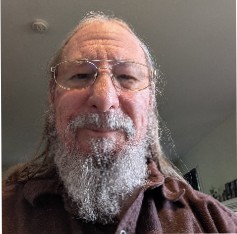
Born in California and lived in Idaho, Vermont and now reside in Oregon. BA in English from the University of California, Stanislaus. Author of "The Children of Raven's Reach," "We Won't Forget You Mr. McGillicuddy," and "Enchanted Shores." Retired from the USDA as an Inspector in Charge. Lover of the outdoors and environmentally concerned since childhood. I live alone with my two dogs, 5 hens and a rooster.
I've lived a varied life. I have to put my travels thruogh life into fiction as no one would believe me if I wrote an autobiography.
