
 Apple Podcasts

 Spotify

 Youtube Music
When Magic Meets Cybersecurity: Ancient Magic, Modern Secrets | Janet Roberts
What happens when ancient magic collides with modern cybersecurity—and the power you've spent your life hiding becomes your only chance at freedom? In this episode of The Author Spotlight Series, Shannon and Ann welcome Janet Roberts, author of Wired for Magic, for a conversation about suspense, inherited magic, Welsh mythology, and the courage to reinvent your life. Rowan Campbell has spent years running from a dangerous stalker. Living under different identities and working as a traveling p...
What happens when ancient magic collides with modern cybersecurity—and the power you've spent your life hiding becomes your only chance at freedom?
In this episode of The Author Spotlight Series, Shannon and Ann welcome Janet Roberts, author of Wired for Magic, for a conversation about suspense, inherited magic, Welsh mythology, and the courage to reinvent your life.
Rowan Campbell has spent years running from a dangerous stalker.
Living under different identities and working as a traveling photojournalist, she's learned to avoid lasting relationships and keep her distance from anyone who might discover her past.
But Rowan possesses something extraordinary.
She's inherited magical abilities she has never learned to control.
When her journey leads her into a world of ancient druid stones, ancestral secrets, and powerful magic, Rowan must confront the very thing she's spent her life suppressing.
Meanwhile, her brother Griff, a white-hat hacker who doesn't believe in magic, brings an entirely different kind of power to the fight.
In this Author Spotlight, we explore:
🔮 The inspiration behind Wired for Magic — Why Janet combined ancient magic, suspense, and modern technology.
💻 Cybersecurity meets fantasy — How Janet's professional experience influenced the technological side of her novel.
🏰 Welsh mythology and magical places — The legends, landscapes, and travel experiences that helped inspire the story.
✨ Discovering your hidden strength — Rowan's journey from fear and isolation toward reclaiming control of her life.
🌍 Travel as creative inspiration — How exploring new places can spark fictional worlds and unforgettable characters.
📖 Independent publishing — Janet's experiences navigating the publishing world and bringing her stories to readers.
❤️ Reinventing yourself after 50 — Janet's personal journey of entering cybersecurity later in life and pursuing her dream of becoming an author after retirement.
One of the most inspiring parts of Janet's story is that she didn't allow age or expectations to determine what she could accomplish next.
Her journey reminds us that it's never too late to discover a new passion, take a different path, or begin writing another chapter of our lives.
Whether you're a fan of fantasy, suspense, magical mysteries, or stories of personal reinvention, this conversation offers something to enjoy.
📚 Featured Book: Wired for Magic
✍️ Featured Author: Janet Roberts
🔦 Series: The Author Spotlight Series
Find Janet and her books:
📖 Wired for Magic: https://link.amazon/B0aALRhYz
🌐 Author Website: https://booksbyjanetroberts.com
JOIN THE CONVERSATION!
If you could choose one, would you rather possess magical powers or extraordinary cybersecurity skills?
Tell us in the comments!
🎙️ About Travel Time Stories
Real Journeys. Real Stories. Real Healing.
Join Shannon and Ann as we explore the journeys that shape us, the stories that connect us, and the conversations that remind us we're never alone.
🌐 https://traveltimestories.com
Every book has a story, but so does the person who wrote it.
Until next time, keep traveling your story and keep making memories for life. #TravelTimeStories #AuthorSpotlightSeries #fantasybooks #welshmythology #Cybersecurity #WiredForMagic #JanetRoberts #midlifereinvention #indiepublishing
SPEAKER_00
In the office I store collide. When the authors waiting, let curiosity guide. All daughters invited from forward a story. Unravel the tales at our podcast high.
SPEAKER_02
Welcome to the Author Spotlight series. This is where we step behind the pages to meet the people who create the stories we love. We'll talk about their latest book, their writing journey, the story behind the story, and probably a few things neither of us plan to talk about because around here the best conversations have a way of taking us somewhere totally unexpected. All the time.
SPEAKER_04
Today we're putting Janet Roberts in the spotlight. Janet, welcome to Travel Time Stories. We are so glad to have you here with us today.
SPEAKER_03
I'm really happy to be here. I'm so happy that you invited me. This looks like a lot of fun. I'm ready to have a great conversation.
SPEAKER_04
About a great book. So, and before we dive into your book, I'd love for you to introduce yourself to our audience and tell us a little bit about who you are.
SPEAKER_03
Sure. I am an author, an independently published author of mixed genre fiction with a focus on women's fiction, suspense, and thrillers, often, not always, with elements of cybersecurity in the plot structure. Because I spent over 13 years building cybersecurity education and awareness programs for multinational companies. So if it fits, if the shoe fits or the cyber fits, uh then I weave it in. I have been writing for a long time, but I retired three years ago from that big career. So I have been working on books, uh, lots of books, and I'm hoping to keep bringing them out because that's really what I love to do.
SPEAKER_02
It definitely shows in your books, I have to tell you, Annette. So your novel, Wired for Magic, brings together two worlds that you normally don't see combined. And one is cybersecurity, which you just mentioned, and then the other is ancient magic. And we have this main character, Rowan Campbell, and she spent years living under different identities, traveling around as a photojournalist and avoiding lasting relationships and all of this to escape a powerful stalker. And, you know, she's the magic that she spent her life suppressing, ends up being, you know, the thing that could set her free that she's been searching for. And so what inspired you to bring together the modern technology, the magic, and then a woman fighting to reclaim control of her life?
SPEAKER_03
Well, I would say that the common denominator in my books, even though I don't write in one genre, is that there's always a woman on a journey to find her personal power. So I like to say that finding, owning, and unleashing your personal power is your magic. Although in this case, Rowan has real magic, you know, the kind that you can make things move and do all kinds of things with. So I was, uh I had a couple things that I was interested in. One was mother-daughter relationships. What if it goes beyond death? You know, what if your mom is always kind of there for you? And then I have two brothers, and most of my cousins are boys. And so I usually do in my books have a male voice, but I sort of wanted to do something fun with a sibling, you know, rivalry a little bit. And I decided that her brother would be a white hat hacker and she would have magic. Uh now, originally, this book, this is where we're gonna go off into something you don't expect, but originally this book has a little bit of a story, and I don't like to call any of my books an accident, but it was a little bit of an accident. So I was working in Illinois, in the suburbs of Illinois, uh, for a big multinational insurance company. I had built their program, I was running it, and uh I really was working long hours, and I was trying to write whenever I had time and I wasn't too tired, but I needed a break with other writers. And in Chicago, there's a really well-known place called the Story Studio, where they have great writing classes. Rebecca Mackay and some other well-known authors founded this story studio. And they have a class called Novel in a year. So I thought, well, surely, even in my busy schedule, I could get down into Chicago once a month because that's all you had to do. And I could write in between and I could work on a novel and just kind of get out with people who were not doing chasing cyber criminals or teaching people how to, you know, not uh fall for fishing and all these things that I did all day. And so I, being working long hours and being busy, I filled out the application and I thought I checked the right box for contemporary fiction, uh, which was what I was basically writing. And then I was asked to speak in at a conference in London, and somebody there was a super spreader for a virus, and I came away kind of sick, but I was already booked to go to Japan. And so I was all this plain stuff. I was, by the time I got to Japan, I was really like stuffed up like I've never been in my life. So you know this because the funny part is I'm in this lovely hotel sitting on the edge of the bed with Kleenex box here and my phone over here, and I get a message that says, Congratulations, you've been accepted into novel in a year, speculative fiction. And I said, Uh-oh. I checked your wrong box. That's not what I write. And because my head was all stuffed up and I was slightly delirious, or maybe I just because I like a challenge, I said, okay, I'm just gonna tell them yes and I'll take on this challenge. I I don't know how I'll do it, but I'm gonna do it. So this book became my project in class, where I at first was way behind everyone else and I wasn't world-building and things like that. But it helped me to realize that I I really do like magical realism. From the day that I read Alice in Wonderland and walked around the house at seven or eight years old, wondering if I could go through the mirror, you know, to meet the jabber walk. I really liked that sort of thing. And I have been a good reader of Sarah Painter and I like Simone St. Jane's, I like a good ghost story. So I didn't assume I was gonna actually finish a novel in this class. I just assumed I had taken a challenge and I was gonna figure out how to write in speculative fiction. So I worked on something and I probably had 75 pages when I did ask my boss if I could uh work remotely from Western Pennsylvania, where I'm from, and just come back home. All of my team were in other countries or other cities, and I didn't really need to be in Illinois. And they said yes, and so I dropped the class and I moved back home and I put my little experiment away and thought, wow, I really learned something. And a friend of mine, who's a writer, he said, he writes speculative fiction and he kept bugging me to see it. And I said, It's really not good. Like it's just an experiment. And he said, No, no, I I want to see it. So I showed him and he said, This is probably the best work you've ever done. And he said, Did you have fun doing it? He said, I can see this woman, I can hear her voice, it's really clear. He said, I'll bet you were having fun and you were totally relaxed because you didn't take it seriously. And I said, Yeah, pretty much. He said, I think you should do something with it. So I went back, I pulled it back out. And at that point in time, I was finishing uh What Lies We Keep. I was in the middle of that and I, you know, was taking it forward. So this was a little on the side all the time, but it became my fun on the side project because I could do other things with Rowan. I could uh if if I got stuck, she could use her magic. I I tried, but I wanted her, I wanted the magic not just to be another magical realism novel or something. I wanted it to be something that's part of an interior struggle that she has overall because she didn't have guidance from her mother. And I also had a lot of fun with her brother thinking it was, you know, not that he didn't want to hear about it. It's real, that stuff doesn't happen. So as I'm having fun with this, I have a friend, um Megan, who lives in Wales, and she had been bugging me to come and visit her. She lives way out at the most southeastern tip in a village near the Gower Peninsula. And uh I said, okay, one of these days, one of these days. So I told her that I needed somewhere where Rowan could recharge her magic. And I had been to Ireland to see friends, and they were like, How many more ruins, Janet, do we have to go through? I'm like, that's not the right one. So Megan sent me an article that a writer had done for The Guardian, where he walked all through Wales, which is a very small country, and uh he wrote about all kinds of different ruins and druid cat ruins and castles and other things like that. She sent it to me and said, See if you can find it in here. So I'm going through and I did. I did. I found the location and I sent her an email and said, How far is this from your house? And she said, 30 minutes. If you come visit me, I'll drive you there. Won her battle. She did, I did, you know, and I said, Okay, I'm coming. And so we had um quite a little adventure where with her husband driving us there and hiking through some woods and across some farmlands and avoiding sheep poo and climbing over fences and all kinds of things that happened that I once we got there, I realized we could have just driven around and parked in the parking lot, but that's another story. So I went, I took pictures, you know, I I stood there, I was astonished that people could bring 5,000 years ago, they brought these five, you know, multi-ton stones down from a mountain I could see far away. And how did they do that? But it it was the right location. And from there, I was then able to really dig in and kind of, you know, get spooky and uh start to work through um how Rowan would find her magic, how she would get trained. And so uh I found a developmental editor, the daughter of a friend who also writes speculative fiction. And she gave me a blog called The Rules of Magic, and she said, what you need to do is take all the questions in this blog and you need to answer them for Rowan so that you know, because your reader needs to know what are what can she do and what she can't do. What are the rules? You need to be clear on that so they don't feel like they're randomly. If you've ever read a book with magic and sometimes you're like, I'm confused. I thought they couldn't do that. And so I I took time to do to do that as well. And then I contacted uh a friend of mine that I used to work with who's a white hat hacker, and I said, I think I want to use some deep fake. And he he sent me a white paper that was very technical. Took me about three months, even though I worked in that, but I wasn't technical, you know, to go through and pick what I thought I could use and sound reasonably correct without the reader, you know, throwing up their hands and and walking away. Yeah. Uh and so that's that's kind of how it went from uh oops to a challenge to a book that uh just won its second award uh yesterday or the day before.
SPEAKER_04
So oh congratulations.
SPEAKER_03
Yeah, congratulations. That's wonderful. So what a story. Yeah, it's it's a good story. I'm a storyteller.
SPEAKER_04
It's a very good story. You can tell you're a good storyteller by your writing style.
SPEAKER_03
Yeah. Yeah. I've been doing it since I was little, but I know what I like. I know how I feel when I expect a good story, and then, you know, I'm disappointed or I I don't want to finish the book. And so I never really want that for anybody that's reading my work.
SPEAKER_04
So one of the things that stood out about Rowan is that she has spent so much of her life running. She's built this nomadic existence, she changes identities, she keeps people at a distance, she just doesn't feel safe. When you were creating Rowan's character, what did you want readers to understand about the emotional cost of living in constant fear?
SPEAKER_03
So I wanted readers to feel that although on the surface Rowan's running from a stalker, she's also running from herself and from the pain of losing her mother. And uh the loss of her mother has made her a little bit crippled in handling relationships anyway, you know. And she became very kind of famous at a young age. And so she has all these things that she needs to handle, not just her magic, uh, but about herself that she's not doing. And I wanted them to see that uh shutting down or shutting out people or running like that, you know, means that what what do you lose? And then that's where Hugh comes in. Well, she also seeing her aunt. So she's kind of lost a great relationship that she could be having with someone that she loves, but you know, she keeps a distance or she tells she's herself she's protecting other people, but actually then she doesn't have to be vulnerable. And so the the lesson is if you run, you don't have to be vulnerable. But if you're vulnerable, the rewards can be really, really high. And uh, these are the things that she comes to realize she's just tired of running. There's no other way out but for her to take on this stalker, but she's also taking on herself in the process. Yeah.
SPEAKER_02
You kind of touched on it at the beginning that most of all of your books have this common theme of a woman on a journey of finding herself. This book in particular, since I haven't read your other ones to know, but for Rowan, why was it important for her to discover her strength herself rather than having a person swoop in and rescue her? Because you have Hugh, but he's not the rescuer. He's like the supporting cast to her.
SPEAKER_03
Right. Uh well, you can ask the feminist in me. I don't think he needs a man to come in and help her find herself, but I think that it doesn't stick and resonate finding your personal power unless you do it on your own. And sometimes you got to walk through the fire and come out the other side to find it. Sometimes you have to go through some really tough things. In the in every instance, regardless of what it is, you you stand up to to something or face yourself, and then it's solid. It stays with you, you know. If somebody else rescues you, then you're simply hiding behind the rescuer. And eventually whatever the problem was is going to land right back in front of you, you know. And and I'm a believer, I always have been, I guess, because that's how my life has been, that women don't um, it's not like Hollywood in a one-hour movie. Women do not ring the bell at Wall Street or pop out and you know, take over the world and automatically have everything going for them that way. Women have a lot of talent and they have a lot to offer. And a lot of times they're up against, you know, a predominantly male environment, but they also often have their own journey one way or the other, whether it's in their job, in their marriage as a mother or finding their own, you know, passion or talent. It's and and some some women are prepared for it. Their mom prepared them or somebody else did. And some of them have parents that didn't prepare them at all, you know, pushed it, yeah, pushed themselves down. And later in life, you see them in mid of their life, you know, trying to figure out, you know, what they want to do. I probably was a late bloomer with a lot of things, although I was always writing. I couldn't figure out what I was doing to earn a living. I mean, I was shifting jobs and trying to find my way. So I have a real passion for my readers who know what it feels like to not, you know, come out all perfect, wrapped together or come into a family that opens all the doors for you or anything like that. That you you have to go open your own doors all the time. Yeah.
SPEAKER_04
That's usually how it really is in life. Yeah. It's real life. Yeah. Yeah.
SPEAKER_02
Exactly.
SPEAKER_04
Okay, so without giving away too much of the story, what does Rowan have to overcome within herself before she can finally stand up to the person who is threatening her freedom?
SPEAKER_03
Well, fear, you know, fear two types of fear. The obvious fear that he's a pretty bad guy and he's a pretty powerful guy. And she already has had altercations with his, you know, bad people or, you know, his little goons a couple times. So she knows that they would snatch her right off the street. She knows, you know, what the danger is. So fear of danger, but also fear that uh she can't control that magic because there's been an instance where she automatically reacted and she she burned his hand. I think that's pretty early on, so don't think I'm really ruining a spoiler. No, you're not. And and she she has a fear of her lack of control of her own magic when she's angry or when she's upset or when, you know, she's fearful. And so confronting him um would could trigger any of those things, and she's just not really sure what you know she would do.
SPEAKER_02
Yeah. So she has her brother Griff, and he's an important part of helping her fight back against her stalker. I love Griff.
SPEAKER_04
I love very fun to write.
SPEAKER_02
He he's such a great character. I and I love the fact that he is in total doubt about this whole magic thing.
SPEAKER_03
Because he's a tech guy, and tech is the answer to everything. So you can find a tech, you know, you can find something in technology to make things work better. And uh, you know, he thinks, why would she go through all this? I'll just go in there and, you know, take care of the guy kind of thing. Yeah.
SPEAKER_02
Exactly. And how did your professional background influence Griff's character and the technology side of the sport?
SPEAKER_03
Well, I I worked with I loved all the guys I worked with, and the limited a couple of the women who are really were good friends of mine. And I watched how much how intense they could be about the work they did, how serious they were, and also how smart they were. And I sat near people who did white hat what's called white hat hacking. So most companies have what's uh an offensive security department, and the white hat hackers actually hack the comp, you know, fake hack the company to see where the bad guy would get in, and then things can be fixed and patched and all that. And and some of them had a good bit of fun uh reporting who they could, you know, where they could hack in uh and what could happen and that kind of thing. So I know how much they loved what they did. And also, if I would have stood up and said, Well, you know, we could just get a magic wand and do this, I it would have been hilarious. Uh it would have been absolutely hilarious to watch the re reaction and you know, whether they wondered if they should, you know, report me to someone for help, not HR, you know. So um I was really I imagined myself saying some of the things Rowan would say, you know, because then I imagined what all the guys that I worked with would think if I stood up and said those sorts of things. Then it was kind of fun to do Griff back. What I really wanted out of Griff that was important to me was that he's not a jerk, that he respects her. As bad as he wants to go past her and take over, he loves her and he respects her. He eye rolls her, you know, and because I was working my way to him believing her at the end, I always knew I was gonna have him believe her at the end, and I wasn't quite sure how I was gonna do that. And so I wanted to keep that balance with Griff, you know. Yeah.
SPEAKER_02
Well, I love the way that you did it because for guys like that, seeing is believing. So him actually getting to see it, you know. That's true. That's what led to revelation.
SPEAKER_03
I'll tell you a funny story, and it's not about this book, it's about what lives we keep. And I that was the first book that I started to put some cyber in, and I was still working, you know, and I was trying to work out how something could happen. And so I stood up, we all were in cubicles, you know, and I said, Hey, can I ask you guys a question? If somebody wanted to embezzle, how would they turn off the alerts and everything if they were gonna like transfer the money? And there was this dead silence. They looked at me and one of them said, So you know what your job is, Janet. You're supposed to teach people, you know. I said, No, no, no, no, I'm working, I'm writing fiction. I'm sorry, I'm writing fiction, I'm working on a book. And there was this kind of like, hmm, look and everything. Now they all know that now, and they all ended up that I would take them out. We would go out for a beer and I would ask questions, and they would kind of, you know, believe me. And when I wrote that book, I thanked all of them by name in the back. And so now we're good because evidently some of them got dad credits from their teenage daughters, and good things, you know, happened out of that. Awesome. So now I think when they see me coming on text, you know, do you think I could have some of your time for this or that? They're like, yeah, okay. She she actually does this. Nothing bad can happen. That's hilarious. Yeah.
unknown
Yeah.
SPEAKER_03
It's fun. I work with some of the smartest, most amazing and really nice, you know, people who are committed to what they they do. You know, they're just committed to being the good guys in in these, you know, cyber wars. So yeah.
SPEAKER_04
That's awesome. We need those guys. Yeah, we do.
SPEAKER_02
Exactly. Yeah.
SPEAKER_03
And girls. There's some girls. There are some games. I was gonna say, we have girl hackers and guys. I know some of them, and they're awesome. Yeah. There are uh there's a group called uh Weesus, and it's women in cyber security, I think. W-I-C-Y-S, I think that's how it goes. And it's a great big organization with chapters in many cities, and they're all about women, you know, in cyber and moving them forward. And it's it's really awesome. Group. I love that.
SPEAKER_04
That's amazing.
SPEAKER_03
It is because when I when I started doing the first program I built, I I was actually in a US company and I was doing communications, and the security department was one of my groups I was supposed to support, and I was fascinated. I was supposed to give them 10% and I was always over there. And uh so they the CISO asked me if I would build a security awareness program, and I said, Don't you want someone who knows what that is? That was my first response. And uh it was in 2010, and so he said, No, I want somebody who can translate geek speak to people speak so the people will stop doing the things I don't want them to do. And I thought, oh, this sounds really cool. I I loved, I always was interested in technology from the big floppy disk days to, you know, to Blackberry and everything. So I started doing it and um going to some classes and and joining some groups of and it and realized at that point in time there was about 200 people in the world doing that work, and about five of us were communications or graphic design background or not IT. The rest of them were IT people who had been told 10% of your job is to make them stop clicking on these bad links. And so really, I started into this profession when it wasn't a profession yet, and uh ended up building two programs and redesigning one. But I went from the domestic to international for a redesign and then to a big, huge multinational to build it from scratch. And I s a lot of those people are still my friends and uh have been doing it longer than I have. So it was great because I came in when everybody was in a sandbox and no one quite, we didn't we didn't know what we were creating. We were just gonna, you know, do it. And so I have a lot of a lot of good friends. I'm a little rusty at some of it now, but I am trying to help um the local food bank off and on with some security awareness because I'd like to use my leftover powers for good.
SPEAKER_02
I love that. And you you began this career late in life, I did.
SPEAKER_03
I did.
SPEAKER_02
And then after retiring from that career, then now you're transitioning to writing. So that's two major reinventions, you know, at stages in life when, according to society, women are supposed to be slowing down. That's right. Right. That's right. What gave you that confidence to make those changes rather than stay with what's familiar?
SPEAKER_03
You know, it's easy to make take risks when you're younger because you figure you have 40 years to if you script. Right. When you're 50, I was probably 52 to 52 or so when I went from communications over to the security department in the company that I was in. I uh I was in a department that, first of all, uh the I had a journalism degree and I'd worked as a journalist and then as some media relations and then some communication management at a uh university, and I found internal communications to be beyond boring. Like, you know, telling people the benefits are ready and the parking garages closed. And I, you know, I so I kept trying to do different types of campaigns. And I wanted to do something interesting and I like technology. Uh so when that opportunity came up, at the same time, I was in a department. I like, I don't, it's not that I don't mind working with women, but it was all women that were sort of not nice to each other. So I uh when I looked at security, it was all men who didn't really talk, had headphones in, and they were, you know, just like uh so I said, why not? I I was thinking of looking for another job outside the company. You know, why not? This is so fascinating to me. Let's see if the job turns out to work that way. And I did, I took a big risk. I walked away from something that I knew I had a master's degree in and I was qualified in. And I realized early on there is no profession in this. We're just gonna be making it as we go. But I also, the same way that I build novels, I really like to create things from scratch and I like to make it as I go. And so I think it was a good fit for me. At the time, there wasn't a budget, and and I don't think the people in executive office cared that much about security awareness. And, you know, so I really could learn without the pressure of, you know, big expectations and all of that. Uh so I think, and then I was hooked. I was addicted, I fell in love with it. I thought there's just not anything else I'm gonna do. I'm gonna keep doing this. And then when I realized how smart the criminals are, I thought, pfft, I could retire from this job because every time I think up something to teach them, the criminals think up something new. So this could just be an endless process. If I want to work to 70, I suppose I could do that, you know. And at that point in time at going on, then I became one of a few people, and then one of a handful of people who had built three programs and multinational programs. So it was, you know, economically it allowed me to close a big gap because I'd always had very low salaries. And, you know, retirement, when you're in your 50s, you're like, uh-oh, that's a big gap. How am I gonna close that gap? And so this sort of fell in my lap. And then as I went along, I realized it's it's a well-paying job. And because I'm single, I was able to move for the job too. Like I could say, yeah, sure, I'll go move to Arizona and then move to Illinois and you know, I'll do these sorts of things. Yeah.
SPEAKER_02
Yeah. I think I think more women in midlife begin asking themselves, you know, what they want next for for the next chapter or next half of their life or whatever. And I know for myself, I've discovered that, you know, the things that we wanted to do have been sitting there waiting for us patiently. We just need to give ourselves permission to make it happen.
SPEAKER_03
Yeah. And and even doing the writing, so I hear people say, oh, when I'm retired, I'm gonna write a book. Well, I I, you know, you you can, but I was doing this for a long time. I tried self-publishing in 2015, 2016 when it wasn't cool. And I learned from that. I learned a lot of things from that. And then uh in publishing What Lies We Keep, which I got a hybrid contract with a small press right before I retired, uh, I learned that I don't want to have a hybrid contract with a small press. Plus, the small press sold their business three months in. So all of the skill sets that I I gained by being an executive who built large programs. Now I am in my 60s and I want to write books and I want to publish them, and I really don't necessarily want to be a small business, but I'm on a fixed income and I can't be making errors. And, you know, I'm not on the big salary anymore. So I can't just make an error and go, oh, poof, you know, uh, that's fine. I can make that up. I have to think about this. And then when it didn't work out with the small press, I said to myself, Well, wait a minute, you built huge programs. You you can solve this problem. So I took all the rights back. And then I stepped back and I started to talk to really smart women who had solved some of these problems. Did you take the rights back? What should I do? Then how are you, what softwares are you using to do everything by yourself? And, you know, how are you doing this advertising? I hired a book coach for a couple months. I joined the author's guild, and I'm, you know, I made a lot of mistakes. Um, and I broke down and I made myself an LLC. And then I was like, okay, you've done it. Now you are a small business. You know, you're uh my family says I don't know how to be retired. Um, but I do try to be good about just mostly I write in the morning, uh, not always all morning, and then you know, try to live my life, you know. And some days I just take I take it off because I own the business, right? I am the business. Yeah. So I can do that. And independently publishing gives me a lot more flexibility and uh control, transparency, lots of things like that too. So I guess at 67 I'm a small business.
SPEAKER_02
So what for someone who's thinking about independent publishing, what are some of the challenges and benefits that they might face? Okay.
SPEAKER_03
Um, well, it's much better than it was in 2015, 2016 when there was no one you could really, it was really hard to hire anybody to do you had to hire people to do everything because there weren't the softwares really for you to do yourself or they weren't as advanced. And uh it was tough to find the right people. Now there's there's whole businesses of people being editors, you know, making book jackets, doing all that kind of stuff. So I would say that one of the benefits is that you have control over more than just control over when it publishes and you know what you what book jacket you design and all of that, but you have control over timing. If you want to publish your book and then publish an audiobook a year later, because that's when you can afford it, you can do that. If you want to publish your book and take your time marketing it, you can do that. You can do things the way that you can afford and the way that works for you. You have transparency, and by that I mean if there's a different if there's a separate publisher, hybrid, small, whatever, and they upload your book to Amazon, to KDP, Kindle Direct Publishing is what they actually call it. You can't see the sales. You have to trust them to, you know, track the sales and then give you your royalty check. So with the hybrid publisher, one of the things that happened, and they were new owners, was they they didn't give me a royalty check and I said, Hey, where is it? And they said, Well, your sales were you didn't have any Kindle sales. And I said, 10 people that I know bought a Kindle and talked to me about it. So I can't see it though. I can't like pull down a report and show that. Right. So there is a part of every writer that says, I don't want to do any of that. I want somebody else to do it, you know, because I just want to write. But at the same time, especially in this era of AI and everything, you you have uh the ability to log in and see everything. You know, I can see uh if I have sales, I can see a lot of things that way. So I think the the control and the transparency and most importantly, the speed of your book to the reader, especially if you're older and you're like, I just, you know, I want to I want to get my books out because an agent, it could take you years to query and get an agent. It can take the agent two years or more longer to get, you know, a publisher. Then the publisher might take a couple years to get the book out. So it could be anywhere from two, three years to five years for your book to get out. And, you know, I can finish, I I just finished a sequel to What Lives We Keep, and it's gonna go to the developmental editor at the end of this week. And when she's done, then it'll go to a proofreader. And probably sometime first or second quarter of next year, if I want to, I I can put it out. I can format it myself. I'll hire someone to do a book jacket. I can decide whether I just want to quietly launch it or if I want to do a Zoom launch, you know, and invite people. It's all up to me, but the speed with which you can finish something and put it out, you you could put out a book a year if you wanted to, if that's how fast you can finish them and you know get them edited. I'm not fast like that. So I would say for I put out one a year only because I was already working on them for like four years. So, but I think that I I'm, you know, I'm able to to do that. And that's the benefit. I would say the struggles, the struggles are, you know, what's your budget? Because it's it's not cheap when you're doing it on your own. And um, you'll have people saying, Well, I need an audiobook. I want an audiobook. Well, that's three to five thousand dollars unless you want to split share and be only on on Amazon. And so then also there's the struggle of trying to get reviews, trying to get those algorithms to move. In this time, I've noticed at a couple in-person book events lately, people are really money conscious because it's tough right now, you know, with gas prices and all the other things. So they're careful instead of buying, they're, you know, carefully picking and choosing. A lot of times they they want you to tell them, are you gonna have 99 cent copies or free copies? And you know, you're struggling with how much you already invested. And you know, what are you gonna do about that? So that's part of the struggle. And then AI right now is a struggle in on many levels. I have because I love technology, I I'm not a like a doomsayer and a black and white about it, but I I have concerns, and there's places it should never ever be used. And even where I think you can, it should be limited and careful. But the bigger concern and the bigger struggle is if you hand it over to other people, developmental editors, proofreaders, your agent, you need to get language in the contract that says that they're not going to use generative AI to check, you know, for them, because this has been happening and then it's ingested. That's it, it's ingested. Or I know an independent author that just this week put her arc up on BookFunnel, but instead of, you know, screening and just picking people she knew, she wanted a lot of readers. And one of them took it and then uploaded it to a pirated site. So the AI is making a lot of challenges. Really good groups like the Authors Guild are putting up the fight, and they're teaching, they're also having a lot of webinars to teach authors, like this is what you watch for, this is what you do, this is what you have to ask for in a contract. Um, and hopefully one of these days, guardrails are put up the way they were on the internet. If you're old enough to remember, people were like, oh my god, right. Yeah, I think that then, you know, I guess Congress or whoever in the industry, you know, started to put up some, maybe not as fast as people would like for social media, but put up, you know, some structure. So we'll see. It's a wild, wild west right now. So that's a that's a challenge because you're brand new coming in to be an independent writer, and you're you're really overwhelmed with figuring out which software do I use and how do I, you know, find things. And my my strongest recommendation would be join a writer's group. Women's Fiction Writers Association, Sisters in Crime, Mystery Writers, uh, just the Authors Guild, join these groups because they have speakers and webinars and they have toolkits and they have just networking and you know, getting you close to other writers who maybe have already solved problems and can where you can go ask a question and say, What should I do about this, what should I do about that? That's that's like really, I didn't do that for a long time. I probably belong to the groups, but I work so many hours I never could show up. So not helpful. If I would have done that, I probably wouldn't have gone with a hybrid publisher. Thank you. That's great advice.
SPEAKER_04
Yes, really good advice. Thanks.
SPEAKER_02
I'm I'm working on uh some books now and I'm trying to absorb and learn the best processes and things to do. And it's a lot.
SPEAKER_03
I tell myself that in retirement it's keeping my brain active. And the other part of me is like, my brain's like, but I'm tired. We're all tired. This is a lot, you know.
SPEAKER_02
Exactly. So, Janet, before we end the show, we like to do a little segment called Under the Spotlight. And so it's just like a click round of questions, this or that kind of thing. Okay. So ancient magic or modern technology? Modern technology, Scotland or Wales?
SPEAKER_04
Ooh, that's a hard one.
SPEAKER_02
Wales. Bookstore browsing or sightseeing? Bookstore browsing.
SPEAKER_03
That is sightseeing for me. Well, there might be another shelf to look at exactly. Well, I like bookshelves in other countries, so that's kind of that's kind of my thing. Yeah.
SPEAKER_02
Yeah. Awesome. So coffee on the porch or wine with friends. Ooh. Ooh.
SPEAKER_03
That's really hard. That's it. Can I can I have a tie? Sure. Because I I love coffee, but I love wine. So exactly. Um, do you plot everything out or let your character surprise you? I'm a pantzer. I'm a semi-reformed pantzer. After being too much of a pantser and having to do multiple revisions, I have conceded that some some outlining of plot points and things might make my life a lot easier. But if I outlined everything, I would get bored and I wouldn't finish the book. So it's an archaeological dig, it's a journey. So yeah.
SPEAKER_05
Exactly.
SPEAKER_02
A cozy mystery or a heart pounding thriller. Heart pounding thriller every time. If you could spend one day anywhere in the world researching a novel, where would you go?
SPEAKER_03
Ooh, my bucket list is so long, but I think I really want to go to Croatia.
SPEAKER_04
Me too. I do. I hear it's fabulous.
SPEAKER_02
Yes. Yeah. I have a coworker that went um two years ago now because her daughter's husband is from Croatia. And so they went there to spend some time and meet his family. And she said it was so amazing and that you absolutely have to go. It's definitely on my list, you know. Yeah. Yeah. So if your life were a book, what would the title be?
SPEAKER_03
Wow. Curiosity can make your dreams come true. I like that.
SPEAKER_02
Yeah.
SPEAKER_03
Because I loved to travel. My job, the gift of my job was that I got to travel a lot of different places, and I always took a little booklet with me and I wrote scenes. I wrote them just not ever knowing if I would use them or do them or anything like that. And uh also because it was my dream to travel and to write books. And so I was always just really curious, more curious than I was afraid, you know, in of any thing. And the result was I have good friends in countries other than here. And I'll I also have had lots of great experiences, and hopefully I'll have more. Yeah.
SPEAKER_04
I love that. I love that you wrote the little scenes while you were there.
SPEAKER_03
Yeah.
SPEAKER_04
Not knowing if you were gonna use them, but right.
SPEAKER_03
Well, when when Rowan gets on the uh gets off at uh the subway when she does a subway ride, yes, me. I did that, and then I got off and I wrote that whole scene. I had no idea if I would use it or not, you know. I just I just did. And I'm hopeful. I'm hopeful that uh Rowan will become a series. I have I'm hopeful too. Yeah, I've done the research. It's harder with Rowan because I I have to put cyber in because now I made Griff and I made Hugh, and you know, I have to put some cyber in. So I've been doing a lot of research on uh generative and agenic AI and some other things, and I'm making some decisions, and I had a brainstorming with my friend from Wales came here for a week. So we did drink lots of wine, lots, and brainstormed Rowan all over the European content. But I have enough that I think maybe in six months or so I can start to do some plot points and then think about that. In the meantime, I have something else I'm gonna start writing that doesn't have any. I don't know. There's all these little imaginary friends in my head, you know, asking to get out.
SPEAKER_04
I love that. Janet, we have loved hearing about Wired for Magic and your journey from cybersecurity to writing novels. What's next for you? Are there more new books and projects besides? I mean, you're gonna I'm I'm really hoping you you carry on the Rowan series. I will. Yeah. Because we have to know what happens to her. She's she's g is one of those characters that becomes part of your heart.
SPEAKER_03
That's what I think. That's what I feel like. That's how I feel about her. And I never had so much fun writing any character as I had writing her. So I have finished, I actually wasn't gonna do a sequel to What Lies We Keep, but three book clubs said, you know, they wanted to know what happened to Leah. Leah is a kind of a bad character in the book. I don't I that's not the person I would have asked about. But and I said, Well, I don't really write sequels, and then all my writer friends were like, hey, hello, they want to buy your book. You need to write the book. Um, but then once I started doing it, I was kind of in. So it's more of a repairing a friendship story, but it does have a little bit of cyber in it, and it should be out next year. I have another book that's probably gonna be a straight women's fiction friendship story, but it's it's gonna be about uh how a lot of us in these troubled times have um lost friendships or relationships because some people can't park their politics in the world. And I know that um there are people that I aren't part of my life anymore or aren't even the person I used to know. And I, you know, wish they that didn't happen. So it started to bring these different characters up in my head. And so I do have that book that's gonna probably not be fun to write and be sort of serious, but I did some research for it and I think that I know what I want to do with it. So what I'm hoping is while I'm doing that, and it's like dragging me through, but I think it's an important book and I want to do it, I'm gonna do a Rowan and have loads of fun, like advance her magic, you know, have her and Hugh. So the goal is that she and Hugh will, you know, the I don't want to tell you how the book ends, Ann. Let's just say that they might be hired by Interpol. So I um I do also need to tap some, I need to get on that one, not outline, but some plot points out and some things so that I can tap some smart people and ask a few favors uh and explain what I'm doing. So it doesn't sound like, you know, I'm just running it around in my head and it it doesn't really have any, you know, substance. Yeah.
SPEAKER_05
Yeah.
SPEAKER_03
It may take me longer, may not, maybe 2028 or something, but I'm I'm hopeful I'm I want to keep doing it. And so far, uh Wired for Magic has not found its audience. So I'm very excited to be here and keep get to talk about it. And I've been trying to get out uh when asked, you know, and talk about it different places because people are are like, you put magic and cybersecurity together. How's that work? I'm like, well, you should get the book, you'll see how it works. It really works.
SPEAKER_02
It really works great. It really works. I just had a great conversation with it about my son before we got on here to talk to you and record. And I was telling him about, you know, the combination. He was like, that sounds so interesting. I was like, Yeah, you should read the book.
SPEAKER_03
Yeah, it's a you know, the funny part is Narrative Muse did a they did a webinar for Authors Guild and they picked 15 people to get a free report. Okay, so I said cybersecurity and they picked me. And then they told me that I have really more my audience is probably excuse more male than female. And I was like, really? But I think it probably I should think about how to talk about that book to men. Because I went to one event and I maybe sold 10 books and six of them were guys. So uh, you know, I probably need to think about what women like about it and what men would like about it so that I think about that when someone approaches a table and I'm talking about the book to them, you know. Because I didn't realize it, I just assumed women wanted all my books. You know, that was it.
SPEAKER_04
Interesting.
SPEAKER_03
Yeah.
SPEAKER_04
So I we we need for more people to read this book because guys, it's it's just a wonderful story. So, Janet, tell us all where we can find Wired for Magic. You've got what lies we keep, and how can our listeners connect with you?
SPEAKER_03
So Wired for Magic is available nearly everywhere that you would find books, you know, online. If you're in the Pittsburgh area, you can get copies at uh Staygold Bookstore or Wooly Bear Books in Carnegie or Staygold Books in Pittsburgh. And then you can find me. I have a website and it's called booksbyjanetroberts.com. Pretty easy. I am on Instagram at Janet Roberts77 and that connects to Facebook and Threads. I often, you know, watch Threads. You can D DM me, uh especially if you want to talk about the book or you want me to come. If your book club does the book, I'll come and talk to them. Now, there's a caveat. If it's in the middle of the winter and you're up on the Great Lakes, which I grew up on, I know better than to drive up there. But we can do things on Zoom. I've done a number of book clubs on Zoom and it's worked out really, really well. So I I love to talk about this book. I'm excited about it. And um, it's available pretty much anywhere in Kindle and paperback. I am working on getting it available in an audio book. It's not recorded yet, but I have someone that is probably going to take that project on. Awesome.
SPEAKER_02
Oh, that's great. Well, Janet, thank you so much for joining us and taking us behind the pages of Wired for Magic. You know, I I love that Rowan's journey is about discovering the power that she's carried within herself all along. And and in a different way, your own story reminds us that it's never too late to discover new possibilities, pursue a dream, or write an entirely new chapter of our lives. So, to everyone watching and listening, you'll find Janet's books and all her information in our show notes and on our website, traveltimestories.com, where each of our guests has a dedicated page. And her books will also be on our book recommendation page as well.
SPEAKER_04
Thank you so much. Yes, no, Janet, thank you. This has been so much fun. You're such an interesting lady.
SPEAKER_03
Thank you. It has been fun. You know, um, you never know when you get on a podcast, you know, but you guys are a blast. I I would love to come back for Rowan's next journey.
SPEAKER_04
So we will definitely have you back. Okay, exactly. Yes. All right, and until next time, keep traveling your journey.
SPEAKER_01
So join us each week. In the land of the eyes, in the of the spotlight. We capture the heart with every story shared. A new world takes light. As we gather tonight,
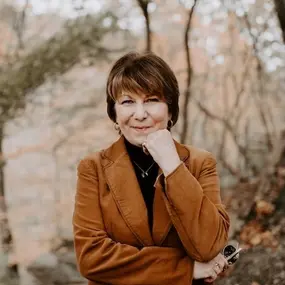
Janet Roberts is a former global leader in cybersecurity education and award winning novelist. Her books are set partially in Western PA, where her roots run deep. Her readers know to expect a female character who awakens to the discovery of her own inner strength while facing adversity. Wired For Magic (2026) and What Lies We Keep (2024) include elements of cybersecurity. A member of WFWA and PGH Sisters in Crime, she lives in Pittsburgh and loves travel, wandering through bookstores, reading on her porch swing, and sharing a bottle of wine with friends. Find her at https://www.booksbyjanetroberts.com/, Substack https://letsstartwithacoffee.substack.com/ or on Instagram @janetroberts77.
