

 Apple Podcasts

 Spotify

 Youtube Music
Houston's Forgotten Black Medical History | Carlton Houston

Before Houston became a world-renowned medical center, there was another chapter of its healthcare history—one that deserves to be remembered.
What was Houston Negro Hospital? Who were the people behind it? And why has this important part of Houston's history received so little attention?
In this episode of The Author Spotlight Series, Shannon and Ann welcome Carlton Houston, author of The Houston Negro Hospital (The Untold Legacy of Riverside General), for a fascinating conversation about the people, struggles, and contributions that helped shape Black healthcare in Houston.
Established during an era of racial segregation, Houston Negro Hospital represents a complicated chapter of American history. Its existence reflected the injustice of segregated healthcare, but its story also includes the determination of Black medical professionals and community members who worked to provide care despite enormous obstacles.
In this Author Spotlight, we explore:
🏥 Healthcare during segregation — What medical care looked like for Black Houstonians and why separate institutions were created.
👩🏾⚕️ The people behind the hospital — The physicians, nurses, and community members whose contributions deserve recognition.
📚 Uncovering overlooked history — How Carlton researched the hospital and the challenges of recovering stories that were never fully documented.
🌆 Houston's medical legacy — Understanding the hospital's place in the broader history of Houston's healthcare community.
✍️ The story behind the book — What inspired Carlton to preserve this history and how the experience shaped his understanding of the city.
❤️ Why preserving history matters — Recognizing the people behind the institutions and ensuring their contributions aren't forgotten.
This conversation reminds us that history is more than buildings, dates, and institutions.
History is people. Their lives. Their struggles. Their contributions.
And sometimes, understanding where we are today begins with uncovering the stories we nearly lost.
📚 Featured Book: The Houston Negro Hospital (The Untold Legacy of Riverside General)
✍️ Featured Author: Carlton Houston
🔦 Series: The Author Spotlight Series
Find Carlton and his book:
📖 Book: https://link.amazon/B0gqJloyG
🌐 Author Website/Social Media: @myhistoryvibe
JOIN THE CONVERSATION!
What is one piece of local history you wish more people knew about?
Share your thoughts in the comments!
🎙️ About Travel Time Stories
Real Journeys. Real Stories. Real Healing.
Join Shannon and Ann as we explore the journeys that shape us, the stories that connect us, and the conversations that remind us we're never alone.
🌐 https://traveltimestories.com
Every book has a story, but so does the person who wrote it.
Until next time, keep traveling your story and keep making memories for life.
#TravelTimeStories #AuthorSpotlightSeries #BlackHistory #MedicalHistory #HoustonHistory #HoustonNegroHospital #RiversideGeneral #CarltonHouston
SPEAKER_04
Welcome to the Author Spotlight series. This is the series where we go behind the book to meet the person who wrote the story and to hear about their journey and probably a few things that neither of us plan to talk about, because around here, the best conversations have a way of taking us somewhere unexpected.
SPEAKER_05
Always. Today we're putting Carlton Houston in the spotlight. Carlton, welcome to Travel Time Stories. We are so glad to have you here.
SPEAKER_02
Thank you. I appreciate you all supporting the book and uh look forward to the conversation.
SPEAKER_05
Well, before we dive into your book, why don't you tell us a little bit about yourself and let our audience get to know you a little bit?
SPEAKER_02
I am a Missouri kid who grew up with this tiny little nugget of knowledge that my grandfather was a doctor. He died 22 years before I was born. We never knew each other. And my mother just kind of casually said at one time when I was probably nine, ten years old. She said, Your grandfather was a doctor. I thought, huh. And I just kind of imagined him carrying a little black doctor's case bag and doing house calls and that type of thing. And that was just kind of it, right? I didn't press the issue. Uh, you know, that was it. I grew up in Missouri, attended the University of Missouri, studied journalism, became a reporter, and spent 25 years in news. Multiple states, TV stations from Virginia, Mississippi, Florida, Oklahoma, Washington, D.C. And while I journeyed through that career as a journalist, my interest in the family history started to grow more and more. And my mother was doing some of that family research while I was sort of getting my career started. So she was handing me things and nuggets and pieces and interesting little things, tidbits that she'd find. And I created a book and started collecting it. Never imagined that, you know, in 30 years I'd be sitting down using that material to write a book. But that's what happened. And the discoveries that we have made about her father and his life have just been jaw-dropping. The biggest reason is because he had survived his first wife, remarried, and my mother was the youngest child of that second marriage. So he's 65 years old by the time she enters the world.
SPEAKER_04
Oh my goodness.
SPEAKER_02
And he died when she was 13. So there was no opportunity to really explore his life and understand where he had been and what he had done. He was so busy in his surgery and his medical practice and in his civic leadership roles. I mean, she said he was always going somewhere. That's what she remembered as a little girl. And so over the course of 25, 30 years of family research, and then this last three years of intensive research, we've been able to peel back the onion layers, if you would, and learn so much more about his journey and how we ended up here. And it's just been an amazing journey to be able to share with her. My mother is 92 years old. She lives in Kansas City. And to be able to share this with her has been probably the best part of the journey.
SPEAKER_04
I love that. Yeah. I bet. Yeah. And it's amazing that you still have your mother with you. I mean, that's a blessing. I would I would give anything to have mine still with me today.
SPEAKER_02
Me too. He will jokingly say, Why am I still here? And I'm like, because we had to go through this. This is why you're here. You we had to answer some of those nagging questions about your upbringing and what was going on with your parents. And it's just phenomenal that we're able to even find as much as we have found through newspaper accounts and archives at the University of Houston. I mean, it's it's there was a time where I thought, okay, I've maxed out. I found everything I'm gonna find. And, you know, that's how I felt 10, 15 years ago. As I find another nugget, I'd be like, okay, well, there's like three more things, and I just, you know, I think I found them all. There's a lot more out there. And there's stuff I'll never see. I will never find, but it's out there.
SPEAKER_04
Well, we're super excited to get to know you and to talk about the book. And this is the book here. It's the Houston Negro Hospital, The Untold Legacy of Riverside General. And I have to tell you that, you know, the title alone immediately makes you want to know more. As I told you before we started recording, I saw a picture of you with your book on threads. And that title immediately caught my attention. And Houston is known around the world for its medical institutions. But there's an important history behind how the city became the medical center that it is today. And it's also surprising how much history can exist right in your own community. And you don't even know about it because I didn't even know about this. And I'm born and raised in right here in Houston, and I currently work in medical education. So I work in and around the hospital. So can you tell our listeners what is the Houston Negro Hospital and why did you feel the story needed to be told? I know partly because of our majority because of your grandfather, but what is the hospital?
SPEAKER_02
I didn't know anything about the Houston Negro Hospital. And interestingly, as I've peppered my mother with questions over the years, I said, Did you even call it the Houston Negro Hospital? No, it was the hospital. Right?
SPEAKER_03
Yeah.
SPEAKER_02
The hospital. It was built in segregation in Jim Crow and it represented this idea of dignified care in a world where if you walked into the hospital, your skin color determined what type of care you were going to get. If you walked into Jefferson Davis, the city county run hospital, they had what was called a black ward where they would send black patients to be treated. And that was in the basement. There were no windows, it was damp. One newspaper editor called it a death house. Like you didn't you got the the least amount of attention and care there. And so building this hospital was symbolic of an idea that you know there should be a place where black people can get care, dignified care. I didn't know about it. It's been called Riverside General since 1961. So if you think about it, anybody who is roughly 65 years and younger doesn't know the Houston Negro Hospital. And Commissioner Rodney Ellis, Precinct One, Harris County, was born there in 1954. He knew about the Houston Negro Hospital. And the more that I learned about it, the more that I understood the significance and started to see the backstory and started to see the newspaper coverage and started to see all of the nuances and dynamics around this hospital. It wasn't just a clean slate, like, you know, build a hospital, we open the doors, and everything was fine. It was crazy in those first years because it was such a radical idea. And so as those revelations became apparent to me in 2023, I said, wow, this hospital is going to be a hundred years old, and I've got three years to figure out how to write a book and get it published. And I hadn't done neither of those things in my life. And so the journalist in me was able to basically set a three-year deadline. And by the end of year two, I said, I've got to have the manuscript done because it's going to take me a year to figure out how to get a book published.
SPEAKER_03
Yeah.
SPEAKER_02
And so I toiled away writing, collecting notes, archival material, newspaper, you know, digital newspaper archives is a game changer. Because now you're not sitting in a library scrolling through microfilm of a newspaper. You're putting in a keyword, Houston Negro Hospital, in quotation marks, and finding all the articles with that term in it. I created a timeline. The Cullenan files, Joseph Cullen built the hospital. He has boxes of papers at the University of Houston. They digitized a lot of them concerning the Houston Negro Hospital around 2010-ish. And that was the first clue. That's when I stumbled on my grandfather's name in a letter to Joseph Cullen. And I thought, what in the world is this? Then the newspaper archives, Texas Portal of History, that has the Houston Informer, gobs of issues of the Houston Informer. Clifton Richardson was the editor. He was also on the board of the hospital. So he had insight and was able to write about the hospital matters and the politics and everything going on at the same time. And I created a timeline. And I just take every random letter thing I found in the Culinant files. And then I go through newspaper archives and I'm just plotting random newspaper clippings on the timeline. None of it makes sense to me. I'm just logging it, right? Logging it. And then I stood back and I started to read the timeline. And I saw, oh, this letter was written right before this newspaper article appeared. Oh, that explains why they were talking about this one. Oh, now I understand this telegram and the urgency of it because then this happened. And when I stepped back, I was like, wow, this is crazy. What a story. And then for three years, I'm wondering, someone must have written this already. I can't be the first person to have pieced all this together. And I mean, we're six months after publishing, and I still haven't seen it anywhere. I gave a copy of the manuscript to Commissioner Ellis in February as we were still finalizing it. And he read it on a flight. He was flying somewhere, and he called me late one night, and he was like, wow, I I didn't know this story. Like it was literally buried for decades.
SPEAKER_05
An important part of history, and you've preserved it. And that was your mama's job.
SPEAKER_02
Yes.
SPEAKER_05
All those tidbits she gave you.
SPEAKER_02
Just stack them, just keep them, preserve them. Don't know what I'm gonna do with this. You know, we were collecting stuff before the internet.
unknown
Yeah.
SPEAKER_02
Before there was a Texas Quarterly History, before there was a Colin and digital archives, before all of that. We were just saving it, saving it, saving it for the right moment. That's incredible.
SPEAKER_04
Wow. Yeah, and I I know you said that he passed away when she was 13. That's right. Correct? Did she have any inkling that he helped bring about this hospital?
SPEAKER_02
No. She didn't know.
SPEAKER_04
Wow.
SPEAKER_02
She got married in 1960. My dad, who was the Houston part of the name. Interestingly, his family moved to Houston for a couple of years when he was about ten, eleven years old. And my parents were classmates in the fifth grade. Then his family moved back to Louisiana and they never saw each other again. Until my mother enrolled in Southern University in Baton Rouge. And they met again on campus of Southern University. He goes to the army, serves in post-war Korea, eventually makes it back to the United States, and he goes to pick up his sweetheart in Houston. They got married in 1960 and left Texas. So her father had been dead for 12 years at that point. And Riverside General was the new name of the hospital. But in terms of her mother sitting her down and saying, Okay, here's the story, that never happened. And we continue to struggle with somewhat why that is. My suspicion is that when you read the book and you see the struggles, this is before the civil rights movement. This is Jim Crow, whites over here, blacks over here. And when you think about that struggle and how difficult that was. And my grandfather was so focused on making things better, getting people out to vote, building the NAACP, building the Black Chamber of Commerce, you know, doing surgery at the hospital. He wasn't focused on his legacy or what he had done. There was so much to do. Also, I think after reading the newspaper accounts, I mean, half of what I know about his life isn't even in the book because it's the civic affairs and those political battles. Yeah. And I think my grandmother was just pulled through the ringer through all of that. And, you know, there's a point where Dr. Drake resigns from the Chamber of Commerce and resigns from the NAACP in 1939 for peace. Like there's so much political fighting that he says, you know what? Let me remove myself if that's going to help everybody get along and get united, because we need to all be on the same page. You know, you have the new leaders coming up, and they're looking at Dr. Drake like, oh, you're old school, man. We got some new ideas about how we want to do things. So I think that took a toll on my grandmother. And also I think generationally, you know, when you live through a time like Jim Crow and the violence and the type of things that she was traumatized by just in everyday life, people say, Oh, grandma, won't you tell us about segregation? Why? Like, why would I want to talk about such a horrible thing? And so, you know, I suspect that's probably why my mother was shielded from a lot of the things that were swirling around her own father. You know, those are tough times. She tells me, she says he slept with a pistol under his pillow. You know, and so when you live in an era like that, you know, talking about it, you know, mental health and therapy and all that probably really wasn't a big thing in those days. And so you would lock it away, compartmentalize it, and not talk about it. And so, you know, we can look back on it now and think, oh, with nostalgia, how proud we are of these trailblazers and the hard work they put in. But you go a layer deeper into that and you realize how difficult these things were and why someone would not want to relive it.
SPEAKER_05
I think she was also afraid to some extent. You know, he was so involved and I think so.
SPEAKER_02
I just read, I stumbled down another rabbit hole yesterday. Guy by the name of J.B. Grigsby. I posted this on Instagram, and then that sent me down the rabbit hole, right? I shared with the world, and then I'm like, wait a minute.
unknown
J.
SPEAKER_02
B. Grigsby was the first black man to run for school district in Houston in 1939. And some guys rolled up into his front yard, put some crude cross in the yard, lit it on fire, and ran off. And this made headlines. I'm reading about this yesterday. J.B. Grigsby. He was a businessman. And, you know, that just emboldened him to say, I'm not gonna be, you know, afraid to run for school board. He didn't win. He got 600 plus votes, but not enough to get on the board. But uh, that was their world. That's 1939. My mother is five years old when that happened, just a few blocks from where she lived. She doesn't talk about that. She never told me, oh yeah, they burned a crop. You know, she was five. She may not have even known about it.
SPEAKER_04
Yeah. Yeah, when I was reading the book and looking at the dates, my parents were born in 1926.
SPEAKER_03
Oh, wow.
SPEAKER_04
So they were they were small children during that time when all of this was happening. So yeah.
SPEAKER_02
It's the same perspective. I love that. I yeah. Anytime you talk about anything in those dates, I sort of now have a reference point. Like if you say 1940, I'll say, okay, my mother was six, heading into World War II. You know, she's seven, eight, you know, if you mention a court case, 1932, I know my grandfather would have been about 62 years old and they had two boys, and my mother was not yet born, you know. So it's like it totally changes history and perspective to have this, you know, timeline that I've been obsessed with for, you know, several years.
SPEAKER_04
Yeah. Wow.
SPEAKER_05
I love that you put it into a timeline. Because the visual, I'm a very visual person. And so the visual just puts it right into my head if if I can look at it.
SPEAKER_02
No question. And that timeline helped me kind of see the chapters in the story as it played out.
SPEAKER_03
Yeah.
SPEAKER_02
You know, the book starts out with that emergency meeting at Joseph Cullen's mansion. Black doctors are not happy and considering walking out. They're thinking about turning the hospital over to the white doctors, which Joseph Cullen did not want. And they're trying to be pleasant with each other, and they're trying to be polite, and but they're also trying to get their points across, you know, and we start there and then we backtrack and then sort of pick up along the timeline and tell them build the characters, build the timeline, and take you all the way through, you know, the market bright years and all of that. I definitely wanted to start at a point of tension to kind of immediately immerse the the reader into the story. I'm visual. Like I see these, like their acts in a play, right? I can see them sitting there at each other trying to be polite and trying to get their point across.
SPEAKER_04
Yeah, and I love during that time, you know, the time of Jim Crow and the segregation, that it was Joseph, a white man, that wanted to make sure that this hospital got built and the black people had a hospital that they could go to. His vision was for it to be overseen by them as well. But then because he brings in the white advisory committee of that didn't work out, but he had that whole vision. You know, he looked at humanity and not color.
SPEAKER_02
Very much so. Yes, and he was he was a complex man, you know. They called him the Dean of Oil Men of his day, incredibly influential, powerful, rich, and had this fascinating humanitarian streak about him. And I often think about the kind of guy it takes to uh, you know, to achieve that kind of success and to have that kind of wealth, you know, you've gotta be, you've gotta have an edge about you, right? You you're not timid. You know, he's he's there's stories about him going to the judge, you know, asking for basically not a not a concealed carry. He's a he's asking for an open carry. Like, can I shoot somebody if they come onto my oil field? Right? You know, it's like those are we're not exaggerating when we say it was the wild west in those early days.
SPEAKER_03
Oh, yeah. Yeah.
SPEAKER_02
You'd strike it, you'd find an oil well, and you know, those are dangerous times. And he lived in all of that, right? But he had so much influence and he had this humanitarian streak that kind. To cast him as an outsider. And he, I love sort of thinking about how he how much of a marketing guy he was. Like he understood optics. He understood on the day of the dedication of the hospital who was going to sit where. He invited people who probably didn't really want to be there. But he had so much money and influence that they didn't have a choice. Cullen wants us there, so we got to be there because there's an election coming up and we're going to need some of his cash. So, you know, get don't put on your nice suit and get your hat and go do the dance.
SPEAKER_05
Pretty much.
SPEAKER_02
Right. He's fully aware that he's a puppeteer and he's got the ability to do that, you know, but he's not consumed with it in that way. Like he there's a there's a mission behind, there's a motivation behind. I mean, it's fascinating to kind of think about what drove him to take these steps. He was donating money to the black hospital before he built the Houston Negro Hospital. I found the letter at the library, MDMC Library, University of Houston. He was prov he was giving $25 a month to the Union Hospital, which was falling apart, but that's that's how this started. Like he was involved with them way before he actually constructed the new hospital.
SPEAKER_05
That was a lot of money back then, too. Right. Yes.
SPEAKER_02
You know, $75,000, $80,000 to build the hospital. You know, that's that's definitely how you transfer that to $2,026. That's a lot of money.
SPEAKER_03
Mm-hmm.
SPEAKER_04
Mm-hmm. Yeah, it is. It's just fascinating how we can hold two truths together during this time. I mean, this hospital existed because of racial segregation. Right. Well, and then we also have to recognize the extraordinary people who came together during this time to get this thing built. Make it happen. Yeah. To make it happen.
SPEAKER_02
Yeah, you know, the segregation was such a reality. I know folks that maybe don't think about this as much are kind of struck by, well, that was just wrong, but that was the way it was.
SPEAKER_04
Yeah.
SPEAKER_02
You know, so it's unfortunate. What are our choices? The book forces you to sort of deal with what are what is my choice? I don't like the way things are run at the black hospital. So as a physician, I'm gonna pull out. You know, my grandfather was the last one. And he's he writes this letter to Joseph Cullinan, and he says, I'm the last one. And my friends are starting to turn on me. He's like, what do I do? Do I pull out and not treat patients in the hospital anymore? This is the best treatment that they're gonna get. You know, in the 1920s, blacks were dying at a rate of two to one compared to whites, and they said you had two options. You could go get bad treatment at Jefferson Davis Hospital, or you could die at home. So when the black doctors are not happy with the circumstances and they're trying to do something about it, and no one's listening, they're thinking, well then let's walk out. And then you have other doctors that are thinking, Well, what is that gonna do? How is that gonna help our people? You know, right. I have a I removed a tumor today. It's over in the lab. You want to go look at it. 20 pounds, you know, how is that gonna get removed if we don't have this hospital here? And so it's just this constant conflict in a world where there are, you know, the easy the best answer is is just not doable in a segregated world. And so we got compromise and and twist and turn and figure out solutions and ways around the elephant in the room, which is Jim Crow.
SPEAKER_04
Yeah. I can't even imagine having to live in those circumstances during that time. No, me either. I mean, we have issues still to this day, but not to the extent that it was during this time of of Jim Crow. Yeah.
SPEAKER_02
You know, I was in the hospital as we were finishing the manuscript. I had a colectomy. Portion of my colon was removed in March. And at the same time, like we were at the finish line with the publisher, my editors, and the manuscript. And I almost felt like it was like fate that these circumstances would have me in a hospital dealing with abdominal surgery, which was my grandfather's specialty, you know, a hundred years later, exactly a hundred years later, books not even published yet, and I'm patient. And I, you know, I couldn't help but think about my care versus a hundred years prior, what it would have looked like. You know, as I'm twisting and turning in the bed in the middle of the night, and you know, I had robots and lasers and a great uh medical team. I had a diverse team of nurses coming in, you know, every shift. It was a different nurse, and you know, and I couldn't help but think about that. And white nurses and Latino nurses, I had black nurses, I had male nurses. And I'm the whole time I'm just thinking about what life would have been like for me in these circumstances a hundred years ago. You know, dignified this idea of dignified care. This idea of people coming in and looking at you like a person and not a patient.
SPEAKER_04
Yeah, and not sticking you off in a corner somewhere, and you may or may not live. You know, they may or may not get treated. Yeah, that's what I'm saying. You they may get around to you and they may not, you know, it's a gamble, you don't know.
SPEAKER_02
Right. Yeah. And so a lot of people would have said, I'll pass. You know, literally. I'll pass, as opposed to deal with that secondary, get treated in that way. There was another big challenge in those days in that a lot of black people did not trust black medical professionals because they hadn't seen them before.
SPEAKER_03
Yeah.
SPEAKER_02
And because you think about the oppression of Jim Crow and segregation and all of the things that remind you of your tears, your second-class citizen status, there are times where your mind begins to believe what you're surrounded by. And so my grandfather was constantly trying to remind educate black community, folks in the community, that look, I have a medical degree from Maharry and from the University of Illinois. I have two. I go to clinics every year at Tuskegee, Prairie View, Provident Hospital in Chicago, where I'm learning the very latest. I'm just as skilled as the white medical professionals out there. And in fact, in his late years, there were people also sort of backing him up, saying, you know, white medical professionals saying, look, the black doctor is just as good, right? I mean, these were the circumstances and the environments that our ancestors lived in. And so it was a big challenge.
SPEAKER_05
What a powerhouse he was to accomplish everything that he accomplished.
SPEAKER_02
They talked a lot about his energy level. And I find that really fascinating. Like more than one article that I found, a newspaper article or write-up, talked about his energy level. Like this guy had a motor that was just different. And, you know, to hear my mother say he was always going somewhere to read a newspaper that talked about his energy level kind of gives you that, you know, those are the bookends, right? The real life anecdote and the documented written word that says this guy was different. You know, I don't have that energy level. It's interesting, though, when I see some of these traits in, say, some of my cousins who may not even be as interested in the history as I am, but I can look at them and go, mm-hmm. I see it. I see that Drake energy. Right.
SPEAKER_05
Isn't that kind of creepy though when you recognize that in one of your cousins or brothers or sisters? You're like, oh, that does run through the family at the thing.
SPEAKER_02
Yeah, and it's like a little thread that pulls. Right. And and you know, we just assumed having been born in 1870 approximately, we don't know the exact date, neither did he. Born to formerly enslaved parents and his siblings. You know, he was the youngest, and so he had two older brothers and two older sisters. And you know, when you when you when you understand his life, you start to wonder how in the world did this man get from a farm in Mississippi to being known across the country as a surgeon? How did that happen? And you start to get these little clues. And you find a census in 1880 that says he's 10, and his brothers, his sisters are 14-16, his brothers are 20-21. He's 10. Three of the siblings are listed as school teachers. Black school teachers in Mississippi in 1880. Okay, that's something's going on there. Their father was Reverend George Washington Drake. And there was one article in which he described his father as a trailblazer in the Methodist Church in northern Mississippi. So now you're starting to add these clues. What's going on? Dad was a preacher, a former enslaved American man, and a preacher, and his two oldest boys were listed as teachers in the census. You could easily put farmhand and just kind of not worry about it. It was in the census. One of the other two sisters, school teacher, the other sister, farmhand, my grandfather, farmhand. And so you start to piece all these things together. And then, you know, one of the bombshells was when I found a resolution in the 1890s from Texas. So by then he's a student at Wiley College in Marshall, Texas. Just up the road from Marshall, Texas, is a tiny town called Jefferson. And in Jefferson, there was a resolution in honor of a relatively young man who was a doctor who had died at an early age, and his name was George Washington Drake. And I realized, oh my God, my grandfather was not the first doctor in the family. His brother was.
SPEAKER_04
Oh wow. Yeah, that's incredible.
SPEAKER_05
Amazing.
SPEAKER_02
All this time we just assumed that he was the first. He was following in his brother's footsteps. Driven. Yeah. I have no idea where his brother got his medical degree. I haven't figured that out. But when I saw that resolution, that was just like a jaw dropper. I have a little book that I keep for some of these discoveries. And because like stuff was happening fast and furious, and I was just like, okay, things are happening too fast. And so I would literally write down the date when I was making some of these discoveries. I found his sister. We don't know what happened to any of his siblings. We don't have any idea where his parents are buried, right? My mother came along at the tail end of his life. The last years of his life, she was there. But yeah, when I would find something amazing like, oh, his brother was a talk during the 1890s, I would write it in my little handbook here just because I I knew I wouldn't be able to keep track of all this through my own little memory.
SPEAKER_05
Well, you're just getting it all in little bits and you're having to put it somewhere until you can put your timeline, put it into your timeline. Right.
SPEAKER_03
Right.
SPEAKER_05
Wow. Interesting to know where he got his degree at, wouldn't that?
SPEAKER_03
Mm-hmm.
SPEAKER_02
I I suspect Flint Goodrich was a there were only so many hospitals, uh medical schools for blacks in the South. And I suspect Flint Goodrich, I checked with McHary. They did not have a record of a G.W. Drake. Back in those days, it only took two years to get a medical degree. Imagine that.
SPEAKER_03
Oh wow.
SPEAKER_02
I think my grandfather took the state medical exam after a year. So he's 35 years old. He was a teacher, he was a school principal, he quits everything to go back into medical school. And I explain in the book one of my biggest reasons why. It's in the brother being a doctor is one, but there are a couple of other reasons that I think motivated him. Um but he's passing the state medical exam after the first year. And then the following year, I think graduation's in like February. So you can imagine back in those days, you know, it's like you could graduate in February because spring's around the corner. It's time to get planted.
SPEAKER_04
Yeah. That's true. That's yeah, very true. And they were doing some, I mean, some really cutting-edge work back then too. I was shocked when I was reading in the book, like they were talking about using spinal anesthesia back then. And I'm like, what? Back in that day and time, they were already doing spinal anesthesia.
SPEAKER_02
Yes. I mean, he was removing fibroid tumors by 1910. Wow. I mean, that is, and you'd read these articles where it was like Dr. Drake was joined by Dr. Jameson down in Texarkana, and Dr. So-and-so, who came in from this town. And so you could kind of tell, like, it was like all hands on deck. We have no room for error. And I'm sure there were some errors and there were deaths. But you can imagine these guys who obtained these education, you know, nursing, the profession of nursing, and the idea of having a team. That's another rabbit hole I went down in terms of what did medicine look like in those days as he was entering the profession. And the nursing profession was growing rapidly. Great career for black women who sometimes were allowed to enter white hospitals before black doctors ever got that green light. But yeah, having a team in a surgery was important. You know, speed was probably really important then. And uh yeah, there were just not there was no room for error. You know, you're fighting time, you're fighting light, you know. I can imagine surgeries that start to get in go into the nighttime and what type of lighting do they have available. You know, that's it it takes a special, unique and then the courage to look at somebody and say, Yeah, I could go in there and solve a problem and make your life better. And you know, you do that a few times, you start to gain some confidence. All right. He says in one letter, I have done like 90 operations in since the hospital opened with no deaths.
SPEAKER_03
Oh, wow.
SPEAKER_02
Clearly he's logging the number, right?
SPEAKER_04
Yeah.
SPEAKER_02
I don't think for one second that he didn't experience a death during or after a surgery, based on the fact, you know, that's sort of that investigative news guy in me that says, well, if he says it this way, 90 operations with no deaths means there's been a death somewhere along the line. Because he's definitely keeping track of his record, you know.
SPEAKER_05
Well, it's inevitable, you know, and they didn't have as much back then as we do now. Right. Not even CPR. Right. Right.
SPEAKER_03
Exactly.
SPEAKER_02
It was, yeah. I don't know how, no blood transfusion. I mean, I how yeah, exactly. Recovery like, yeah. So many questions.
SPEAKER_04
I mean, because uh X-ray was just pretty new back then.
SPEAKER_02
Yeah, no MRI for that five.
SPEAKER_04
Yeah, yeah, yeah, nothing like that. So the fact that basically he was going in there taking these tumors out and he was going in blind exactly. Yeah. You know, like nowadays they have the MRI and they it's all mapped out. They know what it's connected to and and all of that before they even cut you open. But back then, he just knew there was a tumor. He didn't know till he got in there like what all it was connected to, how bad it was gonna be, none of that.
SPEAKER_02
Yes. Yes.
SPEAKER_04
And this is That's incredible.
SPEAKER_02
I mean, we're literally talking about details that my mother had no clue about growing up. I often think, how would my life be different had I known what's in this book? Like, how might his life have inspired me? How might it have inspired me as a young child growing up to know all of the things that he did, especially considering all the obstacles he's faced to do it, you know?
SPEAKER_03
Oh yeah.
SPEAKER_02
He built his first hospital in Marshall as soon as he got out of med school. And he said it says in the article, my friends, most optimistic friends, said that's impossible. Like you can't do that. And he did it anyway.
SPEAKER_04
You know, it's like Yeah, and then turned around and did it again in San Antonio, right? Yes. Yeah, yeah.
SPEAKER_02
Yes. I mean to talk to him, man. All the questions.
SPEAKER_04
Oh no, right?
SPEAKER_02
Well, it's literally impossible for me to ever pick his brain. Won't ever happen. I'll never know.
SPEAKER_05
No, but I think you get a sense of the man from everything that you're reading, the things that you're finding. I think you have a pretty good handle on the type of man that he was and should be very proud to have a grandfather like that.
SPEAKER_02
I am. I definitely love telling his story. You know, my grandmother, when they got married, it was a hundred years ago, actually, they got married in 1926. And if I piece the story together, it's it starts to make sense. He told his friends, I found the woman I'm going to marry. She was 29. He was 56. And, you know, not only his journey, but you know, she had just gotten her nursing degree from Prairie View. She went off to Alabama for a short stint. She ran into him at a Tuskegee annual clinic. He convinced her, he said, you know, let's get married. She says, You're gonna have to go talk to Mr. Taylor, her daddy, my great-grandfather, John Taylor, in Butta, Texas, near Austin. And he said, No problem, whatever. And we went to go talk to Mr. Taylor, and they got married just a couple of weeks before the hospital opened on Juneteenth, 1926.
SPEAKER_03
Oh, wow.
SPEAKER_02
They bought their home right around the corner on Delano in Francis. They bought three lots and raised their family. That's where my mother grew up in the shadows of that hospital with this amazing story that nobody really talked about.
SPEAKER_04
That's incredible.
SPEAKER_05
Yeah, so much family history here.
SPEAKER_02
So, what did you guys think about old Margaret Bright?
SPEAKER_04
Uh, that was my other thing. When we were talking about the segregation. And how black people didn't trust the black doctors. And then you have Margaret Bright, who is a black person, and then going against her own community and her own people and sabotaging her own people and the community and this whole project.
SPEAKER_02
I wonder if I even used that word because that's exactly what it was.
SPEAKER_04
But I'm not I I did not see the word sabotage in there, but that's exactly what it was. Yeah.
SPEAKER_03
Yeah. Why?
SPEAKER_04
Yeah, it's like, why would you do that?
SPEAKER_02
And she was uh there were a number of things that I worried about in the process of putting the story together. And and being fair to Margaret Bright was one of them. That's the journalist in me. Going, okay, I don't want to just get a couple of nuggets and then just to make a bunch of assumptions and just railroad her legacy. But boy, the documentation, my goodness. Yeah. It is fascinating. And I mean, I know where she was born, and anytime we drive cross country back to Kansas City, and we pass through Nashville, I'm thinking about her because I know where she's buried. Oh, you know, it it's a fascinating story. She is a fascinating character in this, and she held that place hostage for more than a decade.
SPEAKER_04
And she was an educated woman. So it's like, how could you do that as an educated woman?
SPEAKER_02
Mm-hmm. Yeah, that's a great yeah. And I mean, she had she had the checkered past, bouncing around from one hospital to another, which is a red flag in hindsight, for sure. I don't know if they saw it that way, but and she was a charmer. That's clear. I mean, she could win over people. And you literally had when I spoke at the University of Houston, I read portions of two letters, one from Dr. Lee, one from John Slaughter. And I'm like, Who do you believe? Because it sounds like they're describing two different people. Nope, they're describing the same person from through two different lenses. The book is almost like a mystery novel because it's like, Who do you want to believe? in this sordid affair of hospital control. And then after I published the book, I found another document that said when something about the black doctor, she would not allow the black doctors to use the hospital elevator to get an elevator, three-story hospital. I believe the operating room was on the third floor. So you had to have a means of getting the patient up to the third floor. But there was something I found in writing that talked about her sort of saying, well, the elevator's off limits. You can't use it.
SPEAKER_05
Wow. Makes you wonder if Margaret was okay. You know what I mean? Like were we bipolar?
SPEAKER_02
Certainly, yes. You do start to wonder when you see it.
SPEAKER_05
Yes, yes, exactly.
SPEAKER_02
Or or a trauma, or if she was okay because some of that stuff was so blatant. And you know, she died, the circumstances around it, it was a cerebral hemorrhage. And she I mean early 50s, if that. There's some discrepancies on her name and her date of birth along the way, but I kind of just had to sort of come to terms with what I was seeing and pick what I thought was the right age, you know, death certificate and census didn't always match. But yes, yeah, I absolutely thought a lot about her character and the decisions she made and the motivations behind it.
SPEAKER_04
Yeah. Right. Yeah, that's what I was wondering. Yeah, when I was reading that part of the story and about her, and that just kept going over and over in my head, like, why? What is the point of this? Why are you doing this? You know, why are you sabotaging your own people? You're an educated woman, and yeah, I couldn't I couldn't make sense of why she would do that.
SPEAKER_02
The beauty was for the longest time, I was worried that I'd never see her. So I knew the story of Margaret Bright as it came together three, four years ago. I didn't know what she looked like. And the first I stumbled upon her. Every time I go back to see my mother, we always pull out the photo albums and we start flipping through. And sure enough, we had a photograph of her in the family photo album. No one for a century, no one knew who this bright was. My gosh. And sure enough, we had her in the family album. Second time I found her was in the Prairie View Archives, and there was a typo. Margaret H. Bright was listed as HM Bright. So they reversed the initials. Which in a lot of cases, in a search, I may not have seen that because of a typo.
SPEAKER_04
Yeah, right.
SPEAKER_02
The third time I found her, there's a book I have here in my office, Tuskegee. It's about Tuskegee Hospital back in the day. And one morning something just told me to grab that book off the shelf and see if you can find grandma in it. I was looking for my grandmother. And I'm flipping through her, and there's this photograph of all these nurses standing in in two rows, and I'm looking at each face, looking for my grandmother. I don't see her, and then I hit one face in particular, and I think that's Margaret Bright. There's no name on it. No name. But it's 1910, so it's the youngest image that I've ever seen of her. And I put it up against other photographs of her, and you know, I'm looking at the brow, the eyebrow, cheek, ears, you know, and everything, and I'm like, that's her. She was in a book on my shelf for a year before I realized it.
SPEAKER_05
Okay, I just have to throw this out there.
SPEAKER_02
Uh-huh.
SPEAKER_05
Some things are meant to happen, Carlton. Some of us are on this earth for a reason. And there are just too many coinky dinks going on here with this book. I feel and I I do believe one of your reasons was to preserve this history. It's so important.
SPEAKER_02
And nobody I can't explain it. I mean, you're what are the odds?
unknown
Yeah.
SPEAKER_05
What are the odds? They are there's too many of them. Too many, too many.
SPEAKER_02
And the photograph the photograph I I referred to that I found in the book is on the cover. Like literally on the cover of the book. And so, yeah, I probably should tell that story in an Instagram story one of these days. But I'm just like, how is this how is this even possible? And the the revelations aren't like instant because it's a suspicion, right? It's like, yeah, wait a minute. And then there's like days of me questioning and sleeping on it and waking up and looking at them again and saying, that's her. That is Margaret Bright. Yeah, it's incredible. Even when I decided to write the book, which was June of 2023, there was just this big gate opening of discoveries in the next in the following weeks. Like after I had I wrote down the date and the time when I said, because people told me I'd tell them little things about family history, and they say, Oh, you should write a book. And I kept telling them, I don't have enough to write a book. And then as the whole hospital story started to come into focus, I said, Hmm, I think I have a book. I gotta write it. And I wrote down the date and the time when I made the decision, June 2023. And in July, I was just like, I was finding my grandfather's sister. I found that brother that was a doctor. I mean, I found a letter that they had written trying to find family members from before slavery ended. I mean, it was just like, whoa. Wow. Wow. I definitely feel like as a middle-aged guy, okay, like there is something about this journey that has given me like confidence that I've done something worthwhile, that I've left something. You know, I was talking to my mother yesterday, and I'm like, there's no way he ever imagined a hundred years from now, some grandson who I don't know is going to be reading this letter that I'm writing. Right? Yeah. Right. He couldn't have had that thought. And then my mother reminds me, a hundred years from now, Solo could be reading your book. And I thought, wow. Yeah. I even think about it.
SPEAKER_05
Even bigger.
unknown
Yeah.
SPEAKER_04
They will be too. They will be reading your book a hundred years from now. Mm-hmm.
SPEAKER_05
Oh, yeah, it's part of history.
SPEAKER_02
It's crazy. It's crazy. Really enjoyed the process of writing the book, and I even knew that one of these days I'm gonna be done writing the book, and I'm gonna be sad because I'll be done writing the book. But like I said, the discoveries continue. Like there's there are plenty of rabbit holes that I can go down.
SPEAKER_05
This is only the first. Yeah, you have more books to write. You have a mission. You are preserving your family's history.
SPEAKER_03
Yes.
SPEAKER_05
You're preserving history for people all over the world to learn about this hospital and what it took to get us to today.
SPEAKER_02
Yes. That's the important part. That's the important part if people say, I don't understand where we are and how we got here. You know, this is like my gift to the community to say, well, here's a starting point. You know, you can you can start here and perhaps get a riveting, up-close view on how real things were back then. And as I say to a lot of people, a hundred years is not that long ago.
SPEAKER_05
No, it's not.
SPEAKER_02
The people who raised us were all walking around a hundred years ago.
SPEAKER_04
Exactly.
SPEAKER_02
So that says something about time and it says something about legacy, and I didn't want to write a fairy tale. Like I didn't want to write everybody lived happily ever after because that's not real. I wanted to keep it real in terms of what life was like. Yes, things got a little better, but here we are in 2026, still talking about care, the price of health care, you know, dignity in care, the maternal health rate in Harris County, in Houston is abysmal. You know, and maybe the conversation around this book can kind of inspire some folks to try some things that we haven't tried before to address some of those problems that we have today.
SPEAKER_04
Exactly, because we still have the issue today that for black women, the number that die from complications of childbirth in 2026. That should not be happening.
SPEAKER_02
No. Absolutely. And in Houston, a medical capital of the world, the resources are there to address it. You know, some of those problems you just mentioned are in third ward. Literally, the neighborhoods that surround Houston Negro Hospital or Riverside Health Hub as it's known today. So glad to see that it is it has reopened. They are providing some important uh through Harris County Health Department, they're providing some important health services for the community. But we have a long way to go. And maybe reading this story is a way of reminding some folks that we can do better.
SPEAKER_04
Absolutely. Yeah. I think if your grandfather was still alive today, Carlton, he would be so honored by this book. I think you did an excellent job of honoring him with this book.
SPEAKER_02
Thank you. Absolutely. I think he'd be nitpicky too.
SPEAKER_04
Probably, because he seemed to be probably indigenous. So yeah.
SPEAKER_02
Yeah. He might hit me up on a couple of facts and say, okay, let me explain to you exactly what was happening. That's that's nice how you framed that letter I wrote, but let me tell you what really happened. And so to to have that conversation with him would be incredible. But thank you. Yes, I I'm very proud of the the legacy, and I really enjoy sharing it with folks and appreciate you guys asking the questions about it. Uh it makes me think about his life and the story in different ways. And so I appreciate you both.
SPEAKER_05
An amazing family that you come from.
SPEAKER_04
Exactly. Yeah, that's a lot to live up to, Carlton.
SPEAKER_02
You know, um it is, and and we see this with like high achieving people. He was brilliant, he was talented, he is charismatic, and you know, that doesn't necessarily mean all those traits just pass off to the next generation. And so, you know, yeah, you can imagine that how difficult it might have been to live up to his standards, you know, because so much.
SPEAKER_05
A very driven man for sure. He had a lot he wanted to accomplish, and and he did. He accomplished so much.
SPEAKER_03
Yes, yes.
SPEAKER_04
Exactly. Well, Carlton, we've really enjoyed getting to know you and learning about uh the important history of your grandfather and Houston's history in regards to the hospital and all of that. It's just been wonderful. Like I love learning about history, and then like I said, to find out this. It's been in my own backyard all these years and I had no clue about it, and now I've educated myself on it. So I love that.
SPEAKER_02
Yeah, they're supposed to break ground on phase two. There's uh the health department's gonna build up more health facilities on that property. And so that just gives the story more life, gives us a chance to talk about it.
SPEAKER_04
Well, Carlton, where can our listeners find your book and also learn more about you and follow what you're doing?
SPEAKER_02
So the book is sold at Kindred Stories, which is an independent black-owned bookstore in the old El Dorado ballroom, just a couple of blocks away from the hospital in Third Ward, Houston, Texas. There's a link to their site on my Instagram page and my threads page and my YouTube channel. Everything is typically under one word, my history vibe. My history vibe. That's where you can find me on Instagram, you can find me on threads, you can find me under my name on Facebook. There's a couple of accounts, but the serious-looking one is the author page. So you can follow me there. And uh yeah, love to hear what folks think about some of these real life characters and the complicated decisions that they were they were facing. I learned just as much about the story talking to you all as I did writing it. So I really enjoyed to engage with folks about it.
SPEAKER_05
It was fascinating. Absolutely fascinating.
SPEAKER_04
Exactly. Well, thank you so much again, Carlton, for joining us. I hope people will reach out. And I think one of the most important things about preserving history is remembering that behind every institution, every date, every historical event are real people whose lives and contributions help shape the world that we know today. Exactly. And it's important that we preserve those stories and remember those stories and continue to share those stories.
SPEAKER_02
Yes, honor that legacy and know that there are people right now carrying the torch and trying to improve things for the next generation. And hopefully we'll be writing books about them too.
SPEAKER_04
Yeah. And to everyone watching and listening, you'll find Carlton's book and his information in the episode description and on our website, traveltimestories.com, where he'll have a dedicated page so you can click on there and learn more about him.
SPEAKER_05
And remember, every book has a story. But so does the person that wrote it.
SPEAKER_00
So join the beach we have to be after the hotline. We got to the heart with every story.
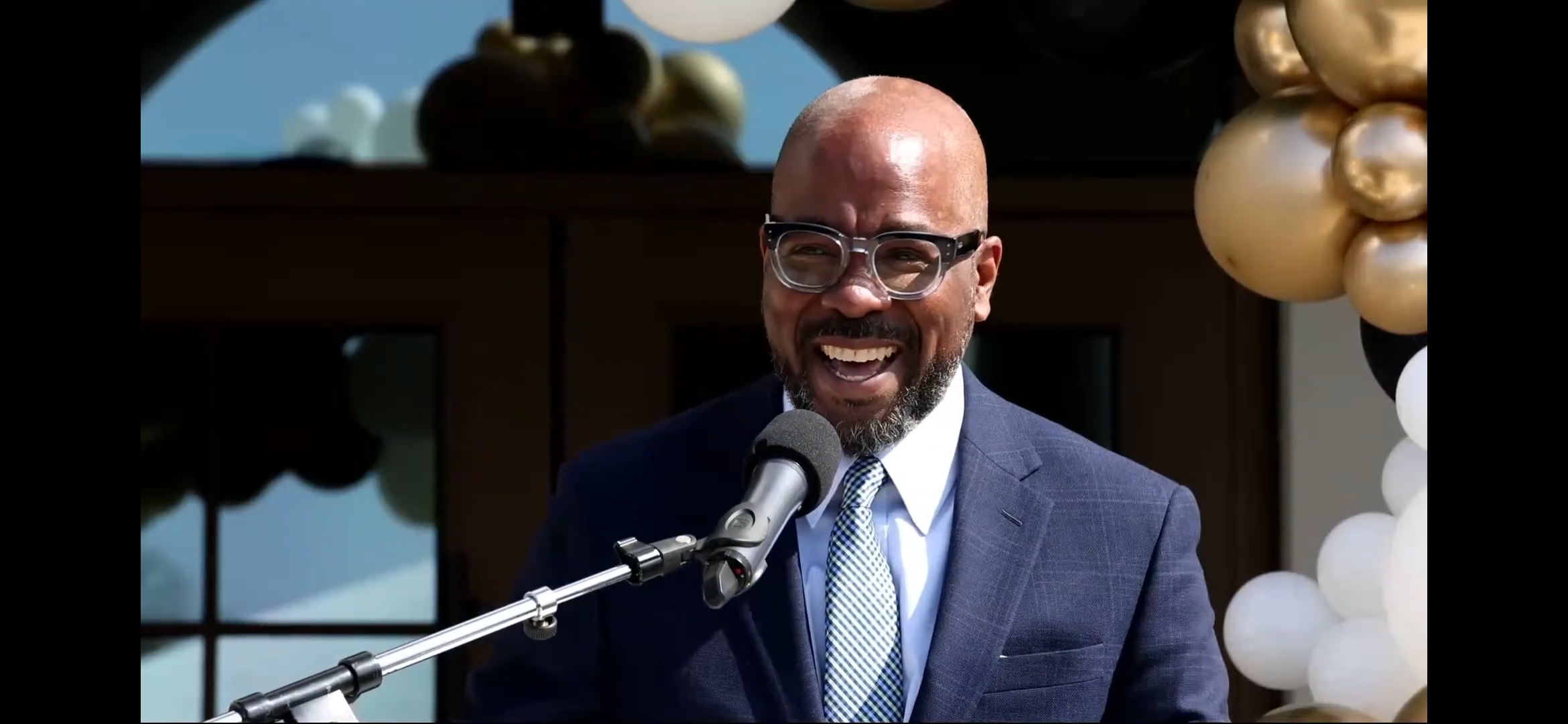
Carlton Houston is an Emmy Award-winning journalist, storyteller and author of Houston Negro Hospital: The Untold Legacy of Riverside General. A former television news anchor and executive, Houston draws on years of investigative research, family archives and historical records to uncover the people and human stories behind overlooked chapters of American history. His work explores the intersections of race, medicine, community and the institutions people build to create change.
