

 Apple Podcasts

 Spotify

 Youtube Music
JL Andrews - Jones (Letting Go) When Life Doesn't Go as Planned: Learning to Let Go

In this episode of Travel Time Stories: The Author Spotlight Series, Shannon and Ann welcome Jordin Lea Andrews-Jones, writing under the pen name J.L. Andrews-Jones, to explore her deeply personal book, Letting Go.
Through reflections on anger, happiness, isolation, resentment, grief, and acceptance, Letting Go explores the complicated emotions we experience when life changes in ways we never expected.
But this isn't a book offering a perfect formula for healing. It's an exploration of what it means to feel, to struggle, to accept, and ultimately to move forward.
And behind the pages is an equally compelling personal journey.
Living with chronic illness changed the future Jordin once imagined for herself. When traditional employment was no longer a viable path, writing became an unexpected new direction—one that would eventually lead her into the world of independent publishing.
What began as something she never intended to publish became the start of her journey as an author who at 26 has published three books while battling her disabilities.
In this Author Spotlight, we explore:
💜 What letting go really means — Understanding the difference between acceptance and giving up.
🌿 The emotions we carry — Exploring grief, anger, resentment, isolation, happiness, and the complicated process of healing.
❤️ When life takes an unexpected turn — How chronic illness changed Jordin's plans and opened an unexpected path toward writing.
📖 From private writing to published author — How Letting Go became a book she never originally intended to share with the world.
✨ Finding purpose through creativity — Discovering new possibilities when the future looks different from the one we imagined.
✍️ The journey continues — Exploring her writing beyond Letting Go, including Life Without Fantasies and her developing projects.
At its heart, this conversation is about more than writing a book. It's about navigating change, making peace with difficult emotions, and finding the courage to create a new chapter when the old one ends unexpectedly.
Whether you're experiencing a major life transition, learning to live with circumstances you never chose, or simply searching for a story that reminds you you're not alone, we hope this conversation speaks to you.
Find J.L. Andrews-Jones and her books:
📖 Book: https://link.amazon/B01iKhfD7
🌐 Author Website/Social Media: https://jla-literary-archive.base44.app/
JOIN THE CONVERSATION!
Have you ever had to let go of the future you imagined to make room for a different one?
What helped you move forward?
Share your thoughts in the comments. Your story might be exactly what someone else needs to hear.
SPEAKER_04
In the author's spotlight. Where stories collide? Twenty authors waiting. Let curiosity guide. All genres invited. From horror district. Unravel the tales at our podcast heartbeat.
SPEAKER_01
Welcome back to another episode of the Author Spotlight series. This is where we meet the people who create the stories we love. We talk about their latest book, their writing journey, and the story behind the story. And probably a few things neither of us plan to talk about. Because around here, the best conversations have a way of taking us somewhere unexpected.
SPEAKER_02
Oh, that is for sure. Today we're putting Jordan Lee Andrews Jones in the spotlight. Jordan, welcome to Travel Time Stories. We're so glad to have you here.
SPEAKER_00
Thank you so much for having me. I'm excited to be here.
SPEAKER_02
Before we dive into your book, I'd love for you to introduce yourself to our audience and tell us a little bit about who you are.
SPEAKER_00
My name's Jordan Lee Andrews Jones, and I write under the pen name JL Andrews Jones because I don't think my full name would fit on the spine of a book. My first book was Letting Go, and I will be publishing my third book in November, which I'm very excited about.
SPEAKER_01
Yeah. Congratulations.
SPEAKER_00
Thank you. It's been a journey and a half. I never thought this is where I would end up, but life handed me very different cards than what I was expecting. I gained a disability in 2020 that has prohibited me from working a normal job. And that is how I started my writing journey.
SPEAKER_01
Wow. I love that. I always say God closes one door to open another. So while gaining a disability isn't wonderful, at least it opened a door for another path for you to go down that you probably wouldn't have otherwise, you know. I couldn't agree more. Well, we're definitely excited to get to know you more and to talk about your book Letting Go. Your book is an intimate look at the emotions and experiences that we all carry with us, such as anger, happiness, isolation, and so on. And what it actually takes us to release those things that no longer belong in our futures. But I think what makes this story even more interesting is that you never intended to publish it. So let's start right there.
SPEAKER_00
So publishing it, it's actually a funny story. I actually started writing it right after my disability diagnosis. And I started grieving myself and who I thought I was going to be. It started before that when I was 19. I was diagnosed with my first autoimmune disease. And I was devastated because I knew life was gonna be a whole lot different than I thought it was gonna be. And basically things just went downhill. I didn't think it could keep going downhill, but it did. I have now got about five disabilities that are recognized. I have had probably about 20 surgeries in the last five years. I lost my grandfather in 2022, and I lost my be-all and my end all, my dog Baxter, last year. So this book had been in the making for a long time, but it was actually my journal that I flipped around so that it wasn't only what I was feeling, it's what everybody feels and how I interpret letting go of these emotions. And the idea to publish it came at three o'clock in the morning when all the best ideas happened. And I just decided I was gonna go for it. Wow.
SPEAKER_01
What a journey you've been on, Jordan.
SPEAKER_00
At such a young age, I just can't even imagine it. It's been a roller coaster, but like you said, one door closes and another opens.
SPEAKER_02
That's true. That is it's so true. So one thing that really stands out, excuse me, about letting go is that you're not trying to hand readers a simple formula for healing. You're creating space for them to sit with some pretty complicated emotions. Why was it important to you not to tell people how they should feel?
SPEAKER_00
I spent a lot of my life in therapy where I was told how I'm feeling. And there is only one way to get over it, and that is that. And it frustrated me to no end. It frustrated me because, like I've tried my best to do in letting go, you don't have to forget what you're feeling, what made you feel that way, but you can't let it control your life either. So that's where that came from.
SPEAKER_02
That makes so much sense. You explore everything from anger and resentment to grief, acceptance, and finally happiness. Was there one emotion that was especially difficult for you to put on the page?
SPEAKER_00
Resentment was a very difficult one. I have dealt with a lot of resentment growing up. I'm only human, it still happens. It's an emotion a lot of people are not proud of feeling, but we all do. Like I said, we're we are human.
SPEAKER_01
Yep, exactly. And I loved um when I was reading the chapter on happiness. I love the way that you describe we have this expectation of happiness and that it's supposed to be this big, overwhelming, wonderful thing that happens that we can pinpoint it every single time. And I love how you say that's not actually the truth. Happiness can be in little things that we don't necessarily pinpoint as happiness. And I really love that you broke that down because most people don't think about that and they miss those little things that actually are happiness.
SPEAKER_00
Definitely. And that came from the disabilities as I thought about my life before and the little things that made me happy. They weren't big things that would jump out at me. It was, you know, driving my car, going out for a cup of coffee, being able to get up to go make a cup of coffee. Little moments in life, they also contribute to happiness and like I said, it's not a huge big revelation.
SPEAKER_01
Yeah, exactly. I think a lot of people forget that though, and so I love that you had that in there as a reminder for everyone.
SPEAKER_02
Yes.
SPEAKER_01
And I think uh sometimes we think letting go means that we're reaching a point where something no longer hurts us, but that isn't necessarily what healing looks like. So what does letting go actually mean for you?
SPEAKER_00
For me personally, letting go is accepting what has happened, what is happening, and moving forward, not necessarily forgetting, but allowing it to shape me becoming a better person.
SPEAKER_01
Yeah.
SPEAKER_00
Yeah. And I mean it's a very difficult thing to try and explain. Yeah, exactly.
SPEAKER_02
It is.
SPEAKER_01
So one of the things that you had mentioned that you wanted to talk about is the emotional cycles that can come from grief and difficult experiences. And I think Ann and I have seen this firsthand. We both have spouses with disabilities that just happened within the last few years. And so they like you have are going through that grieving process of, you know, no longer being the person that they were, and now what is their life going to be moving forward? And a lot of people recognize that feeling, and you think you've dealt with something, and then suddenly, you know, you're right back inside it, you know, with that emotion that you thought you'd already moved past. So, why do you think we sometimes mistake revisiting an emotion for failing to heal?
SPEAKER_00
It can be pretty complicated. I'm gonna go back to my first disability diagnosis. So I have complex regional pain syndrome. It is ranked the most painful disease in the world, and there is no cure, obviously. So I had a spinal cord stimulator implanted in 2020. And this year, in July, I had to have my whole system replaced and it reopened the wound.
SPEAKER_01
Yeah.
SPEAKER_00
And a lot of people say I carry myself very well, I deal with it very well, but that doesn't mean it doesn't come back and I don't re feel what I feel. My grandfather's birthday that opens a wound as well. And the grieving cycle, it starts again.
SPEAKER_01
Yeah.
SPEAKER_00
So there's there's little moments that just restart the cycle. And I think I don't think you ever fully get over grief, to be honest. I think you just learn to manage it and learn how to deal with it.
SPEAKER_02
And eventually when you get older, you wrap it up into this little pillow that you keep. And when those feelings hit you, you just think about your little pillow and you squeeze on it, and it makes it better. So next time those feelings hit you, imagine you have it all wrapped up in a little soft pillow.
SPEAKER_00
Well, that's actually a very clever way of doing it.
SPEAKER_01
I like that. So, and I also think that we're never really fully healed. We're constantly evolving and changing, and so yeah, you're never really fully healed from anything, I don't think. You just learn how to navigate it better or look at it from a different angle, that kind of thing. That's how I feel about it anyway.
SPEAKER_00
I feel the same way.
SPEAKER_02
I compartmentalize everything gets tucked into its own little box, and if I want to revisit that emotion, I open the box. And sometimes those boxes get opened when you don't open them yourself. As you said, your grandfather's birthday. That is just an emotional day for you, probably every time. So it definitely is, yes.
SPEAKER_01
I think acceptance, you can accept something and still wish that it had been different. And that's okay.
SPEAKER_00
Definitely.
SPEAKER_01
Yeah.
SPEAKER_00
It is okay. And I think there's a misconception where people, if they disagree with something, they don't think it's okay. But not everybody has the same opinion, not everybody feels things the same way, not everybody deals with things the same way, but that's okay.
SPEAKER_01
Yeah. Yeah. I think the important thing is to acknowledge that and to meet someone in their space and how they're dealing, versus trying to conform them to how you think things should be or how they should feel.
SPEAKER_02
Exactly. Exactly. So one of the messages you wanted readers to take from the book is simply you're not alone in what you're feeling. Was there something you were experiencing while writing Letting Go that made you need to hear that too?
SPEAKER_00
With the grief, when I lost my grandfather, my mom lost her father. And my grandmother lost her husband. When I gained my disabilities, my mom lost the daughter she had and had to learn everything all over again. I think again, going back to how everybody feels things differently doesn't mean that they're alone in what they are feeling. Just they might express it in a different way. They might release it in a different way, and that's okay.
SPEAKER_01
Yeah. So, Jordan, your own story really intersects with the book. It's in a sense, it's an autobiography, but then it's also, I would say, leans into self-help in a way. So it's kind of like a cross. And you say you never planned on becoming an author, and then you had your disabilities that happen. So who did you think you were going to become before illness changed your plans?
SPEAKER_00
I was in university studying psychology and English, and I had to drop out when my first autoimmune appeared, unfortunately. And then I started the route of makeup and beauty and all of that. And that's where my second disability came in, and I couldn't do that anymore. So there were a few different paths that I thought I was going down. And obviously, none of those worked out.
SPEAKER_01
Right. Wow. So do you feel like you have to let go of that earlier version of your future in order for you to move forward in what you're doing now?
SPEAKER_00
I wouldn't necessarily say I need to let go of that person because that person shaped who I am now.
SPEAKER_02
Yeah, for sure. Was there a moment, Jordan, when writing stopped being only a way of processing what you were going through? And you had a thought, hey, maybe there's something here that other people need to to hear or to know too.
SPEAKER_00
Definitely. Basically, through the whole book, like I said, that book started as my own personal journal of feelings. And I eventually went back and read it, you know, and I was like, I can't be the only one who feels these things. Maybe I can help other people not feel as alone as I have felt, especially during the period where I was writing this journal. I felt very alone. I felt like I had no one to talk to. All the therapists were telling me you have to feel this way about the situation, and this is the only way to deal with it. And that was very, very frustrating. And it led me to feel very isolated. During all of this, as well, I lost myself. I lost a lot of friends, family members, and I, as a person, I'm a big empath, and I can't stand the feeling of other people feeling helpless.
SPEAKER_02
It impacts you greatly when you're empathic like that. So here's the part of your story that I really love. You didn't plan to become an author. You didn't even originally plan to publish Letting Go. But one book became Life Without Fantasies, and now you're working on a third book and a prequel. Apparently, nobody told the accidental author she was supposed to stop after one, Jordan.
SPEAKER_00
I'm a bit of an overachiever.
SPEAKER_02
I didn't want to say that, but I think writing suits you. I think maybe you were put on this path for a reason, Jordan, to help others.
SPEAKER_00
Thank you so much. I really appreciate that.
SPEAKER_02
What's it been like independently publishing as a young South African author?
SPEAKER_00
It has been a challenge and frustrating. And I sit here some days, you know, what am I doing? Why did I do this? I think a lot of people forget in self-publishing that I don't have editors and stuff backing me up. So, yes, there might be a typo or a slight inconsistency that I've missed. People forget that. There's also a price tag that comes with independent publishing that I think people also forget about.
SPEAKER_02
Yes.
SPEAKER_00
And as a South African, it has actually been easier to get my books in America and the UK, get them selling there, than getting them into the bookstores here. I've only recently, on Friday, I my mom actually found it. It was the first time my book was listed in a South African store.
SPEAKER_02
That's crazy.
SPEAKER_01
Oh my gosh. Why is it so difficult to get it published locally?
SPEAKER_00
So to get it in stores locally. The bookstores, some of them pull the we only do international authors. A lot of them, they want you to have a publisher behind your name. Or there's the they want you to buy all the books and supply them, but if they don't sell them, you're not making your money back.
SPEAKER_01
Right. Wow.
SPEAKER_00
That's a problem.
SPEAKER_01
Yeah.
SPEAKER_00
Being disabled, I don't exactly have all the funds in the world to sit and print 50 books at a time for them not to sell.
SPEAKER_01
Yeah, exactly. Wow.
SPEAKER_02
It's too bad they would let you set up a table and put a few books out and do like an author signing, you know, because you're a local author.
SPEAKER_00
That would be great. And unfortunately where I live is not I don't know how to put this. It's not safe here, firstly. We've had a bit of a an incident in the last month with a serial killer. So me going to put up a stand and stuff, it's just not safe.
SPEAKER_01
Yeah, it's not. Wow. That's really eye-opening in the difference between different countries and what you can and can't do and the opportunities that are available. Right.
SPEAKER_00
Definitely. Uh when I do get the chance to inform people about South Africa, we've got big walls around our houses, electric fencing, barbed wire, um bars over the window, alarm systems at night. If the traffic light is red, especially if you're a woman on your own, if there's nobody coming, you go through that traffic light. You do not stop. I cannot imagine.
SPEAKER_02
That's hard.
SPEAKER_00
Yeah. It's been very difficult. Just last year, gender-based violence was declared a national emergency. But like I said, with the incident that's been going on for the last month, not much has been done about it.
SPEAKER_01
Wow. I'm so sorry, Jordan. That has to be very difficult, especially on top of everything else that you're dealing with to have to be in that type of environment, you know, on a daily basis. That's stressful in itself. Very stressful. You know, and then yeah, I'm sure that stress, yeah, that stress is hard on your body. And then on top of that, what you're already going through. Right. Goodness. That's a lot.
SPEAKER_00
It's very stressful. I mean, you hear a noise in the garden at night. Now I'm awake, I'm looking out the window. If there is someone there, I hope they don't see me first. So a lot of us, we don't sleep properly at night. You can't. I personally have had not this house, but previous houses. I have had my house broken into three times. But this is just how I've grown up. I'm used to living like this.
SPEAKER_01
Right. I was gonna say, yeah, for you, it's a normal thing, but for someone like us that didn't grow up in that environment on a daily basis, it's shocking to hear about and to know about.
SPEAKER_02
To know that you have to live that way.
SPEAKER_01
Yeah, exactly. And I'm sure it's also hard for your parents, even though they also grew up in that type of environment, as a parent, you want to be able for your child to have better and be better than what you had. So I'm sure it's hard for and difficult for them to see that you're still, you know, in that same environment and things haven't improved within the country.
SPEAKER_00
It's definitely been a challenge. My parents got divorced in 2016, and my dad moved down to Cape Town, and Cape Town, it's almost like you're in a different country. Oh wow. Okay. It is very well looked after, it is clean. I'm not saying you can go walking in the streets kind of thing. I still wouldn't recommend that. But there is a noticeable difference between Johannesburg and Cape Town.
SPEAKER_01
Wow.
SPEAKER_00
I always say to my mom, if I had the opportunity to pack my bags and leave tomorrow, I would. There is more opportunity for me out there than there is here.
SPEAKER_01
Yeah. And that's what I was gonna ask you is if if you had the opportunity, would you make the decision to move if you could?
SPEAKER_00
I would be packing my bags already. But I do have a life here. I have responsibility here. I've got a boyfriend who I love very much. We've been together for almost seven years. He would never leave South Africa. He was born and bred for it.
SPEAKER_01
Yeah.
SPEAKER_00
Uh I've got my my grandmother here. Here and I don't think she's originally from the UK. Her and my grandfather moved here just after they got married. I don't think she would leave this house that I'm sitting in. My grandfather built it. Oh yeah. Yeah. And my mom, she would also leave in a heartbeat, but she's got me Yeah, I get that.
SPEAKER_02
Yes, very much so.
SPEAKER_01
Do you think you've discovered what kind of writer that you are yet? Or do you think you're still figuring that out with each book?
SPEAKER_00
I think with each book there is a recurring theme. Life Without Fantasies is a fiction psychological thriller. And Man's Best Friend, which is launching next month, is a romantic comedy. But if you look closely in all my books, the recurring theme is the complexity of human emotion. So while I'm playing around with different genres, I might stick to one, I might continue to write whatever comes to me. I think that theme will always stick around.
SPEAKER_01
Yeah. That's a good theme. Yeah, that's a good theme. And as a writer, you need to leave yourself open to different genres and don't just put yourself into one specific lane.
SPEAKER_00
Definitely. I always say to people, I'm not defined by all my illnesses, and I'm not going to be defined by one genre.
SPEAKER_01
Yeah. Exactly. But I love that you have that underlying theme in all of your books. So keep definitely keep that. I love it. Yeah. So, Jordan, one thing that we like to do on here is what we call a lightning round. So we give you a this or that choice and you just tell us which one you would pick. So uh right to process or right to escape.
SPEAKER_00
Okay.
SPEAKER_01
Process. Okay. Happy ending or complicated ending.
SPEAKER_00
Complicated ending.
SPEAKER_01
So physical book or ebook?
SPEAKER_00
Physical book.
SPEAKER_01
Yeah, me too. There's something about holding that book in your hands and the smell of the paper.
SPEAKER_00
The smell, I miss it so much. I had my septum fixed two years ago, and my smell has never come back, and that is the smell I miss the most. Oh my gosh. That would be horrible.
SPEAKER_01
Yeah. Wow.
SPEAKER_00
I'm always saying to my boyfriend, does this smell like the book? Does this smell like a book? But he is not a reader, so he doesn't understand what I mean by does this smell like a book.
SPEAKER_02
Right.
SPEAKER_01
Right, yeah. You have to be a reader to understand that. Yeah. Yes.
SPEAKER_02
So that paper smell that comes out of them. So good.
SPEAKER_01
Yeah, exactly. So uh silence or music while you're writing. Silence. And are you a morning writer or a late night writer?
SPEAKER_00
A late night writer into the early morning.
SPEAKER_01
Ooh, yeah. So a night girl.
SPEAKER_02
Yes. I think I do think you're more creative during those hours.
SPEAKER_01
Yeah. There's something about the the evening hours, yeah.
SPEAKER_00
I agree. I think it's because everybody is asleep, nobody's around to bother you. Exactly. And your thoughts can just expand on their own. Exactly. Yeah. With no interference from others.
SPEAKER_01
Yeah, you can your imagination can just go wild. So Yeah, it's true. So do you like to outline first or do you just discover as you go? A bit of both. Yeah. I think it depends on what type of story that you're writing. I think sometimes you need an outline and then other times, depending on the story, you just kind of let the character speak to you and run wild with it.
SPEAKER_00
Yes.
SPEAKER_02
Jordan, you started writing a book you didn't intend to publish. And somehow that turned into a writing career you didn't plan. So I think the obvious question is where is this unexpected journey taking you next? And so we've got some more books out on the pipeline.
SPEAKER_00
We definitely do. And the fun part about an unexpected turn is I have no idea where I'm going. I'm just going with it. I like that.
SPEAKER_01
That's the best life, is when you just go with it. Don't plan things out. Just be open to whatever and just go where it takes you.
SPEAKER_00
Definitely.
SPEAKER_02
Exactly. But Jordan, tell us where can everyone find Letting Go and follow you?
SPEAKER_00
Letting Go, along with Life Without Fantasies and Launch Day announcements, can be found on my website or my Facebook page, which is just JL Andrews Jones. My website is linked there. It's very easy to find. I also have Instagram, which I do my best to keep up with, but I'm one person. And all my books are available on Amazon, USA, UK, South Africa. There's a few other American retailers that I see have stocked the books, Walmart being one of them. Barnes and Nobles, they are all listed on Goodreads as well.
SPEAKER_01
Well, Jordan, thank you so much for joining us and letting us go behind the pages of Letting Go and to get to know you a little bit more. We really appreciate it. Yes.
SPEAKER_00
Thank you both so much. And thank you for taking the time to meet with me. I really appreciate it.
SPEAKER_01
Absolutely. And if you ever get to America, then you definitely need to reach out to us. And we would love to meet you in person and show you around a bit. So that would be great.
SPEAKER_00
And if you ever take your trip to South Africa, your local tour guide is here waiting.
SPEAKER_02
Awful. We will be contacting you for sure.
SPEAKER_00
Exactly. You're welcome, see.
SPEAKER_02
Just so we can meet in person and see what all you have going on at that time.
SPEAKER_01
Exactly. Have a tea or a coffee or something.
unknown
Yeah.
SPEAKER_01
That would be great. To everyone watching and listening, you can find Letting Go and all of Jordan's information in the episode description and on our website, traveltimestories.com, where we will have a dedicated page for Jordan and her books and her information.
SPEAKER_02
And remember, every book has a story, but so does the person that wrote it. So join us each week.
SPEAKER_03
In the splendor of the arts, in the author's spotlight, we capture the hearts with every story shared. A new world takes flight. Dare to dream as we gather tonight.
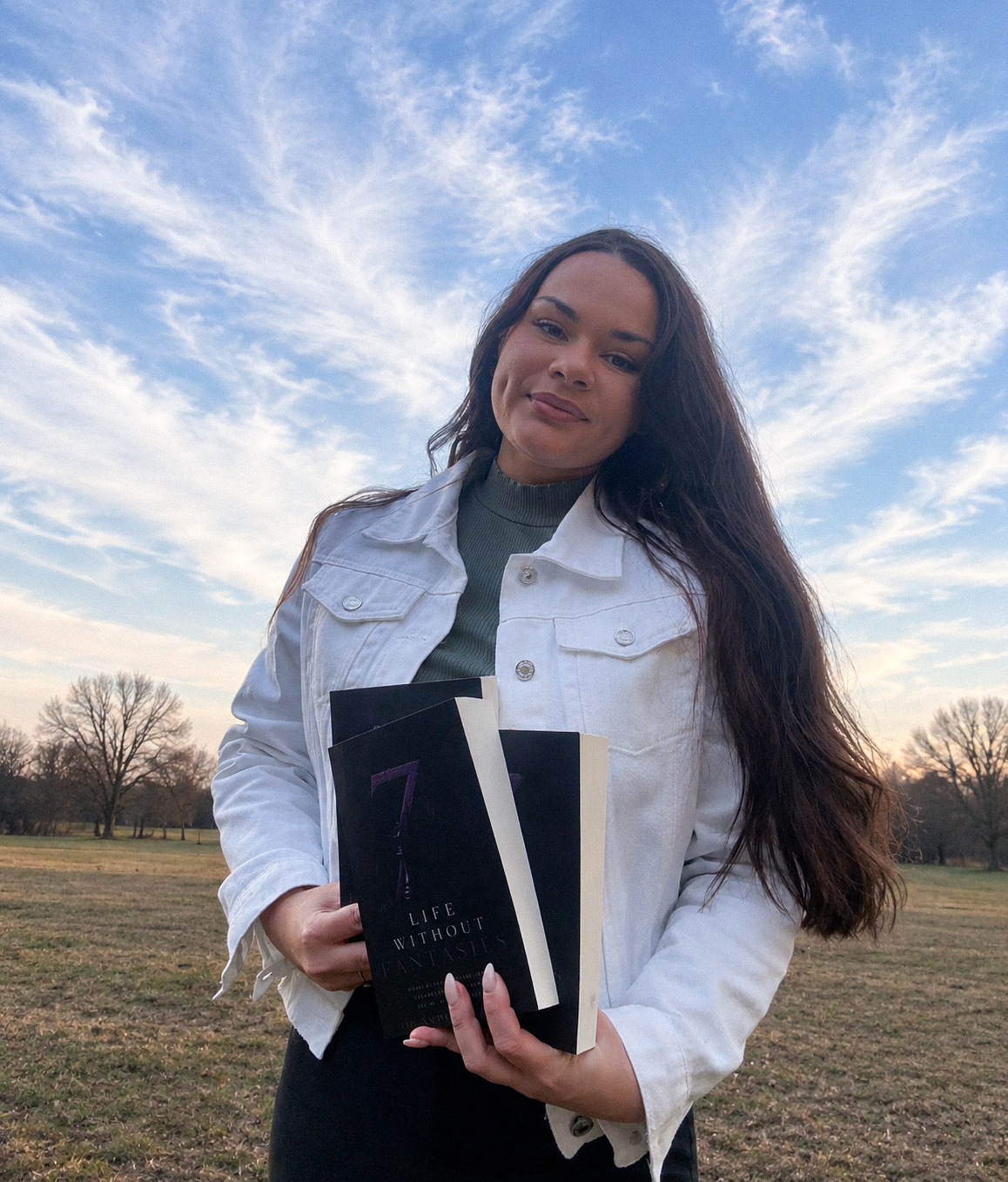
JL Andrews-Jones is an author who refuses to be defined by a single story-or a single genre.
A South African writer with an instinct for turning complicated emotions into compelling stories, Andrews-Jones writes about the things people often struggle to say out loud: loss, resilience, identity, obsession, love, and the messy space between letting go and holding on.
Her debut, Letting Go, is a deeply reflective exploration of the emotions we carry long after we think we have moved forward. Her psychological thriller, Life Without Fantasies, takes readers somewhere much darker, proving that the same author who can explore healing can also make you question what you believe is real.
Perhaps the most interesting thing about Andrews-Jones, however, is that her stories don’t fit neatly into one box. She writes where curiosity takes her-following characters, emotions and ideas wherever they lead.
For Andrews-Jones, writing isn’t about having all the answers. It’s about asking the questions that stay with you long after the final page.
