Apple Podcasts
 Spotify
 Youtube Music
 When the War Comes Home: GOODW.Y.N. on Trauma, Poetry & Finding Love | Author Spotlight

The Author Spotlight continues with poet and writer GOODW.Y.N. How do you escape war when fighting is all you know? In this episode of the Travel Time Stories: Author Spotlight Series, Shannon sits down with Nicole Goodwin, aka GOODW.Y.N., author of Warcrimes—a raw and deeply personal poetry collection shaped by war, hate, love, motherhood, trauma, and transformation. GOODW.Y.N.'s experiences as a soldier in Iraq didn't simply disappear when the deployment ended. In our conversation, we explo...
The Author Spotlight continues with poet and writer GOODW.Y.N.
How do you escape war when fighting is all you know?
In this episode of the Travel Time Stories: Author Spotlight Series, Shannon sits down with Nicole Goodwin, aka GOODW.Y.N., author of Warcrimes—a raw and deeply personal poetry collection shaped by war, hate, love, motherhood, trauma, and transformation.
GOODW.Y.N.'s experiences as a soldier in Iraq didn't simply disappear when the deployment ended. In our conversation, we explore what happens when the physical war is over but another battle continues within—and how poetry became a place to confront experiences that weren't always easy to put into ordinary words.
We talk about trauma and the writing of Warcrimes, finding catharsis through poetry, and the complicated journey from war and hate toward love. GOODW.Y.N. shares how their experiences as a soldier, mother, writer, artist, and seeker have shaped both their work and their humanity.
But our conversation also moves beyond personal healing to something bigger:
Why can someone recognize themselves in a poem about an experience they've never lived?
We explore the extraordinary ability of poetry to give language to difficult emotions and create connection between people whose lives may look completely different.
GOODW.Y.N. is a 2023 Pulitzer Prize in Poetry longlistee, a 2023 RWW Creative Nonfiction Fellow, and a 2018 Ragdale Alice Judson Hayes Fellowship recipient. Their writing has also appeared in The New York Times Motherlode.
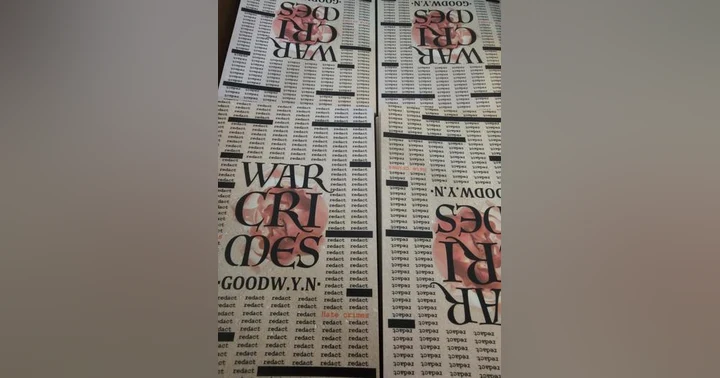
📖 Featured Book: Warcrimes
https://amzn.to/4xBr2Bj
✍️ Featured Author: GOODW.Y.N. (Nicole Goodwin)
@goodw.y.n9 or ngoodwin10@gmail.com
If you've ever wondered whether putting our experiences into words can change the way we carry them or how one person's deeply personal story can help another person feel understood this conversation is for you.
20 authors. 20 books. All genres.
Turn the page, unlock the door, and step with us inside the mind of a storyteller.
Every book has a story. But so does the person who wrote it.
🎙️ Travel Time Stories: The Author Spotlight Series
#wartrauma #authorspotlightseries #authorspotlight #bookrecommendations #authors #poetry #femaleartist #warcrimes #traveltimestorieswithshannon #newepisode #tunein
SPEAKER_03
Welcome to the Author Spotlight series. This is where we step behind the pages to meet the people who create the stories we love. We'll talk about their latest books, their writing journey, the story behind the story, and probably a few things neither of us plan to talk about. Today we're putting Goodwin in the spotlight. Goodwin, welcome to Travel Time Stories. We're so glad to have you here. Yes.
SPEAKER_02
Oh, thank you. Thank you, ladies. I'm glad to be here. And I'm just I'm happy to discuss my work and to hear your thoughts on it and your opinion.
SPEAKER_03
Well, we're ready to talk about it. But before we dive into the book, Goodwin, we'd love for you to introduce yourself to our audience and tell them a little about you.
SPEAKER_02
I'm never any good at these things, but my name is Goodwin. I changed it from I changed my nomenclature from my legal name to Goodwin after the advice of just embracing my history, but it's also an acronym that I keep to myself the meaning of, but I allow audiences to fill the blanks. I am located in East Harlem, New York City. I have an adult child that I live with who is also an artist and inventive, innovative person. That's amazing. Thank you. I'm really proud of this. I am the author of the book War Crimes, which is a poetry collection based on my deployment to Iraq in 2003 and my homecoming back to New York City. Basically, with the struggles and trials and tribulations, the ups and downs of a homecoming that uh because of survivor's guilt, I wasn't um certain I wanted to have. And PTSD, which developed into bipolar disorder. So I had mental and physical issues due to my uh enlistment in the military, the army, to be exact. And yet I use that energy to seek outpatient therapy. I've been in there for about five years now, consistently. Also to create works of art and to write and to reach people in an authentic and honest way.
SPEAKER_03
I love that, Goodwin. And I can I can relate to your uh mental health struggles with bipolar diagnosis. My oldest son, John, he was first diagnosed with bipolar at H4. And then as he grew older, uh, obviously with the changes in his own body from hormones and everything, uh his diagnosis shifted. And he was his final diagnosis was schizoaffective, meaning he has bipolar and schizophrenia. And yeah, so I have had to watch him and fight for him my whole life to get, you know, the treatment and help that he needs just for him to try to live as good a life as he can live with the uh struggles that he has on a daily basis from having those diagnoses.
SPEAKER_02
Well, I understand that definitely. Um, my adult child suffers from depression, major depression, actually. And uh a lot of it was due to the unfortunate upbringing that the neglect, the uh abusive history that I was trying to overcome my mental illness with alone, because a lot of the support we have now we didn't have in 2004, and for at least for at least several years. And it was very difficult for her and for myself. I had to battle to keep custody several times. It was a trial, made people understand the pain I was going through, but also listen to her pain. And then I realized a great deal of the pain was me locking it away while she was intuitive and watching and learning and absorbing my essence, my emotional essence. And so I decided like a frontal lobe decision, meaning I was very aware and conscious of the decision, was to start talking about my military service slowly. And as she got older, I became more and more open. And I was also opening myself up to the possibilities of rebuilding our relationship as mother and daughter, as parent and child, as young adults to older adults, and just the reconnecting and rebounding was something special to the point now that she is 23, and even though we both have our issues with mental illness, and I have my issues with physical disability, she and I are not only mother and daughter, we're colleagues in art making, we are best friends. Our relationship has grown so much into a multitude of things because I decided to be open and honest with her in, you know, a myriad of ways through my writing, through conversations, through not denying the pain anymore, opening up about it as much as possible, letting her see the struggle that I have to go through, which is a hard thing to do. Because you never want to burden your child. But I think her witnessing what I go through has made her more empathetic, more compassionate towards human beings, and I love her for it. I really do. She is one of the most wonderful people I've ever known, and she's my hero. I'm very proud of her.
SPEAKER_05
Well, she was shaped by a pretty great lady herself.
SPEAKER_02
Oh, thank you.
SPEAKER_05
I'm really, really happy that you have this relationship with your daughter. It's a rare and beautiful thing.
SPEAKER_03
Yes, exactly. I love that y'all share the passion of art together. That's wonderful.
SPEAKER_02
Yes, we have conversations about it. We debate over people like Frances Bacon. Like, that's her favorite artist. And personally, I was like, the man is despicable. But, you know, we I love her brilliance, her mind, how she sees things, the good she finds, and even the most wicked of people. And it was amazing for her to crack open war crimes. And she cried, she cried, she read a few poems and she cried, you know, and I was like, it was the most generous gift she could have given me because I wrote the book, especially for her to read. And I think it was it's a testament, but it's also a legacy.
SPEAKER_03
Yeah, exactly.
SPEAKER_05
Exactly, yeah.
SPEAKER_03
And I just have to say, Goodwin, I'm so glad that you did write the book. Yes. Because when I cracked it open and read it, I mean, first of all, just the cover alone affected me. I mean, that is one of the most brilliant book covers I have seen in a long time. Oh, thank you. I love the fact of how it has the redacted all the way across it, but then the little words hidden inside there, if you really look close. And that was amazing. And then when I opened it and started reading the poems, they they really brought out all the feels. And there were several that made me cry, and not in a bad way, just made me cry because I could feel the pain, I could feel the suffering, and having a parent who had fought in a war and came home and I saw them and how a war had affected them. Reading your poem really brought me back to that. And I just absolutely loved it. Really, I did. And and then when you talk about uh the one poem where you're talking about the relationship uh with your family home and your mom.
SPEAKER_05
Yes.
SPEAKER_03
That that really affected me too because I had personal things that I went through, you know, in my own home life. And so that kind of brought out some of those feelings and made me think about that that I hadn't thought about in a long time.
SPEAKER_05
Well, thank you. Thank you. There was there was one particular point that really I mean, reached out and literally grabbed me. After Shannon started reading the book, she texted me. She said, Have you started Goodwin's book yet? I'm like, No. So that night I started. Can I read a a piece?
SPEAKER_04
Please.
SPEAKER_05
All right. It's a hard one. The name of it is Dear Tony. It's for Tony Morrison. Is death a vagrant thing? We come away with your words. Your work is etched on our flesh, body, and bone. I cannot remember the times I was touched, moved, removed from pain. Yet you kept screaming for us, to us, by us to be heard. Like a hungry ghost, a dog with a slab of meat, ravenous to the core. I let myself go just to hear your voice in my ears. I don't know if I can finish it. Crack open the sky for me, mama. I'm flying to you, flying home. I am not a crier. You can watch Anna.
SPEAKER_03
I do not cry. I'm the crier. That's why I got tissue over here.
SPEAKER_05
Yeah. That one tore me up. I visualized what I thought you were going through at the time and why you would pray to your mama to take her take you home.
SPEAKER_02
Yeah. I I write, how do I put this? Because that last line is so many metaphors in one. It's me talking to Tony. It's me talking to Shyla, my daughter. It's me talking to my mother, Maria. It's me talking to my grandmother, Emma. It's me talking to myself and these women that had this profound impact on me. Not as just an artist, but as a person, as a writer, as a mother. And being welcomed with open arms is a desire that has carried me and been carried by me for several years. And it has taught me grace and empathy and understanding. And to pull back and see the perspectives, especially of the history of black women in pain and black women in catharsis, and my own journey with it. And we as a society dealing with pain and dealing with losing these incredible women, Rip Gloria Steinem, Rip Tony Morrison, and so many others to the passage of time, if we're lucky. It is uh it is a powerful thing to leave your mark and have these marks imprinted on you. And my mother, my mother writes, but she writes for herself. I don't know if she's ever gonna publish. But the privilege of telling these stories of being vulnerable, finding the space and creating the space for vulnerability, especially as a black queer woman. For me, it's not only powerful, it's tender and softness and strength. It defines my femininity and it raises me above limitation. It makes me immortal. It makes me immortal. And I I offer the space, especially the women, coming from different backgrounds, coming from different sources of pain, of torment, of watching and being unable, excuse me, unable to change the course of their loved ones' lives. You know, that is a sort of despicable act that war and the the love of war creates, you know.
SPEAKER_04
Yeah.
SPEAKER_02
I could throw all these buzzwords out like imperialism, colony, colonization, militaryism, and I have. But the bottom line is if you cannot make space for the resistors, then you've already lost the war. The war within the war that must be fought. And that's usually when you come home. That's the first battleground. It was for myself, it was for my daughter, it was for my mother and her mother. It's for you, and it's for you, Shannon. It's so many of us who have seen the war at home. Yeah, and America refuses to speak on it. And the book is about war crimes, it's about accountability, especially now. I wrote it five years ago, but it's so poignant. It's yes, it's almost in five years.
SPEAKER_03
Wow. Wow, and it still resonates so strongly today.
SPEAKER_05
Today. And it always will. Always will. It's timeless.
SPEAKER_02
I appreciate that. I appreciate that. I wanted my words to uplift as well as inform, you know.
SPEAKER_03
Well, I think you've reached that goal because it definitely did for me. Yeah, say it uplifted me. It it made me think about traumas that I had gone through that I haven't thought about for a long time, and allowed me to re-look at those again through a different lens. And also informed me a lot on because, like I said, my dad never talked about his time in war and so hearing about your time and what you went through in your struggle allowed me to then know what must have happened with him and what he was going through and made me even, you know, stronger bond with that memory of him.
SPEAKER_02
I appreciate that. There's so many, so many young veterans now that are coming up seeing the new wars that are similar to the wars that I went through, but also there's plethora of differences as well. It's different for everyone. Yes. Yeah, it's the same for everybody. It's very hard to explain that and not feel like, okay, I'm blanketing these experiences because I don't want to do that. I don't want to take away from the individual's experience by exposing the universal communal experience. So I it was a heavy, it was a hard line to tread upon. But at the same time, it gave me catharsis to know so many people found solace in my work. They they they felt a resolve of the tension that comes with silence. You know?
SPEAKER_06
Well said.
SPEAKER_03
So Goodwin, do you do you have to forgive something to stop fighting it?
SPEAKER_02
You have to forgive something to stop fighting it. Not always, not always. I recognize that for me, forgiveness is a choice, and what to do with the choice to forgive or the lag thereof comes from me. Once I recognized that it was a choice, I recognized that I had the power to let go of some, if not all, the anger and the confusion. You have to, I had to recognize that I, and like many others, we are the product of our environments and our era.
unknown
Right.
SPEAKER_02
In our era. And when I when I openly testified that I am a war criminal, which scared a lot of veterans to hear, that was very frightening for a lot of people because we a lot of us have resolved to say it was the higher-ups, it was the government. You know, there were so many elements to it. And they're not wrong. They're not. I hold that truth. I hold that truth in my right hand, but I also hold the truth from my experience that I made choices that led me to the floor. And yet, also I can acknowledge, like, in other eras of American and Western history, I was painted into a corner and trying to survive. Does that make it right? No. Does that absolve me of my responsibility? No. But it gives me a reason to seek atonement and to reach other people and to justify becoming another person in order to survive, to thrive, to acknowledge the pain I've caused and been and been privy privy to privy to. So, no, do you have to forgive? No. But you do have to meet people where you're at and where they're at. For me, forgiveness allows that to happen. I can meet people where they're at, and I can see the different perspectives that need them, even if they can't acknowledge it themselves.
SPEAKER_05
Yeah, I love that answer.
SPEAKER_02
Thank you. Yeah, I know I'm long-winded, but no, it was spot on, girl.
SPEAKER_03
Spot on. Exactly. So what do you what did you have to unlearn to become the person you are now?
SPEAKER_02
I'm still learning. I had to unlearn that you don't stop learning. You don't, you have to rebound. I do constantly. I I rebound every day. And sometimes, especially with depression, major depression, I'll have these quote-unquote episodes. I hate that word, but that's the best way to describe it. And where I'm feeling super low for no apparent reason. And I have to fight to stay awake, to wash the dishes, to perform um hygienic routines, to create, to work. You know, it can be exhausting. It can be exhausting. Sometimes even just the rest, you know, all of it is a form of resistance against my depression and my manic state to take my medication. Things that I can get easily tired of that I have to remind myself. Yeah, I have to remind and recall and say, hey, you need to do this because of A plus B equals C, you will fall, you will fall, you will fall. And you don't want that. You don't want that. And sometimes it's admitting that, hey, it equals C anyway, and guess what? You still have to live with it. You still have to live with it. You have to adapt. It could be it could be any mild thing. It could be any mild thing. Being an artist and being a writer is full of rejection.
SPEAKER_04
Full of it.
SPEAKER_02
Yeah and being a black artist and a black writer. Who's middle age, that that is a conundrum in itself of pressure, of rejection, of hills and valleys and mountains, all of it.
SPEAKER_04
Yeah.
SPEAKER_02
And the one thing I have to realize, you know, constantly is reaffirming that I am worthy. Even when I trip and fall. If I could catch myself, great. Some days those those feelings last and linger, but they haven't lasted and lingered to the point where I crash and burn in years. And I have to pat myself on the back for that.
SPEAKER_03
Yeah, you guys. You definitely should for that. Yeah.
SPEAKER_05
So I have a question. Yeah. When you hit when you hit rock bottom and you're telling yourself as you're laying in bed or on the couch or wherever your rock bottom spot is, okay, I gotta get up. I gotta do this. I gotta do this. Do you tell yourself I gotta do this for me, or I gotta do this for everybody around me? Which one gets you out of bed quicker?
SPEAKER_02
It depends on the bottom and it depends on the day. Because sometimes it's like, you know what? You gotta do the routines. Yeah. Just to feel better, just to be like not sick of myself. So I remind myself, okay, I'll do the routines just to be pleased. Okay. Definitely. Right. And then there are other days when I'm like, you know what? You take your medication just so you don't burden your friends. You don't burden your daughter. You take your medication because these intrusive thoughts will have climbing the wall. And nobody wants to be around that. Even if they do want to be around it, they don't want to be around. And it's honest. It's being honest, it's like, look, sometimes you just have to be blunt. Like there are days when I'm like, look, get your ass out of the bed. Go eat. Go shower. Yep. Do it. Do it because you need to. Get your ass out of bed because nobody's gonna want to be around it. Be a person, be a human being. Yeah. Even when it sucks.
SPEAKER_04
Girl. I get it. Yep.
SPEAKER_02
And have to crawl out of bed, moaning and groaning, being like, it all sucks, it all goes to hell. And then I feel better. Exactly. You always do.
SPEAKER_05
Yep.
SPEAKER_02
I always, you know, when you fight enough and you you succeed, even the little ones, especially the little ones, I am a little things person. And the small wonders, they come to you. They really do. If you keep fighting, it might take what seems like forever, but it really, it really is worth it. It is worth, you're worth fighting for. And I'm worth fighting for.
SPEAKER_05
Yeah, I'm we all are. Exactly.
SPEAKER_03
Yeah. And one has to see it. Exactly. And if you need somebody else in your corner fighting for you, just give me a call. I'll I'll stand up there and fight, fight for you.
SPEAKER_02
Yep. I appreciate y'all.
SPEAKER_03
Thank you. Thank you so much. Oh, you're very welcome. Do you think poetry gives people language for feelings that maybe they haven't known how to name for themselves? Yeah.
SPEAKER_02
I always believed that. I think there is the the cool thing about language, as just as a linguist, because I I studied anthropology and got a bachelor's in it. And linguistics was so hard, but it was so satisfying to see the word that other languages mean and interpret. And it made me a better poet because I was like, wow, you brought life to this melancholy in-between, you know, backwards thing called living. And I get to play with words and create words, and you know, it's a seesaw. You know?
SPEAKER_03
Yeah.
SPEAKER_02
And you don't have to necessarily know what it means. It can mean something different to everybody, right? Exactly. Yeah. And the meaning can sneak up on you.
unknown
Yes.
SPEAKER_02
And you're blue. That's what they meant. It's a beautiful thing. You can Google as many lines of my poems as you want to, and it still means something different. The AI will never catch up to poetry. No.
SPEAKER_05
No, it won't. It can't.
SPEAKER_03
No. It can't. It can't.
SPEAKER_05
Poetry or feelings on paper, and AI isn't capable of feelings.
SPEAKER_03
Exactly.
SPEAKER_02
Yeah. No. And it could mean something to you in different eras of your lifetime. You can always come back to it and it'd be it and you see it in all new perspective on top of the perspective you saw before.
SPEAKER_03
It's so true. I I have had many poems that when I first read them years before, I got one thing from it, and then now I can sit down and reread it years later and get something completely, totally different out of it. Yep. And I love that. I love that. It's so thrilling.
SPEAKER_05
Yeah, and we've grown too. Our experiences have grown. So there's so many different ways that you can take that to mean.
SPEAKER_03
Yeah. Exactly. So what do you hope happens between you and a reader when they encounter one of your poems?
SPEAKER_02
It depends on the poem. It depends on the poem. I hope they just discover an emotion and that it's okay to feel that way. If war crimes make you want to cry, go ahead. If it makes you want to throw it across the room, go ahead. You know? It's okay. It's okay. It's okay because anything that book does to you, it did it to me for a minute.
SPEAKER_05
Let me tell you, there are times when you're reading those poems where you do want to throw it for a minute. You just think, oh my gosh. I just I don't know if I could finish this one or I just want to throw this. I'm so mad that she had to go through this. And yeah. Yeah. So lots of emotion.
SPEAKER_02
There are books that I've thrown like right across the room. Like right across the room. And then I picked it up, and where I left off, I kept going. But it g it gives you that permission to feel. It gives my book and other books gives you that permission to feel. It says okay to feel this.
SPEAKER_05
Yeah, I was feeling it for you.
SPEAKER_02
Yeah.
SPEAKER_05
You know, and I just wanted, but the book was too good to throw, so that didn't.
SPEAKER_02
Oh, thank you. Thank you. I know a lot of people get connected to me through the book. And I'm like, huh. It's always the first time for me. And it's been five years. You know?
SPEAKER_05
I wanted to hug you. I mean.
unknown
Oh.
SPEAKER_05
Serious.
SPEAKER_03
Exactly. I just want to be able to meet you in real life and you know, have a lunch or a drink or whatever together. A real conversation again. A real conversation again.
SPEAKER_02
Wow. That'd be lovely. I'm I'm down for that. Please send me where you guys are located, and I'll try and get a gig in that direction to make it happen. Yeah.
SPEAKER_03
Yeah. Well, I'm in I'm in Texas, uh, close to Houston, and Anne is in Missouri. Yeah. We're spread out. Yeah, we're spread out. I understand.
SPEAKER_05
We're too far away from each other. It's horrible.
SPEAKER_02
Well, how close is Missouri to to Illinois?
SPEAKER_05
Oh, we're pretty close. Yeah.
SPEAKER_02
I'm going to be in Chicago in November. And if you're going to be able to do it.
SPEAKER_03
I love Chicago. I call it my second home. Okay.
SPEAKER_02
You know? I have an exhibit at the is it the Elmhurst Gallery? Yeah, that sounds right. Yeah. And it's with other veterans. And some of my new writings are going to be there. And uh the zine we made is called Machine Man. Okay. So it's going to be it's up now, but it'll be up until, I believe, January 2027. I might be wrong, but I doubt it. I think it's going to be up for a long period of time at the gallery. But I'm going to be there in November. Cool. The 5th to the 8th. I wrote it down.
SPEAKER_03
Yeah, I'm writing it down right now, too, so we can we can see if we can make that happen.
SPEAKER_05
See if we can do something.
SPEAKER_02
Yeah, this will be amazing. It would be great to meet you guys. Yeah, yeah. That would be really cool for me, too. Don't get shocked, because I I get shocked when people love my work. I'm like, like, I'm cool now because you guys gave me emails and said this and we discussed this. But I get shocked when people are like, Goodwin, come on. This is amazing. And I'm like, Yeah. I'm very Scooby-Doo at that moment. I'm very, I don't know, Hackie. Like, oh, like my work? Yeah. Because it's such, it's such an intimate part of me. And then it goes out and it grows legs, and then it goes off on its own. And you're like, oh man, I remember when you were just pages, like scraps of pages everywhere, and getting typed up, and you know, the process of trying to get published. And it was a miracle that Atmosphere Press picked it up. For me, they were like, no, this is really good stuff. And I was like, wow, like, okay, let's do this. Let's do this. And I'm very proud of it. I'm very proud. They listened to me, especially with the cover, that that was pure collaboration and love and tenderness. And working with good editors is always a pleasure. And I had a really good editor, and it was a lot of love. It was a lot of, it was a labor of love. So much so it did get long listed for the Pulitzer. Oh my gosh. I was troused. Yeah, yeah. They're not gonna release, they're not gonna release the long list. They haven't in several years. It was in 2023. But I'm on it that I know.
SPEAKER_05
That's amazing.
SPEAKER_02
I I know that.
SPEAKER_03
Yeah, congratulations. That's that's amazing. Yeah, that's huge.
SPEAKER_02
I just think when you write, and I'm putting this out there to anyone who wants to write about strife or war, the war at home, the war abroad. Please, I call it putting your blood in it. I really put myself in that book. And you can't be afraid of how you change because of that.
SPEAKER_03
Yeah. That that's great advice. I appreciate y'all. Thank you. So, Goodwin.
SPEAKER_05
We appreciate you so much.
SPEAKER_03
Exactly. And and you've had this extraordinary journey as a writer and an artist so far. And what what are you searching for creativity-wise now?
SPEAKER_02
It's all an adventure to me. It's all it's all the destination, but also the journey. So I I have another book coming out due to the opiate press called Human. And what I did for at least the first few, the first chapter, the first chapter of the new poetry starts with um blackout poetry and interpretation of Project 25, 2025, and this introduction. So I started with the introduction, and I used the blackout method to create these poems out of it. And it's the entire introduction. And it was the hardest endeavor to ever do. I really tested myself because that is the most despicable, dry, unimaginative, written document I've ever read. It was horrid to even get through what was written there in the introduction. It was absurd. Some of it was absolutely contradictory, controversial, and absurd at the same time. I was dumbfounded by it because I didn't think people could write like that. I didn't think that was possible. It could be that bad. And to stomach it and say this is what they really mean, read between the lines and tell myself that, I think that was really powerful and brave. And then to write about other destinations, like how when I went to LA, living in New York City, you know, different parts of the country that I've been through. Humans is an endeavor in discovering my altruism to to humanity and other living creatures, to the planet, giving the planet a voice through me and listening to the planet's voice. Not to sound hokey. I'm I'm really not one of those people. I mean, I'm a s I'm a spiritualist. I believe in the cosmos to a degree, right? Yeah, but I believe that we have to spread altruism and meet people where they're at. Does everybody deserve this? No.
SPEAKER_05
Excuse me.
SPEAKER_02
No, not everybody deserves this. But I try to give it to the fighters. The ones that have looked at things in society and said, We are not we are not going to go this way with you. I refuse. And these people give me strength to create because even activism took its toll on me emotionally. Oh yeah. And there was a lot of things that I wanted to say before the good of the group. I didn't say and it left me exhausted, it left me bereft of energy. And I had to say I need to change my activism and my art. So a lot of my art is social justice related. I'd say all of it by now is social justice rel related. Which is having a huge struggle in our um artistic society, our creative spaces due to the administration that we're under. Yeah. The fascism that we're living. So it is a struggle and to get back in and to get, you know, paid and to make a living and support myself through this art. So I have to be inventive and think of new ways to do it and expand, you know, my influence and connect with people who want to hear the work. You know? It's a slow-moving train, but I've learned patience. I've learned patience. It's really weird. It's really weird. If you don't have patience, you're not going to make it as an artist or a writer. You're not.
unknown
Right.
SPEAKER_02
You're not. Yeah.
SPEAKER_03
Yeah, I agree with that. So, Goodwin, where can everyone find war crimes and follow what you're doing?
SPEAKER_02
Well, right now, war crimes is on Amazon, but if you're feeling extra loving and supportive, I also sell wholesale. And um, if you you know, sign copies, author note, author card that is original. Yeah, so basically I'm looking for other bookstores. If anyone has any idea of bookstores that take indie wholesale, you know, I'm shopping around. And please, please, please, if you love the book, or if you're moved by the book, even if the if you hate it, I worship honest reviews. So if you get the book from me or from the Amazon dealer, and it's on Kindle as well, if you love it, if you hate it, if you're moved, you know, shoot me an email at n G-O-O-D W-I-N-10 at gmail.com or just leave a review. I read I read all the reviews. So I'm looking, I'm looking forward to what people's opinions of the book are and how my writing can influence and progress over time.
SPEAKER_05
It's a powerful book, I will tell you that.
SPEAKER_03
Exactly. Yeah, everybody needs to pick up a copy. So all of our listeners, especially those who who love to read, make sure that you pick up a copy of Goodwin's book, War Crimes. And thank you so much for joining us tonight, Goodwin, and letting us go behind the pages of War Crimes and telling us about your life and your story. We appreciate it so much.
SPEAKER_02
Thank you for having me again. You you both are wonderful.
SPEAKER_03
To all of our listeners, that wraps up another edition of the Author Spotlight. Thank you for joining us. And we will have Goodwin's information in the episode description. And uh information will also be on our website, traveltimestories.com, and she will have a dedicated guest page there, and her book will be located on our book recommendation page with the link to purchase on Amazon. And remember everyone, every book has a story, but so does the person who wrote it. So tune in next time.
SPEAKER_00
So join the teacher. We got a lot of people.
Author
ARTIST BIO:
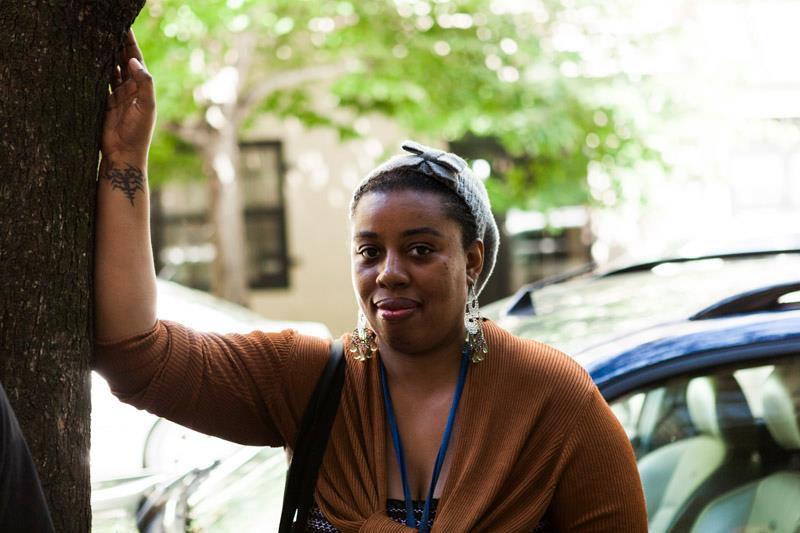
Nicole Goodwin aka GOODW.Y.N. They are longlisted for The Pulitzer Prize in Poetry for 2023, the 2023 RWW Creative Nonfiction Fellow, as well as the 2018 Ragdale Alice Judson Hayes Fellowship Recipient, while advancing to the 2nd Round of the 2018 Creative Capital Awards. They published the articles “Talking with My Daughter…” and “Why is this Happening in Your Life…” in the New York Times’ parentblog Motherlode. Additionally, their work “Ain’t I a Woman (?/!): Poems,” was longlisted for The Black Spring Press Group’s The Christopher Smart-Joan Alice Prize for 2020.