

 Apple Podcasts
 Spotify
 Youtube Music
 Paralyzed at 20… But What He Built After Will Inspire You |(feat. Ken Kunken)
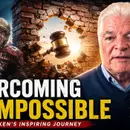
Paralyzed at 20… and yet, this is not a story about loss.
It’s a story about what’s still possible.
In this powerful episode of Travel Time Stories with Shannon, Ann sits down with Ken Kunken—whose life changed forever during a college football game at Cornell University. A single moment left him almost completely paralyzed from the shoulders down.
But what came next… is what makes this story unforgettable.
Ken went on to:
✔ Return to Cornell and complete his degree
✔ Earn multiple advanced degrees in education and psychology
✔ Become a nationally certified rehabilitation counselor
✔ Build a 40+ year career as a Nassau County Assistant District Attorney
✔ Raise a family and become a father to triplets
This conversation isn’t just about resilience—it’s about redefining what’s possible when life doesn’t go as planned.
🎙️ In This Episode, We Talk About:
✨ The moment everything changed
✨ Rebuilding a life after paralysis
✨ Finding purpose through adversity
✨ Breaking through mental and physical limits
✨ Creating a meaningful life on your own terms
Ken’s story is a reminder that even when life takes everything you thought you had… it can still give you something greater.
📘 Learn more about Ken’s book: I Dream of Things That Never Were: The Ken Kunken Story https://kenkunken.com/
💬 If this episode moved you, let us know in the comments: What part of Ken’s story impacted you the most?
🔔 Don’t forget to subscribe for more real stories of resilience, healing, and transformation. Visit our website https://www.traveltimestories.com to learn more about joining our community, our private FB page The Story Circle, and our group travel events.
#podmatch #traveltimestorieswithshannon #overcomingobstacles #healingjourney #quadraplegic #livingwithdisabilities #disabilityempowerment #authors #resilience
SPEAKER_00
I was asked to testify before a United States Health Senate subcommittee chaired by Senator Edward Kennedy. And eight days after my testimony, Senator Kennedy sent me a glass paperweight in the mail that had an inscription on it, and the words on that inscription have always been very meaningful to me. Some men see things as they are and say why. I dream of things that never were and say why not.
SPEAKER_01
Every journey has a story. And every story has the power to heal. My story hasn't been ordinary. I was adopted, I'm a survivor of abuse and trauma, and I have more than a dozen siblings. That's just the beginning of my story. Life has taken me on a long and winding road of healing and personal growth. A journey that ultimately led me back to myself and the path I was meant to walk. Along the way, I discovered that stories have power. The power to connect us, to help us grow, and even to help us heal. This is Travel Time Stories with Shannon. Real journeys, real stories, and real healing.
SPEAKER_02
At 20 years old, one moment changed everything. A football field, a single hit, and suddenly the life Ken Kunkin knew was gone. Paralyzed from the shoulders down. But what came next was not the end of his story. It was the beginning of a life most people wouldn't believe was possible. I'm your host, Dan, sitting in tonight, Shannon's out, and I want to welcome you back to Travel Time Stories with Shannon, where we share real journeys, real stories, real healing. And today's story, it's one of those that really makes you stop and think about what's possible. Our guest, Ken Cuncan, had his life change in an instant during a college football game at Cornell. But what he did after that moment is what makes the story so powerful. Ken went on to earn multiple degrees, build a 40-plus year legal career, and raise a family, all while navigating life as a quadruple. Ken, I am so honored to have you here tonight. Welcome to the show.
SPEAKER_00
Thank you, Anna. Thank you for having me as your guest.
SPEAKER_02
We'd love to start before the accident. What was your life like at Cornell?
SPEAKER_00
Well, at the time I had just begun my junior year. I was studying industrial engineering, and I was having a lot of difficulty with the coursework. I mean, I was always very good at math, but there was so much science between chemistry and physics and other science courses, it was really difficult. But I really enjoyed it at Cornell. I had a lot of good friends, and I felt like I just really needed an outlet to, you know, deal with some of the stress in my life from all the studying. So I decided to play football. And on I was on Cornell's lightweight football team, which was a special league for players that were smaller than the heavyweight team. And I was really enjoying being able to participate in that sport.
SPEAKER_02
Can you take us back to that day, the day of the accident?
SPEAKER_00
Okay. Well, let me take you back one day before that. Um on October 30th, 1970, that evening, I was actually uh together with a number of friends, uh, we decided to spend the evening together um on the other side of Lake Cayuga in upstate Ithaca, New York. And we all went together to the local IGA to shop for steak, corn, and pie. And when we returned to the cabinet, the question was finally asked that should have been verbalized well before we did the shopping, who knows how to cook? And all guys, and not many of us did, but I volunteered. So I put the meat into the oven, turned it to broil, and I remember checking on it uh six or seven minutes later, and the oven wasn't heating up. And I called in my friend Bob, who had rented the cabin, and I said, there's something wrong with the oven. It's not heating up. So Bob asked me if I'd lit the pilot light. And I had never heard the expression pilot light before. I had always cooked on an electric stove. So Bob started laughing at me for saying I know how to cook, and I didn't know what a pilot light was. So he walked over and lit it while I was standing there. And there was a bright flash of light coupled with a thunderous boom, and the gas that had been building up inside the stove suddenly exploded. And I remember looking down to see if I was hurt, and incredibly, I was not injured. I was not burned, I was not even singed. And I remember lying in bed that night, thinking how lucky I was. I remember thinking, if I can survive an explosion like that without being injured, I can survive anything. Nothing could happen to me. I must be invincible. And it was the next day that I broke my neck. Trevor Burrus, Jr.
SPEAKER_02
What was the hardest reality to face in those early days?
SPEAKER_00
Well, one, I couldn't believe this was permanent. I remember speaking to the doctor on the field while I was lying there, asking, will I be able to move again? And he said, I don't know. And that really threw me. And I kept saying to the doctor, but it's only a game. This was only a game. Like I kept thinking, how could it possibly be a permanent injury if you're only playing in a game? Now, this was before I really knew anybody who had a spinal cord injury. This was about 25 years before Christopher Reeves' devastating injury. Now, he became a tremendous role model for all of us. But when I was injured, I didn't know of anybody who had a spinal cord injury that I could look to for hope or inspiration. So I really didn't know what to think at that time. And one of the strangest sensations was when they put a stretcher under me and were carrying me off the field. I remember when they lifted me up, it felt as if I had been decapitated. And they were just carrying my head off the field. Because not only couldn't I move, I had no sensation over most of my body. Right. I had no feeling below my shoulders. So boy, that really hit me.
unknown
Trevor Burrus, Jr.
SPEAKER_02
You know, after something like that, many people would understandably just stop. But you didn't, Ken. What gave you the strength to keep going?
SPEAKER_00
Oh, it was definitely my family and some close friends. I mean, they were so supportive every step in the way. Every step of the way. They kept reassuring me, you still have your mind, you know, you still have your intellect. And basically, we'll do everything we can to act as your arms and legs to make sure you could still have do everything you wanted to do in life. And it was their encouragement. And they asked, I would say, not only did they pull me along, they pushed me along to make sure that I still did everything that I could possibly do to make something productive out of my life.
SPEAKER_02
Trevor Burrus, Jr. You didn't just return to Cornell. You built something extraordinary, multiple degrees, rehabilitation counseling, and then law, 40-plus-year career as an assistant district attorney. Where did that drive come from?
SPEAKER_00
Well, one, I had a brother who was a lawyer, and I used to go and watch him in court and think this looked really interesting. And of course, when I was watching him, it looked like it's mostly speaking, which I could do, and not a lot of legal research behind the scenes, which there is a lot. But also I've been working as a vocational rehabilitation counselor, providing counseling for other individuals with disabilities. And I often spoke before groups and organizations concerning affirmative action and non-discrimination for people with disabilities. And after my talks, I would often be asked questions. And while I would do my best to respond appropriately, I was always careful to caution the questioners, they should really consult with a lawyer about their concerns. And I guess it didn't take long before I started to think there's no reason why I couldn't become that lawyer. So I left my job and decided to go to law school.
SPEAKER_02
Amazing. Well, you've built a full life, marriage, family. Um you guys raised triplets. I can't imagine. But that is the most beautiful part of your story. What do you hope your children have learned from watching your journey?
SPEAKER_00
Well, first, without a doubt, that is the best part of my story. I couldn't be happier to be the father of triplet sons. They're all about 21 years old. They're in their second semester of their junior year, going to three separate colleges in upstate New York, three separate majors, and all doing great. But what I hope they learn from my story, when I say learn, they all read my book, uh, where they actually learned a lot of how helpful my family was, the whole step of the way, and what I went through, because I hadn't really spoken a lot in detail about what I went through. And I hope they learn a number of things. One, how important family is in our lives, and what an important part they played in my life and for them to appreciate it. But also never to quit, never to listen to the naysayers who tell you you can't do something or that it's just too difficult. What is important is how they feel about themselves, that they have the drive to succeed in whatever they choose to do. And I'm convinced they will do that. I believe they will never quit in anything they decide to do. And they're doing absolutely great.
SPEAKER_02
You know, Ken, that's I hope that that that advice resonates with more than just your children. I hope somebody takes that away from this podcast and and it changes their life. Your book is titled I Dream of Things That Never Were. That is such a powerful statement. It's a powerful book. What does that mean to you?
SPEAKER_00
Thank you. Well, let me tell you where I got that statement from. Um, I was in the hospital for nine months and twenty days following my injury. And actually, while I was still in the rehab center, this was six months after my injury, I was asked to testify before a United States Health Senate subcommittee chaired by Senator Edward Kennedy. And eight days after my testimony, Senator Kennedy sent me a glass paperweight in the mail that had an inscription on it that the Senator said his late brother Robert Kennedy liked very much. And the words on that inscription have always been very meaningful to me. The inscription read, Some men see things as they are and say why. I dream of things that never were and say why not. And that's where I got the title of my book, I dream of things that never were, the Ken Kumpkin story. And what does it mean to me? I was always told you can't do this. I mean, you're not, you know, facing up to your injury. You're a quadruple lead. You can't do these things. I was determined to dream things that never were, and to do things that people never had done before in my condition.
SPEAKER_02
You know, your story is is amazing. Everything that you've accomplished, a really long, long career in law. What did that career mean to you?
SPEAKER_00
Oh, it meant everything. I mean, you know, when I was in the rehab facility, the doctors seemed reluctant to answer any of my questions. And the expectations for a quadriplegic were so low that, you know, when I met other people in the rehab center who had been hurt far longer than I was and who had more movement than I did, didn't seem to be doing much with their lives. Just nobody seemed to expect that from them. And I remember being in a rehab facility and uh obtaining a booklet that the rehab facility put out. And it told all aspects of spinal cord injury, depending on what level you're hurt, whether it be in your back or your neck. I'm hurt between the fourth and fifth cervical in the neck, which is very high up. And I remember looking at that booklet, and it said they had a page, what type of careers you could go into with that level of injury. And the only career I saw for my level of injury would be to someday sell magazine subscriptions over the telephone. And I was devastated. I mean, here I was in my junior year at Cornell University, one of the most prestigious schools in the country. And now I'm looking at a career selling magazine subscriptions over the telephone. And while there's nothing wrong with doing that, I couldn't even dial a telephone at that time. This was before they had touchstone phones. These were rotary phones, and I couldn't take notes or write anything. And I remember lying in bed thinking, I may not be able to even do that. So I was devastated, and I was determined I'm gonna show everybody there's wrong. They're wrong, and that there's more that I can do. And I was determined to do that.
SPEAKER_02
As you said, there there wasn't a lot out there that long ago. Christopher Reeves did change a lot. He brought a lot of awareness. There have been a lot of new felt developments and equipment and and like you said, touch touch phones now, you know. But you did it. I mean, you what was that moment that just you were sitting there thinking, I'm gonna do this? What?
SPEAKER_00
Well, I can tell you, it goes back before that to my job as a rehab counselor. I have to give a lot of credit to the Viscarty Center on Long Island for hiring me to work as a vocational rehabilitation counselor for other individuals with severe disabilities. They hired me to do that back in 1977, after I had been injured six and a half years by then, and nobody else would give me the opportunity to work or show what I could do. And just so your listeners know, by that time I had a bachelor's degree from Cornell, a master's degree from Cornell, a master's degree from Columbia, three prestigious Ivy League degrees, two master's degrees, and no one would hire me. Everyone felt I was just too disabled to work. And I was even turned out when I offered to volunteer my services. And then the Viscotti Center gave me that opportunity, and that changed my life. It made me feel so much better about myself. It improved my self-esteem, my feelings of self-worth, my self-confidence. It totally changed the way I felt about myself. And in fact, it gave me enough self-confidence to then leave the job and go to law school. So I owe them just so much about what I've been able to do with my life.
SPEAKER_01
Before we continue, I want to share something really special we've created for this community. If you've ever listened to an episode and felt something deeper, like a moment that stayed with you or a story that made you reflect on your own life, we wanted to give you a place to go with that. We've officially launched our Travel Time Stories membership, where you can go beyond listening and become part of the experience. Inside the membership, you'll get access to the Story Circle, our private community where we reflect on each episode through guided journal prompts, share our stories, and connect through monthly meetups. There are also additional tiers with opportunities to go even deeper from storytelling and sharing your voice to being part of the creative journey behind the scenes and joining us on our yearly group travels. If this speaks to you, you can join us through the link in the show notes or visit our website, travel timestories.com. We would truly love to have you join the community.
SPEAKER_02
So if anybody out there is listening, I hope that you remember this. Sometimes just giving somebody a chance, opening the door can just uh change their world, literally.
SPEAKER_00
Absolutely. And I might also add that now I had the opportunity to help others, and that made a big difference. For years I had been the recipient of so much help, which I really appreciated. But it felt so good to be able to give some of that back and be in a position where I could help others, and that really made a difference in my life as well.
SPEAKER_02
So you did help quite a few people in their rehabilitation process. You're probably able to give some great advice not only to other patients that needed it, but uh to the medical field. I mean You're a pioneer, basically.
SPEAKER_00
Thank you. Well, again, I was hurt 1970. This was well before the Americans with Disabilities Act took effect.
SPEAKER_02
Right.
SPEAKER_00
So you didn't see many people who used wheelchairs, even out in public back then. Certainly people who didn't have the use of their arms, you didn't see. You know, there were curb curbs, steps everywhere you went. You didn't see any curb cuts or ramps or public transportation. That was accessible to somebody in a wheelchair. So that made a huge difference to the Americans with Disabilities Act. And let me tell you one more step. When I left and went to law school, I completed law school, the standard three-year time period, passed the difficult New York State bar exam the first time that I took it, began my work by participating in a very intensive four-week training program where they taught us all aspects of trial techniques from a prosecutor's perspective. And I was so so confident and pleased to be able to go to work my first day, only to find I couldn't fit through the swinging doorways in the courtroom. They were too narrow to allow me to get through in my electric career. It's like, can you believe that? What more did I have to do just to be given the opportunity to show that I could work and help others?
SPEAKER_02
What? Oh my gosh. You know, and if you're not in a wheelchair, you don't think about those things. My dad was in a wheelchair. You know, many times we would want to take him out, to go do something, whatever, and there would be no way to get him into the facility, basically. Um so yeah, we've been there, done that.
SPEAKER_00
And just so you know, my first day back at Cornell, which was now in 1971, there was not one ramp or curb cut on the entire campus. On my first day of schooling back at Cornell, I had to be either pulled up or bounced down close to 100 steps just to attend my first day.
SPEAKER_02
Oh wow. But you had quite a big support group, didn't you?
SPEAKER_00
I sure did. I mean, in addition to my family, who's always been supportive, I had members of the football team, members of my fraternity, I was in the Sigma New fraternity, as well as just other people that were other students that heard about me or read about me that tried to help in any way they could. They were all very, very supportive, and I was really fortunate about that.
SPEAKER_02
What amazing people, really. You couldn't have done it without them.
SPEAKER_00
That's for sure. And that's why it's even more important now to know that people with disabilities, once they're given the opportunity, can do so much with their lives, not only to make their lives better, but the lives of other those around them better as well. And when I hear people in our current administration seem to have a negative impression of DEI, diversity, equity, and inclusion, I think they're certainly not looking at it the right way. I mean, inclusion, including people whether they have disabilities or be from another country or another religion or different walks of life helps us all. And it's so sad to think the current administration doesn't recognize that. And part of my mission is to show people DEI can make a huge difference for everybody, not just any particular individual, but everybody. So while there were some people in the administration that knew I'd be coming, you know, my teammates, my fraternity brothers, my friends had no idea.
SPEAKER_02
Oh my gosh, I love that. I bet they were so surprised to see you that day. And so happy to see you. So Ken, your story is a reminder that even when life changes in ways we never expect, it doesn't mean our purpose is gone. Sometimes it just looks a little different and maybe even bigger than we imagined. Um, where can our listeners find you and your book, Ken?
SPEAKER_00
Okay, well, they can go to my website, which is kencunkin.com, my name, kencunkin.com, which will tell them more about me and my life, but also how to purchase the book, which is available not just in a hardcover, but in a Kindle version as well as in an audiobook version.
SPEAKER_02
And that's what I got, guys. Ken, thank you so much for sharing your journey with us. If this episode spoke to you, share it with someone who needs to hear it. Because stories like this remind us that even in life's hardest moments, there is still so much ahead. Kent's information will be in the show notes and on our website at TravelTimestories.com, where each of our guests have a dedicated page so you can find out more about them and listen to their episodes. We invite you to become a part of the TTS family by becoming a member of the Story Circle. Information is on our website. Until next time, keep traveling your story and keep making memories for life.
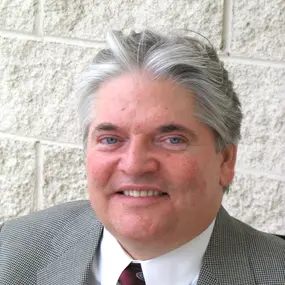
Lawyer/Author
Ken Kunken broke his neck playing football for Cornell University in 1970, leaving him almost totally paralyzed from the shoulders down. After a lengthy hospitalization, Ken returned to Cornell where he completed his undergraduate degree in engineering. Ken then earned a Master of Arts degree at Cornell in education, as well as a Master of Education degree at Columbia University in psychology.
Ken became a nationally certified rehabilitation counselor. He worked for more than two years at Abilities Inc., where he provided vocational and placement counseling to severely disabled individuals.
Wanting to accomplish still more, Ken enrolled in Hofstra University’s School of Law. Ken then worked for more than 40 years as a Nassau County assistant district attorney, where he became a Deputy Bureau Chief.
Ken is married and the father of triplet boys.
“I Dream of Things That Never Were: The Ken Kunken Story” was published in 2023.

