

 Apple Podcasts
 Spotify
 Youtube Music
 He Left the Pulpit for the FBI… Here’s Why|(feat. Eric Robinson)

What happens when your life takes a turn you never saw coming?
In this fascinating episode of Travel Time Stories with Shannon, I sit down with Eric Robinson, a recently retired FBI Special Agent whose journey is anything but ordinary.
Before spending 24 years in the FBI—working cases involving counterterrorism, crimes against children, gangs, drugs, and public corruption—Eric spent 12 years in Christian ministry, including pastoring a church. From the pulpit… to SWAT operations. From saving souls… to chasing criminals.
This conversation dives into what it really looks like to step into a completely different calling—and what Eric discovered along the way.
🎙️ In This Episode, We Talk About:
✨ What led him from ministry to the FBI
✨ What it’s like entering the world of federal law enforcement
✨ The emotional and mental realities of working high-stakes cases
✨ Surprising, humorous, and unexpected moments from his career
✨ How faith and law enforcement intersect
✨ The story behind his upcoming book Irreverend
Eric’s journey challenges the idea that we only have one path in life—and shows what can happen when we follow where we’re being led, even when it doesn’t make sense.
📘 Coming Soon: Irreverend: From Saving Souls to Chasing Sinners in the FBI
Find Eric at: https://www.preachertobreacher.com/
https://www.instagram.com/_eric_robinson/
💬 Let us know in the comments: Do you believe people have one calling in life… or many?
🔔 Subscribe for more real stories of transformation, purpose, and unexpected journeys. Visit our website: https://www.traveltimestories.com to learn more about joining out community, our private FB group The Story Circle, and our group travel events.
Life is a journey… and every journey is worth telling.
#FBI #truestory #lifechange #Purpose #faithjourney #lawenforcementlife #Inspiration #careerchange #realstories #traveltimestorieswithshannon
SPEAKER_02
One day the IRS came to me and said, Hey, can you do us a favor? Uh we need to go back in on a search warrant, and it would be embarrassing for us to write another search warrant. I'll write it, you be the affian, you swear it out, and then you know, we need to get out of the dead man's ashes. They didn't seize his ashes, though they had noticed that it was in a very literal Chinese takeout box. And so the defense would say, Oh, he he loved us, we loved him, and the prosecution was gonna say, Ah, this isn't love, putting him in a Chinese takeout box.
SPEAKER_00
Yeah. Every journey has a story, and every story has the power to heal. My story hasn't been ordinary. I was adopted, I'm a survivor of abuse and trauma, and I have more than a dozen siblings. That's just the beginning of my story. Life has taken me on a long and winding road of healing and personal growth. A journey that ultimately led me back to myself and the path I was meant to walk. Along the way, I discovered that stories have power. The power to connect us, to help us grow, and even to help us heal. This is Travel Time Stories with Shannon. Real journeys, real stories, and real healing.
SPEAKER_01
He went from preaching on Sundays to chasing criminals on weekdays, from saving souls to investigating some of the darkest parts of humanity. But the question is, did he really leave one calling behind, or was it always leading him here? Welcome back to Travel Time Stories with Shannon, where we share real journeys, real stories, and real healing. Our guest, Eric Robinson, spent 12 years in Christian ministry, including pastoring a church, and then made a dramatic shift into a 24-year career as an FBI special agent. So he went from the pulpit to SWAT operations, counterterrorism, and major criminal investigations. Eric, welcome to the show. We're so glad you're here.
SPEAKER_02
Thanks a lot, Shannon. And I want to um just clarify something. So I preached on Easter Sunday in 2002, and that was my last sermon as a pastor of my church in Western New York. The next Sunday, I was in the FBI Academy, but the Sunday after that, I preached in the chapel in the FBI Academy because they didn't have a chaplain and they wanted to borrow my services. So I they eased me into it a little bit.
SPEAKER_01
Wow, that's amazing. So let's start at the beginning, your life and ministry. When did you receive the calling to become a minister?
SPEAKER_02
Well, I I grew up in a Christian home. We went to church every Sunday, and it wasn't the strict kind, it was just what we did and enjoyed it. I was, I'll say I was the kid that uh always raised his hand and knew the answers because my parents did a good job of teaching us the Bible. So from there in college, it became more personal. I gained more biblical knowledge, and then by the time I graduated, I thought, well, this is something I definitely have an affinity for. This is something that can bring good to people, and I think I can do it well. So moved into ministry from there. So along the way, then just took the usual path of youth pastor, assistant pastor, until in the late 90s, the church where I was the assistant pastor wanted to plant a new church off of theirs. And I said, I'd love to do that. And so in Jamestown, New York, we started a church that was meant to be one that welcomed in people that maybe felt like they didn't fit in in church, and I think we did it well.
SPEAKER_01
So who were you during that season of your life?
SPEAKER_02
So I had one of the members of the core team that helped plant the church videotaped every every sermon, every uh service we had, and then he gave that to me as a gift years later of all these DVDs. And I remember thinking, oh my gosh, I'm gonna watch some of this stuff and be embarrassed. And uh, no, I was really good. So I'm like, ah, good. Uh I'm not embarrassing. So I was somebody who was earnest to see that people would feel a place in church. And so part of that church we planted, I told that core group that if we're gonna make a mistake, we're gonna err on the side of grace. So if God's gonna judge us, he's gonna say, you guys were too kind to people. And so I gave that group a flinch test. And I asked, what if somebody, and this is in a Baptist church too, what if somebody came in in a concert t-shirt or not, you know, dressed for church? What if you see a lot of piercings or tattoos, gay couples, interracial couples, whatever it might be, if you smell alcohol on their breath, can you welcome them and not have that, you know, that giveaway flinch? And people said, Yeah, let's do this. And the community responded. And many people who didn't feel comfortable in church for that very reason were now coming and experiencing something good.
SPEAKER_01
And so do you believe that that's what your purpose was at that time was to bring in people who didn't feel like they had a place and show them that they did?
SPEAKER_02
Yeah, I didn't want to just be a a preacher. I didn't want to just be in front and okay, great, now I've got folks following me. I didn't want to move 30 people from this church into my church and then four from this church into my church. I wanted to expand and I wanted to uh I wanted to do this with other Christians too, to say you're gonna get to experience something pretty cool when you see people hear the gospel come to Christ for the first time. And one of my favorite parables is a story of the treasure hidden in a field, where Jesus says, Kingdom of heaven is like a man who finds this great treasure hidden a field, and so he goes off, sells everything he has so that he can buy that treasure. And I was telling folks, look, you're asking people to give up everything they have the way they used to live in order to fully embrace this new life. That's not a small thing. So we've got to win an audience, we've got to show them there's something valuable here. And so not just gonna preach some message, have an altar call, and then say, okay, we'll figure it out from here. I wanted people to have a reasoned response to experiencing life with other Christians and then saying, Okay, I think this is what I want to be too.
SPEAKER_01
That's uh the miracle of uh being a believer is seeing someone who's a non-believer that switch happen and them join in. So I can't imagine to see that on a wider scale of a church that that was your primary purpose was was to do that.
SPEAKER_02
Yeah, it was very fulfilling. Many new people, you know, just getting those baby steps of learning. The issue for me, though, that led to the transition was it's one thing to pastor a church where generationally everybody's grown up in the church, and it's not that Christians don't have problems, but as we were reaching out to folks outside of church, they were bringing in a lot of their personal issues, and I was unable to separate myself from those things. So for two straight years, every single day without fail, I had stress-related headaches, and I just came to a point where I said, I've got to do something different. So I told my wife, I've got to find a job with less stress, and that's why I joined the FBI.
SPEAKER_01
There's no way I believe that the FBI has less stress than being a pastor.
SPEAKER_02
It just it it was different stress.
SPEAKER_01
Yeah, a different type.
SPEAKER_02
I wasn't facing anything that other pastors didn't face. I just didn't know how to deal with it. So the stress in the FBI, sure, all the time. But the body would react, here's a situation. The body gives you what you need to handle it, and then I'm I'm moving on or I'm accomplishing a task. Someone comes to me and says, Yeah, I think my son is forming a heroin addiction, and that's not over today, tomorrow, and it just kept weighing on me. So the FBI stress, handled that easy. I that was fine. It was just different.
SPEAKER_01
So, where did the ideal of the FBI come from?
SPEAKER_02
It's funny when people ask me that, and I'll give you the answer that I usually give. It's because it's cool, right? Like I I had a friend ask me this, a woman, and I said, it's obvious. And she's well, you know, my husband, I don't think would get into that, you know, that'd be difficult. And I said, But did you ask him? And so she came back with, yeah, he said it would be cool. So I applied for two jobs, one I was overqualified for, and they turned me down, and one I thought I was underqualified for, and kept along in the process. And I was a little surprised. The first stage after the long application is you take a test that's like an SAT, a college test, and I took it, and I thought, well, you know, I tried. There's no way I passed that. FBI called back, and from there I thought, okay, I have a handle on this, the physical fitness, the background, the oral examination. Like I can control that more than the other things.
SPEAKER_01
And so what did that transition feel like internally?
SPEAKER_02
Uh so I'll tell you this the day that I got accepted in the FBI, I've got the conditional acceptance, my headaches went away. So that was one big change. And I remember thinking to myself, I don't have to do this anymore. I don't have to struggle. And they just stopped. And then so I'd never handled a gun before. I didn't know much about law enforcement. So there was that learning a new career. But on top of that, it's not just learning a new career. You're learning about a storied historic agency, the supreme law enforcement agency in the world. And there's so much to there's so many aspects of the FBI. So 24 years in, I gonna I would estimate, and this is blind, maybe I know 75% of the FBI. Like there's things every day you just learn, oh, okay, that's a position I didn't know about. And so it's just a fire hose of here's a career change, but this is how the FBI works, this is what our history is, this is how our computer system works, and there was a lot to pick up.
SPEAKER_01
So did it feel like you were leaving something behind or stepping into something you were meant to do?
SPEAKER_02
Well, it was difficult for me to leave ministry because this is I I was successful, I was doing well, we were seeing lives changed, it was fulfilling, but I fought against it for so long until I just couldn't deal with the headaches anymore. And it didn't take long in the FBI for me to feel like, yeah, this this feels right, this feels comfortable. And and it took it on. Part of that is the people that the FBI hires are just high class, intelligent, good people too. So that that really helped in the transition to say, look at these folks I'm working with, they're great. So it felt felt comfortable very early on.
SPEAKER_01
So, what was it like walking into the FBI for the first time, the training environment, expectations?
SPEAKER_02
I I remember getting uh a conditional acceptance in the FBI and going on eBay and thinking, I should get some FBI gear. This is so cool. And you know, then I learned like nobody, nobody in the FBI wears that stuff. The I never lost the fascination through all the years of, are you kidding me? This is what I get to do. Like even in the end of my career when younger agents were coming to me for advice and training and saying, How do you do this? I still was thinking, like, I'm a kid, like this is remarkable that I got to do this, that I'm here. And and then I'm learning off of them too. So it was always amazing to me.
SPEAKER_01
So you never had a moment where you thought, what the heck did I sign up for?
SPEAKER_02
Well, no, no. I mean, there's plenty of days I hated. There's plenty of days of tedium and you know, disappointment. That was all the time. But then there's the times where I would just sit back. I remember that late in my career, near the near before retirement, I was on the SWAT team and I was holding perimeters. So, you know, my job is just to make sure somebody doesn't break through. And as my buddies were inside the house and now making movements, you know, I'm hearing over the radio in my headphones the calls that they're making. And I remember thinking, oh my gosh, if somebody was listening in on this, they would think this sounds so awesome. That these guys are calm. Like they're going up against possibly violent people, but it's just quick, snap, calm. It's the kind of thing that if I played for you, you go, those guys sound like they're pretty bad.
SPEAKER_01
Yeah. I can I can imagine that. I mean, I come from a military family, so I have an extensive military background with my family, so I can imagine what that sounded like because I know how they they are when they're out in the world.
SPEAKER_02
Yeah, when you when you get that high level of professionals doing the things right and comfortably, you go, wow, these guys sound like they're experts at it. And they were.
SPEAKER_01
Yeah. So working everything from counterterrorism to crimes against children, how do you mentally and emotionally handle seeing that side of humanity?
SPEAKER_02
There has to be self-reflection along the way. So I'll I'll start with this. If I grabbed you, not knowing you, but if I grabbed you and pushed you into some of these things, that would be much more traumatic than for me because I was already waiting in that water. So, you know, I'm in hot water and so it's not so hot. You know, you come from the pool to the hot tub, that feels a lot hotter. So some of these traumatic things, these difficult things we saw didn't feel as bad because we're already in that milieu, and and so it just kind of was one more thing. But otherwise, it takes self-reflection to think through what am I experiencing? Instead of just living it, there had to be times where I'm stopping to consider how what effect does this have on me? How am I dealing with this? Is is this is this making me someone that I don't want it to be in cynicism or anger. And then what I learned along the years is that agents will tell stories. So whenever there's open time, we share stories with each other. And that storytelling is many, in many ways, the catharsis, the reliving. And we are in literally life and death situations many times. And I say that, you know, and then you know, the bad guy walks out with his hands up, so it's not really life and death, but we don't know. And I think those stories that we would tell are survivor stories to say, remember that crazy time one of our guys stepped on a pile of clothes and the subject was hiding underneath it with a loaded shotgun. And guys are like, Yeah, that was man, that was wild. Friends could have died. So we tell that, and then we implicitly say, and we're here. And we made it through.
SPEAKER_01
Yeah, I can see how that would be cathartic because it's like with I use writing as a catharsis for you know working through anything that you're going through emotionally or whatever to help help you sort through that. So yeah, I can see that. And did your background in ministry change how you approach the people in these situations, or you think it was a help to have that background?
SPEAKER_02
Oh, absolutely. So if if you're able to stay calm and curious, that's always gonna help. Um, I I found that coming into a situation with kindness, you know, many times, of course, with victims, that's gonna be necessary. And and I had some, you know, experience doing counseling, so that's going to be a practice that I'd use. Working with informants or witnesses the same way of being open to them and showing them that I'm a safe person. And then even with the criminals, if I can come to a criminal and have an openness, show them that they're human, you know, not yell at them, not slam tables, call them a monster, they would respond in many ways like this is a conversation. I'm trying to bring this to a relatable level, a familiar place where we're just talking, and then their guard comes down, they feel some appreciation that they're not getting the level of verbal violence that they may have expected, and and so now they're engaged and often telling me things that they later would regret.
SPEAKER_01
That they later wish they had invoked their keep your mouth shut. So you've had front row seats to some intense situations. So without sharing anything you can't, what's a moment that really stayed with you?
SPEAKER_02
Oh, the people stand out the most because, you know, when I was on the SWAT team, I was getting up at 1.30 in the morning to drive across state to prepare for an early morning hit and you know, and then spending time in an armored bear cat with friends and bonding that way, knowing that, hey, we're about to go into something dangerous and we're both supporting each other. You know, that makes for a camaraderie that you don't get just by hanging out at a bar and telling stories. It was something so much more. So the people stood out. As far as cases go, there's so many. One of my most significant cases was a four-year financial investigation I had on a guy who had been stealing investor money over years to what I estimated about $22 million. And he was very literally a sociopath. He he hit the marks. And so when people would come to him who had invested in this company and then that went down, and then here's a new company, it didn't affect him. He had no remorse. He deserved the money. And by the time I was getting into him, he'd already collapsed a number of companies, stolen from them, lived a great life, and then it burned through all his money. And now he was moving into a world of trading foreign bonds that were completely fraudulent. And these were hundred billion dollar contracts that he thought he was going to close, and he was just going to get one percent. So not greedy. He just wanted one percent of the hundred billion dollar deal. Um, and there was and it was fascinating because I found that there is this world of people on the internet that truly believed in this, and I'm sure there were some that were in it because they're trying to just con people. But I would talk to many people that he had dealt with, and one stood out, this woman, who said, Yeah, this is absolutely true, and and we're just trying to close deals. She said, I had one client who owned a quad. And I said, What is a quad? And she said, Well, it's a contract worth a quadrillion dollars.
SPEAKER_01
Oh my gosh.
SPEAKER_02
I thought, I don't know that there is a quadrillion dollars, but they they believed in this, and and this guy that I was chasing finally closed a deal where he convinced someone that he had uh a Fannie Mae package worth $150 million, and he would sell it to him for I think $15 million, and he was to get a million dollar commission off of that, and he convinced the guy to give him $500,000 up front, or they put a lien on on the uh deal. And so he and his partner got five hundred thousand dollars and they burned through it in 45 days, and they bought nothing. It just just stupid things. No cars, no, you know, no fancy jewelry. Just just burned it. Which I I I think if I challenged you, you'd have a hard time doing that.
SPEAKER_01
Yeah, yeah, that's crazy. So on the flip side of that, you're writing a book about the humorous and surprising moments. So what's one story where things didn't go the way anyone expected?
SPEAKER_02
Well, I'll I'll I'll tell you a story that went the way that the prosecutors didn't expect. There was a case in Toledo, Ohio where a blue-collar man owned a duplex and he lived in one and then he had some renters in the other, and he had given away to them that he had been socking away money to two million dollars that he had in the bank. That man fell down the stairs and died, and the police tried to find homicide there. They were unable to, and then a will came forward. And in this will, he was leaving it to his two tenants, all of his money. Well, those people had gotten an attorney on board, gave her a cut, they faked up a will, backdated it, and put that through. And his father, the father of the tenant, came forward because he felt like he wasn't getting paid enough. So he was going to rat him out. Well, the IRS had that case, and they did a great job on it. But one day the IRS came to me and said, Hey, can you do us a favor? We need to go back in on a search warrant, and it would be embarrassing for us to write another search warrant. I'll write it. You be the affian, you swear it out, and then we need to get the dead man's ashes. They didn't seize his ashes, though they had noticed that it was in a very literal Chinese takeout box. And so the defense would say, Oh, he loved us, we loved him, and the prosecution was going to say, This isn't love, you know, putting him in a Chinese takeout box.
SPEAKER_01
Yeah.
SPEAKER_02
So we got the search warrant, found the ashes, rain would be dripping on it through a leaky ceiling, and we got what we needed. But this was a pretty high-profile case, and so I knew the prosecutors were going to stop by. So, in preparation, I had taken an Amazon box. I had gone to my fireplace and put some ashes in it in preparation. And I then I cut a hole in the corner. So when the federal prosecutor showed up to check on us, I walked out of the garage and I held the box over my head and said, Hey guys, I found it with ashes just pouring out everywhere into the wind. And they turned and they turned kind of white.
SPEAKER_01
Yeah. Oh my goodness.
SPEAKER_02
So, you know, terrible situation. They probably killed a man. And this is, you know, you ask, how do you deal with it? Well, you deal with that by you have to have dark humor and make light along the way. That was my provision. That was what I was offering to my colleagues.
SPEAKER_01
Yeah. So what's something that most people get completely wrong about the FBI?
SPEAKER_02
So my daughter went through a spell where she was watching criminal minds all the time. And so she would put it on the TV, and then she'd pause it, and she'd say, You get five complaints, and then you shut up. And I would burn through those fast. So there's many things. But I I think broadly speaking, and very practical, is that especially in this time right now, when you hear a lot of news coming about the FBI, people get wrong that that's DC. 99.5% of the FBI has nothing to do with that. Wherever you are in Texas, whatever office you're next to, those agents there want nothing to do with Washington, D.C. They just want to make your area safer, do their cases, bring justice, and do the honorable thing. The last thing that any FBI agent wants is for a 202 area code to show up on his phone where somebody in D.C. is checking in on him. So I think people put it together that if this director or this spokesperson or this issue comes out, that that's the FBI. And that's those are politicians running things.
SPEAKER_01
So did your faith evolve through your experiences in the FBI?
SPEAKER_02
It did. Uh I I'll say this that the people that I worked with in the church were the same people I worked with in the criminal fields. It's just that the people in church would come to me and say, hey, Pastor, I've made a mistake. I'm doing things I don't want to do, and I want to change, which we call repentance. And the criminals said, Here's something I can do that's wrong, and I'm all in. And they would never turn back. So any of us can be this criminal, but we strive to be the ones who say, I am wrong, I need to do better. You know, someone helped me do this. So I got to see more of humanity and what they're capable of and and what often affects them to nudge them in that way, too.
SPEAKER_01
So do you think that faith and law enforcement are two very different worlds? Do you see them as separate or do you think they're connected more than people think?
SPEAKER_02
Absolutely. Absolutely connected. I did God's work in the church. I think that's a pr that's a pretty safe statement. I thought it was. And and I felt like I was doing God's work in the FBI because one thing that God wants, very assuredly, is justice for people. And there's only so much that the church can do for you if harm has been brought to you. So, you know, we can support you, pray for you, raise money even, but you can't bring justice. And so if you don't have that, you're not fulfilled. So you need people who are going to support you, but you need something to be God's arm to bring justice. And I had chaplains tell me the same thing that, yeah, absolutely, this is God's work. So just like in the church, it can be used for poor purposes, but otherwise, if done right, this is, I think, what God wants.
SPEAKER_01
Yeah, I can see that. So your upcoming book, Irreverent, From Saving Souls to Chasing Sinners and the FBI, that title alone is pretty powerful. What inspired you to tell the these stories now?
SPEAKER_02
My wife, she said, you should write a book. And I thought, yeah, but I I didn't write the stories down. And just like I shared with you, we always are. I mean, you know, I had my catalog in my head whenever we had downtime of like, all right, I'm gonna tell you this one. But once I sat down at the computer, they just kept coming, you know, oh, then there's this one, and oh, I remember that one. And it was very easy. And all throughout my career, I and I this is not to brag, like I looked at these cases as very remarkable. Whether they were ones that I was initiating or I just got to be a part of with my with my team and my squad, they're amazing. And so I when the guys would tell stories, I would uh, you know, everybody's laughing and going, yeah, yeah, yeah. And I'd listen and I'd go, Yeah. Dude, do you have any idea how amazing that story is? Do you have any idea of how crazy that would be if somebody else heard it? And so I wanted to share that to say, hey, here's some insight. Here's a guy who had no business being in the FBI, and yet they took him on board, and he got to be a part of all this. This, I mean, this is the same thing as anybody else could do. So I think that's going to be the feel that people will have of going through of like, yeah, this isn't some dude who's, you know, way up here, and I can't relate to him. This is a guy who, again, came in from the pulpit and never handled a gun, and yet, you know, here we start out. He's he's trying to do his best and getting some succeed along the way.
SPEAKER_01
Yeah. And what do you hope readers walk away with?
SPEAKER_02
Well, in in each of my chapters, I tell typically like one major investigation or maybe a couple that are that are closely related, and then I follow up with something that's I don't know if your family ever talked about this in the military. It's familiar in law enforcement too, of an after-action review, where you look back and say, How do we screw that up and how do we do it better? What did we do right? And now we need to maintain that. And so it's reflecting on that as a Baptist pastor. This is me talking about some of the things that I used from ministry and got to put it into work. And, you know, here's how here's how I completely followed that up and need to try something different next time. And then here's ways where, yeah, that this is a reason why we succeeded.
SPEAKER_01
Yeah. And also I think it gives people a chance to see that, like America says, if you dream it, it can happen. I mean, you were a preacher and you went to the FBI. So, you know.
SPEAKER_02
Pretty uncommon.
SPEAKER_01
Yeah, exactly. So if someone feels like they're being pulled in a completely unexpected direction in life, what would you say to them?
SPEAKER_02
Yeah, so for me, I I again I I fought for years, and part of it is because I've, you know, this is a calling, this is successful, this is what I I'll be doing until I'm 80. And part of it was I was afraid to move out of what I thought I was supposed to do. So over years now, now that I'm older, now that I've experienced things, I can see some truths that I missed when I was younger. And one is people tend to overestimate the impact of poor decisions, even wrong ones. Like it's not just like I'm afraid that I might make a mistake. Even if it is the wrong decision, we overestimate how that will bring bad impact to our lives. And people underestimate the resilience that they have that through trauma, poor decisions, mistakes, you're able to recenter and now just live a new life that may be a little changed, but but you just accept it, and now you are this person moving in. So I was afraid to take that step. And if I were to go back to talk to my younger self, my younger self would say, Look at you, you've hold up really well, man. Look how handsome you are now, even in your old age. And then I'd stop him, I'd say, That's enough. But you know, you you not to be afraid to make that change, not be afraid to take those steps because even if it's wrong, things will turn out okay.
SPEAKER_01
That's true. And so how did your family deal with the change? I mean, that had to be drastic for them as well.
SPEAKER_02
I mean, well, so the kids were young, and so, you know, none of them would identify as being a preacher's kid. My wife started out, we were in Chicago for my first assignment, and I remember early on, she, you know, she's like, Oh, you know, let me know when you're safe, and she was always worried. And I was like, honey, I'm not getting a shot. If I die, it's gonna be a car accident or a heart attack. You know, it's so don't be afraid. So it went from early years where she was also experiencing something new, to later in life where I'd come home every time where I'd say, Hey, we've got uh SWAT operation on Tuesday next week. And she's like, Yeah, okay. And I'm like, Yeah, guy's kind of dangerous. She's like, Yeah, yeah, yeah. I said, Well, he said he told an informant he wouldn't be taken alive. And she goes I'll put it in the calendar. So she went from being scared to be just like, yeah, everything works out. So it took some time as well. I went from being at home to being away sometimes overnights, sometimes very weird hours. But in the times that I didn't have to be away, I was home. I didn't go to the bars, I didn't golf all weekend. So if I had to be away from the family, I was there all the other times. And I think they accepted that as an okay sacrifice.
SPEAKER_01
And so did we all did you stay just at one location or did you have to y'all have to move around over the years?
SPEAKER_02
So I started in Chicago because my wife and I had done some schooling there, and you know, that was where the Bureau sent me. I think I got into the FBI because my studies were in Islam and in outreach to Muslims, and my application was in process when 9-11 hit. So I assume that part of it is they go, hey, this guy works with Muslims, we've got an issue here, and then they immediately put me on a drug squad. So I worked drugs and gangs and public corruption in Chicago for eight years, and then got a transfer back home to Toledo, Ohio, which is the Cleveland division, top half of the state. And and in the FBI, wherever you go as your first office, if you want to stay there, you can stay there your whole career. If you want to move, you can move. If you want to do different violations, there's always opportunity. So that's one of the nice things of the variety offered from the FBI.
SPEAKER_01
Yeah, that's interesting. I didn't realize that. I guess I kind of related the FBI pretty much kind of like to the military, where you know, you're constantly getting moved from one location to another for different jobs or whatever.
SPEAKER_02
No, unless you screwed up something pretty bad, you're I I'm I mean, we had one agent spent 30 some years in Toledo and wasn't from Toledo, but okay, had you know, met a man, had a son, had roots, and they're like, you know, and stayed until they retired. So yeah, you don't have to go, but I mean at the same time, if you want to, you go to DC anytime you say Washington, D.C. three times in the mirror, and you'll get transferred. You know, you can work overseas even, so there's a lot of opportunities.
SPEAKER_01
Yeah, that's good to know. So is there anything else, Eric, that you would like to share with our audience before we close out?
SPEAKER_02
Well, if they want to hear some crazy stories, they can check out my book. They can follow me on Instagram. I'm at underscore Eric underscore Robinson. I'm on LinkedIn with my name and you can type FBI. And if you want to follow along with what is going on with my book, which will be published in the fall, you can go to the website Preacher to Breacher, because I used to knock down doors.
SPEAKER_01
I like that. That's cute. Well, Eric, your story is such a reminder that life doesn't always follow the path that we expect, but sometimes the most unexpected turns lead us exactly where we're meant to be. And so thank you so much for sharing your journey with us. And we'll make sure to have your information in our show notes. And it will also be on our website, traveltimestories.com, where every guest has a dedicated page so you can find out more about them and listen to their episodes. And if this episode made you think differently about your purpose, your identity, or even second chances, share it with someone who needs to hear it. Because sometimes the path you never planned becomes the story you were meant to tell. So thank you again, Eric. We appreciate it. And to everyone else, until next time, keep traveling your story and keep making memories for life.
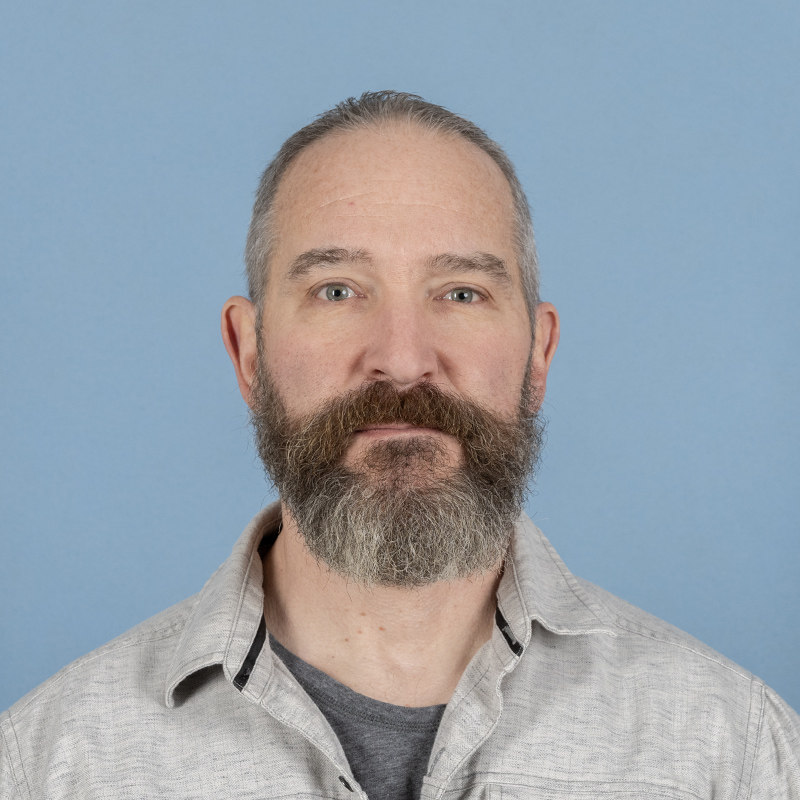
Retired FBI Agent, Author, former Pastor
Recently retired from the Federal Bureau of Investigation (FBI), after 24 years as a special agent, Eric Robinson worked a range of crimes including white collar, counterterrorism, crimes against children, gangs, drugs, and public corruption. He served as a SWAT operator, a firearms instructor, and a tactics instructor.
Eric will soon release his first book, a collection of the humorous, surprising, and intriguing moments from his career. The memoir combines his years in law enforcement with his career prior to the Bureau.
Eric joined the FBI after 12 years in Christian ministry, to include pastoring a Baptist church in Western NY.
With a background as a pastor and years of experience in HUMINT, recruiting and developing informants, Eric is a gifted and easy speaker. He uses humor to disarm and a quick wit to win people over.

