Apple Podcasts
 Spotify
 Youtube Music
 Rewriting Your Life’s Soundtrack: Trauma, Identity & Healing | (feat. Johnzelle Anderson)

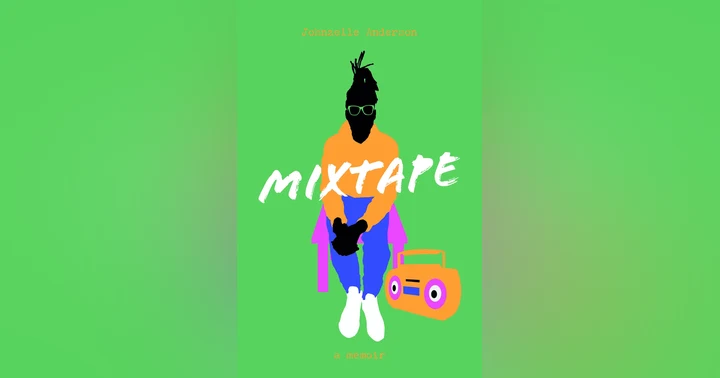
What if your life had a soundtrack… and you could rewrite it? In this deeply personal episode of Travel Time Stories, Shannon and Ann sit down with therapist and author Johnzelle Anderson to explore his powerful memoir, Mixtape: A Memoir—a story of survival, identity, and the journey from silence to voice. Told in “tracks” instead of chapters, Mixtape weaves together memories of growing up mixed race in 1990s Virginia, navigating childhood abuse, neglect, and racism, and searching for belongi...
What if your life had a soundtrack… and you could rewrite it?
In this deeply personal episode of Travel Time Stories, Shannon and Ann sit down with therapist and author Johnzelle Anderson to explore his powerful memoir, Mixtape: A Memoir—a story of survival, identity, and the journey from silence to voice. Told in “tracks” instead of chapters, Mixtape weaves together memories of growing up mixed race in 1990s Virginia, navigating childhood abuse, neglect, and racism, and searching for belonging in a world that often made him feel like an outsider. But this isn’t just a story about pain. It’s about resilience. It’s about healing. It’s about learning that you can rewrite the narrative—even if you didn’t choose how it began.
In this episode, we explore:
🎧 The “sound and silence” of survival
🧠 How trauma shapes identity and self-worth
❤️ The importance of safe relationships and chosen family
🌍 A life-changing journey to Ghana and reconnecting with roots
✍️ Using storytelling as a tool for healing and transformation Johnzelle’s story is honest, lyrical, and deeply human—a reminder that even the hardest chapters can become part of something meaningful.
✨ You may not choose your story…
✨ But you can choose how you carry it.
💬 Comment below: What would your life’s soundtrack sound like?
🎧 Subscribe for more stories of travel, healing, and transformation. Become a Member of our Community, Join The Story Circle: https://www.traveltimestories.com/join/
Connect with Johnzelle at: https://www.johnzelle.co/
#podmatch #tunein #newpodcastepisode #authors #traveltimestorieswithshannon #memoir #traumahealing #identityandbelonging #healingjourney #findingyourroots #therapyhelps
SPEAKER_01
Growing up, silence was the expectation. When my brother was abusing me, it was don't talk about our business outside of the home. Um, keep quiet, don't have a voice, but then we pair it with what my Angela said of there's a cost to an untold story. That cost is trauma, that cost is developing a crippling anxiety disorder, that cost is body dysmorphia, that cost is a person who finds themselves in unreciprocated relationships in which people walk all over them and they don't have the assertiveness to say, actually stop that, don't do that. The cost is those who do harm continuing to do harm. And um the silence of my survival served a purpose when I was still in the on the in the battlefield, so to speak, but breaking the silence once in safety served as a way to process and understand what I was made of.
SPEAKER_00
Every journey has a story, and every story has the power to heal. My story hasn't been ordinary. I was adopted, I'm a survivor of abuse and trauma, and I have more than a dozen siblings. That's just the beginning of my story. Life has taken me on a long and winding road of healing and personal growth. A journey that ultimately led me back to myself and the path I was meant to walk. Along the way, I discovered that stories have power. The power to connect us, to help us grow, and even to help us heal. This is Travel Time Stories with Jamin. Real journeys, real stories, and real healing. What if your life had a soundtrack, not just the songs you love, songs that held your pain, your memories, your turning points, the silence you carried, the words you never said, the pain you'd learned to survive. And the hardest parts of your story were the ones that shaped your rhythm, tracks of belonging, and tracks of feeling like you never quite fit anywhere. And what if one day you realized you could rewrite it, not erase the past, but change what it means?
SPEAKER_04
Today's episode is about survival, identity, and what it means to rewrite the soundtrack of your life.
SPEAKER_00
Welcome back to Travel Time Stories, Real Journeys, Real Stories, Real Healing, where we listen to everyone's life records and invite you to take a world tour of your life and embrace healing so you can reach your diamond potential. I'm your host, Shannon from Texas, and I am joined by my co-host Ann from Missouri. We're joined today by John Zell Anderson, licensed therapist, storyteller, and author of Mixtape, a memoir.
SPEAKER_04
Through his writing, John Zell explores mental health, race, relationships, and identity, using storytelling to heal, disrupt, and inspire.
SPEAKER_00
His memoir is told in tracks rather than chapters, capturing a journey from trauma to healing, from silence to voice.
SPEAKER_04
John Cell, we're so honored to have you here. Welcome to the show today.
SPEAKER_01
Thank you for having me. It's great to meet with y'all.
SPEAKER_00
It's great that you're here, John Zell. So everyone, grab your favorite beverage and let's get into it.
SPEAKER_01
I have a big cup of coffee here.
SPEAKER_00
That's perfect.
SPEAKER_04
I just finished the whole pot, so I couldn't have another cup. Literally, an entire thing. But she's not lying.
SPEAKER_00
I was gonna say she means that literally.
SPEAKER_04
Yeah.
SPEAKER_00
Yeah. So everyone, close your eyes for a moment and imagine if your childhood had a soundtrack, what would it sound like? You don't have to say it out loud, just think about that.
SPEAKER_04
Chonzel, you grew up mixed race in 1990s, Virginia, feeling like an outsider in many spaces. Can you share what that experience was like for you?
SPEAKER_01
So the identity of being mixed race was one that it became important because of how other people perceived it. So I am the product of a West African father who immigrated from Sierra Leone and a white woman from Michigan. So they had a volatile relationship. So the father was not really in the picture. So what you have is a uh a single white mother raising uh not only me but one other mixed race black child. So I look different than my caregiver. And then that contrasts asks, you know, people ask questions, well, oh, that's your mother, or where's your father? Or what are you? Or you you don't talk black, or you're you're definitely not white. Um, and and and a lot of the commentary would leave the person who is merely existing to question some things about identity. Um, and I think through writing a mixtape of memoir and sharing my stories of what that was like, not so much to it's not like a you know, a revenge tour or like a trauma, you know, dump or anything like that. I mean, there's heavier topics in there, but there's also humor and you know coming of age stuff. But um I think the thing that sits with me more recently is that the the folks who went about creating my existence should have been the people to help me with identity. Like this is who you are, this is where you come from, this is the dynamic that you live in. And um, you know, and I can I can say that as a 33-year-old, and I have a a six-year-old daughter. Uh, she's currently downstairs watching SpongeBob, so hopefully she remains quiet while we do this. But you know, um, and I guess I can understand I I understand my own experience a little bit better as I go through adulthood myself because I have a child and a lot of what I do to raise my child is just the opposite of what happened for me because my caregivers did not didn't prioritize like you know teaching me about my identity. There's a lot of trauma and and things like that. But you know, my my daughter is in the midst of being, I guess, a child of divorce because uh, you know, I'm separated and uh I think for her to know who she is, even if her parents aren't together, my priority is still for her to know her identity and to to you know have a relationship with her father and um you know to see like I've taken her to West Africa and I've I've shown her, you know, we're going to a bookstore later on today. Like I read to her every day to diverse books with, you know, from different backgrounds, and you can explore worlds through the books and through travel and things like that. I say all of that to say that I can see what is possible with uh show uh with teaching a child how to come into their own and to build their identity because I am supporting my own child in doing that. Uh but my own experience uh and and coming to understanding an identity uh really felt like the hard way. Um and that's how I have a tell all book at the age of 33. So it made for interesting stories. Yeah. To summarize that upcoming of age in the 90s, it was um it was very confusing. Um and living and uh unlearning what didn't suit me as an adult has been quite a journey to come to this point.
SPEAKER_00
Yeah, I can't I can't even imagine what that must have been like to have to grow up like that with you know your identity being questioned. And yeah, I can't I can't imagine that. I I have my own experience, not of people questioning my race, obviously, but I was adopted. And so when you finally learn, and I didn't learn I was adopted until I was a teenager, which was traumatic in itself because you grow up thinking one thing is your whole world, and these people are your parents and your siblings are your brothers and sisters, and in a sense they are because they raised you, but they're not because that's really not where you came from, not what your roots are. They're not the people that look like you, you know, that kind of thing. And so that really, for me, wrecked my world to find out as a teenager that, you know, who I thought was my parents and my siblings actually weren't my parents or my siblings, and explained a lot to me why I never looked like any of them. You know, I always wondered, but never questioned it, you know, because I never had any reason to question it. And but I always wondered, like, why does nobody else look like me in the family? Everybody else was different than me, you know, but I never questioned it. I had never had no reason to. And then yeah, you find that out and your whole world just kind of blows up. And people have asked me, but why did that blow up your whole world? Like you were raised in a loving household or whatever. And I'm like, but it it stripped my identity away. Yeah. Because who I thought I was wasn't actually who I was.
SPEAKER_01
Yeah, I often tell uh, you know, because I work as a therapist, uh, I often tell my clients to be careful with why. So you mentioned how people will you'll express uh an experience you had of how it wrecked your world. And the easiest thing to kind of say as a person receiving something is why, which is really a boomerang. Um instead of holding what somebody said and processing it, why means prove why that matters and prove the validity of this. And I I tell people why as a rabbit hole. Also, shoulda, coulda, and woulda, those are all ways if we have that in a thought, we're gonna go down a rabbit hole and get lost in the sauce. Whereas those other questions were it's like who, what, when, where, how. Okay, so who, Shannon, what adoption, when, whenever you were growing up, or 13 years old, or when you found out where, wherever you grew up, why, that one's gonna take a lot of time. And people won't go to the who, what, when, where, and how, they go to the why. And it's often on the person who is struggling or has been harmed or is figuring out an identity somehow. We put why on them as if they chose that, as if you chose to be an adopted person and not know until you were a teenager, or as if I chose to be a mixed race person in the middle of the nineties with you know volatile parents. Like, um it can complicate things. So we got to be careful with that why. Yeah, definitely.
SPEAKER_00
Exactly. And that also couldn't have been easy in Virginia, of all places, to be growing up mixed race in Virginia in the 90s.
SPEAKER_04
Because you didn't fit anywhere, you know.
SPEAKER_00
You you were different than your classmates, your friends, and so and I always tell people like, why do we it's so confusing to me, like, why do we do that to other people, you know, because they don't have the same color skin as us, or their hair is different, or they weigh more than I weigh, and all that. Why do we point those things out and ask those, you know, questions? Why? What does it matter? What does it matter? I mean, we're all just humans, and why can't we just treat each other as that? That we're just humans. Yeah, our only differences is male and female. And then that also could be questioned, you know, that's a whole nother can of worms. It's a whole nother can of worms, but really in reality, it just comes down to basic differences male and female and the parts that we have in that area. Other than that, we're all the same, we all want the same things. If you ask anybody, no matter what culture or where they're from, yes, we all want the same things. So it doesn't matter.
SPEAKER_01
Mm-hmm. But uh one of my favorite quotes is comparison is the thief of joy. And humans were really good at comparing ourselves. And the reason it's the thief of joy is because if I say compare myself to someone who I think is doing worse than me, I'm gonna make them feel like crap. And if I compare myself to someone I think is doing better than me, I'm gonna make myself feel like crap. So either way, when we compare, we lose. And I think um, you know, you mentioned how there's a lot of the being we're all human. That's what unites us. Uh, we're a lot more alike than we are different. And I I mentioned like every person uh wants connection, love like an understanding. We're wired that way as humans, but yeah, that not everybody lives by the motto of comparison is a thief of joy. So sometimes, oftentimes, if you think of any bad thing going on in the world, it's usually linked to someone feeling like they need to make someone less than so that they their value is somehow boosted. And it's often coming from a comparison. Um, and I mean any big thing in the world, it kind of comes back to that someone's doing some comparison. Or, like you said, Shannon, they're not regarding other humans as a fellow human. They're basing a value off of something like race or gender or the country that they live in, or the resources, or the way they look, or you know, their weight and different things. And that's where suffering comes from when your basic human needs of love, like, and understanding and safety aren't met.
SPEAKER_00
Yeah. Oh yeah. Exactly. And you you mentioned when you were talking about the identity, you mentioned unlearning, and that is so true. Like society puts all of these labels onto us and tells us how we should be, thank, fill, act. And yeah, you get to a certain point and you realize I don't have to, I don't have to be like that. I don't have to have these labels, I don't have to do that. And so, yeah, then you start the process of unlearning all that. And I think for me, that hit at midlife. And that's what I'm currently in the process of doing now is trying to unlearn some of those things and see how do I want my life to be for the next half of it.
SPEAKER_01
Yeah, that kind of goes back to what you said earlier about rewriting and making meaning of what was and what you're gonna be. That's the beautiful part about being human, I think, is that we're never completely evolved. Um, so we're constantly uh kind of like our computers or our phones are constantly getting like software updates, we're constantly evolving and upgrading, unless we don't, and then you're suffering in a different way if you you stop adjusting evolving.
SPEAKER_00
Yeah. So your book doesn't shy away from difficult truths, and I love that. It talks about abuse, neglect, and silence. And I I have some experience in that field as well. But what was it like for you carrying those experiences as a child?
SPEAKER_01
It varies based on you know how like something will hurt really bad when it first happens, and then as time goes on, it softens or it might creep up on you. And then there's the complexity of like if something occurred multiple times, then it compounds because like you didn't really recover from the first time or whatever.
SPEAKER_02
Yeah.
SPEAKER_01
I would say a lot of things, especially like the kind of the premise that you shared about like a a disengaged, you know, West African father and that sort of stuff. I think for a lot of my childhood I thought that not having a father around wasn't that big of a deal. Um because it's like, well, I don't have that, so I don't really know a ton. Yeah, you don't know what it but then as you get older and then you're like, well, wait a second, you you know, you get to you talk to your friends and you see what their their lives are like, not so much from the comparison part, but of course as a young kid I definitely compared myself to you know other kids who like got to go see their fathers and or you know, if they were if the parents were split or where they had two parents that lived in the home or or whatever, but you start to recognize like, hmm, maybe what's going on in my life is not the best way to do this. And I would say that this isn't to like make myself sound magical or anything, but I think what the glimmer of hope that I anchored myself on from a very early age was that there was something in me that could overcome and do it differently than what I was seeing in front of me. And so even when it was hard, I I was like, I'm not gonna end up like this. I'm not gonna end up like what they're doing. And I just remember that from such a young age. But um, to answer your question, the the processing of it um I think really started to become more vibrant when I was out of the environment. Because I tell my clients all the time, you can't heal in a place that you're getting wounded actively. Like that's you can't you can't recover from you know cuts and bruises if you're still on the battlefield, kind of thing. So once I was kind of out of those environments, the what was left behind, and while simultaneously living and and evolving in the age that I was in, uh it became more apparent, and then that unlearning was okay, what do I keep, what do I deal with, what do I throw away, what do I challenge, you know. Um and then what y'all get from Mixtape and Memoir is kind of the concise, um, you know, I wouldn't say polished, it's very genuine. Polished in a sense that it's got edit, you know, it was with the editor and stuff, it's not like sloppy, but um it is the concise literary, artistic, creative portrayal of what was, is, and what will be kind of thing. But yeah, going through those various things, those neglect, abuse, uh bullying, adversity, and then just coming of age too, going from being a child to being an adult. Um is uh yeah, it'll it'll have different meanings at different times. Like Shannon, you said, uh at midlife, you're you're starting to, you know, reckon with and and you know, change some things that were kind of set in stone for you. So we're constantly evolving. And I that's what excites me about being a human, even though I don't have it all figured out. It's probably good that we don't have it all figured out because we would get bored.
SPEAKER_04
Right. That is true. So, John Zell, you used the phrase sound and silence of survival. Can you talk about what silence meant in your life?
SPEAKER_01
Thank you. Sound, I guess in this book, was illuminated with the soundtrack that the book is based around. But silence, the silence of survival is of course it's like artistic and even in that that wording, but the silence of survival is people are living lives and experiencing things that are unseen every day. And so not everybody sits down and pens a you know a memoir to process it all and share it with people. Um, I'm a therapist and uh I people come and talk about their lives um, you know, as part of their healing, but even in therapy, people don't always say everything that's going on, you know. Uh and so the silence of survival is uh people are everyone's going through something and not everybody speaks on it. And it's not to say that everyone needs to, you know, not everybody needs to, you know, uh process it or or put it out there like I have, but there's weight to that. I think it was Maya Angelo, and this is definitely a paraphrase because I heard about it paraphrased in somebody else's book, but there's a cost to an untold story, there's a weight to an untold story. And so growing up, silence was the expectation. When my brother was abusing me, it was don't talk about our business outside of the home. Um you know, you're meant to be seen and not heard. And thinking of the keep quiet. Don't have a voice, but then we pair it with what Maya Angela said of there's a cost to an untold story. That cost is trauma. That cost is developing a crippling anxiety disorder. That cost is body dysmorphia. That cost is a person who finds themselves in unreciprocated relationships in which people walk all over them and they don't have the assertiveness to say, actually stop that, don't do that. The cost is those who do harm continuing to do harm. And yeah, um, I can't say that that's that way for everyone, but um the silence of my survival served a purpose when I was still in the on the in the battlefield, so to speak. But breaking the silence once in safety served as a way to process and understand what I was made of. I don't give credit to those who harmed me for making me stronger. Uh, I give credit to you tried to break me, you did break me, but I took my story and I used it as a way to heal. And I also have the skill and the intuition that was sharpened by those experiences to help other people take their stories and to heal as well. And I have the talent to do it through the written word. Um, I don't give credit to those who harmed me for being like, ah, if you didn't traumatize me, I wouldn't have anything to write about. I would have rather not gone through that actually. But since I did, there's a lot of things. It's like that shouldn't have happened. I would have rather not go through that. But since it did, what am I gonna do with it? Not to say, oh, get over it. What am I gonna do with it that I can have peace and joy within, but also move forward and to continue to evolve. And it's definitely a gift to be at that intersection of therapist and storyteller because I get to experience other people's stories through being an avid reader, through talking to people like you, Shannon, who you've shared bits of your story here. Um, because like you said earlier, we're all human, we're united in our humanity. But what is being human and existing here if not but a series of stories interconnected? So our stories are everything.
SPEAKER_00
Yes, yes. That is exactly what I say on the show, and that's exactly the reason I started this show is because I believe that our stories are meant to be told. By telling our stories, we help others because every person will connect with a story in some way, shape, form, or fashion. And that helps them to grow or change or whatever they need to get from that story. And so, yeah, it's very important to share our stories to connect with with each other through that way, and that's the whole point of my show and why I do my show. So I love that.
SPEAKER_04
If we can help one person with one, you know, if one person hears a story and connects with it and it helps them, then this is all worth it.
SPEAKER_00
Yeah, exactly. And I love that you've taken your trauma, your pain, and everything that you've gone through. And now you're like you said, you're not saying, oh, I'm glad that happened to me, you know, but you're taking that and using it to help other people. And and in doing so, you're helping yourself because you're telling your story, so it's healing you.
SPEAKER_01
Yeah. I think the story itself I was saying words can be healing as you write them. Absolutely. Um, and to piggyback off of that, and the stories that we have can also remind us when we go through something else, of what we're capable of, because other things are gonna happen. You never get to the point where it's like, okay, and then nothing bad ever happened again. My memoir doesn't end with and then he lived happily ever after. In fact, my story ends, and if you don't read uh, or if you finish reading the book and you don't look at the acknowledgments, there is a like a like whoa moment in the acknowledgments because the book ends, and then you're like, okay, so he made it to adulthood, he's got a business, he's got a kid, he's married, or whatever. But if you read the acknowledgments, you'll see that that marriage didn't work out and that a divorce is happening. You know, it's kind of like I give, you know, kind of like an acknowledgement to my ex, but the reader would be like, oh my gosh, what happened? You know, and there's no context. The story keeps going on. Yeah, so my story that I thought was, you know, sign-sealed and delivered, quite frankly, was also my reminder in going through this next era, which was, you know, divorce and becoming a single dad, and and you know, even like getting back out there and dating and remembering, like, hey, what your book taught you uh was about the embedded, like if unreciprocated relationships hurt you because they're not sustainable. Remember that you need to take the lessons that you've learned from your own stories and apply them, know better, do better kind of thing. So it's our stories continue to teach us, it's not a singular um experience. So that's the beautiful and the hard part about being human.
SPEAKER_00
Before we continue, I want to share something really special we've created for this community. If you've ever listened to an episode and felt something deeper, like a moment that stayed with you, or a story that made you reflect on your own life, we wanted to give you a place to go with that. We've officially launched our Travel Time Stories membership where you can go beyond listening and become part of the experience. Inside the membership, you'll get access to the Story Circle, our private community where we reflect on each episode through guided journal prompts, share our stories, and connect through monthly meetups. There are also additional tiers with opportunities to go even deeper from storytelling and sharing your voice to being part of the creative journey behind the scenes and joining us on our yearly group travels. If this speaks to you, you can join us through the link in the show notes or visit our website at traveltimestories.com. We would truly love to have you join the community. So, how important is it to have even one safe person when everything else feels unstable?
SPEAKER_01
Humans are wired for connection. We're not meant to exist in isolation. A sense of community is essential for survival. I mean, none of us can single-handedly do all of the things needed to survive without somebody else. So having support, uh obviously, my story shows that my family of origin is very flawed and oftentimes harmful. But the good thing about life is that you can have a chosen family. You can have, you get to choose your friends. We don't choose the families we're born into, but you get to choose your friends, you get to choose your partners, you get to choose where you live and what you do. Being connected and being, like I said, every human wants to be loved, liked, and understood. And because of that, every person has the ability to love, like, and understand others. And then internally, we are we ought to be love, liking and understanding ourselves. So it's a three-way direction of these needs being met. So to answer your question, it's crucial, it's essential to have at least one person, preferably more, um, to balance off those human needs of love, like, and understanding. I can imagine a lot of things going wrong when you feel alone, and I can imagine them because I've been there. You know, I think we've all been there at some point. So it's it's definitely essential.
SPEAKER_04
So as a grandmother, I have to say that you mentioned your grandmother's love as a grinding force in your life. I love that you had that relationship with her. But also you went on to become a therapist, which is that's a powerful full circle moment. What led you to that path?
SPEAKER_01
Thank you for asking. Yes, my grandmother uh has been the most, I would say the most present and consistent family member in my 33 years. But as you read the story, you'll also see that it goes from like heartwarming, like, you know, safe place. There were times where she wasn't the safest, you know. There were times where it was more neutral. And even now that that dynamic between her and I is uh, you know, evolving and changing because we still carry our wounds despite growing older.
SPEAKER_04
You went on to become a therapist, and that's huge. What what led you to that path?
SPEAKER_01
So becoming a therapist actually uh it's interesting I mentioned that the healings uh was safer to do once I was out of the environment of the trauma and stuff like that. So I went to college and about three years in I was uh was supposed to be an elementary school teacher, so I was studying to do that. And um I had done some internships and I decided or I came to the awareness like I didn't want to do that, I didn't want to work with kids for the rest of my life. So that put me in a bit of a crisis, but you have to remember I am primed for like anxiety and wanting to survive no matter what because of everything that I had been through. So it threw me into a tailspin. It was the first time where I would there was a name put to what I was going through. I went to therapy for the first time in college and uh was diagnosed with panic disorder because I was having like 10 panic attacks a day at one point.
SPEAKER_00
And oh my gosh.
SPEAKER_01
And so going to therapy and going to like the doctor and getting medication to help with the anxiety and stuff and feeling a sense of stability from mental health treatment for the first time in my life. Once the dust settled, and obviously at the end of that, I was still like, I know I don't want to be a teacher. So then it was like, actually, why don't I go to grad school and become a therapist? Because I was already majoring in psychology, like and minoring in elementary education. So it was like I have the credential or the the background to be able to get into grad school to become a therapist. So um, yeah, I uh in the middle of like uh changing my mind on what I wanted to do for a career, I was experienced the benefits of therapy, and then that made it apparent to me that it was something that would be worth pursuing. And, you know, as we record this, I've been a therapist over a decade. So um it worked out, and quite frankly, I had a good 22 years of mental health training and uh uh field experience before I ever set foot in a grad school from my upbringing.
SPEAKER_04
Exactly. And how many how many therapists can say that? How can you truly help somebody? I don't know. If you've been there yourself, I feel like you have a lot more empathy, a lot more knowledge, and you know what they need to hear because you needed to hear it yourself at some point. So Yeah.
SPEAKER_01
I love that about being a therapist. I especially enjoy working with uh teenagers because I think that's where I could have benefited the most if I would have had therapy as a young person. Probably would have been when I was a teenager, but being able in ways to speak to maybe a younger version of myself through working with young people and and seeing also appreciating like getting to see how their parents will, you know, give them access to support and seeing that not every situation is just like the like you said earlier, the silence of survival, but we don't have to be silent and we can we can heal, we can learn, we can grow. That it inspires it inspires me every day, and it also uh it chips away at the younger versions of John Zell who had to figure things out the hard way. So I can appreciate and I can also see how those similarities and differences can, yeah. The the ability to have a ripple effect in your community is is a good one. So I love it. Thank you for the inviting.
SPEAKER_00
Exactly. We need more John Cells, exactly. We really do. And we need to we definitely need to work on breaking the stigma around mental health and seeking mental health because that's still it's still a block for a lot of people that need need to get help but don't reach out because of the stigma that's tied to mental health.
SPEAKER_01
Absolutely.
SPEAKER_00
Well, one of the most powerful parts of your story is your journey to Ghana. So, what did that experience mean to you? You said you took your daughter as well, correct?
SPEAKER_01
Yes. So I've now been to Ghana or I've been to West Africa three times. So in the book, the book kind of ends with my first uh trip to Ghana. That was a solo trip. And then I also went a second time by myself to Ghana. Um, and it was the beginning of, you know, as I, you know, I talk about growing up a mixed race, single parent, basically black race and whiteness. I didn't have a connection to the West African culture. I didn't have, you know, my father didn't show me where where I come from kind of thing. So as an adult and having done a lot of unlearning and also being a parent myself, I felt like it was time for me to find the roots. There's a there's a symbol in Ghana in the Adinkra language, is called uh there's the symbol is called Senkofa, um, and it basically means to go back and get it. And so I learned that while I was there, and it resonated with me in that I going back, mind you, I live in Virginia. I'm the product of, you know, a white person and a West African who immigrated here, but it's not lost on me that, you know, I grew up in Virginia, so in history we learned about the transatlantic slave trade and how you know cotton and tobacco and all of that was like a hub. Like I literally live a few minutes away from like Philip Morris, where they still produce like you know, the cigarettes and things like that. Like, so that was that was huge, but to then be able to go back to the continent of Africa and by choice, you know, rather than you know, my ancestors, and really connecting with what does that who who am I in this longer story? And to, you know, go to those slave castles and to see the Atlantic Ocean from the other side, it really did some healing. It felt it awakened a lot spiritually for me. And then this isn't written about in the book, but uh this past December of 2025, I took my daughter. It was actually her sixth birthday while we were there. So it was my first time going to Sierra Leone, which is where my father is uh immigrated from. But my daughter turned six years old in Sierra Leone. Uh so it was really cool that my daughter, unlike me when I was six, she gets to be six years old and she'll never have to question where she comes from. And the dedication of the book is to her. It says Maya Jane, I'm I'm loosely because I don't have it in front of me, but it's like Maya Jane, you can't read yet. But someday I hope you'll pick this up and understand where I come from. May this encourage you to explore who you are unapologetically. Love data, right? And I've it's a paraphrase because I can't remember word for word, but you know, the ability to have to bring her to West Africa and you know, the weight of like we went to one of the slave castles in off the coast of Freetown, Sierra Leone, and and to really feel, you know, I've been to the ones in Ghana, but since I know uh, you know, my people come from Sierra Leone to actually be in the spot where my ancestors were, you know, entering into that transatlantic slave trade and stuff like that, with my daughter by choice, like all of that, all of these stories kind of converging on this kind of redemption and um overcoming, it meant a lot. And of course, that means I gotta write another memoir. So stay tuned for that. Yeah, I think West Africa really when I I went looking for some roots and I found something more vibrant and meaningful than I expected. And the cool thing is that I have more questions and curiosity than I thought. And so that means that it's kind of like all of these things is like you pull out a string, but it's not over, like you you keep going. So um, yeah, that's kind of the I wouldn't say my Nyxtape memoir ends, it just it kind of the words stop, but it's leaving you with a you know, everything continues on and we'll see how this goes.
SPEAKER_04
So well, you know, it's in your blood, Sierra Leone, because of your dad. Um I'm curious what emotions did that bring up the first time that you went there and saw where you actually come from.
SPEAKER_01
Yeah. Uh I think the thing that stood out to me the most was like being in the Sierra Leone uh I can't remember the name of the airport, but the airport that you fly into. And mind you, I'm mixed race black. Uh I have my six-year-old daughter with me who is fair-skinned. She's mixed as well, but you know, her mother is white, so she's very fair skinned. But she, of course, has my face. Like there's very strong uh genes, and you know, I know what my father looks like, and the the resemblance is very strong, you know. And so then here I am, you know, uh a lighter skin black, my daughter fair skin mixed, and then I'm seeing all of these different people, not just you know, full black Africans, but different mixtures of people, but seeing the incredibly strong resemblance, like we all look the same, even though we came to that space from different walks of life, that felt like home because of like you said, it's in your blood, and to see this really is in our blood, we really are family, we really are connected, even though I didn't have to say anything. That um is something I'm still exploring because it was it really surprised me to see that the strength of that resemblance and what that meant, especially in doing such a monumental kind of um journey with my own daughter. And that was also to add to that, like that trip with my daughter was a few months after getting separated, you know, and everything kind of splitting up. So um yeah, as you can imagine, there were a lot of emotions going on. So yeah, it it was this journey of life is it's not I don't think it's what any of us expected when we were kids, but at the same time, I am grateful that I can say I'm better off that it didn't turn out to be as basic as I imagined it would be when I was a kid.
SPEAKER_04
Yeah. Sounds like you got the feeling of belonging somewhere, John Cell.
SPEAKER_01
Absolutely. Good connection there. I didn't think of that.
SPEAKER_04
I love that. Yeah, I love that. I I was feeling it as you were talking. I'm like, yeah, he belonged. He finally, besides Virginia, which is where he grew up, he finally went somewhere where he thought to himself, I actually belong. I mean, this is this is where I come from. These are my people. That's uh that's uh that's an awesome thing to get to experience, John Cell.
SPEAKER_01
Thank you for that connection.
SPEAKER_00
Yeah, it's powerful. So your memoir mixtape is structured around tracks versus chapters. And so why was that the right format for your story? And what was it like in writing the story like to be vulnerable to revisit those traumas?
SPEAKER_01
Yeah. Um, so I love music. I cannot remember a time where I wasn't immersed in music. Growing up in the 90s, we had great music, the fashion was very colorful. And you know, my own coming of age also saw so much like evolution within music. Like, I think earliest on, like I know records were a thing, but I, from my own recollections, I I remember cassette tapes turning into CDs, CDs turning into kind of like burning CDs. And then that led to like MP3s and MP3s eventually evolved into like the smartphone and streaming and all of this stuff. So the evolution, but also like music videos and concerts and the culture around it and all of that. I've always been tapped into that. And I think it goes back to my attraction to stories. So with that being said, from a young age, never did I think I would grow up to write a book or anything like that. But I always imagined I was living in a movie. So when I'd walk to go get a drink of water at school or something, I'd be like, okay, there's a song playing in my head. What is the soundtrack to what's going on here? Like that's how my mind works. So in telling my story, I wanted it to be like a literary version of a mixtape. Like you create a mixtape and it's like loosely related to some sort of theme or something you think about a person or a time, or we used to burn CDs that had themes or something, right? So I wanted that to be the framework because it captures that nostalgia of the 90s, but also it was giving my story a multi-sensory experience. So obviously, you read a book and it's uh you're seeing the words, you're feeling the stories, but to bring out the sound component, like you had mentioned the the uh sound and the silence of survival, to be able to use that those songs as a way to punctuate and to compliment and to support the story that I'm telling anyway, and then for those tracks to loosely relate to something that I'm gonna talk about in that section, it felt like though I'm not a musician, though I'm not planning to make a movie or anything like that, I felt like in my own medium of storytelling, I was able to almost like craft a playlist and and to share my story in this unique way. And the playlist was the framework to do that. And like you said, about how did I find a way to do that with the heavier topics and the traumas and things like that? The cool thing was that the songs I chose were able to, if you're reading the part of the book or whatever, and you see the song I chose, sometimes that song is an encouragement to a younger version of John Zell. Sometimes that song is for the reader to just kind of have a break between the different things that they're kind of unfolding as they read it. Sometimes it's joyful and it's a celebratory part. So it the pulse of music can complement and also drive the story forward. So it was really fun through the writing process to kind of. I mean, I was uh making modifications to the track list all the way up until like the very end of the editing process. There was like a couple that got switched out, so it felt like, you know, I'm not a musician, but I imagine you've you've heard of like people who are putting an album out to be like, oh yeah. And in the end, we cut these songs out, and these were some bonus tracks or something. It it really felt like I was in charge of a production while I told my own story. So I really got to immerse myself in that and I had a a great time. And it is my favorite thing I've ever written. So I had a great time.
SPEAKER_04
I love that you were making edits up until the end. I I can't imagine. I'm sure even after when you were like, wait, wait, I there was something else. I just thought of something I need to change.
SPEAKER_01
Yeah. And there's a point too where you just have to let it go.
SPEAKER_04
Me too.
SPEAKER_01
Yeah.
SPEAKER_04
Yeah. Yeah, that's true.
SPEAKER_00
As you were describing it in my mind picturing, uh, because you know, you're the 90s, I'm the 80s, and in the 80s, we all made mixtapes for each other for if you were if you had feelings about somebody or your friends or whatever, and you picked the songs that invoked those, or you hoped invoked those feelings that you wanted them to know that you had, or whatever. And so as you were talking about it just now, that's that's what I pictured in my mind. That's such a unique way to do a book, and I love that because yeah, you add in that, you add in the audio sensory to the story.
SPEAKER_04
Yeah, I love that. You literally wrote the soundtrack of your life, John Zell. I love that you took the time to do that. Do you believe we all can change our story even if we didn't choose how it started?
SPEAKER_01
I do believe that your story doesn't have to be set in stone. Um as long as you're still living. Um and it's not about revision as history. We don't want to revise what what occurred. Like I mentioned earlier, shoulda, coulda, and woulda, we don't really have access to that or why. Um but we can rewrite our story with honesty and uh and and and paring down and unlearning what doesn't serve us. Um because the story is uh dynamic, but uh what does our story say about us is the part that we can change.
SPEAKER_00
I like that. Well, John Zell, your story is powerful, not just because of what you've been through, but because of how you've chosen to tell it.
SPEAKER_04
You've taken pain, identity, and silence, and you turned it into something that can help others feel seen.
SPEAKER_00
So thank you so much for sharing your story with us today.
SPEAKER_01
Thank you, Shannon and Anne, for having me.
SPEAKER_04
Yeah, thank you for being here. This was such this was very powerful, and I think it's gonna touch a lot of people. So, with that said, where can listeners find you in your books? Thank you.
SPEAKER_01
So my book uh or my website is johnzell.co. So J-O-H-N-Like Nancy Z like Z bra e L L E dot co. Um, so that's the website. There are links to uh where you can find the book, Amazon, uh Barnes and Noble Bookshop. There's also a link on my website there where if you want like a signed copy, you can click it and order it there. It's also available as an audiobook on Apple and Audible right now. So all of those links are at johnzell.co. But if you go to wherever you buy books at online uh and you type in the title, you should be able to find it because it's distributed. Um and then as far as where you can find me, I am on Instagram at Johnzell underscore. So the same spelling, J-O-H-N-Z-E-L-L-E underscore. So um you'll see me on there. I read a lot, so I often am reviewing uh the books that I'm reading and and geeking out uh with other readers. And of course, I share updates about my own writing and things like that too. So uh definitely give me a follow and um you know say hi.
SPEAKER_04
If this episode resonated with you, share it with someone who might need to hear it.
SPEAKER_00
And we will include Johnzell's information in the show notes and on our website, traveltimestories.com, where every guest has a dedicated page so you can learn more about them and listen to their episode. And remember, you have the power to rewrite your story. If you would like help doing that, join our community, the story circle. The information is on our website.
SPEAKER_04
And until next time, keep traveling and keep making memories for life!
Therapist I Author
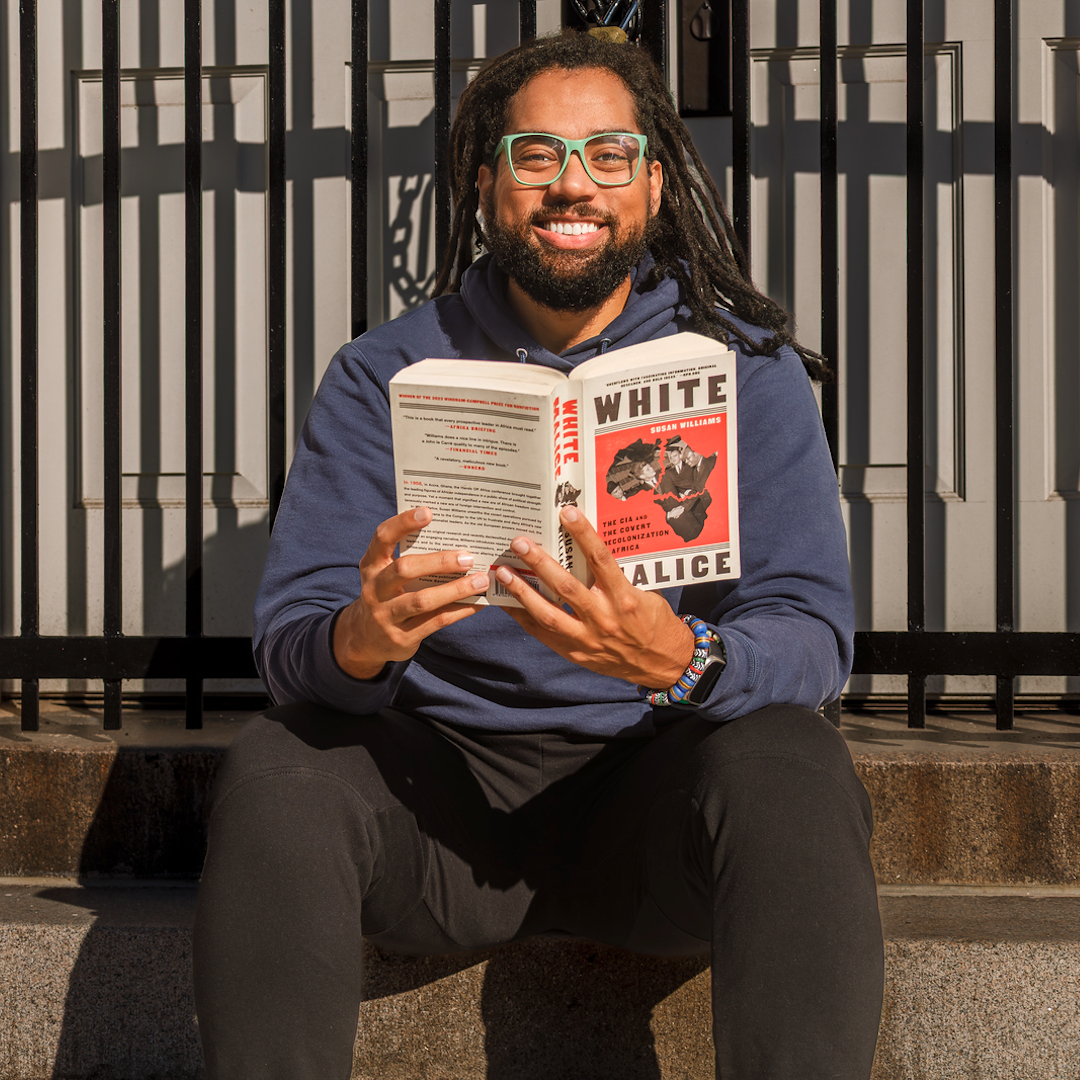
Johnzelle is a licensed therapist by trade, and believes in the power of storytelling to heal, imagine, disrupt, and inspire. His writing focuses on mental health, race, relationships, and identity.
His debut book is "Mixtape: A Memoir"
He’s an avid reader and reads approximately 100 books annually.
He lives in Virginia with his daughter and an energetic Sheprador.